
Sociology and Civil Engineering: Integrated Analysis
Exploring Civil Engineering Foundations and Society's Complex Role
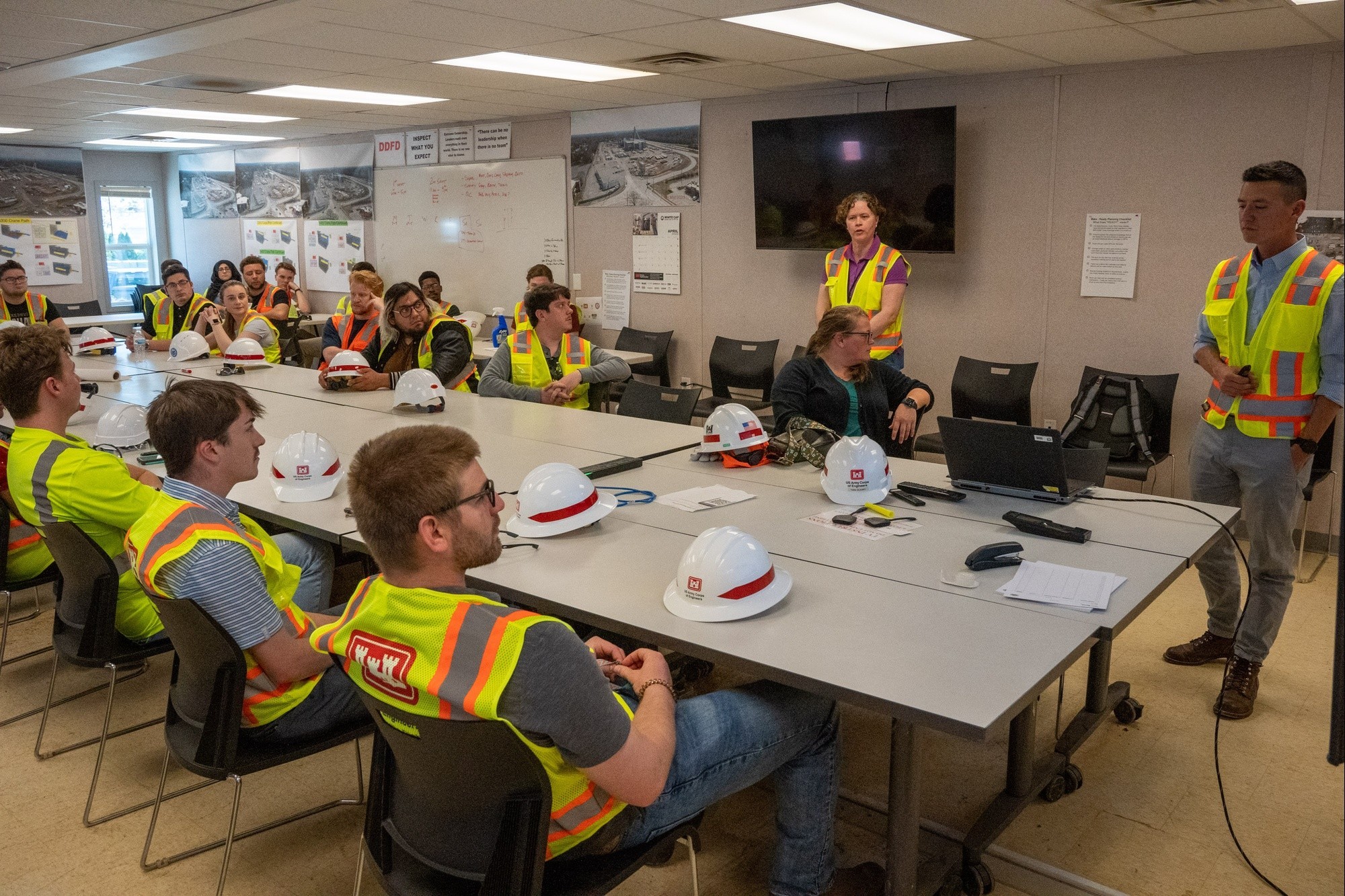
Key Highlights
- Civil Engineering Specialization: Understand its meaning and application in infrastructure design and maintenance.
- Theoretical Frameworks: Explore core theories such as Structural Safety, Hydraulic, and Materials Science (or alternative, Euler-Bernoulli Beam, Yield Line, and Finite Element Methods) that guide civil engineering practices.
- Society Beyond a Mere Tool: Analysis of society’s dynamic complexity, emphasizing social relationships, cultural influence, and transformative power.
Assignment A: Civil Engineering Specialization
1. Area of Specialization: Civil Engineering
Civil engineering is a professional discipline concerned with the design, construction, and maintenance of the built environment. It encapsulates projects ranging from roads, bridges, and buildings to water systems, dams, and public infrastructures. This area of specialization entails the application of mathematical, physical, and scientific principles to solve problems related to infrastructure that sustains modern civilization.
(i) Meaning of Civil Engineering
The meaning of civil engineering involves creating, enhancing, and preserving systems essential to modern society. This field not only applies theoretical principles in practical scenarios but also integrates sustainability, safety, and efficiency into its design philosophy. Civil engineers are tasked with ensuring that infrastructures meet societal needs while remaining robust under variable conditions such as extreme weather, heavy loads, or natural disasters. This discipline has evolved significantly, branching from ancient methods to incorporate advanced technologies like computer-aided design (CAD) and numeric simulations.
(ii) Three Key Theories in Civil Engineering
Several theories form the backbone of civil engineering practice and research. Although several frameworks contribute to the field, three prevalent theoretical approaches are outlined below:
| Theory | Description |
|---|---|
| Structural Safety Theory | This theory focuses on ensuring the structural integrity of infrastructures under various loads. Civil engineers calculate load paths, implement safety factors, and model potential failure scenarios to guarantee that buildings, bridges, and other structures maintain stability under both typical and extreme conditions. |
| Hydraulic Theory | Hydraulic theory governs the behavior of fluids within engineered systems. It is utilized to design dams, canals, drainage, and water distribution systems by analyzing fluid dynamics. Principles from this theory help engineers to manage water flow efficiently, predict pressures, and design systems for proper water resource management. |
| Materials Science Theory | This theoretical framework examines the properties and behaviors of construction materials like concrete, steel, asphalt, and composites. Understanding the interaction between material properties and environmental influences is crucial for selecting the proper materials and predicting their performance in constructions over time. |
Other common theoretical concepts in civil engineering include the Euler-Bernoulli Beam Theory, Yield Line Theory for slab analysis, and the Finite Element Method (FEM), which is a computational tool widely used for detailed structural assessment. Each of these theories has contributed significantly to the evolution and practical advancements in the field.
Assignment B: Society as a Mere Tool?
1. Evaluating Society: More Than Just a Tool
When considering the role of society, the statement “society is a mere tool” offers an oversimplified view of a deeply intricate web of human interaction, culture, and evolution. I firmly disagree with the notion that society functions solely as a utilitarian instrument. Instead, society is best understood as a dynamic, living ecosystem that shapes and is shaped by its members.
Reasons Why Society Is Not a Mere Tool
-
Social Structures and Institutions:
Society comprises several layers of social structures including family, education, governance, and economic systems. These foundational institutions frame the way individuals interact, collaborate, and progress. For example, the educational system does not merely serve an individual function; it sustains societal continuity by transmitting cultural values and knowledge across generations.
-
Cultural Heritage and Identity:
Cultural heritage is deeply embedded within any society. It influences social norms, rituals, and collective memory, ultimately shaping the identity of individuals and communities. Cultural diversity and traditions contribute far more than mere utility — they are central to the human experience, enhancing creativity, ethical development, and emotional fulfillment.
-
Interdependence and Network Complexity:
Society is characterized by complex interpersonal and institutional networks. These networks represent relationships built on trust, reciprocity, and mutual respect. Unlike a tool that serves a single purpose, societal relationships are multi-dimensional and continuously evolve. This complexity enables adaptability, resilience, and the collective management of challenges.
-
Agency and Autonomy:
Individuals within society possess agency and autonomy. Each individual contributes to the evolution of societal norms through personal decisions, innovations, and expressions of creativity. This capacity for self-determination means that society is an amalgamation of free agents, making it a dynamic force rather than a static instrument.
-
Moral and Ethical Evolution:
Societies evolve ethically and morally over time. Collective experiences, debates, and reforms shape frameworks that govern justice, freedom, and equality. These ethical dimensions are intrinsic to societal development and cannot be simply reduced to instrumental use. They are fundamental in promoting values that underpin social cohesion and progress.
In summary, society is a multi-layered entity driven by cultural, ethical, and structural dynamics. While it provides mechanisms that individuals may use to achieve personal or collective objectives, it simultaneously influences behaviors, lifestyle choices, and overall human development in profound ways. This interplay between using society and being shaped by it forms the crux of social complexity.
Deep Dive: Merging Engineering and Sociological Perspectives
Intersection of Technological Advancements and Social Evolution
While civil engineering focuses on the tangible, physical infrastructure that supports modern life, sociology examines the intangible yet critical aspects of societal organization. Both disciplines share a mutual interest in the creation, maintenance, and evolution of organized systems.
Analogy Between Civil Engineering and Society
Just as civil engineering involves robust theories to ensure structures can withstand natural and man-made stresses, society is built on a more abstract framework where cultural, ethical, and informal institutions provide resilience against social turbulences. For example, engineering theories like Structural Safety Theory ensure that bridges and buildings hold up under pressure, while societal norms and ethics are designed to maintain social stability in times of crisis.
Further, technologies developed from engineering theory—such as simulation models and predictive analyses—come with analogs in sociology. Social network analysis and the study of social dynamics employ rigorous methods to predict how changes in societal structures might influence behavior and cultural integrity. This cross-disciplinary blend enriches our understanding of both fields, demonstrating that the built environment and social frameworks are interdependent.
Supporting Data and Comparative Framework
| Aspect | Civil Engineering | Sociology |
|---|---|---|
| Core Focus | Design, construction, and maintenance of physical infrastructure. | Analysis of social structures, cultural norms, and interpersonal relationships. |
| Theoretical Tools | Structural Safety, Hydraulic, and Materials Science theories, among others. | Frameworks such as social network theory, cultural analysis, and ethical philosophy. |
| Impact | Ensures resilient, sustainable, and safe built environments. | Shapes individual behaviors, governs social interactions, and guides moral development. |
| Methodology | Quantitative analyses, computer simulations, and material testing. | Qualitative research, survey analysis, and theoretical modeling. |
Mathematical Insight in Engineering
In civil engineering, mathematical formulations are pivotal. Consider the Euler-Bernoulli Beam Theory, which models the relationship for small deflections in beams:
\( \text{\( \frac{d^2}{dx^2} \left(EI \frac{d^2y}{dx^2}\right) = q(x) \)} \)
Here, \( \text{\( EI \)} \) represents the flexural rigidity of the beam, \( \text{\( y \)} \) the displacement, and \( \text{\( q(x) \)} \) the loading function. Such formulations are analogous to the structured frameworks that underpin sociological theories, where clear models outline the flow of cultural or social capital within communities.
References
- Civil Engineering Definition - Cambridge Dictionary
- Civil Engineering Overview - Encyclopaedia Britannica
- Civil Engineering Roles - U.S. Bureau of Labor Statistics
- Critical Theories in Civil Engineering - Construction Placements
- Definition of Society - Wikipedia
Recommended Queries for Further Exploration
Last updated March 22, 2025