
The Intertwined Crisis: How Climate Change Degrades Our Air Quality
Understanding the profound and worsening impact of a warming planet on the air we breathe.
Climate change and air quality are inextricably linked, forming a dangerous feedback loop that poses significant threats to human health and ecosystems worldwide. While often addressed as separate issues, scientific evidence increasingly demonstrates that a changing climate directly exacerbates air pollution, intensifying existing problems and creating new challenges for environmental management and public health.
Key Insights into Climate Change's Air Quality Impacts
- Increased Ozone Pollution: Warmer temperatures and more frequent heat waves, hallmarks of climate change, accelerate the chemical reactions that form ground-level ozone (smog), especially in polluted regions, leading to a "climate penalty" on air quality.
- Worsening Wildfire Smoke: Climate change contributes to longer and more intense wildfire seasons, particularly in drought-prone areas, releasing vast amounts of fine particulate matter into the atmosphere, which significantly degrades air quality over wide geographical ranges.
- Heightened Allergen Exposure: A warming climate influences plant growth cycles, leading to longer pollen seasons and higher concentrations of airborne allergens, further impacting respiratory health and decreasing overall air quality.
The Atmospheric Dance: A Complex Interplay
The Earth's atmosphere is a delicate balance of gases, and human activities, primarily the burning of fossil fuels, have significantly altered its composition. This alteration has led to an increase in greenhouse gases (GHGs) like carbon dioxide (\(\text{CO}_2\)) and methane (\(\text{CH}_4}\)), which trap heat and drive global warming. This warming, in turn, influences atmospheric conditions in ways that directly impact air quality.
The relationship is bidirectional: while GHGs cause climate change, many air pollutants are co-emitted with GHGs from the same sources. For instance, burning fossil fuels releases not only \(\text{CO}_2\) but also particulate matter (PM) and precursors to ground-level ozone. Addressing these common sources offers a "win-win" scenario for both climate mitigation and air quality improvement.
The Escalation of Ozone Pollution
One of the most direct and well-documented impacts of climate change on air quality is the exacerbation of ground-level ozone pollution. Ozone at ground level, often referred to as smog, is not directly emitted but forms when volatile organic compounds (VOCs) and nitrogen oxides (NOx) react in the presence of sunlight and heat. Climate change creates ideal conditions for this process:
Warmer Temperatures and Stagnant Air
Hotter temperatures, a defining characteristic of climate change, accelerate the chemical reactions that produce ground-level ozone. This effect is particularly pronounced during heat waves, where large areas of high pressure can cause air masses to become stagnant for several days, trapping pollutants and allowing them to "cook" into higher concentrations of ozone. Studies indicate that climate change alone could increase summertime surface ozone in polluted regions by 1-10 ppb over the coming decades, necessitating stronger emission controls to meet air quality standards.
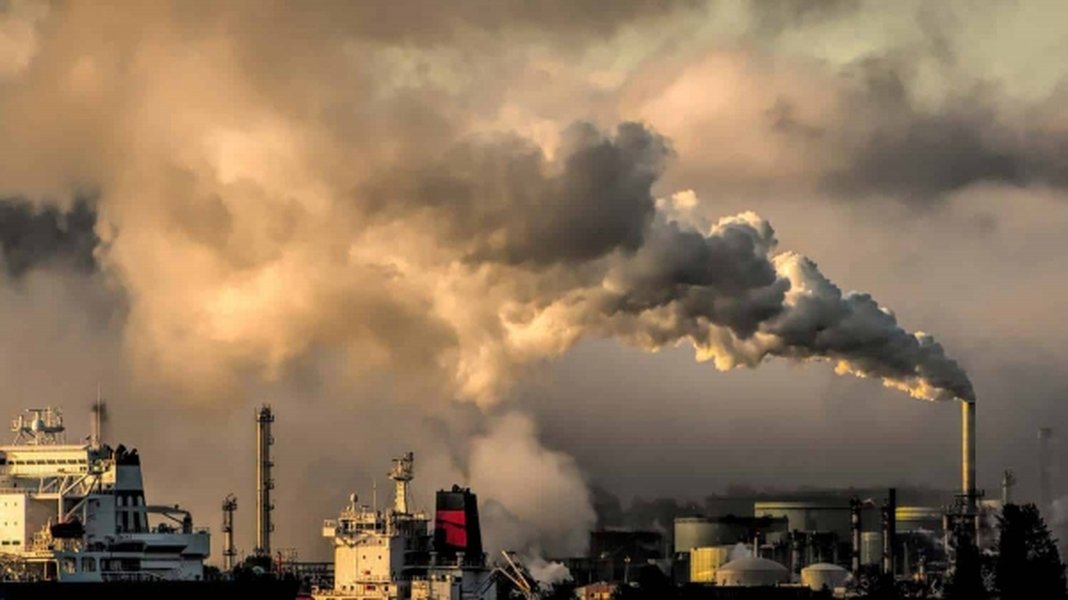
A hazy city skyline under a reddish sky, depicting severe air pollution.
The Smoke Scourge: Wildfires and Particulate Matter
Climate change intensifies the frequency and severity of wildfires, which are a major source of air pollution. Longer periods of drought, higher temperatures, and increased wind intensity create conditions ripe for ignition and rapid spread of fires. Wildfire smoke is composed of fine particulate matter (\(\text{PM}_{2.5}\)), carbon monoxide, and other hazardous air pollutants. These tiny particles can travel hundreds or even thousands of miles, significantly degrading air quality far from the source and posing severe health risks.
Health Ramifications of Wildfire Smoke
Exposure to wildfire smoke can lead to a range of health issues, from respiratory problems like asthma attacks and bronchitis to cardiovascular issues and premature deaths. In some regions, wildfire smoke now accounts for a substantial portion of total particulate matter pollution. The "vicious cycle" described by the World Meteorological Organization highlights how climate change drives wildfires, which then release more pollutants, further impacting human health, ecosystems, and agriculture.

A dense plume of smoke rising from a wildfire, obscuring the landscape.
Aerosols: The Double-Edged Sword
Aerosols, tiny solid particles and liquid droplets in the atmosphere, are emitted from both natural sources (like volcanoes and dust storms) and human activities (such as burning fossil fuels). Their impact on climate and air quality is complex. Some aerosols, like black carbon, absorb sunlight and contribute to warming, while others, like sulfates, have a temporary cooling effect by reflecting sunlight. However, even cooling aerosols can have detrimental effects on human health, agriculture, and local air quality.
The distribution of aerosols is highly localized, meaning their impacts on air quality and climate are very dependent on where they are emitted. This contrasts with carbon dioxide, which has a global impact regardless of its source. Understanding these localized effects is crucial for developing effective mitigation strategies.
The Allergen Onslaught: Pollen and Respiratory Health
Climate change also affects the prevalence and concentration of airborne allergens. Warmer temperatures extend growing seasons and can lead to higher pollen concentrations, particularly for allergens like ragweed. This increased exposure to pollen, combined with elevated levels of smog and particulate matter, creates a "double whammy" of unhealthy air quality, worsening respiratory allergies and conditions like asthma, leading to more emergency room visits and missed days of school and work.
Mechanisms of Climate Change's Influence on Air Quality
The mechanisms by which climate change impacts air quality are multifaceted, involving atmospheric dynamics, chemical reactions, and natural emissions:
| Mechanism | Description | Impact on Air Quality |
|---|---|---|
| Temperature Increases | Higher ambient temperatures accelerate the chemical reactions that form ground-level ozone. | Increases ozone (smog) concentrations, particularly in urban and polluted areas. |
| Changes in Precipitation Patterns | Altered rainfall can reduce "wet scavenging" of pollutants, allowing them to remain in the atmosphere longer. | Can lead to higher concentrations of particulate matter and other pollutants. |
| Modified Ventilation Rates | Changes in wind speed, mixing depth, convection, and frontal passages can lead to more stagnant air. | Traps pollutants closer to the ground, increasing concentrations and exposure. |
| Increased Droughts | Prolonged dry periods contribute to increased susceptibility to wildfires and windblown dust. | Elevates particulate matter (smoke, dust) and associated hazardous pollutants. |
| Altered Natural Emissions | Warming temperatures can affect emissions from vegetation (e.g., biogenic VOCs) and soil (e.g., mercury). | Can contribute to increased ozone formation and other pollutant levels. |
| Longer Growing Seasons | Warmer temperatures influence plant phenology, extending the period for pollen release. | Increases airborne allergen concentrations, worsening respiratory health. |
The interdependence of air quality and climate change means that effective solutions must address both simultaneously. Policies aimed at reducing fossil fuel combustion, for example, yield benefits for both greenhouse gas emissions and air pollutant levels.
Visualizing the Synergistic Impacts
To better understand the complex interplay between climate change and air quality, let's consider a radar chart. This chart visually represents how various aspects of climate change influence different facets of air quality, emphasizing the multi-dimensional nature of this challenge. Each spoke of the radar represents a different impact pathway, illustrating their relative strengths based on current scientific understanding.
As the chart illustrates, the current impacts are already significant, particularly for ozone formation and wildfire smoke. Without substantial mitigation efforts, these impacts are projected to intensify, underscoring the urgency of addressing both climate change and air pollution collaboratively.
The Interconnectedness of Solutions
Recognizing the deep connection between air pollution and climate change is crucial for developing effective and efficient solutions. Many of the sources for greenhouse gases are also sources for harmful air pollutants, primarily the burning of fossil fuels in transportation, power generation, and industrial processes. This presents a unique opportunity for "co-benefit" strategies.

A diagram illustrating the interconnectedness of climate change, air pollution, and human health.
For example, transitioning to renewable energy sources like solar and wind power not only reduces carbon emissions but also significantly cuts down on particulate matter, NOx, and SOx emissions, leading to cleaner air and improved public health. Similarly, promoting electric vehicles helps reduce tailpipe emissions that contribute to both smog and climate change.
The World Bank and WHO emphasize the need to tackle air pollution and climate change jointly, with a particular focus on protecting human health, especially in vulnerable populations. Policies that reduce short-lived climate pollutants (SLCPs) such as black carbon and methane offer immediate "win-win" benefits: rapid reductions in global warming potential and significant improvements in local air quality.
This video provides an excellent overview of the connections between air quality and climate, highlighting the shared origins and the necessity for integrated solutions:
The video underscores that the chemical species responsible for air quality degradation are often co-emitted with greenhouse gases, reinforcing the argument for a unified approach to these environmental challenges.
Future Outlook and Mitigation
Despite progress in air quality improvements in some regions due to regulations like the Clean Air Act, climate change poses a significant "climate penalty" that could counteract these gains. The scientific consensus is that without aggressive global action to reduce greenhouse gas emissions, the negative impacts on air quality will continue to worsen.
Targeting Common Sources
Effective mitigation strategies involve targeting the common sources of both air pollutants and greenhouse gases. This includes:
- Shifting from fossil fuels to renewable energy.
- Improving energy efficiency in buildings and industries.
- Promoting sustainable transportation like electric vehicles and public transit.
- Implementing stricter emissions standards for industrial and agricultural activities.
- Sustainable land management practices to reduce wildfire risk.
These actions not only contribute to long-term climate stability but also provide immediate and tangible health benefits by improving the air we breathe. Collaborative efforts between governments, industries, and communities are essential to achieve these intertwined environmental and public health goals.
Frequently Asked Questions
How do greenhouse gases affect air quality?
What is the "climate penalty" on air quality?
Are air pollution and climate change the same thing?
How does climate change affect allergies and respiratory health?
Conclusion
The impact of climate change on air quality is undeniable and multifaceted. From increasing ground-level ozone and intensifying wildfire smoke to exacerbating allergen levels, a warming planet is making the air we breathe less healthy. This intricate relationship necessitates a unified approach, where climate action and air quality improvements are pursued collaboratively. By addressing the common root causes, primarily fossil fuel combustion, we can achieve significant co-benefits, safeguarding both the planet's climate and public health for future generations. The scientific evidence is clear: the time for integrated solutions is now.
Recommended Further Reading
- How does black carbon impact climate and health?
- What are the health impacts of particulate matter pollution?
- Strategies for integrating climate and air quality policies
- The role of aerosols in atmospheric warming and cooling