
Anthropogenic Climate Change and Its Effects on Caribbean Countries
An in-depth exploration of environmental, economic, and social challenges
Key Takeaways
- Environmental Impacts: Rising sea levels, more intense hurricanes, and deteriorating coral reefs.
- Economic Strains: Increased costs related to disaster recovery, tourism declines, and agricultural setbacks.
- Social and Cultural Challenges: Displacement of communities, threats to health, and disruptions to local livelihoods.
Overview
Anthropogenic climate change, driven by human-induced emissions of greenhouse gases, is fundamentally altering the natural environment across the globe. For Caribbean countries, these changes manifest in severe and multifaceted challenges. The region, characterized by its unique geography—comprising mostly low-lying islands that are inherently vulnerable to environmental shifts—faces a rapid escalation in risks related to rising sea levels, intensifying hurricanes, and deteriorating ecosystems. In this comprehensive analysis, we explore the cascading impacts of climate change on the Caribbean, examining environmental consequences, economic repercussions, social implications, and the adaptation efforts underway.
Environmental Impacts
1. Rising Sea Levels and Coastal Erosion
One of the most observable impacts of anthropogenic climate change is the steady rise in global sea levels. In the Caribbean, this phenomenon results mainly from the melting of polar ice and the thermal expansion of seawater. With projections indicating a potential increase of 0.3 to 1 meter by mid-century and even higher by the end of the century, the region faces severe coastal flooding, erosion, and saltwater intrusion.
Low-lying islands, such as the Bahamas and others, are particularly at risk. The intrusion of saltwater into freshwater aquifers compromises drinking water supplies and damages agricultural lands, thereby threatening food security. Additionally, coastal erosion not only diminishes valuable land but also jeopardizes coastal infrastructure, including homes, roads, and critical public facilities.
2. Increased Frequency and Intensity of Extreme Weather Events
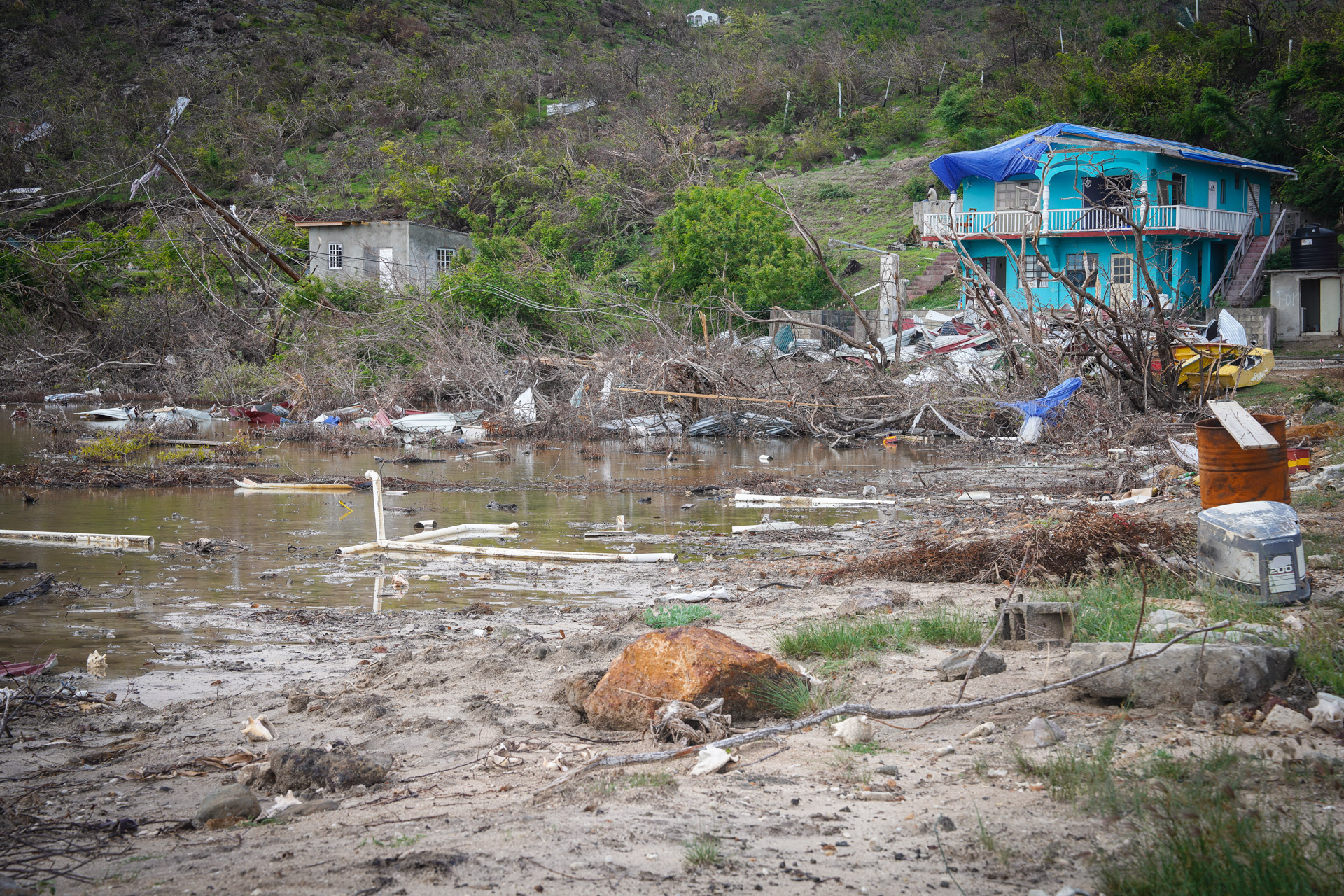
Climate change is driving an increase in both the frequency and the severity of extreme weather events in the Caribbean. Over recent decades, hurricanes and tropical storms have become more intense, leading to higher wind speeds and heavier rainfall. These powerful storms cause widespread destruction, significantly increasing the risks of flooding and landslides.
When hurricanes make landfall, the immediate damage extends to infrastructure, housing, and local economies. In many cases, the aftermath of such storms leads to prolonged recovery periods, overwhelming local governments and disaster relief agencies. The intensification of these events also poses additional risks to life and property, further compounding the overall vulnerability of the region.
3. Deterioration of Marine Ecosystems
The warming of ocean waters, another consequence of anthropogenic emissions, has dramatic effects on marine ecosystems. One of the most critical challenges is coral bleaching—a stress response that occurs when corals expel the symbiotic algae crucial for their survival. With rising sea temperatures and increasing ocean acidification, coral reefs in the Caribbean are experiencing extensive degradation.
Coral reefs provide essential habitats for numerous marine species, contribute significantly to local fisheries, and form natural barriers that protect coastal areas. Their decline threatens biodiversity, reduces fisheries' productivity, and undermines tourism—a vital economic pillar in the region. The long-term loss of these ecosystems may lead to cascading ecological effects that extend far beyond the marine environment.
4. Altered Precipitation Patterns and Drought
In addition to the more visible impacts of rising seas and severe storms, the Caribbean is experiencing significant disruptions in its climatic patterns. Changes in precipitation, characterized by longer dry spells and intermittent heavy rains, have led to prolonged drought conditions in several areas. Historic events, such as the Pan-Caribbean drought between 2013 and 2016, illustrate how human-induced climate change can magnify natural phenomena.
Prolonged droughts affect freshwater availability, agricultural productivity, and can even lead to the degradation of terrestrial ecosystems. Saltwater intrusion, exacerbated by rising sea levels, further compromises the water quality and availability in coastal regions, intensifying water scarcity issues for both people and wildlife.
Economic Impacts
1. Tourism Revenue at Risk
Tourism is a cornerstone of many Caribbean economies, with the region boasting beautiful beaches, vibrant marine life, and picturesque landscapes that attract millions of visitors annually. However, the escalating effects of climate change are beginning to undermine these assets. Rising sea levels, coastal erosion, and the degradation of coral reefs not only diminish natural beauty but also erode the infrastructure that supports the tourism industry.
Economic models suggest that climate change damages could result in a substantial loss of GDP—projections estimate that climate-related damages may increase from 5% of GDP in 2025 to over 20% by the end of the century. This reduction in revenue not only impacts national economies but also affects local businesses and communities that rely on tourism for their livelihoods.
2. Agricultural Disruption
Agriculture in the Caribbean is predominantly dependent on consistent rainfall and predictable weather patterns. However, whose changing precipitation patterns have led to more frequent droughts and unexpected floods, crop yields are increasingly at risk. This instability threatens food security in a region where many communities rely on agriculture for sustenance and economic stability.
Saltwater intrusion—a direct consequence of rising sea levels—further exacerbates the stress on agricultural lands by degrading soil quality. Combined with the impacts of droughts and sporadic heavy rainfall, these conditions could lead to significant declines in agricultural output, thereby increasing the region’s dependence on food imports and reducing its self-sufficiency.
3. Infrastructure and Public Debt
The increased frequency of extreme weather events such as hurricanes inflicts heavy damage on infrastructure—ranging from roads and bridges to hospitals and schools. Repairing and reinforcing these structures requires substantial investment, often leading to a ballooning of public debt. The economic burden on governments to finance rebuilding efforts detracts from other critical development projects.
In some cases, the immediate costs of disaster recovery can increase a nation’s debt by double digits, with long-term fiscal sustainability compromised as recurring disasters necessitate constant reconstruction. This financial strain has broader implications, limiting the capacity for proactive adaptation measures and sustainable development across the region.
4. Impact on Fisheries and Marine-Dependent Economies
Marine ecosystems play a pivotal role in supporting Caribbean economies through fisheries. However, rising sea temperatures and ocean acidification are leading to declining fish populations and the disruption of marine food webs. This not only affects commercial fishing but also threatens food security for populations reliant on seafood as their primary protein source.
Moreover, the decline of coral reefs, which serve as nurseries for many fish species, poses a long-term threat to marine biodiversity and the livelihoods of coastal communities. The potential collapse of these ecosystems could lead to a significant economic downturn for regions that depend on marine resources.
Social and Cultural Impacts
1. Community Displacement and Migration
The intensification of extreme weather events such as hurricanes and prolonged periods of drought has significant social implications. Displacement of populations due to natural disasters has become increasingly common, with many families forced to relocate either temporarily or permanently. This displacement often results in profound disruptions to community structures, economic stability, and cultural practices.
The human toll of such migrations includes the psychological stress associated with losing one's home and community, a disintegration of social networks, and the loss of cultural heritage. Moreover, the escalating environmental crises are particularly concerning for Small Island Developing States (SIDS), which have limited resources to support large-scale resettlement and recovery efforts.
2. Public Health Challenges
Anthropogenic climate change also poses significant public health risks in the Caribbean. Rising temperatures and altered precipitation patterns contribute to the spread of vector-borne diseases, such as dengue fever and malaria. Additionally, extreme weather events can lead to contaminated water supplies, thereby increasing the risk of waterborne diseases like cholera.
The stress imposed by environmental changes combined with insufficient healthcare infrastructure further exacerbates the risks. Vulnerable populations, including the elderly, children, and low-income communities, often bear the brunt of these health challenges. The strain on public health systems means that emergency responses may lag, compounding the human costs of climate-induced disruptions.
3. Threats to Cultural Heritage and Traditional Livelihoods
The Caribbean is rich in cultural traditions and historical practices that are intrinsically linked to its geography and environment. As climate change alters landscapes and disrupts local economies, these cultural practices face unprecedented threats. Traditional farming, artisanal fishing, and community festivities that are tied to seasonal cycles are increasingly at risk.
The loss of these traditions not only affects individual identities but can also erode the communal bonds that have historically unified Caribbean societies. The displacement of communities further complicates the preservation of cultural heritage, as traditional ways of life are often correlated with specific geographic locations and environments.
Adaptation and Resilience Strategies
1. Infrastructure Investments and Urban Planning
Facing the twin threats of intensifying storms and rising sea levels, many Caribbean governments are rethinking urban planning and infrastructure design. Modernizing infrastructure to withstand severe weather events is a critical component of adaptation strategies. Investments in resilient construction, improved drainage systems, and fortified coastal defenses are being prioritized.
Governments and local authorities are increasingly incorporating climate projections into urban planning processes. The development of early warning systems, improved emergency management, and relocation strategies for vulnerable communities also form an integral part of long-term adaptation strategies.
2. Sustainable Tourism and Economic Diversification
Given the economic reliance on tourism, strategies to promote sustainable tourism have become paramount. Sustainable tourism initiatives aim to mitigate environmental impacts while promoting economic growth. For example, environmental conservation efforts that protect coral reefs and natural landscapes also serve to maintain the long-term viability of tourism.
Simultaneously, diversification of the economy is essential. By reducing dependency on tourism and fisheries, Caribbean nations can build economic resilience. This diversification involves investing in renewable energy, technology, and education, which in turn create new opportunities for economic development and job creation.
3. Regional Cooperation and International Support
Climate change is a global challenge, and the Caribbean, due to its limited resources, often relies on regional collaboration and international finance to support adaptation measures. Efforts such as regional action plans have been initiated to bring together governments, non-governmental organizations, and the international community to address these shared risks.
These cooperative efforts include securing climate finance, technology transfers, and policy frameworks that support sustainable development goals. Such collaboration is essential because the scale of investment required to build resilient communities often exceeds the domestic capacity of many Caribbean nations.
4. Building Community Awareness and Capacity
Beyond physical infrastructure and financial measures, fostering proactive community involvement is critical for resilience. Educational programs and local initiatives empower communities to better understand the risks associated with climate change and adopt adaptive practices. Public awareness campaigns, community-based disaster preparedness drills, and local governance reforms are among the strategies that help mitigate the human impact of climate-related events.
This bottom-up approach enhances resilience by ensuring that adaptation measures are not only technically sound but also socially acceptable and culturally relevant. Empowered communities are more likely to engage with long-term strategies and participate in shaping policies that protect their livelihoods and cultural heritage.
Comparative Analysis Table of Climate Change Impacts
| Impact Category | Description | Key Consequences |
|---|---|---|
| Sea Level Rise | Increased water levels leading to coastal inundation and erosion | Loss of land, saltwater intrusion, damaged infrastructure |
| Extreme Weather Events | More frequent and intense hurricanes and storms | Infrastructure damage, human displacement, economic strain |
| Marine Ecosystem Degradation | Coral bleaching and ocean acidification | Loss of biodiversity, decreased fisheries, lower tourism revenue |
| Altered Precipitation Patterns | Longer droughts and erratic rainfall | Water scarcity, reduced agricultural productivity, increased risk of wildfires |
| Economic Impacts | Higher costs of disaster recovery and reduced economic output | Crumbling tourism, agricultural disruptions, high public debt |
| Social and Cultural Impacts | Displacement, public health issues, cultural loss | Community fragmentation, increased disease incidence, erosion of traditions |
Conclusion
Anthropogenic climate change poses an unprecedented threat to Caribbean countries, affecting every facet of life from the physical environment to the socio-economic fabric. The environmental impacts, particularly rising sea levels, heightened hurricane activity, and the rapid degradation of marine ecosystems, have dire implications for the natural landscape of the region. These changes not only reshape physical geographies but also amplify economic vulnerabilities—disrupting tourism, agriculture, and fisheries that are critical to local livelihoods. Furthermore, the social consequences, such as increasing displacement, public health crises, and cultural erosion, compound the challenges faced by communities already on the frontlines of climate change.
The path forward involves a comprehensive and multi-layered approach. Investment in resilient infrastructure and sustainable urban planning is key to mitigating the destructive force of extreme weather phenomena. At the same time, diversifying economic structures and fostering regional cooperation can help alleviate the financial strains wrought by recurrent natural disasters. Importantly, community-based initiatives and public awareness are critical to empowering local populations in adapting to a rapidly changing environment.
Ultimately, addressing the impacts of anthropogenic climate change in the Caribbean requires both immediate and long-term strategies. With coordinated efforts that integrate robust policy reforms, international support, and local initiatives, Caribbean nations can better prepare for and adapt to the challenges ahead. The future resilience of the region depends on an unwavering commitment to sustainable development and proactive climate action.
References
- Article - Wiley Online Library
- Research Publication - Wiley Online Library
- IDB Publication
-
Washington Post Article
- PAHO News
- WMO Media Centre
- WMO Publication
- UNICEF Press Release
- UNDP Climate Promise
- CNN Report
Recommended Queries for Further Exploration
Last updated February 19, 2025