
Unveiling Cloak-Reduce: A Hierarchical Approach to Dynamic Load Balancing and the Power of Reinforcement Learning
Explore how Cloak-Reduce optimizes Big Data processing and the transformative potential of integrating intelligent learning algorithms.
Key Insights into Advanced Load Balancing
- Cloak-Reduce is a dynamic, hierarchical load balancing strategy designed for distributed Big Data processing, particularly within MapReduce-like frameworks. It operates at both intrascheduler (local) and interscheduler (global) levels to minimize communication overhead and improve response times.
- Reinforcement Learning (RL) offers an adaptive and intelligent paradigm for load balancing, learning optimal policies through trial-and-error in dynamic environments. It excels where traditional static or heuristic methods fall short, adapting to fluctuating network conditions and workloads.
- The synergy between Cloak-Reduce and RL holds immense potential for next-generation distributed systems. RL can enhance Cloak-Reduce's deterministic approach by providing real-time adaptability, optimizing task allocation, and improving system resilience to failures, leading to superior performance and resource utilization.
The Genesis of Cloak-Reduce Load Balancing
The Cloak-Reduce load balancing strategy is a significant advancement in managing Big Data processing within distributed systems. Inspired by paradigms like CLOAK DHT (Distributed Hash Table) and MapReduce, this strategy is meticulously designed to navigate the inherent dynamism and instability of large-scale environments, where resource failures and fluctuating workloads are common occurrences. Its core strength lies in its ability to efficiently distribute tasks and optimize resource utilization, ensuring high performance even under challenging conditions.
A Dual-Tiered Approach: Intrascheduler and Interscheduler Balancing
The distinctive feature of Cloak-Reduce is its hierarchical and decentralized operational model, which functions at two distinct levels:
Intrascheduler Load Balancing: Optimizing Local Workloads
This level focuses on the meticulous distribution of workload within a single scheduler. The primary objective here is to prevent excessive utilization of the large-scale communication network by managing tasks locally. This localized balancing ensures that resources are optimally utilized within a confined scope, reducing potential bottlenecks and improving the efficiency of individual processing units.
Interscheduler Load Balancing: Global System Regulation
Beyond local optimization, the interscheduler level aims for comprehensive load regulation across the entire distributed system. This involves balancing the workload among different JobManagers and Schedulers, ensuring overall system equilibrium. This global coordination is crucial for maintaining consistent performance, preventing any single point of overload, and maximizing the collective throughput of the entire framework.
By operating on these two levels, Cloak-Reduce effectively minimizes communication overhead while significantly improving the average response time for distributed MapReduce tasks. This dynamic and hierarchical approach, often leveraging key-hashing for deterministic task allocation, enhances affinity between nodes, which can lead to better cache reuse and reduced latency, all crucial for Big Data applications.
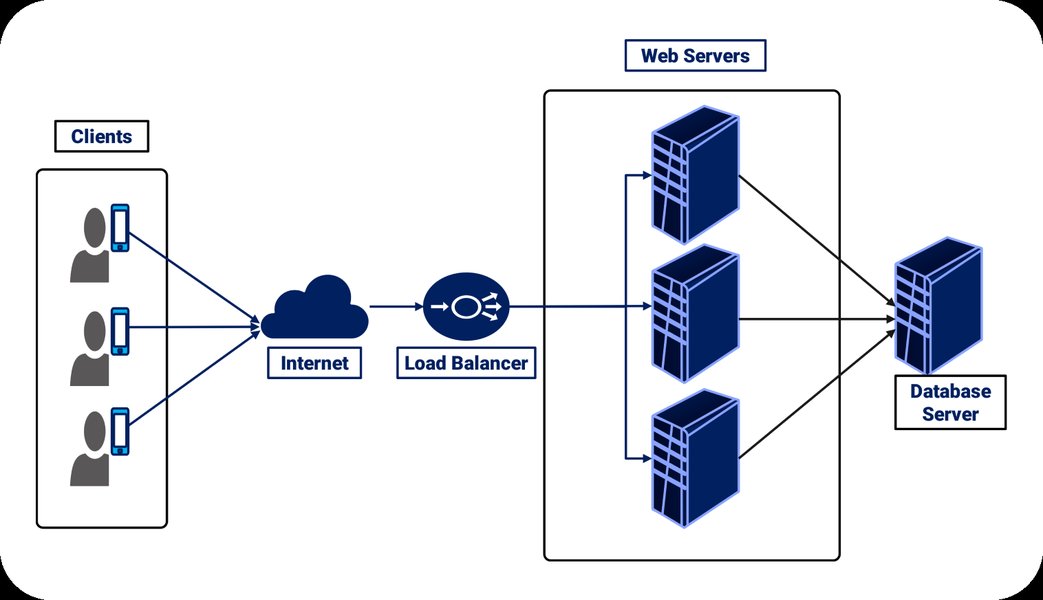
An illustrative network diagram showcasing concepts foundational to load balancing in distributed systems.
Reinforcement Learning: A Paradigm for Adaptive Load Balancing
Reinforcement Learning (RL) stands as a powerful machine learning paradigm that empowers systems to learn optimal behaviors through iterative interactions with their environment. Unlike traditional machine learning, which relies on labeled datasets, RL agents learn by trial and error, receiving feedback in the form of rewards or penalties, enabling them to adapt and refine their strategies dynamically. This makes RL exceptionally well-suited for the complex and ever-changing landscape of modern distributed systems and network environments.
The Transformative Impact of RL in Load Balancing
The application of RL in load balancing scenarios has gained considerable traction due to its inherent ability to:
Dynamic Policy Adjustment and Real-time Adaptability
RL algorithms can continuously monitor network states, traffic distribution, and resource availability, adjusting load balancing policies in real-time. This dynamic adaptability is critical for environments where workloads fluctuate unpredictably, such as cloud infrastructures, data centers, and cellular networks. RL-based systems can learn to predict workload patterns and optimize traffic distribution proactively.
Overcoming Limitations of Traditional Methods
Traditional heuristic load balancing solutions, like Weighted-Cost Multi-Path (WCMP) or Local Shortest Queue (LSQ), often struggle with dynamic conditions, leading to suboptimal performance or imbalanced loads. RL offers a more flexible and intelligent alternative, capable of discovering and implementing highly efficient strategies that traditional static methods cannot.
Optimizing Diverse Performance Metrics
RL is adept at optimizing a wide range of performance indicators, including response time, resource utilization (CPU, memory), network throughput, and even energy consumption. By formulating these as reward signals, RL agents can learn policies that balance multiple objectives simultaneously.
Deep Reinforcement Learning (DRL) for Complex Environments
DRL, which combines deep learning with reinforcement learning, enables systems to handle vast and complex state spaces. This is particularly relevant in large-scale data centers or heterogeneous networks where the number of possible states and actions is immense. DRL-based mechanisms can enhance the efficiency of load balancing by learning intricate patterns in network traffic and resource demands.
Multi-Agent Reinforcement Learning (MARL) for Cooperative Solutions
In distributed systems with multiple load balancers or agents, MARL allows these agents to learn cooperatively to achieve a global optimal balance. This is vital for solving complex cooperative network load balancing problems, where individual "selfish" strategies might lead to suboptimal overall system performance.
This radar chart illustrates the perceived strengths of the Cloak-Reduce strategy, Reinforcement Learning, and their potential combined approach across several key load balancing performance indicators. Cloak-Reduce excels in minimizing communication overhead due to its hierarchical design and deterministic task allocation, while Reinforcement Learning shines in adaptability and overall scalability due to its dynamic learning capabilities. The combined approach aims to leverage the best of both worlds, potentially achieving superior performance across all metrics by integrating Cloak-Reduce's structured efficiency with RL's intelligent responsiveness.
The Potential Synergy: Integrating Cloak-Reduce with Reinforcement Learning
While the Cloak-Reduce load balancing strategy inherently focuses on a hierarchical, deterministic mechanism optimized for MapReduce task scheduling and data locality, the evolving landscape of distributed computing suggests immense potential in complementing such strategies with reinforcement learning techniques. This integration promises to create even more robust, efficient, and adaptive systems capable of handling unprecedented levels of dynamism.
Bridging Determinism with Dynamic Intelligence
The marriage of Cloak-Reduce's structured approach with RL's adaptive intelligence could manifest in several powerful ways:
Dynamic Task Scheduling Optimization
While Cloak-Reduce uses key-hashing for task allocation, RL could introduce an additional layer of intelligence. RL agents could learn and continuously optimize task allocation policies by observing real-time workload changes, node performance, and network conditions. This would allow the system to dynamically adjust task assignments beyond initially fixed key-based hashing, leading to more responsive and efficient resource utilization.
Adaptive Load Redistribution
RL agents could constantly monitor critical performance indicators such as task queue lengths, CPU utilization of nodes, and communication delays. Based on this continuous feedback, they could make fine-grained decisions to redistribute tasks across nodes. This would proactively mitigate load imbalances, ensuring that no single node becomes a bottleneck and that all resources are utilized optimally.
Hierarchical RL for Multi-level Optimization
Given Cloak-Reduce’s two-level (intrascheduler and interscheduler) load balancing, multi-agent reinforcement learning (MARL) could be deployed effectively. Different RL agents could control scheduling decisions at each level, cooperating to achieve system-wide performance optimization. This hierarchical RL approach would align perfectly with Cloak-Reduce's existing architecture, enhancing its distributed decision-making capabilities.
Enhanced Resilience to Failures
RL can significantly improve the fault tolerance of a Cloak-Reduce system. By learning from past failures and performance degradations, RL agents could predict potential issues and proactively rebalance the load when nodes fail or exhibit slow performance. This predictive and adaptive rebalancing would improve the system's overall robustness and availability.
Performance Gains through Learned Policies
Research in RL-based load balancing for data centers and similar distributed environments has consistently demonstrated significant gains in throughput, latency, and energy efficiency. By applying these learned policies to Cloak-Reduce, the framework could achieve superior performance metrics, especially in highly volatile and complex big data processing scenarios.
Visualizing the Synergistic Relationship
This mindmap illustrates the individual characteristics of the Cloak-Reduce load balancing strategy and Reinforcement Learning, and then highlights the significant areas where their integration can lead to enhanced capabilities. It visually outlines how Cloak-Reduce's hierarchical structure and deterministic allocation can be augmented by RL's adaptive learning and dynamic decision-making, leading to a more resilient and efficient distributed system.
Comparative Analysis: Cloak-Reduce vs. Reinforcement Learning Approaches
Understanding the distinct characteristics of Cloak-Reduce and RL-based load balancing strategies provides valuable insights into their respective strengths and ideal application scenarios. While Cloak-Reduce is more of a rule-based, hierarchical system, RL-based methods are inherently learning-centric and adaptive.
| Feature | Cloak-Reduce Load Balancing Strategy | Reinforcement Learning Based Load Balancing |
|---|---|---|
| Approach Type | Rule-based, deterministic, hierarchical | Learning-based, adaptive, trial-and-error |
| Adaptability to Dynamics | Designed for dynamism but relies on predefined logic and key hashing for task distribution. | High adaptability; learns optimal policies in real-time based on environmental feedback. |
| Operational Levels | Operates at Intrascheduler (local) and Interscheduler (global) levels. | Can be implemented at various levels, from individual server load balancing to network-wide traffic management; multi-agent RL for distributed decision-making. |
| Primary Optimization Focus | Minimizing communication overhead, improving average response time through hierarchical task allocation and affinity. | Optimizing response time, throughput, resource utilization, and energy consumption by learning from dynamic network states and workloads. |
| Complexity Handling | Handles large-scale data processing with predefined hierarchical rules. | Excels in complex, dynamic, and unpredictable environments with potentially unlimited state spaces (especially with DRL). |
| Fault Tolerance & Resilience | Designed for resilience through its distributed nature and handling of resource failures within its framework. | Can proactively learn to rebalance loads and predict performance degradation due to failures, enhancing robustness. |
| Overcoming Traditional Limitations | Addresses limitations of centralized strategies by being hierarchical and decentralized. | Overcomes inflexibility of traditional heuristic methods like WCMP and LSQ. |
| Implementation Examples | Proposed for hybrid distributed storage and parallel processing frameworks (e.g., MapReduce inspired). | QCMP, RILNET, Dynamic Q-Learning, DRL in data centers and heterogeneous networks. |
This table provides a concise comparison, highlighting that while Cloak-Reduce offers a structured and efficient solution for specific distributed processing needs, RL presents a more universally adaptive and intelligent framework that can transcend predefined rules to achieve optimal performance in highly dynamic conditions.
A Deep Dive into Adaptive Load Balancing with Reinforcement Learning
The concept of adaptive load balancing, particularly when augmented by Reinforcement Learning, is reshaping how distributed systems manage traffic and allocate resources. It moves beyond static configurations, allowing systems to continuously monitor parameters like CPU usage, memory consumption, and network traffic, and adjust traffic distribution dynamically. This approach is highly versatile and proves indispensable in modern distributed systems where workloads are in constant flux.
This video from Juniper Networks discusses "Optimizing AI/ML Infrastructure with Adaptive Load Balancing," illustrating the real-world application of advanced load balancing techniques. The discussion revolves around Adaptive Load Balancing (ALB) for ECMP (Equal-Cost Multi-Path) and how it addresses the challenges of dynamic AI/ML workloads. It emphasizes the importance of intelligent load distribution in modern data centers to ensure efficient resource utilization and minimize latency, directly correlating with the benefits sought in Cloak-Reduce and RL integration.
Frequently Asked Questions (FAQ)
What is Cloak-Reduce load balancing strategy?
How does Reinforcement Learning apply to load balancing?
Can Cloak-Reduce and Reinforcement Learning be combined?
What are the benefits of using RL in load balancing?
Is Cloak-Reduce a widely adopted strategy?
Conclusion
The Cloak-Reduce load balancing strategy stands as a testament to innovative approaches in managing Big Data processing within dynamic distributed systems. Its hierarchical and decentralized design, focusing on minimizing communication overhead and improving response times, offers a robust framework for efficient resource utilization. Concurrently, Reinforcement Learning provides an unparalleled adaptive and intelligent paradigm for load balancing, capable of learning and evolving optimal strategies in real-time within highly volatile environments.
The true potential lies in the synergistic integration of these two powerful concepts. By combining Cloak-Reduce's structured, deterministic task allocation with RL's dynamic, intelligent adaptability, next-generation distributed systems can achieve unprecedented levels of performance, resilience, and efficiency. This fusion promises a future where load balancing is not just about distributing traffic, but about intelligently optimizing every aspect of resource management in the face of ever-increasing complexity and dynamism.
Recommended Further Exploration
- Deep Reinforcement Learning for Data Center Load Balancing
- Multi-Agent Reinforcement Learning in Distributed Systems
- MapReduce Load Balancing Techniques
- Adaptive Load Balancing in Cloud Computing
