
Unveiling Tomorrow's Tensions: Predicting Global Unrest with GDELT and Node.js
Leveraging real-time global event data and a robust backend to forecast potential conflicts and social unrest.
Predicting social unrest and probable wars is a complex but crucial endeavor in today's interconnected world. This application harnesses the power of the Global Database of Events, Language, and Tone (GDELT) and the Conflict and Mediation Event Observations (CAMEO) event coding system, combined with a robust Node.js and TypeScript backend, to forecast potential conflicts in various countries. By analyzing patterns in global news reports and classifying events, we can identify regions at higher risk of riots or broader conflicts.
Key Insights into Conflict Prediction
- GDELT: A Global Data Lifeline: GDELT serves as an unparalleled open-source data stream, monitoring news from almost every country and classifying events using the CAMEO system. It provides real-time and historical data crucial for understanding societal behavior and potential unrest.
- CAMEO: The Language of Events: CAMEO event codes categorize various actions, from diplomatic cooperation to violent conflicts. These codes are fundamental for filtering and analyzing specific types of events, such as protests, assaults, and riots, which are precursors to larger conflicts.
- Node.js & TypeScript: The Powerhouse Backend: Node.js, a JavaScript runtime, combined with TypeScript, a superset of JavaScript, offers a highly efficient and type-safe environment. This setup ensures that the application can handle complex data processing, real-time data fetching, and robust API development, making it ideal for building scalable backend services.
Understanding the Core Data Sources: GDELT and CAMEO
At the heart of this predictive application are two pivotal data sources: GDELT and CAMEO. Their synergy provides the granular detail necessary for conflict analysis.
The GDELT Project: Monitoring Global Narratives
The GDELT Project is an extensive initiative that monitors broadcast, print, and web news sources globally, identifying and categorizing events, people, organizations, locations, and sentiments. It essentially creates a "real-time, open-data global graph of human societal behavior." GDELT's vast database, which goes back to 1979, is continuously updated, providing an invaluable historical and contemporary record of global events. The project emphasizes its capability to "watch the world unfold" by measuring the underlying narrative and emotional resonance of global public discourse, offering a powerful tool for understanding how the world internalizes global events.
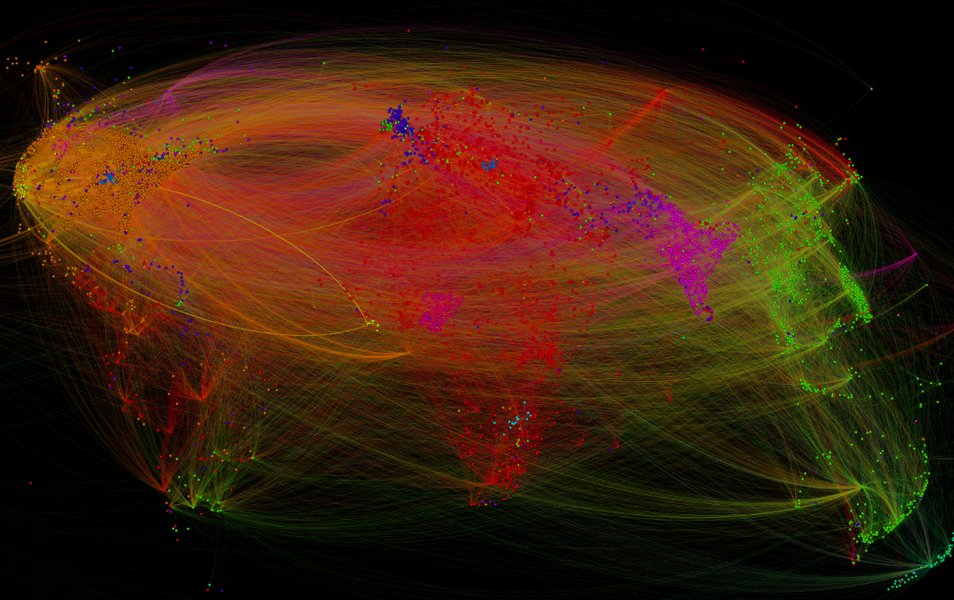
An illustrative overview of the GDELT Project, showing the interconnectedness of global events.
CAMEO Event Codes: Classifying Human Interaction
GDELT event records are meticulously stored using an expanded version of the CAMEO (Conflict and Mediation Event Observations) format. CAMEO is a hierarchical event coding system comprising 20 "root codes" that branch into 310 specialized "base codes." These codes classify a wide spectrum of events reported in news articles, ranging from expressions of intent to cooperate to various forms of conflict. For instance, specific CAMEO codes (e.g., 140-199) are indicative of protests, riots, and other conflict-related events, making them critical for our application's focus on predicting unrest.
Building the Prediction Engine: Architecture and Implementation
Developing this application involves a structured approach, encompassing data acquisition, processing, predictive modeling, and API exposure. Node.js with TypeScript provides a robust and scalable environment for these operations.
Architectural Blueprint
The application's core components are designed to work synergistically:
A mindmap illustrating the architectural components of the conflict prediction application, highlighting the interaction between backend modules and data sources.
Setting Up the Node.js and TypeScript Project
To begin, we establish the project environment. This ensures type safety and a structured codebase, essential for complex data operations.
mkdir conflict-predictor-app
cd conflict-predictor-app
npm init -y
npm install --save-dev typescript @types/node ts-node
npm install express axios @google-cloud/bigquery mongodb
npx tsc --init
The tsconfig.json file configures TypeScript to compile your code into JavaScript for Node.js, ensuring proper module resolution and strict type checking.
{
  "compilerOptions": {
    "target": "es6",
    "module": "commonjs",
    "strict": true,
    "esModuleInterop": true,
    "outDir": "./dist",
    "rootDir": "./src"
  },
  "include": ["src/**/*.ts"],
  "exclude": ["node_modules"]
}
Data Acquisition: Tapping into GDELT via BigQuery
GDELT's vast datasets are most efficiently accessed via Google BigQuery. This allows for powerful SQL-like queries to filter relevant events, such as protests or violent incidents, based on CAMEO codes.
// src/services/gdeltFetcher.ts import { BigQuery } from '@google-cloud/bigquery'; interface GdeltEvent { SQLDATE: number; Actor1CountryCode: string; EventCode: string; // Add other relevant GDELT fields } const bigqueryClient = new BigQuery(); export async function fetchConflictEvents(startDate: string, endDate: string): Promise<GdeltEvent[]> { const query = <code> SELECT SQLDATE, Actor1CountryCode, EventCode, GLOBALEVENTID, GoldsteinScale, AvgTone FROM \gdelt-bq.gdeltv2.events\WHERE EventCode BETWEEN 140 AND 199 -- CAMEO codes for protests, riots, and conflicts AND SQLDATE BETWEEN ${startDate.replace(/-/g, '')} AND ${endDate.replace(/-/g, '')} LIMIT 10000;; const [job] = await bigqueryClient.createQueryJob({ query }); const [rows] = await job.getQueryResults(); return rows as GdeltEvent[]; }
This code snippet demonstrates how to fetch events from GDELT, specifically focusing on CAMEO codes in the 140-199 range, which correspond to various forms of protest and conflict. The data is then prepared for further processing.
Data Processing and Feature Engineering
Once fetched, the raw GDELT data needs to be processed to extract meaningful features for prediction. This involves filtering by specific CAMEO codes and aggregating event counts per country over time. A common approach is to identify codes like "14" (Protest), "18" (Assault), or "19" (Fight) as indicators of potential unrest.
// src/services/dataProcessor.ts
import { MongoClient, Collection } from 'mongodb';

interface ProcessedEvent {
    country: string;
    date: string;
    eventType: string;
    count: number;
    goldsteinScale: number; // For event intensity
    avgTone: number; // For sentiment
}

const CAMEO_UNREST_CODES: { [key: string]: string } = {
    '14': 'Protest',
    '140': 'Demonstration',
    '141': 'Fight/Clash',
    '142': 'Riot',
    '18': 'Assault',
    '19': 'Fight',
    // ... more codes relevant to conflict
};

export async function storeAndProcessEvents(events: any[]): Promise<void> {
    const client = new MongoClient('mongodb://localhost:27017');
    await client.connect();
    const db = client.db('gdeltDB');
    const collection = db.collection('processedEvents');

    const processedData: ProcessedEvent[] = events
        .filter(event => CAMEO_UNREST_CODES[event.EventCode])
        .map(event => ({
            country: event.Actor1CountryCode,
            date: String(event.SQLDATE), // Convert to string for consistency
            eventType: CAMEO_UNREST_CODES[event.EventCode],
            count: 1, // Each event is a count of 1
            goldsteinScale: event.GoldsteinScale,
            avgTone: event.AvgTone
        }));

    if (processedData.length > 0) {
        await collection.insertMany(processedData);
        console.log(<code>Stored ${processedData.length} processed events.);
    }

    await client.close();
}

export async function getAggregatedCountryData(
    collection: Collection<ProcessedEvent>,
    countryCode: string,
    days: number
): Promise<{ date: string; totalEvents: number; avgTone: number; }[]> {
    const cutoffDate = new Date();
    cutoffDate.setDate(cutoffDate.getDate() - days);
    const cutoffSQLDATE = parseInt(cutoffDate.toISOString().slice(0, 10).replace(/-/g, ''));

    const pipeline = [
        {
            $match: {
                country: countryCode,
                date: { $gte: String(cutoffSQLDATE) }
            }
        },
        {
            $group: {
                _id: '$date',
                totalEvents: { $sum: '$count' },
                sumTone: { $sum: '$avgTone' },
                countTone: { $sum: 1 }
            }
        },
        {
            $project: {
                date: '$_id',
                totalEvents: 1,
                avgTone: { $divide: ['$sumTone', '$countTone'] },
                _id: 0
            }
        },
        {
            $sort: { date: 1 }
        }
    ];

    return await collection.aggregate(pipeline).toArray();
}
Building the Predictive Model
While a full-fledged machine learning model would require extensive training and feature engineering (potentially using external Python services for advanced ML), a simplified approach can still provide valuable insights by analyzing trends and thresholds. This model considers event frequency, tone, and Goldstein Scale (event intensity).
// src/services/predictor.ts
import { Collection } from 'mongodb';
import { getAggregatedCountryData } from './dataProcessor';

interface PredictionResult {
    country: string;
    riskScore: number;
    predictedCategory: 'Low Risk' | 'Moderate Risk' | 'High Risk' | 'Severe Risk';
    insight: string;
    confidence: number;
}

export async function predictUnrest(collection: Collection, countryCode: string, days: number = 30): Promise<PredictionResult> {
    const data = await getAggregatedCountryData(collection, countryCode, days);

    if (data.length === 0) {
        return {
            country: countryCode,
            riskScore: 0,
            predictedCategory: 'Low Risk',
            insight: 'No recent conflict-related events found.',
            confidence: 0.8
        };
    }

    const totalEvents = data.reduce((sum, item) => sum + item.totalEvents, 0);
    const averageTone = data.reduce((sum, item) => sum + item.avgTone, 0) / data.length;

    let riskScore = 0;
    let predictedCategory: 'Low Risk' | 'Moderate Risk' | 'High Risk' | 'Severe Risk' = 'Low Risk';
    let insight = 'Stable period with minimal conflict indicators.';
    let confidence = 0.7; // Base confidence

    // Simple heuristic-based prediction
    if (totalEvents > 50 && averageTone < -3) {
        riskScore = totalEvents * 0.5 + Math.abs(averageTone) * 20;
        predictedCategory = 'Severe Risk';
        insight = 'Significant surge in protest and conflict events with negative sentiment. High probability of unrest.';
        confidence = 0.9;
    } else if (totalEvents > 20 && averageTone < -1) {
        riskScore = totalEvents * 0.3 + Math.abs(averageTone) * 10;
        predictedCategory = 'High Risk';
        insight = 'Increased activity in conflict-related events and noticeable negative sentiment. Potential for escalation.';
        confidence = 0.8;
    } else if (totalEvents > 5) {
        riskScore = totalEvents * 0.1 + Math.abs(averageTone) * 5;
        predictedCategory = 'Moderate Risk';
        insight = 'Some isolated conflict events. Monitor closely for developing trends.';
        confidence = 0.6;
    } else {
        riskScore = 0;
        predictedCategory = 'Low Risk';
        insight = 'No significant indicators of unrest. Stable situation.';
        confidence = 0.85;
    }

    // Scale riskScore to be within a reasonable range, e.g., 0-100
    riskScore = Math.min(100, Math.max(0, riskScore));

    return { country: countryCode, riskScore, predictedCategory, insight, confidence };
}
Implementing the Backend API with Express.js
The Express.js framework provides a straightforward way to create API endpoints for our application. Users can query predictions for specific countries.
// src/server.ts
import express from 'express';
import cors from 'cors';
import { MongoClient } from 'mongodb';
import { fetchConflictEvents, storeAndProcessEvents } from './services/dataProcessor';
import { predictUnrest } from './services/predictor';
import cron from 'node-cron'; // For scheduling daily data updates

const app = express();
const port = 4000;

app.use(cors());
app.use(express.json());

const MONGODB_URI = 'mongodb://localhost:27017';
const DB_NAME = 'gdeltDB';
let processedEventsCollection: Collection;

async function connectToMongo() {
    const client = new MongoClient(MONGODB_URI);
    await client.connect();
    const db = client.db(DB_NAME);
    processedEventsCollection = db.collection('processedEvents');
    console.log('Connected to MongoDB');
}

// Schedule daily data fetch and processing
cron.schedule('0 0 * * *', async () => { // Runs every day at midnight
    console.log('Running daily GDELT data fetch and processing...');
    const today = new Date().toISOString().slice(0, 10);
    const yesterday = new Date(Date.now() - 86400000).toISOString().slice(0, 10); // GDELT updates daily
    try {
        const events = await fetchConflictEvents(yesterday, today);
        await storeAndProcessEvents(events);
        console.log('Daily data update complete.');
    } catch (error) {
        console.error('Error during daily data update:', error);
    }
});

app.get('/api/predict/:countryCode', async (req, res) => {
    try {
        const { countryCode } = req.params;
        const prediction = await predictUnrest(processedEventsCollection, countryCode.toUpperCase());
        res.json(prediction);
    } catch (error: any) {
        console.error('Prediction error:', error);
        res.status(500).send({ message: 'Failed to retrieve prediction', error: error.message });
    }
});

app.listen(port, async () => {
    await connectToMongo();
    console.log(<code>Server running on http://localhost:${port});
    // Initial data fetch on server start for recent data
    const today = new Date().toISOString().slice(0, 10);
    const yesterday = new Date(Date.now() - 86400000).toISOString().slice(0, 10);
    const events = await fetchConflictEvents(yesterday, today);
    await storeAndProcessEvents(events);
});
This server includes an endpoint GET /api/predict/:countryCode which will return the risk assessment for the specified country. It also sets up a daily cron job to ensure the data is continuously updated from GDELT.
Running the Application
To run the application, first compile the TypeScript code and then execute the compiled JavaScript file.
npx tsc
node dist/server.js
You can then test the API using tools like curl or Postman:
curl http://localhost:4000/api/predict/USA
Predictive Model Performance Analysis
While the simplified model provides a foundational understanding, its effectiveness can be evaluated across several dimensions. This radar chart visualizes the strengths and areas for improvement in a conceptual conflict prediction model.
This radar chart compares the "Current Simplified Model" against an "Ideal Advanced Model" across several critical aspects: Data Timeliness, Prediction Accuracy, Interpretability, Scalability, Ethical Considerations, and Feature Richness. It visually highlights that while the current model offers good interpretability and timeliness, there's significant room for growth in accuracy and feature richness, which advanced machine learning techniques could address.
Ethical Considerations and Limitations
While powerful, tools for predicting social unrest come with significant responsibilities and limitations. It's crucial to acknowledge these to ensure responsible use and interpretation of the results.
- Accuracy vs. Probability: The application predicts the *probability* or *risk* of events, not definitive occurrences. News data, while extensive, can have biases, reporting delays, and variations in tone.
- Data Lag: Although GDELT is near real-time, there's always a slight lag between an event happening and its reporting and inclusion in the database.
- Ethical Implications: Mispredictions or misuse of such data could lead to misinformation, panic, or inappropriate interventions. The results should always be cross-referenced with on-the-ground intelligence and official sources.
- Causation vs. Correlation: The model identifies correlations between events and outcomes, but it does not necessarily establish direct causation.
- Scalability: For truly large-scale, high-performance predictions, integrating with cloud-native solutions like Google Cloud Functions or Kubernetes for distributed processing would be beneficial.
Deep Dive: The Role of AI in Understanding Global Events
The GDELT Project's advancements are deeply intertwined with the use of AI and large language models for processing vast amounts of news data. This video explores how AI is used to understand television news, a similar approach that GDELT takes with its global monitoring. Understanding the underlying technology helps appreciate the depth of analysis possible.
This video from Google Jigsaw and the GDELT Project discusses how AI and Large Language Models are used to understand television news. This contextualizes the sophisticated data processing that underpins GDELT's ability to categorize and analyze global events, which is critical for our predictive application.
Comparative Analysis: GDELT and Other Conflict Data Initiatives
While GDELT is a primary data source for this application, it's beneficial to understand how it compares to other conflict data initiatives. These comparisons highlight the unique strengths of GDELT and areas where it can be complemented by other sources.
| Feature | GDELT (Global Database of Events, Language, and Tone) | ACLED (Armed Conflict Location & Event Data Project) | UCDP (Uppsala Conflict Data Program) |
|---|---|---|---|
| Primary Focus | Real-time monitoring of global news media, identifying events, people, organizations, locations, themes, sources, emotions, and events. | Collection of real-time data on political violence and protest events across Africa, Asia, and the Middle East. | Collection of data on organized violence, with a focus on armed conflict definitions and detailed event-based data. |
| Data Source Types | Broadcast, print, and web news from nearly every country in over 100 languages. | Local news, reports from NGOs, academic research, and partner organizations. | Various sources, including news reports, government documents, and scholarly articles, with a strong emphasis on reliability. |
| Event Classification | Expanded CAMEO (Conflict and Mediation Event Observations) format (310 codes). | Proprietary ACLED coding scheme (event types like battles, explosions, protests). | Detailed classification of armed conflicts (state-based, non-state, one-sided violence). |
| Temporal Coverage | Since 1979, real-time updates. | Varies by region, generally from 1997 onwards for Africa, later for other regions. Real-time. | Since 1946 for state-based conflicts, later for other types. Annual updates. |
| Geographic Scope | Global. | Africa, Asia, Middle East, Latin America, Europe, US. | Global, but with focus on conflicts above a certain threshold. |
| Predictive Use | Extensively used for predicting social unrest, conflict risk, and forced migration flows due to its real-time, broad coverage, and tone analysis. | Used for conflict analysis and early warning systems, particularly for specific regions and types of political violence. | Primarily for academic research and historical analysis of conflict trends; less focus on real-time prediction. |
| Key Strength for Prediction | Breadth of coverage, real-time nature, sentiment/tone analysis, and integration with CAMEO for granular event coding. | Detailed event-based data on political violence and protests with high granularity. | High reliability and strict definitions of armed conflict, excellent for long-term trend analysis. |
This table provides a comparative overview of GDELT alongside other prominent conflict data initiatives like ACLED and UCDP. It highlights GDELT's unique strengths in real-time global news monitoring and sentiment analysis, which are particularly advantageous for predictive modeling of social unrest.
Frequently Asked Questions (FAQ)
What is GDELT?
What are CAMEO event codes?
How does this application predict riots or wars?
What are the limitations of such a predictive model?
Can I integrate more advanced machine learning models?
Conclusion
This Node.js and TypeScript application provides a foundational framework for predicting social unrest and potential conflicts by leveraging the rich, real-time data from GDELT, categorized by CAMEO event codes. While the predictive model presented here is a simplified heuristic, it demonstrates the immense potential of open-source geopolitical data for early warning systems. Further enhancements, such as integrating advanced machine learning algorithms, incorporating additional data sources (e.g., social media sentiment), and developing sophisticated visualization dashboards, can significantly augment its accuracy and utility. The ethical implications of such predictive tools necessitate careful consideration and responsible deployment, ensuring that they serve as valuable insights rather than sources of misinformation.
Recommended Further Exploration
- How to integrate advanced machine learning models with Node.js for time-series prediction?
- What are the ethical considerations in AI-driven conflict prediction?
- How can GDELT Global Knowledge Graph be used for semantic enrichment in conflict analysis?
- How to build a real-time geospatial visualization for conflict data with Node.js?