
How Much Constraint is Too Much in Revision Total Knee Arthroplasty (TKA)?
Balancing Stability and Longevity in Revision TKA
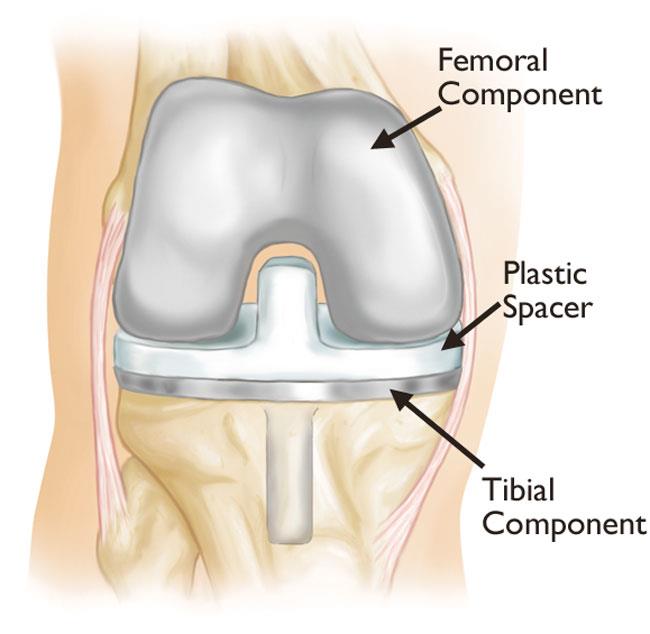
Key Highlights
- Balanced Approach: The goal in revision TKA is to use the least amount of constraint necessary to achieve stability, minimizing the risk of complications like aseptic loosening.
- Constraint Levels: Constraint in TKA ranges from cruciate-retaining to rotating hinge, with each level offering varying degrees of stability and potential for increased mechanical stress.
- Modern Innovations: Recent advancements such as modular components (tantalum cones and titanium sleeves) can reduce the need for high constraint levels by improving fixation in cases of bone deficiency.
Introduction to Constraint in Revision TKA
In revision total knee arthroplasty (TKA), the level of constraint applied to the prosthetic knee is a critical determinant of both immediate postoperative stability and long-term implant success. The challenge lies in determining the appropriate level of constraint to ensure stability without compromising the longevity of the implant due to increased mechanical stress at the bone-implant interface.
Understanding Constraint in TKA
The Spectrum of Constraint
The level of constraint in TKA can be categorized into a spectrum, with each type designed to address varying degrees of instability:
- Cruciate Retaining (CR): The lowest level of constraint, suitable for cases where the posterior cruciate ligament (PCL) is intact.
- Posterior Stabilized (PS): Suitable when the PCL is sacrificed, offering moderate constraint.
- Varus-Valgus Constrained (VVC): Provides more stability for patients with significant coronal plane instability.
- Constrained Condylar Knee (CCK): Offers mediolateral and rotational constraint, often used in cases of severe instability.
- Rotating Hinge (RTH): The highest level of constraint, used in cases of severe instability or significant bone loss.
Factors Influencing Constraint Choice
The choice of constraint in revision TKA is influenced by several key factors:
- Ligament Integrity: The state of the collateral ligaments plays a critical role in determining the necessary level of constraint.
- Bone Loss: The severity of bone loss around the knee affects the choice of constraint and may require more constrained implants to achieve stability.
- Soft Tissue Laxity: Soft tissue condition and laxity can necessitate higher levels of constraint to maintain joint stability.
The Risks of Excessive Constraint
Increased Mechanical Stress
Excessive constraint in revision TKA can lead to increased mechanical stress at the bone-implant interface. This can result in several complications:
- Premature Aseptic Loosening: Higher constraint levels can transmit increased forces to the implant, potentially causing early loosening.
- Implant Wear: Increased constraint can lead to accelerated wear of the implant components, reducing its longevity.
Complications of Over-Constraint
Over-constraining the knee can exacerbate bone loss during revision surgeries, complicating future interventions. It may also lead to higher failure rates due to the increased stress on the implant and bone interface.
Balancing Constraint and Stability
The Importance of a Balanced Approach
The optimal approach in revision TKA involves balancing the need for immediate stability with the use of the least constraint necessary. This approach minimizes the risk of complications while ensuring adequate stability for the patient.
Assessing Instability
Surgeons must assess the degree of instability and choose the least-constrained implant that will correct it. This requires careful consideration of the individual patient's specific knee anatomy, condition, and biomechanical requirements.
Types of Instability in Revision TKA
Instability in revision TKA can be classified into three types based on the management of bone loss and ligamentous deficiency:
- Type 1: Bone deficiency where revision with restoration of the joint line and rebuilding the bony anatomy results in a balanced joint.
- Type 2: Ligamentous deficiency where constraint needs to be adjusted to manage soft tissue laxity.
- Type 3: Combined bone and ligament deficiency, often requiring higher levels of constraint.
Recent Innovations in Revision TKA
Modular Components
Recent advancements in modular components, such as tantalum cones and titanium sleeves, have been introduced to improve fixation in cases of bone deficiency. These components can theoretically reduce the need for high levels of constraint by providing satisfactory meta-diaphyseal fixation, which in turn decreases mechanical stress at the joint line.
Benefits of Modular Components
Modular components offer several benefits in revision TKA:
- Improved Fixation: Better fixation in cases of bone loss, reducing the need for high constraint levels.
- Reduced Mechanical Stress: By providing satisfactory meta-diaphyseal fixation, these components can reduce the mechanical stress at the joint line.
- Enhanced Stability: These components can enhance the overall stability of the knee joint, potentially allowing for the use of less constrained implants.
Clinical Outcomes and Survival Rates
Impact of Constraint on Implant Survival
The level of constraint used in revision TKA can significantly impact the survival rate of the implant. A study showed that using a semi-constrained implant in revision TKA had a 5-year survival rate of 91% and a 10-year survival rate of 81%, with male gender significantly increasing the risk of revision.
Survival Rates of Different Constraint Levels
| Constraint Level | 5-Year Survival Rate | 10-Year Survival Rate |
|---|---|---|
| Semi-Constrained | 91% | 81% |
| Highly Constrained | 85% | 75% |
Conclusion
In revision total knee arthroplasty, the level of constraint is a crucial factor that must be carefully considered to achieve a balance between immediate stability and long-term implant success. The goal is to use the least amount of constraint necessary to achieve functional stability, minimizing the risk of complications such as aseptic loosening and implant wear. Recent innovations, such as modular components, have provided new options for improving fixation and reducing the need for high constraint levels. Ultimately, the decision on the appropriate level of constraint should be based on individual patient factors, including ligament integrity, bone loss, and soft tissue condition.
References
- Revision total knee arthroplasty: the evaluation and management of bone loss - PubMed - NCBI
-
Constraint in Revision Total Knee Arthroplasty: A Review of the Literature - ScienceDirect
-
Modern Techniques in Revision Total Knee Arthroplasty - ScienceDirect
- The level of constraint in revision total knee arthroplasty: a systematic review - BMJ Open
-
The role of constraint in revision total knee arthroplasty - PMC
- Level of constraint in revision knee arthroplasty - SpringerLink
-
Balance and constraint in revision total knee replacement - PMC
- Biomechanical analysis of different levels of constraint in TKA during - BioMed Central
-
Constraint choice in revision knee arthroplasty: study protocol of a randomised controlled trial assessing the effect of level of constraint on postoperative outcome - PMC
- Constraint degree in revision total knee replacement: a registry - SpringerLink
-
Balance and constraint in revision TKR: A classification for instability - PMC
Recommended
Last updated February 23, 2025