
Unveiling the Potent Antioxidant Power of Corn Silk
A Deep Dive into its Health Benefits and Traditional Uses
Corn silk, the delicate, thread-like fibers found at the top of an ear of corn (Zea mays), is often discarded as agricultural waste. However, this natural byproduct has a rich history in traditional medicine across various cultures, including Native American, Chinese, and European practices. Modern scientific inquiry is increasingly validating its traditional uses, particularly highlighting its significant antioxidant properties. Far from being mere fibrous material, corn silk is a treasure trove of bioactive compounds that offer a wide array of health advantages, primarily due to its remarkable antioxidant capacity.
Key Insights into Corn Silk's Antioxidant Prowess
- Rich in Bioactive Compounds: Corn silk is packed with a diverse range of beneficial compounds, including phenolic compounds, flavonoids, vitamins (especially Vitamin C), and minerals, all contributing to its strong antioxidant profile.
- Combatting Oxidative Stress: The antioxidants in corn silk effectively neutralize free radicals, mitigating oxidative stress—a primary contributor to cellular damage, aging, and the development of chronic diseases like diabetes, heart disease, and certain cancers.
- Versatile Therapeutic Applications: Beyond its antioxidant effects, corn silk demonstrates anti-inflammatory, diuretic, anti-diabetic, and antihypertensive properties, making it a promising natural remedy for various health concerns, from urinary tract issues to blood sugar regulation.
The Antioxidant Powerhouse: What Makes Corn Silk So Effective?
A Symphony of Protective Compounds
The remarkable antioxidant activity of corn silk stems from its rich phytochemical composition. It contains an impressive array of compounds that work synergistically to protect the body from oxidative damage. These include:
- Flavonoids: These plant pigments are a major class of antioxidants in corn silk. Specific flavonoids like maysin, luteolin, apigenin, and isoorientins are particularly noteworthy. Their ability to scavenge reactive oxygen species (ROS) and act as reducing agents is central to corn silk's antioxidant prowess. Flavonoids help inhibit free radical damage, a key mechanism in preventing oxidative stress.
- Phenolic Compounds: Beyond flavonoids, corn silk is abundant in other phenolic compounds such as chlorogenic acid and ferulic acid. These compounds contribute significantly to its overall antioxidant capacity, offering broad-spectrum protection against cellular damage.
- Vitamin C: Often recognized for its immune-boosting properties, Vitamin C is also a potent antioxidant found in corn silk. It plays a crucial role in neutralizing free radicals and protecting against oxidative stress, with some studies suggesting corn silk can have an antioxidant value comparable to Vitamin C.
- Polysaccharides: Research indicates that corn silk polysaccharides (CSP) also exhibit substantial antioxidant potential, further adding to its beneficial properties for use in food and medicine.
These compounds protect against inflammation and the effects of aging, as well as diseases like cancer and diabetes. The complex interplay of these natural components makes corn silk a powerful natural antioxidant.
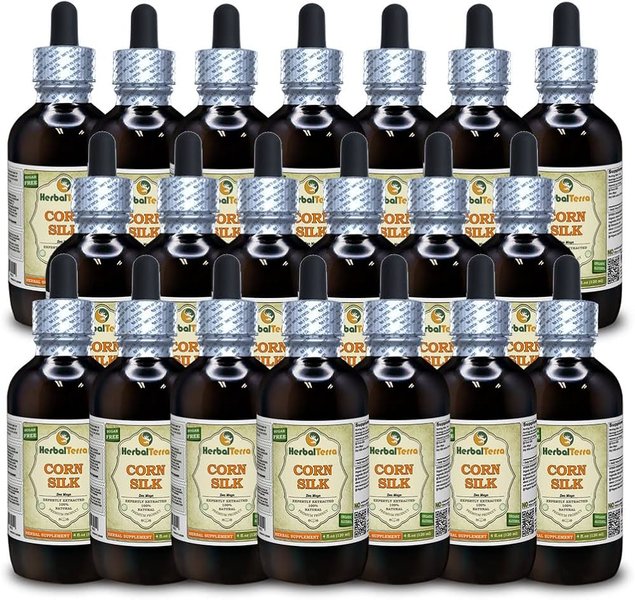
A bottle of corn silk liquid extract, highlighting its availability as a natural health supplement.
Mechanisms of Antioxidant Action
The antioxidants present in corn silk work through various mechanisms to combat oxidative stress:
Free Radical Scavenging
At the core of corn silk's antioxidant activity is its ability to scavenge free radicals. Free radicals are unstable molecules that can cause significant damage to cells, DNA, and proteins. Flavonoids and phenolic compounds in corn silk donate electrons or hydrogen atoms to these unstable molecules, stabilizing them and preventing further chain reactions of oxidative damage.
\[ \text{R}^{\bullet} + \text{AH} \rightarrow \text{RH} + \text{A}^{\bullet} \]where \( \text{R}^{\bullet} \) represents a free radical and \( \text{AH} \) represents an antioxidant (such as those found in corn silk) that donates a hydrogen atom to neutralize the radical.
Metal Chelation
Some components in corn silk can chelate (bind to) metal ions like iron and copper. These metal ions can catalyze the formation of highly reactive free radicals. By chelating them, corn silk helps prevent these harmful reactions, thereby reducing oxidative stress.
Enzyme Modulation
Certain compounds in corn silk may also modulate the activity of enzymes involved in the production of reactive oxygen species or those that are part of the body's natural antioxidant defense system, further enhancing its protective effects.
Beyond Antioxidants: A Spectrum of Health Benefits
Holistic Wellness Contributions from Corn Silk
While its antioxidant properties are paramount, corn silk offers a broader range of therapeutic benefits, many of which are intricately linked to its ability to reduce inflammation and oxidative stress. These benefits have been recognized in traditional medicine for centuries and are increasingly being explored in modern scientific research:
- Diuretic Properties and Urinary Health: Corn silk is well-known for its potent diuretic effects, increasing urine production and flow. This makes it beneficial for urinary tract health, helping to prevent and alleviate conditions like urinary tract infections (UTIs), bladder infections, kidney stones, cystitis, prostatitis, and gout by flushing out toxins and excess water.
- Blood Sugar Management: Preliminary research, particularly animal studies, suggests that corn silk extracts can help regulate blood sugar levels and improve glucose tolerance. This makes it a potential natural aid for individuals with diabetes or those at risk of developing the condition.
- Blood Pressure Regulation: Corn silk has shown promise in lowering blood pressure, attributed to its chemical compounds that might have antihypertensive effects. This could be particularly beneficial for managing hypertension.
- Cholesterol Reduction: Studies have indicated that flavonoids from corn silk extract can significantly lower levels of triglycerides and LDL ("bad") cholesterol, contributing to better cardiovascular health.
- Anti-inflammatory Effects: The same compounds that give corn silk its antioxidant properties also contribute to its anti-inflammatory actions. This can help soothe inflammation throughout the body, easing pain and potentially benefiting various inflammatory conditions.
- Skin Health and Anti-Aging: The antioxidants in corn silk protect skin cells from oxidative damage, which can contribute to premature aging. It can also be used topically to alleviate itching and pain from skin wounds and to rejuvenate the complexion.
- Neurological Support: Rich in flavonoids, corn silk has been traditionally used to treat depression and may alleviate neurological symptoms, such as those associated with ischemic stroke, by improving oxidative stress and inflammation.
The Comprehensive Impact of Corn Silk's Antioxidants
To further illustrate the multifaceted benefits of corn silk, particularly highlighting the role of its antioxidant components across different health domains, a radar chart can provide a clear visual representation of its perceived strengths:
The radar chart above visually represents the perceived strengths of corn silk across various health benefits, with 'Antioxidant Potency' scoring highest, underpinning its wide range of therapeutic applications. The values are an aggregation of research insights, demonstrating where its beneficial compounds, particularly antioxidants, exert the most significant impact.
Traditional Uses and Modern Applications of Corn Silk
From Folk Remedies to Contemporary Products
Corn silk has a long and storied history as a traditional remedy across different continents. Its application has evolved from simple folk medicine to being incorporated into modern supplements and skincare products.
Historical Context
In Asia, particularly China, corn silk has been used for its diuretic and detumescent properties, benefiting the liver and gallbladder, and treating conditions like cystitis and jaundice. Native Americans utilized it for various disease treatments, a practice that continues in traditional medicine in parts of the US, France, and Turkey. Its historical use is a testament to its perceived efficacy for a wide range of ailments, with many benefits now being scientifically investigated.
This video provides a comprehensive overview of corn silk benefits, including how to make corn silk tea and methods for long-term preservation, underscoring its versatility as a natural remedy.
Preparation and Usage
Corn silk can be used in fresh or dried forms. The most common way to consume it is by steeping it to make a tea or extract. It is also available in pill form as a dietary supplement. For topical applications, corn silk tea can be applied to the skin to address issues like boils and rashes. The extract is also found in rejuvenating skincare products due to its antioxidant and allantoin content, which promotes skin health and reduces oxidative stress.
Composition and Nutritional Profile
What's Inside Those Silky Threads?
Beyond its active antioxidant compounds, corn silk is a source of various essential nutrients, making it a valuable addition to a healthy diet:
| Nutrient/Compound Category | Specific Examples | Primary Contribution to Health |
|---|---|---|
| Antioxidants | Flavonoids (Maysin, Luteolin, Apigenin, Isoorientins), Phenolic Compounds (Chlorogenic acid, Ferulic acid), Vitamin C | Combat oxidative stress, protect cells from damage, anti-aging, disease prevention. |
| Macronutrients | Proteins, Carbohydrates, Fiber | Energy, digestive health, satiety. |
| Minerals | Calcium, Potassium, Magnesium, Sodium salts | Electrolyte balance, bone health, muscle function, nerve transmission. |
| Other Bioactive Compounds | Alkaloids, Saponins, Tannins, Steroids (Sitosterol, Stigmasterol), Fixed and Volatile Oils | Diverse therapeutic effects including anti-inflammatory, antimicrobial, and metabolic support. |
This table summarizes the key components found in corn silk and their primary health contributions, highlighting its rich nutritional and phytochemical profile.
Considerations and Future Research
Understanding Dosage and Safety
While corn silk is generally considered safe and has been used traditionally for centuries, scientific studies, particularly human clinical trials, are still limited. Much of the existing research has been conducted on animals, and these results cannot always be directly applied to humans. Therefore, it is important to exercise caution and consult with a healthcare professional before using corn silk, especially if you have existing health conditions or are taking other medications.
Potential Interactions and Side Effects
Due to its diuretic properties, corn silk may interact with diuretic medications or affect electrolyte balance. People with diabetes should use it with caution as it can naturally reduce blood sugar levels and may interfere with maintaining healthy glucose levels if combined with antidiabetic medications. Although generally well-tolerated, the appropriate dosage of corn silk is not yet definitively established, and natural products are not always inherently safe. More research is needed to determine optimal dosages and potential long-term effects.
Future Research Directions
Continued research is essential to fully elucidate the mechanisms of action, confirm the efficacy of corn silk in human trials, and establish standardized dosages. Further studies could also explore innovative techniques to improve the bioavailability of its phenolic compounds and develop more effective corn silk-derived products for therapeutic and nutritional purposes.
Frequently Asked Questions (FAQ)
Recommended Further Exploration
- How to prepare corn silk tea for maximum health benefits?
- What do scientific studies say about corn silk and diabetes management?
- Explore the evolution of corn silk usage from traditional medicine to modern applications.
- How does corn silk compare to other natural diuretics in terms of efficacy and safety?
References
Last updated May 21, 2025