
Why Groups of Order 5 Are Cyclic: A Deep Dive
Understanding the Unique Structure of Prime Order Groups
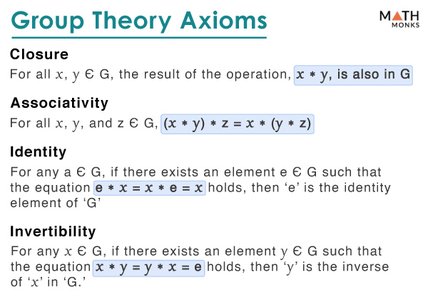
Key Highlights
- Prime Order Implication: For groups of prime order, Lagrange's theorem forces all non-identity elements to have order equal to the group's order.
- Unique Subgroup Structure: Only trivial and full subgroups exist in groups of order 5, ensuring cyclicity.
- Contrast with Composite Orders: Unlike groups of order 4 where varied subgroup structures allow non-cyclic arrangements, prime numbers impose strict limitations.
Theoretical Background
Lagrange's Theorem and Its Role
Lagrange's theorem plays a pivotal role in understanding the structure of finite groups. The theorem states that in any finite group G, the order of any subgroup H must divide the order of the entire group. For a group of order 5, which is a prime number, the only divisors are 1 and 5. Hence, any subgroup of G can only have order 1 (the trivial subgroup) or order 5 (the whole group itself).
Implications for Element Orders
Consider any element a in G that is not the identity element. According to Lagrange’s theorem, the order of a (i.e., the smallest positive integer n such that \( a^n = e \)) must divide 5. The only possible values are 1 or 5. Since a is not the identity, its order cannot be 1, so it must have order 5. This means that a generates a cyclic subgroup:
\( \langle a \rangle = \{e, a, a^2, a^3, a^4\} \)
As there are exactly 5 distinct elements in this subgroup, it must be equal to the entire group G. Hence, the group is cyclic and is generated by a single non-identity element.
Understanding the Cyclic Nature
Definition of a Cyclic Group
A cyclic group is one that can be generated by a single element. This means every element of the group can be expressed as a power of this generator. In the case of a group of order 5, since any non-identity element a has order 5, it follows that:
\( G = \langle a \rangle \)
This property is unique to groups whose orders are prime because the subgroup structure is extremely limited. Since any non-trivial element must generate the entire group, no alternative subgroup configuration can exist that would allow the group to be non-cyclic.
Why No Non-Cyclic Group Can Exist
In groups of prime order (in this case, 5), the only possible subgroups are the trivial subgroup and the group itself. There is no possibility of forming a proper non-trivial subgroup that is not the entire group. This structural restriction directly implies that all groups of order 5 are cyclic. With no room for alternative subgroup arrangements, the existence of a non-cyclic group of order 5 is impossible.
Comparison with Groups of Order 4
The distinction between groups of order 5 and groups of order 4 highlights the significance of prime numbers in group theory. Groups of order 4 can have non-cyclic structures because 4 is a composite number with divisors 1, 2, and 4. This allows for a richer subgroup structure:
Subgroup Structures in Order 4 Groups
For instance, the cyclic group of order 4 (isomorphic to \( \mathbb{Z}/4\mathbb{Z} \)) is generated by a single element, but there also exists the Klein four-group \( V_4 \), which is non-cyclic. In \( V_4 \), every non-identity element has order 2, and the group lacks an element of order 4 that could generate the entire group. This diversity in possible subgroup arrangements is feasible because 4, as a composite number, provides additional divisibility options.
Table: Group of Order 5 vs. Group of Order 4
| Characteristic | Group of Order 5 | Group of Order 4 |
|---|---|---|
| Order Type | Prime | Composite |
| Possible Subgroup Orders | 1 and 5 | 1, 2, and 4 |
| Element Orders (Non-Identity) | Must be 5 | Can be 2 or 4 |
| Group Structure | Necessarily cyclic | May be cyclic (if generated by an element of order 4) or non-cyclic (e.g., Klein four-group) |
| Subgroup Diversity | Minimal; Only the trivial and full groups | Multiple; Allowing for different subgroup configurations |
Detailed Explanations
Fundamental Reasoning Using Lagrange's Theorem
Let us consider a group G with |G| = 5. According to Lagrange's theorem, the order of any subgroup H of G must divide 5. Therefore, the possible orders for any subgroup H are limited to 1 and 5. If we pick any non-identity element a ∈ G, its order, defined as the smallest positive integer n with \( a^n = e \), must divide 5. Since a is not the identity, its order cannot be 1; inevitably, the only remaining possibility is 5. Thus, the subgroup generated by a, denoted as \( \langle a \rangle \), contains exactly 5 elements:
\( \langle a \rangle = \{e, a, a^2, a^3, a^4\} \)
Because this subgroup has the same number of elements as G, it follows that \( \langle a \rangle = G \). This proves that G is cyclic.
Contrast Through Specific Examples: Order 4 Groups
In groups of order 4, more complex subgroup possibilities exist:
- Cyclic Group \( \mathbb{Z}_4 \): This group is generated by an element with order 4, and every element in the group is represented as a power of this generator.
- Klein Four-Group \( V_4 \): This group is non-cyclic because none of its elements (except the identity) can generate the entire group. Every non-identity element in \( V_4 \) has order 2. The structure here allows three elements of order 2 and results in multiple proper subgroup configurations.
The additional divisor "2" that arises from the fact that 4 is composite permits the existence of these non-cyclic groups. For groups where the order is a prime number (such as 5), this added complexity does not exist.
Underlying Mathematical Concepts
Prime Numbers and Group Structure
The special property of prime numbers in the context of group theory is that they significantly restrict the internal composition of groups. When the order of a group is prime:
- Every non-identity element must generate the entire group since the only divisors are 1 and the prime number itself.
- The subgroup structure is trivial, leading to only the trivial subgroup and the group itself.
- This results in the necessity for cyclicity, as there is no alternative way to construct a group or subgroup.
Mathematical Notation Recap
If one considers an arbitrary non-identity element a in a group G of prime order p, the fact that \[ \text{\( a^p = e \) and \( a^n \neq e \) for any \( 0 < n < p \)} \] implies \( a \) has order p. Hence, \[ G = \langle a \rangle, \] which clearly defines G as a cyclic group.
References
- Cyclic Group - Wikipedia
- Cyclic Groups - Mathematics LibreTexts
- Groups of Order 5 - Groupprops
- Uniqueness of the Group with Order 5 - Math Stack Exchange
- Cyclicity of Small Order Groups - Quora
Recommended Related Queries
Last updated March 28, 2025