
Evaluation of Dehazing Impact on High-Level Computer Vision Tasks
Exploring how dehazing preprocessing enhances object detection, recognition, and tracking
Key Insights
- Improved Clarity: Dehazing enhances image clarity, directly benefiting detection, recognition, and tracking by reducing visual ambiguity.
- Integrated Approaches: Joint and selective dehazing strategies are crucial for balancing performance between hazy and clear image conditions.
- Real-World Applications: The preprocessing step of dehazing is vital for autonomous systems and surveillance, ensuring reliability even in adverse weather.
Overview of Dehazing in Computer Vision
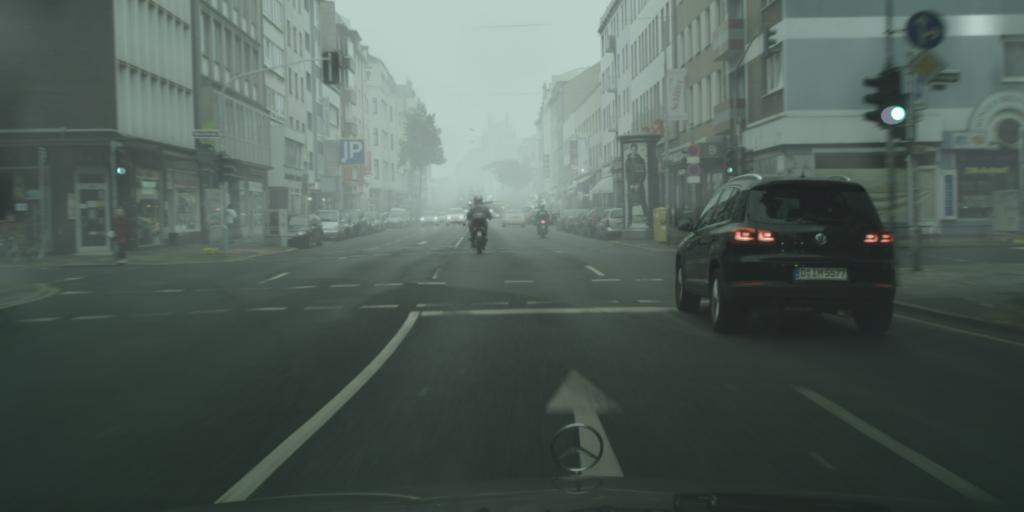
In modern computer vision systems, image quality plays a pivotal role in ensuring the accuracy and robustness of tasks including object detection, recognition, and tracking. Atmospheric phenomena such as haze, fog, and pollution can introduce noise and reduce contrast, obscuring essential features and details. Image dehazing, recognized as a preprocessing method, aims to counter these visual degradations by restoring clarity and enhancing feature visibility.
This evaluation provides an in-depth study of dehazing’s impact on high-level tasks, highlighting not only its contributions to improved performance but also the potential challenges encountered when applying dehazing algorithms. We will analyze how dehazing affects various computer vision tasks, discuss the methodologies that combine dehazing with task-specific optimizations, and examine its practical benefits in critical real-world applications.
Impact on Object Detection
Enhancement in Low-Visibility Conditions
Object detection systems are particularly sensitive to image visibility. In hazy conditions, the diminished contrast and blurred edges lead to decreased detection accuracy. Dehazing preprocessing steps target these issues, restoring edges and improving feature extraction. By enhancing the input image quality, dehazing allows detection algorithms to discern objects more clearly, resulting in increased accuracy, especially in safety-critical applications like autonomous driving and surveillance.
Improvement of Feature Extraction
Many detection frameworks rely on convolutional neural networks (CNNs) that are primarily trained on clear images. When confronted with hazy images, these systems face challenges due to feature distortions. Dehazing not only improves the clarity of features but can also be integrated into joint-optimization architectures. These architectures perform dehazing and detection concurrently, reducing domain discrepancies and improving overall system performance. For instance, frameworks that employ multi-task learning techniques optimize both tasks simultaneously, leading to more resilient object detection models.
Selective Dehazing Strategies
A notable challenge in dehazing implementation is the potential adverse effect on clear images. Dehazing can sometimes alter intrinsic features in images that already possess good visibility, leading to a misalignment in the learned feature space. To account for this, selective dehazing strategies have been developed. These methods focus on applying dehazing selectively to regions of interest (RoIs) where the presence of haze significantly impacts the object detection outcome. This targeted approach not only preserves clear regions in images but also reduces unnecessary computational overhead.
Impact on Object Recognition
Enhancing Feature Extraction for Accurate Recognition
Object recognition tasks are closely tied to the quality of input images. When faced with haze, the subtle features that allow for correct classification may be obscured, resulting in lower recognition accuracies. Dehazing algorithms work by removing these visual obstructions, thereby revealing finer details necessary for feature extraction. With improved clarity, recognition models can extract more discriminative features, thereby increasing the performance of classification tasks.
Modern deep learning-based recognition models, including those utilizing CNNs and vision transformers, benefit greatly from high-quality, dehazed inputs. More accurate feature extraction from dehazed images leads to enhanced learning representations that are less susceptible to misclassification errors. This improved performance is especially important in domains where misrecognition can lead to critical failures, such as in security systems and autonomous vehicles.
Maintaining Robustness Across Conditions
One of the challenges in recognition is ensuring models perform well across varying conditions—from heavily degraded images to fully clear images. Dehazing does not act as a universal solution; hence, many systems incorporate joint training on both hazy and clear images. This approach helps models learn to recognize objects under diverse visibility conditions, ensuring robustness even when environmental factors change dynamically.
Impact on Object Tracking
Improving Tracking Continuity
Object tracking, which depends on the consistent identification of objects across video frames, benefits significantly from dehazing. Haze-induced distortions can cause intermittent occlusions and fluctuating object boundaries, leading to tracking drift or even complete loss of objects. By applying dehazing as a preprocessing step, the clarity of each frame is enhanced. This results in more stable and continuous tracking, as the clearer visual clues facilitate the preservation of object identities across frames.
Enhanced tracking capability is particularly vital in scenarios that involve dynamic environmental changes such as surveillance operations and traffic monitoring. Improved image clarity directly reduces the chances of occlusion errors and assists tracking algorithms in maintaining object consistency, thereby allowing more reliable monitoring of moving entities.
Reducing Occlusion and Error Rates
In sequences where haze is prominent, objects may partially occlude each other or be shadowed by the reduced contrast in the environment. Dehazing addresses these challenges head-on by unmasking regions obscured by haze, thus permitting the tracking system to better differentiate between overlapping objects. This not only improves the estimation of object trajectories but also minimizes errors related to temporary occlusions, leading to a more faithful representation of movement and interaction within a scene.
Practical Benefits in Automated Systems
Enhanced Reliability in Safety-Critical Applications
Automated systems, especially those deployed in safety-critical applications such as autonomous driving, rely heavily on the real-time processing and analysis of visual data. Dehazing significantly contributes to the robustness of these systems by ensuring that input images are as clear and detailed as possible. For example, in autonomous vehicles, accurate object detection and tracking are crucial for collision avoidance and navigation. In hazy conditions, dehazing enables these systems to function reliably by mitigating the visual impairments caused by adverse weather.
Efficiency and Adaptability in Real-World Deployments
Beyond improving the visual quality of inputs, dehazing techniques also contribute to the computational efficiency and adaptability of automated systems. Algorithms that integrate both dehazing and high-level vision tasks into a single framework can optimize resource allocation by processing only the necessary regions or applying adaptive enhancements based on environmental feedback. Such integration helps maintain a balance between computational efficiency and task performance, ensuring that automated systems are both responsive and robust in varying conditions.
Case Studies and Empirical Evidence
Recent empirical studies have demonstrated the efficacy of dehazing as a preprocessing step. In controlled experiments, object detection accuracy improved markedly when dehazed images were fed into processing pipelines, compared to their hazy counterparts. Moreover, when joint optimization frameworks were employed where dehazing and detection were performed concurrently, the overall system performance showed significant enhancement.
Similarly, analyses of image recognition tasks highlight that clarity restored through dehazing allows neural networks to converge faster during training and achieve lower error rates during classification. Enhanced tracking performance, noted by more consistent continuation of object identities over extended video sequences, further supports the practical benefits of dehazing in automated systems.
Summary Table: Dehazing Effects on Vision Tasks
| Aspect | Impact | Methodologies | Applications |
|---|---|---|---|
| Object Detection | Enhanced accuracy under adverse weather; improved edge and feature detection | Joint optimization, selective dehazing, attention-based mechanisms | Autonomous driving, surveillance, robotics |
| Object Recognition | Improved feature extraction leading to better classification | Deep learning enhancement, dual-training on hazy and clear images | Security systems, image retrieval, medical imaging |
| Object Tracking | Increased continuity and reduced occlusion errors | Frame-by-frame dehazing, adaptive region-of-interest processing | Video surveillance, traffic monitoring, autonomous navigation |
Implementation Challenges and Future Directions
Handling Mixed Visibility Conditions
A significant challenge with dehazing implementations is its variable effectiveness based on image conditions. While dehazing greatly benefits images affected by severe haze, applying the same process to images that are already clear can inadvertently distort certain features. Researchers are addressing this by developing adaptive models that can assess the image quality in real-time and decide which regions require dehazing. This selective application helps maintain the integrity of clear images while only enhancing parts where haze is evident.
Integration into End-to-End Frameworks
Future advancements in computer vision may see deeper integration of dehazing with other vision tasks. By building end-to-end neural network architectures that jointly optimize dehazing, detection, recognition, and tracking, researchers can mitigate performance gaps that arise when these tasks are performed independently. Such integrated frameworks demonstrate increased efficiency and robustness, ensuring that dehazing not only enhances visual quality but also contributes holistically to improved task performance.
Extending to New Modalities
While current dehazing techniques primarily focus on standard RGB images, there is growing interest in extending these algorithms to other imaging modalities, such as infrared and thermal images. The challenges associated with these spectra involve different visual noise characteristics and require specialized dehazing methods. Innovations in this area could significantly impact applications in security, search and rescue, and environmental monitoring.
Role of Dehazing in Enhancing System Robustness
The reliable functioning of modern automated systems is tied to their robustness against environmental challenges. Dehazing contributes to this robustness by ensuring that vision models begin the processing pipeline with high-quality, clear images. By reducing the ambiguity induced by haze, these systems can maintain high accuracy regardless of external factors. This robust performance is critical not only for safety-critical applications like autonomous driving, but also for routine tasks performed in dynamic environments.
In practical terms, the use of dehazing leads to increased stability in feature extraction and recognition across various weather conditions. This enables systems to handle real-world scenarios more effectively, where unpredictable variations in visibility are commonplace. Developers and researchers are continuously refining dehazing techniques to meet these demands, ensuring that the performance enhancements translate into practical, real-world benefits.
References
- From Fog to Failure: How Dehazing Can Harm Clear Image Object Detection - arXiv
- Collaboration of Dehazing and Object Detection Tasks: A Multi-Task ... - IEEE Xplore
- Deep Learning for Image Dehazing: The What, Why, and How - DigitalOcean
- Effects of Haze and Dehazing on Deep Learning-based Vision Models - Springer
-
A Novel Image-Dehazing Network with a Parallel Attention Block - ScienceDirect
Recommended Queries
Last updated March 8, 2025