
Divide and Conquer Techniques in Computer Vision
Breaking Complex Visual Tasks into Manageable Subproblems
Highlights
- Efficiency: Improved computational speed and parallel processing.
- Scalability: Enhanced ability to manage large-scale image and video analysis.
- Accuracy: Increased fidelity of visual processing through specialized sub-problem solutions.
Overview of Divide and Conquer in Computer Vision
Divide and conquer is a methodological approach in computer science that finds significant application in computer vision. Its fundamental strategy is to decompose a complex visual problem into smaller, more manageable subproblems. Each subproblem is solved separately, and their solutions are later combined to construct a solution to the original issue. This paradigm has increased both the efficiency and accuracy of various computer vision tasks, from image processing to video anomaly detection.
Core Principles
Problem Decomposition
The first step involves dividing a complex problem into smaller segments. For example, in image processing, a large image is partitioned into sub-regions, each of which can be processed independently. This makes it possible to tackle features like edges, textures, and other details in isolation, which improves the overall analysis and reduces computational burdens.
Independent Processing
Once the problem is broken down, subproblems are processed independently. This phase leverages parallel computing, where different sub-tasks may be executed simultaneously on multi-core processors or distributed systems, greatly reducing processing time. This independence is advantageous because it isolates computation errors and optimizes resource allocation.
Solution Integration
After processing the smaller chunks, the results are combined. The integration stage is critical; merging the sub-results must be done with high precision to ensure that the final output preserves the accuracy benefits achieved during decomposition and independent processing. Techniques such as image registration in 3D reconstruction or stitching in panoramic images are common examples of this integration.
Applications in Computer Vision
Image Reconstruction and Super-Resolution
Large-Scale 3D Reconstruction
One of the prominent applications of divide and conquer in computer vision is large-scale 3D reconstruction. This involves dividing extensive datasets into smaller, manageable clusters that represent local sections of a scene. Each cluster is independently processed to reconstruct a small-scale model, and these models are subsequently merged using advanced registration techniques. This approach allows the processing of high-density point clouds and 3D models efficiently, ensuring each section receives focused computation, reducing errors during reconstruction.
Image Super-Resolution
Super-resolution aims to enhance the resolution of images by reconstructing high-frequency details lost in low-resolution inputs. The divide and conquer strategy is applied by breaking the image into smaller segments which are then individually processed to enhance details. These enhanced segments are combined to create an overall high-resolution image without sacrificing clarity or introducing computational noise.
Segmentation and Object Detection
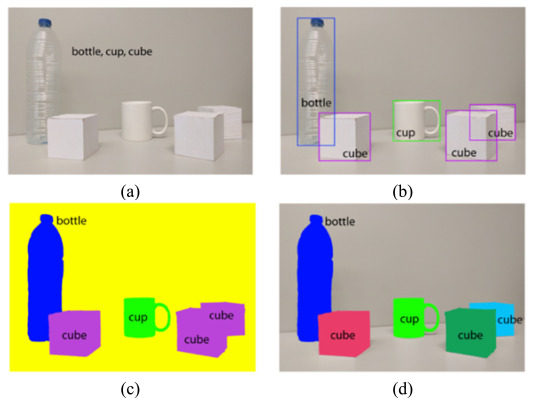
Effective segmentation is central to object detection tasks. Divide and conquer methods benefit few-shot segmentation and conventional segmentation algorithms by isolating regions of interest in an image. In few-shot segmentation, for instance, only a few annotated images are used to train models to recognize and segment objects by dividing the learning task into relevant partitions. Additionally, dividing an image into small sections allows specialized algorithms to delineate object boundaries more accurately and handle cluttered scenes.
Video Anomaly Detection
Temporal and Spatial Division
In video anomaly detection, the divide and conquer framework is particularly useful due to the multidimensional nature of video data. The video is subdivided along temporal (time-based) and spatial (region-based) dimensions. Processing each segment independently allows the detection of abnormal events or unusual patterns which may not be visible when assessing the video as a whole. This method ensures that subtle anomalies are not overlooked.
Modality-Based Division
Videos contain multiple data modalities such as RGB images, optical flow, and even skeleton data. By treating these modalities as distinct subproblems, independent algorithms can focus on extracting unique features from each data type. Once analyzed, the results from different modalities are fused for a comprehensive anomaly detection system that is robust against noise in any single modality.
Progressive Text-to-Image Generation
The divide and conquer approach also extends into the realm of generative models in computer vision. In progressive text-to-image generation, the generation process is decomposed into several sequential stages, with each stage refining the details further. By segmenting the generation process, neural networks can gradually construct an image that evolves from rough creation to a finely detailed final product, allowing better control over the generation output.
Algorithmic Efficiency and Benefits
Parallel Processing and Speed
One of the major benefits of using divide and conquer techniques in computer vision is the natural fit for parallel processing. Once a problem is partitioned, subproblems can be solved concurrently. This can be mathematically expressed as follows:
The total time \( T(n) \) required for a problem of size \( n \) can be approximated by:
\[ T(n) = a \cdot T\left(\frac{n}{b}\right) + f(n) \]
where \( a \) is the number of subproblems, \( \frac{n}{b} \) is the size of each subproblem, and \( f(n) \) represents the cost of dividing and then combining the subproblems. When \( f(n) \) is relatively small compared to \( T\left(\frac{n}{b}\right) \), the approach results in considerable time savings, especially when computed on modern multi-core architectures.
Improved Accuracy and Precision
By breaking down complex visual tasks into specialized sub-tasks, the accuracy of the computed results is enhanced. Each sub-task can benefit from a more targeted set of algorithms designed to handle specific challenges such as texture recognition, object boundaries, and depth perception. This leads to a more precise final result, as the weaknesses of one sub-task are often compensated by the strength of another in the integrated output.
Scalability and Manageability
In real-world applications, computer vision systems are often required to process sprawling datasets. The divide and conquer strategy lends itself well to such large-scale applications. For instance, in distributed computing environments, large-scale 3D scenes are segmented into clusters that can be processed on separate nodes and later reassembled. This not only simplifies handling large volumes of data but also alleviates potential memory constraints on individual processing units.
Challenges and Considerations
Integration Complexity
Although each subproblem may be easier to solve individually, a major challenge lies in effectively integrating these solutions back into a coherent whole. The process requires techniques like high-precision image registration, sophisticated stitching algorithms, and fusion strategies that can handle discrepancies across individual sub-results. Improper integration can lead to visible seams in composite images or errors propagating in 3D models.
Data Quality and Preprocessing
The quality of input data significantly influences the performance of divide and conquer strategies. Poor quality input data, such as noisy images or low-contrast segments, can complicate the subproblems further. It is therefore essential that proper preprocessing steps, such as noise reduction and image normalization, are applied to ensure a clean division and to maximize the fidelity of each sub-task.
Algorithm Selection
Another important consideration is the choice of algorithms best suited for each sub-task. For example, specialized algorithms for edge detection or feature extraction might only be effective when applied to smaller regions rather than an entire image. Thus, the selection and tuning of algorithms for subproblems become critical in establishing an effective overall system.
Comparative Table of Divide and Conquer Applications
| Application Area | Key Techniques | Benefits |
|---|---|---|
| Image Reconstruction | Scene partitioning, parallel 3D modeling | Handles large datasets efficiently, accelerates reconstruction |
| Super-Resolution | Segmented processing, detail enhancement | Improved resolution without noise amplification |
| Segmentation & Object Detection | Region-based decomposition, few-shot learning | Accurate object boundaries, effective with limited data |
| Video Anomaly Detection | Temporal/spatial division, modality-based processing | Efficient anomaly spotting across multiple dimensions |
Advanced Topics in Divide and Conquer for Computer Vision
Multimodal Approaches
In the current landscape of computer vision, multimodal analysis is a growing field. Divide and conquer techniques are perfectly suited for handling diverse data types simultaneously. Whether merging depth maps with RGB information or integrating optical flow with skeletal data from videos, the process typically involves segregating each modality and applying tailored algorithms. This enhances the overall perception accuracy of systems such as Multimodal Large Language Models (MLLMs) that need to interpret high-resolution visual content.
Progressive Deep Learning Models
Deep learning models have been adapted to incorporate divide and conquer strategies to mitigate their traditionally high computational costs. In progressive text-to-image generation, the network divides the image synthesis task into iterative refinement stages. Early layers focus on coarse features, while later layers add finer details. This method is akin to solving the problem step by step rather than attempting an end-to-end synthesis, which can be suboptimal given the high complexity of modern images.
Real-Time Processing
Real-time processing applications, such as autonomous driving and surveillance, greatly benefit from divide and conquer techniques. By distributing the computational load across smaller independent units, systems are better able to meet the stringent latency constraints required in real-time environments. The ability to process sub-tasks simultaneously ensures robust performance even in scenarios demanding rapid responses.
References
- Component Divide-and-Conquer for Real-World Image Super-Resolution - GitHub
- Divide and Conquer: 3D Point Cloud Instance Segmentation with Point-Wise Binarization - GitHub
- Few-Shot Segmentation via Divide-and-Conquer Proxies - SpringerLink
- Divide, Conquer, and Combine in High Resolution MLLM Perception - arXiv
-
Supporting Divide-and-Conquer Algorithms for Image Processing - ScienceDirect
- Advanced Techniques in 3D Reconstruction - arXiv
- Comprehensive Overview on Image Segmentation - SpringerLink
- Practical Implementation of Divide and Conquer in Super-Resolution - GitHub
- Robust Instance Segmentation via Divide and Conquer - GitHub
- Enhanced Object Detection Using Divide and Conquer Optimization - SpringerLink
Recommended Related Queries
Last updated March 2, 2025