
Duck Egg Classification for Balut and Penoy Production
Innovating Conventional Methods with Automated Image Processing
Key Highlights
- Challenges in Conventional Methods: Manual candling is subject to human error, time constraints, and inconsistency.
- Technological Advancements: Image processing and machine learning offer promising avenues for automation and efficiency.
- Global, National, and Local Perspectives: Addressing these issues can revolutionize duck egg classification and incubation practices in the industry.
Background and Industry Overview
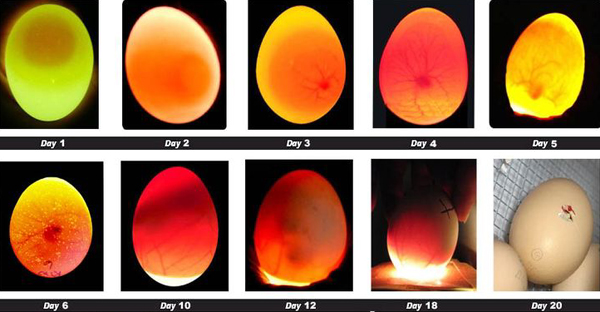
The duck egg production industry, particularly for balut and penoy products, holds critical socio-economic importance in the Philippines. Balut—a delicacy created from a fertilized, developing duck egg—and penoy, which refers to either unfertilized or non-viable eggs, have deep cultural roots and bolster livelihoods in many rural communities. Traditional techniques relying on manual candling have long been the norm. These methods involve holding eggs against a light source to observe the internal content, determining viability based on the observed developmental stage. Despite being a non-invasive technique, manual candling is inherently labor-intensive, frequently subjective, and inefficient for large-scale operations. Inadequate precision in the manual process may lead to inconsistencies in product quality, financial losses, and operational challenges that the industry grapples with today.
Global Perspectives on Egg Classification
On a worldwide scale, traditional egg classification methods, similar to candling, are increasingly being challenged by the need for automation and higher throughput. With the rise of sophisticated computer vision techniques and machine learning models, several studies have demonstrated that automated systems can achieve a remarkable classification accuracy nearing 95.83%. Despite the promising evidence in studies involving chicken eggs and other poultry products, the integration of these methods into duck egg classification has been limited.
Many international research efforts underscore the economic significance of reducing waste and increasing production efficiency. For example, automated candling systems in various contexts have shown potential in optimizing resource usage and elevating product quality by minimizing misclassification due to manual oversight. These advancements invite the replication and customization of such systems for duck eggs, which are inherently more challenging due to varying egg sizes, shapes, and the complexity of differentiating between fertile (balut) and non-fertile (penoy) classifications.
National Perspectives in the Philippines
The Philippines stands as one of Southeast Asia’s leading producers of duck eggs, playing a pivotal role in sustaining food security and contributing to the agricultural economy. However, the local industry remains predominantly reliant on manual techniques for the egg classification process. This has been a longstanding challenge, as the dependence on human expertise leads to significant variability in classification outcomes. In the bustling local markets, smallholder producers often struggle with the inefficiencies and high labor demands of the current methods. This labor-intensive approach is not only time-consuming but also increases the probability of errors in detecting fertile from non-fertile eggs.
Furthermore, the cultural importance of balut and penoy extends beyond their economic value. These products are embedded in the social fabric of many communities, with consumption patterns and market preferences affecting production priorities. The manual classification methods often fail to provide the robustness necessary for scaling operations and ensuring standardized quality. Recognizing this, stakeholders including agricultural researchers and government agencies are exploring innovative methods, such as automated image processing, to enhance production efficiency and reduce costs. The integration of technology could modernize the industry while retaining its cultural significance.
Local Perspectives and Practical Challenges
At the grassroots level, local duck egg producers—particularly small-scale and backyard farms—are the most affected by the limitations of manual egg classification. These local producers face several challenges:
Manual Candling Limitations
The conventional method of manually candling eggs requires considerable manpower and is subject to human error. Visual fatigue, the subjective nature of the evaluation, and environmental factors all play a role in misclassification. Furthermore, while manual candling is non-destructive, it does not provide quantitative data, and the absence of standardized visual assessments means that different operators might yield conflicting results.
Impact on Product Consistency and Economic Viability
The inconsistencies originating from manual methods contribute directly to significant variations in product quality. Inconsistent classification leads to portions of eggs being incorrectly categorized, either impacting the visual appeal or compromising the taste and quality of the end product. Consequently, economic losses occur due to wasted resources, increased operational costs, and the additional labor required for re-sorting and quality control. This economic strain is particularly pronounced in smaller local settings where technological upgrades are financially challenging, and economies of scale are hard to achieve.
The local demand for balut and penoy remains high, and safe, quality production is essential for sustaining both consumer trust and market stability. An automated system that ensures each egg is correctly classified and that the incubation process is precisely monitored could open new pathways for local producers, making the industry more robust and competitive.
Proposed Technological Innovations
The primary objective of the proposed study is to develop an automated classifier that differentiates between fertile and non-fertile duck eggs while simultaneously refining the incubation process through image processing techniques. The breakthrough here is to integrate modern computer vision coupled with deep learning algorithms to facilitate a more accurate and efficient classification paradigm.
Automated Classifier for Duck Eggs
The envisioned classifier will utilize a Convolutional Neural Network (CNN) model to analyze high-resolution images of duck eggs. This system aims to classify eggs based on distinct visual features that indicate fertility or developmental stages of incubation. By automating the classification process, the system will eliminate the inconsistencies inherent in human oversight, ensuring that every egg is scrutinized with precision. The classifier not only significantly reduces labor costs but also curtails the risk of misclassification by automating what is traditionally a subjective process.
Moreover, the proposed image processing system will operate in real-time. By integrating seamlessly with existing egg sorting lines, the tool can monitor eggs continuously and flag potential misclassifications for operator review. This real-time monitoring creates an additional safeguard, ensuring that subsequent processes, such as incubation, receive the highest possible quality inputs.
Enhancing the Incubation Process Using Image Processing
In parallel to classification, the study aims to leverage image processing techniques to optimize the incubation environment. Traditional incubation requires not only determining whether an egg is fertile but also an assessment of the developmental stage, which guides the necessary conditions such as temperature and humidity. The application of image processing in this context entails:
Stage Determination and Quality Assessment
The automated system can be trained to estimate the developmental days of the egg by analyzing subtle cues such as embryo formation and growth patterns. This will help in predicting the optimal incubation period necessary to maximize hatch rates. By obtaining quantitative data on the embryo’s development, producers can adjust incubation conditions dynamically, ensuring a controlled micro-environment that complies with the specific needs of each egg.
Temperature and Humidity Adjustments
The classifier system will record real-time data that is instrumental in fine-tuning the incubation process. This data-driven approach allows for automated adjustments in temperature and humidity to match the precise requirements of eggs at different developmental stages. Often, deviations from optimal conditions lead to a decline in hatchability rates. Hence, by correlating the visual cues with environmental data, the system minimizes the risks associated with manual monitoring while maximizing production efficiency.
Integrating Research Findings and Related Studies
The proposed research builds upon multiple related studies that have evaluated the use of image processing and automated classification in egg production. These studies, stemming from both international and local research communities, document significant improvements in accuracy, efficiency, and overall productivity when automation is applied. Some of these works demonstrate that CNN models can achieve high test accuracies (approaching 95.83%) in egg classification tasks, emphasizing the role of digital tools in simplifying what used to be a laborious process.
In the context of the Philippine duck egg industry, related studies illustrate the prevailing challenges:
| Perspective | Problem Area | Key Insight |
|---|---|---|
| Global | Reliance on manual classification techniques | Labor-intensive and error-prone practices in egg sorting |
| National | Limited technological adoption in the poultry sector | Inconsistencies in quality and scalability issues due to traditional methods |
| Local | Dependence on manual candling for small-scale producers | High labor costs and misclassification lead to economic inefficiencies |
These insights have propelled the interest in exploring integrated solutions that not only address classification inefficiencies but also enhance the incubation process. One of the most compelling aspects of this research is the potential synergy between quantitative image analysis and environmental control, offering a comprehensive solution for quality assurance and economic viability.
Research Gaps and Opportunities for Innovation
Despite encouraging results from the preliminary investigation into automated egg classification, several research gaps remain. The majority of studies have focused solely on the classification aspect without adequately integrating it with the incubation process. There is an evident need for a holistic system that not only classifies but also tracks developmental stages to actively control the incubation environment.
Identified Gaps
Standardization: The absence of a standardized quality assessment framework presents significant challenges. Variability in classification outcomes due to human subjectivity has impeded the consistent application of optimal incubation parameters.
Lack of Integration: Most technological implementations do not comprehensively integrate incubation control with classification processes. The lack of real-time feedback mechanisms prevents dynamic adjustment of environmental conditions suited to the developmental stage of each egg.
Technological Accessibility: While advanced image processing techniques have proven effective in laboratory settings, their adaptation to the resource-constrained environments of small-scale producers remains limited.
Opportunities for Innovation
This research provides an opportunity to design an integrated system that bridges these gaps. By developing a reliable automated classifier accompanied by a real-time monitoring system for the incubation environment, the study can set an industry standard for both quality assessment and production efficiency. The integration of sophisticated algorithms with comprehensive environmental controls promises to revolutionize egg classification and incubation—thus reducing waste, standardizing quality, and ultimately enhancing the economic sustainability of the balut and penoy industry.
References
- IEEE Xplore - Automated Classification Study
- Semantic Scholar - CNN-based Duck Egg Classification
- ResearchGate - Philippine Duck Industry Research
- Mashed - Balut vs Penoy
-
NCBI - Duck Egg Quality and Classification
Recommended Further Queries
 pinoyfoodillustrated.blogspot.com
Last updated March 18, 2025