
Unlock Maximum Space: Master the Art of Efficient Suitcase Packing
Travel lighter and smarter with expert techniques to organize your belongings, minimize wrinkles, and fit everything you need.
Key Packing Insights
- Combine Techniques: Blend rolling softer clothes with folding stiffer garments and utilize packing cubes for optimal organization and compression.
- Strategic Placement: Position heavier items like shoes and toiletries near the wheels for balance, and fill empty spaces (like inside shoes) with smaller items.
- Plan Ahead: Create a packing list based on your trip's duration, weather, and activities to avoid overpacking and ensure you have versatile outfits.
Why Pack Efficiently?
Efficient suitcase packing is more than just fitting items into a bag; it's about maximizing space, minimizing weight, keeping clothes wrinkle-free, and ensuring easy access to your belongings upon arrival. Whether you're a frequent flyer or an occasional vacationer, mastering packing techniques can significantly reduce travel stress and potentially save you from checked baggage fees. This guide combines proven strategies and modern tools to help you pack like a pro.
Step 1: Preparation is Paramount
Before you even think about putting items in your suitcase, a little planning goes a long way.
Choose Your Luggage Wisely
Select a suitcase appropriate for your trip length and travel style. A carry-on might suffice for shorter trips, encouraging minimalist packing, while longer journeys may require a larger checked bag. Consider the benefits:
- Hard-shell suitcases: Offer better protection for fragile items.
- Soft-sided suitcases: Allow for more flexibility and potential compression.
- Features: Look for bags with built-in compression straps, expandable sections, or smooth-rolling wheels for easier transport.
Craft a Detailed Packing List
Don't pack on a whim. Create a list based on:
- Destination & Weather: Check the forecast and plan accordingly.
- Duration: How many days will you be away?
- Activities: Will you need swimwear, hiking gear, formal attire, or business outfits?
Categorize your list (e.g., tops, bottoms, toiletries, electronics, documents) to stay organized. Consider a minimalist approach like the "5-4-3-2-1" rule (adjust numbers as needed): 5 tops, 4 bottoms, 3 accessories/shoes, 2 specific items (like swimwear), 1 outerwear piece. Aim for versatile items that can be mixed and matched to create multiple outfits.
Step 2: Master Core Packing Techniques
No single method is universally best; combining techniques often yields the most efficient results.
Rolling, Folding, or Bundling?
The debate between rolling and folding often comes down to fabric type and personal preference.
- Rolling: Best for softer, wrinkle-resistant items like T-shirts, jeans, casual pants, knitwear, and underwear. Rolling tightly compresses these items, saves significant space, and can prevent harsh creases.
- Folding: Ideal for stiffer fabrics, structured garments, or items prone to wrinkling, such as dress shirts, blazers, starched cotton, and delicate materials. Fold these items neatly, perhaps using tissue paper between layers to reduce friction.
- Bundling: This method involves wrapping clothes layer by layer around a central core (like a small pouch of socks or underwear). Start with more wrinkle-prone items on the outside, smoothing as you go. This creates a compact bundle that minimizes creases, especially for outfits you want to keep together.
Technique Comparison Table
This table summarizes the key characteristics of the main packing techniques:
| Technique | Best For | Pros | Cons |
|---|---|---|---|
| Rolling | Soft fabrics, casual wear (T-shirts, jeans, knits), filling gaps | Maximizes space, minimizes wrinkles in suitable fabrics, good for compression | Can cause wrinkles in stiff fabrics, may not work well for bulky items |
| Folding | Stiff fabrics, formal wear (shirts, blazers), delicate items | Prevents sharp creases in structured garments, easy to stack | Can be less space-efficient than rolling for soft items, may create fold lines |
| Bundling | Organizing outfits, minimizing wrinkles across multiple items | Excellent wrinkle prevention, keeps outfits together, compact | Can be time-consuming, accessing one item requires unwrapping the bundle |
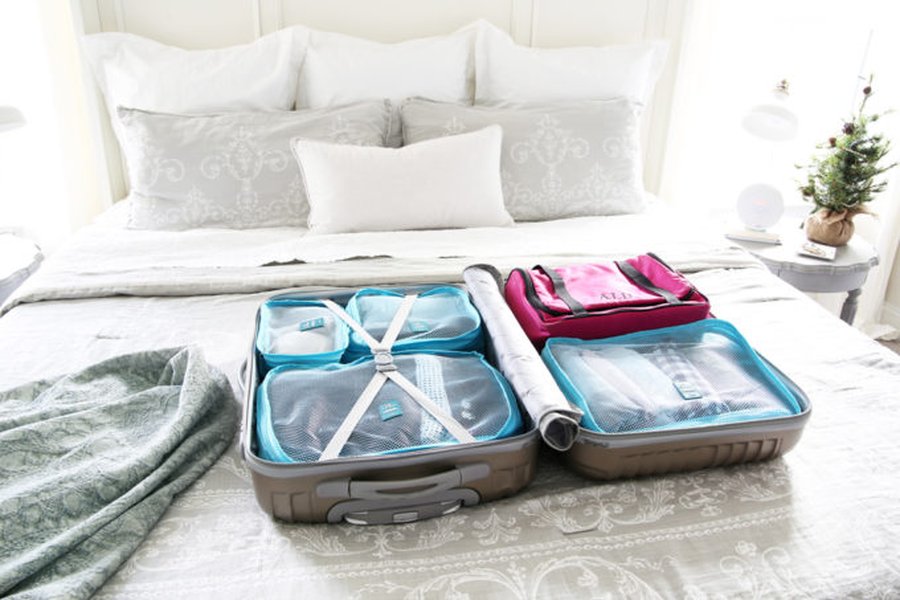
An example of an organized suitcase combining rolling and folding techniques.
Leverage Packing Cubes
Packing cubes are zippered fabric containers that revolutionize suitcase organization. They allow you to:
- Compartmentalize: Group similar items (tops, bottoms, underwear, electronics) or entire outfits together.
- Compress: Many cubes offer slight compression, squeezing air out and saving space. Compression-specific bags offer even more space savings, sometimes shrinking items significantly.
- Maintain Order: Easily find what you need without disturbing the entire contents of your suitcase. Unpacking is also quicker – just transfer the cubes to drawers.
- Separate Items: Use cubes for dirty laundry, shoes, or toiletries.
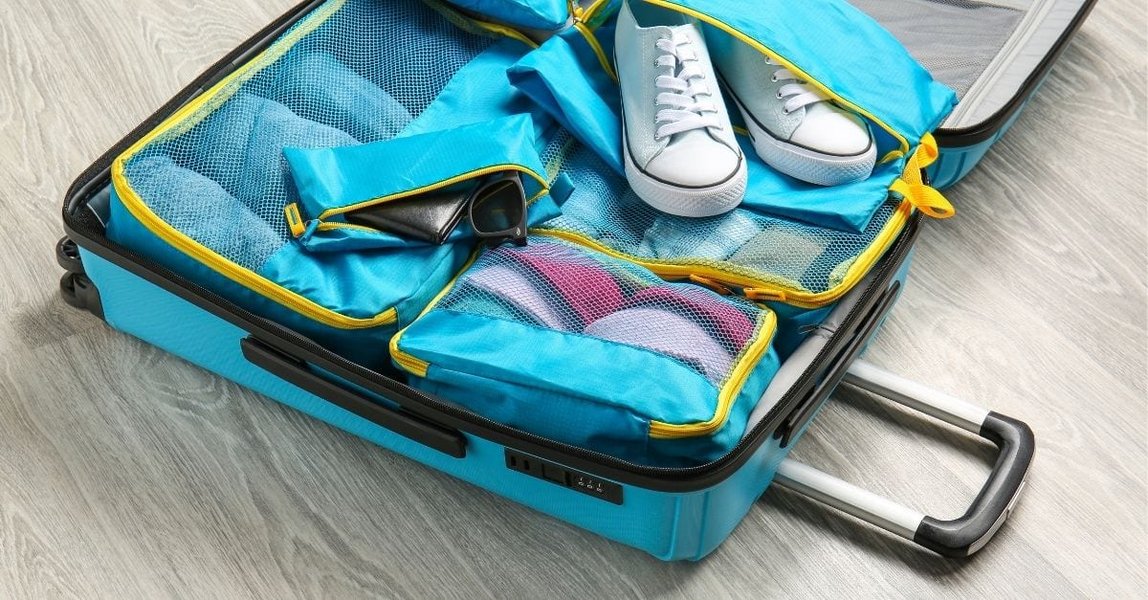
Packing cubes help compartmentalize and compress clothing for better organization.
Step 3: Strategic Placement and Space Optimization
How you arrange items inside the suitcase is crucial for stability and maximizing every inch.
Weight Distribution
Place the heaviest items – shoes, toiletry bags (securely sealed!), books, electronics – at the bottom of the suitcase, near the wheels. This prevents the bag from tipping over and keeps the weight balanced during transit.
Fill Every Nook and Cranny
- Inside Shoes: Stuff socks, underwear, belts, chargers, or other small, flexible items inside shoes to utilize otherwise wasted space and help shoes maintain their shape.
- Corners and Gaps: Tuck small accessories, rolled belts, scarves, or swimwear into the gaps left between larger items or packing cubes.
- Hollow Items: Fill hats or other hollow objects with soft items before packing them carefully to prevent crushing.
Layering Strategy
Think of packing like a game of Tetris. Start with the base layer of heavy items. Add rolled clothing or packing cubes next. Place folded items or delicate pieces on top. Items you might need quick access to (like a jacket or travel documents if not in a separate bag) should be placed last.
Protect Your Belongings
- Toiletries: Always pack liquids in a sealed, waterproof bag (like a Dopp kit or Ziploc) to prevent leaks from ruining your clothes. Consider solid toiletries (shampoo bars, toothpaste tabs) to avoid liquid limits and spills.
- Shoes: Place shoes in shoe bags, plastic bags, or shower caps to keep dirt from transferring onto clean clothes.
- Fragile Items: Wrap breakables in soft clothing and place them in the center of the suitcase, cushioned on all sides.
- Valuables: Keep essential medications, jewelry, important documents, and electronics in your carry-on bag, not checked luggage.
Visualizing Packing Efficiency
Different packing methods excel in different areas. This chart provides a comparative overview based on common packing goals.
Packing Method Effectiveness Radar Chart
This radar chart compares popular packing techniques across five key criteria: Space Saving, Wrinkle Prevention, Organization, Accessibility (how easy it is to get one item), and Speed (how quick the method is). Scores are on a scale, with higher values indicating better performance in that category.
As the chart suggests, Packing Cubes offer a strong balance across most criteria, especially organization and accessibility. Rolling is excellent for space-saving, while Bundling excels at wrinkle prevention but sacrifices accessibility. Choose the methods that best align with your priorities.
Efficient Packing Mindmap
This mindmap provides a visual summary of the key steps and considerations for packing your suitcase efficiently.
(Size, Type)"] id1b["Create Packing List
(Weather, Duration, Activities)"] id1c["Categorize Items"] id1d["Select Versatile Clothing"] id2["Packing Techniques"] id2a["Rolling
(Soft Items, Space Saving)"] id2b["Folding
(Stiff Items, Wrinkle Prone)"] id2c["Bundling
(Outfit Organization, Wrinkle Prevention)"] id2d["Packing Cubes
(Organization, Compression)"] id2e["Compression Bags
(Max Space Saving)"] id3["Space Optimization"] id3a["Fill Shoes
(Socks, Underwear, Chargers)"] id3b["Use Corners & Gaps"] id3c["Utilize Hollow Items
(Hats)"] id4["Strategic Organization"] id4a["Heavy Items at Bottom
(Near Wheels)"] id4b["Layering Items"] id4c["Essentials Accessible
(Top or Pockets)"] id4d["Separate Toiletries
(Waterproof Bag)"] id4e["Protect Shoes
(Bags/Caps)"] id5["Final Checks"] id5a["Mind Weight Limits"] id5b["Leave Room for Souvenirs"] id5c["Pack Carry-On Essentials
(Meds, Docs, Change of Clothes)"]
Video Guide: Maximizing Carry-On Space
Visual guides can be incredibly helpful. This video demonstrates practical tips specifically for maximizing space in carry-on luggage, incorporating many of the techniques discussed above, like rolling and strategic placement.
The video emphasizes avoiding common mistakes and shows a real-world example of packing for a trip, providing actionable insights you can apply immediately.
Frequently Asked Questions (FAQ)
Is rolling clothes better than folding?
It depends on the item. Rolling is generally better for saving space and preventing wrinkles in soft, flexible fabrics like T-shirts, jeans, and knitwear. Folding is preferred for stiffer garments like dress shirts, blazers, or items made of easily creased materials. Many experts recommend using a combination of both techniques for optimal results.
Are packing cubes really worth it?
Yes, for most travelers, packing cubes are highly beneficial. They help compartmentalize your belongings, making it easy to find specific items without unpacking everything. They also offer some compression, saving space, and help keep clean and dirty clothes separate. They are particularly useful for keeping items organized within a larger suitcase or backpack.
How do I prevent clothes from wrinkling in my suitcase?
Several methods help minimize wrinkles:
- Rolling: Tightly rolling suitable garments prevents hard creases.
- Bundling: Wrapping items smoothly around a core minimizes folds.
- Folding Carefully: Fold along seams and use tissue paper between layers for delicate items.
- Don't Overpack: Cramming too much into a suitcase causes wrinkles.
- Unpack Promptly: Hang clothes up as soon as you arrive at your destination.
- Choose Wrinkle-Resistant Fabrics: Materials like knits, wool, and some synthetics travel better.
How should I pack shoes?
Pack shoes heel-to-toe along the sides or bottom of the suitcase (near the wheels). Stuff them with socks, underwear, or small items to save space and help them keep their shape. Always place shoes in bags (shoe bags, plastic bags, or shower caps) to prevent dirt from transferring to your clothes.
Recommended Reads & Searches
- Explore reviews of the best packing cubes specifically designed for carry-on suitcases.
- Learn the specific TSA regulations for packing liquids in carry-on and checked baggage.
- Discover how to create a versatile minimalist packing list for a week-long journey.
- Find techniques specifically for packing suits, dresses, and formal shirts to minimize creasing.
References
Last updated May 5, 2025