
The Origin of Einstein's Theory of Relativity
Discover how the revolutionary understanding of space, time, and gravity emerged
Key Takeaways
- The Special Theory of Relativity originated from the need to reconcile electromagnetism and mechanics, challenging established Newtonian concepts.
- The General Theory of Relativity evolved from extending these concepts to include gravity through the equivalence principle and the geometry of spacetime.
- Key Experiments and Mathematical Insights such as the Michelson–Morley experiment and Riemannian geometry fundamentally influenced these breakthroughs.
Historical and Scientific Context
The inception of Albert Einstein's theory of relativity can be traced to a profound era of scientific discovery at the turn of the 20th century when the classical framework of Newtonian mechanics was being challenged by new experimental evidence and theoretical puzzles. At the heart of these challenges was the conflict between the established laws of mechanics and the emerging principles of electromagnetism.
During the late 19th century, physicists were grappling with puzzling aspects of electromagnetic theory, primarily stemming from James Clerk Maxwell’s formulation of the equations that unified electricity and magnetism. Maxwell’s equations predicted that light behaved as an electromagnetic wave traveling at a constant speed, a fact that was consistently confirmed by experiments. However, this constant speed of light stood in stark contrast to the predictions of Newtonian mechanics, which relied on the idea that speeds simply add together following Galilean transformations.
One of the landmark experiments that intensified this contradiction was the Michelson–Morley experiment. Designed to detect the hypothesized “luminiferous aether” – the medium through which light was thought to propagate – the experiment failed to find any evidence of this medium, strongly indicating that the speed of light remained constant in all directions relative to an observer.
Special Theory of Relativity
The Emergence of a New Paradigm in Physics
In 1905, during what is often referred to as Einstein’s "miracle year," he published his seminal paper "On the Electrodynamics of Moving Bodies." This paper laid the foundation for the Special Theory of Relativity by introducing two fundamental postulates:
Invariance of Physical Laws
The first postulate asserts that the laws of physics are identical in all inertial frames of reference. In other words, whether an observer is at rest or moving at a constant velocity, the fundamental physical laws do not change. This principle challenged the long-held notion that there was a universal “stationary” frame against which all motion could be measured.
Constancy of the Speed of Light
The second postulate posits that the speed of light in a vacuum is constant and is not affected by the motion of the light source or the observer. This revolutionary idea led to profound consequences, such as time dilation—where time appears to pass more slowly for objects moving at high speeds—and length contraction, the phenomenon where objects moving at significant speeds are measured to be shorter in the direction of motion.
Another of the most famous implications of special relativity is the mass-energy equivalence, encapsulated by the iconic equation E = mc2. This equation not only fundamentally redefined the concept of energy but also laid the groundwork for subsequent developments in physics, including nuclear energy.
Motivations Behind Special Relativity
Several factors motivated Einstein’s development of the special theory of relativity. Prior to his insights, conflicting ideas about the nature of space, time, and light were prevalent. Experimental failures to detect the aether, along with the need to reconcile Maxwell’s electromagnetic theory with Newtonian mechanics, created an urgent demand for a new framework. Einstein’s ability to see beyond established paradigms and his reliance on logical simplicity allowed him to synthesize these elements into a coherent theory that has withstood the test of time.
General Theory of Relativity
Expanding Relativity to Gravitational Fields
While the special theory of relativity revolutionized our understanding of space and time, it was limited to inertial frames and did not account for the phenomenon of gravity. Einstein recognized that to provide a complete description of the universe, gravity had to be integrated into this revolutionary framework. His contemplation of gravity led him to develop the General Theory of Relativity over the course of several pivotal years.
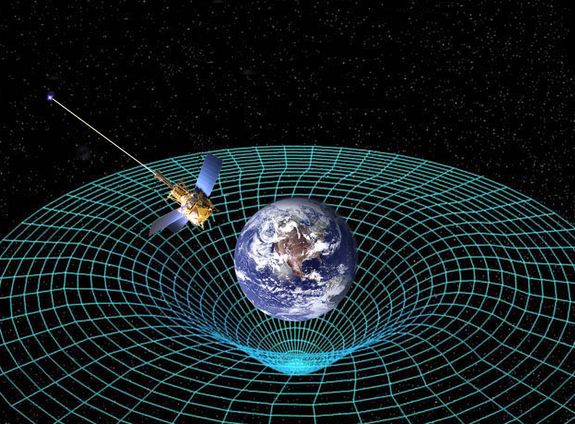
A critical breakthrough in this endeavor was Einstein's formulation of the equivalence principle in 1907. This principle states that the effects of gravity are locally indistinguishable from the effects of acceleration. In simpler terms, an observer in a closed, accelerating system would experience effects identical to those produced by a gravitational field. This insight was transformative, as it shifted the perspective from describing gravity as a conventional force to understanding it as a manifestation of the curvature of spacetime.
The Mathematical Framework: Riemannian Geometry
To mathematically express his ideas, Einstein adopted the tools of Riemannian geometry, which allowed for the description of curved spaces. In collaboration with mathematician Marcel Grossmann, Einstein developed a new geometrical framework that provided the language to articulate how mass and energy could warp the fabric of spacetime. This curvature dictates the paths that objects follow, which we experience as the force of gravity.
In 1915, after years of rigorous development and intense scrutiny, Einstein presented his General Theory of Relativity to the Prussian Academy of Sciences. One of the first observable predictions of this theory was the bending of light around massive objects—a phenomenon known as gravitational lensing. The subsequent confirmation of light bending during a solar eclipse in 1919 provided one of the earliest and most striking validations of Einstein’s theory.
Key Predictions and Experimental Confirmations
General relativity not only revolutionized our theoretical understanding of gravity but also made several testable predictions that were confirmed by observations. Among the significant outcomes of Einstein’s theory are:
- Gravitational Time Dilation: Clocks in stronger gravitational fields tick slower compared to those in weaker fields.
- Gravitational Lensing: Massive objects can bend and focus light from more distant sources, an effect which has become a vital tool in modern astronomy.
- Precession of Mercury’s Perihelion: Mercury’s orbit exhibits a slight precession that Newtonian mechanics could not fully explain, but which is accurately predicted by general relativity.
- Gravitational Waves: As massive objects accelerate, they generate ripples in the fabric of spacetime. These waves were first directly detected in 2015, further cementing the theory’s validity.
Timeline of Key Developments
| Year | Development | Significance |
|---|---|---|
| Late 1800s | Advancements in Electromagnetism | Maxwell's equations unified electricity and magnetism, revealing the constant speed of light. |
| 1887 | Michelson–Morley Experiment | Failed to detect the aether, emphasizing the constant nature of the speed of light and challenging Newtonian mechanics. |
| 1905 | Special Relativity Published | Introduced two key postulates that redefined our understanding of space and time, leading to concepts like time dilation and mass-energy equivalence. |
| 1907 | Equivalence Principle Formulated | Set the stage for integrating gravity with relativity by asserting that acceleration and gravitational effects are locally indistinguishable. |
| 1915 | General Relativity Published | Revolutionized the conception of gravity, describing it as the curvature of spacetime caused by mass and energy. |
| 1919 | Solar Eclipse Observations | Provided experimental confirmation of general relativity through the observed bending of light around the Sun. |
| 2015 | Detection of Gravitational Waves | Direct observation of ripples in spacetime further validated predictions made by general relativity. |
Revolutionary Insights and Their Impact
Changing the Landscape of Physics
The theories of special and general relativity marked a profound turning point in our understanding of the universe. Einstein’s insights not only resolved long-standing conflicts between electromagnetism and mechanics but also transformed fundamental concepts of space, time, and gravity. The implications of these theories have been far-reaching:
Unified Framework
By blending space and time into a single continuum, Einstein’s work illustrated that these two seemingly separate dimensions are intimately connected. This unification paved the way for modern cosmology and deepened our understanding of the dynamic nature of the universe.
Predictive Power
The predictive capabilities of relativity have been instrumental in advancing scientific research. From accurately forecasting the orbit of planets to the groundbreaking detection of gravitational waves and lensing effects, the theory continues to inform experimental physics and astrophysics.
Technological and Theoretical Advancements
Beyond its theoretical importance, Einstein’s work has led to numerous practical applications. Innovations in satellite navigation systems, such as GPS, require adjustments for both special and general relativistic effects to maintain their accuracy. Additionally, the relativistic framework has influenced many fields within physics, inspiring, for example, current efforts to reconcile general relativity with quantum mechanics.
The journey from conceptual insights to experimental confirmation highlights the strength of Einstein’s theories. Despite criticisms and the evolution of scientific thought over the subsequent century, relativity has remained remarkably robust, forming a cornerstone of modern physics.
Challenges and Continuing Research
The Next Frontier in Relativity
While the general theory of relativity has been confirmed by numerous experiments, physicists today are working to expand its framework to include quantum phenomena. This quest for a quantum theory of gravity is one of the foremost challenges in contemporary theoretical physics. Researchers are investigating approaches such as string theory and loop quantum gravity in an effort to bridge the gap between the very large (described by general relativity) and the very small (explained by quantum mechanics).
Additionally, the detection and study of gravitational waves have opened a new observational window into the cosmos. These waves allow us to observe astrophysical events that were previously inaccessible, such as black hole mergers and neutron star collisions. Each detection brings new data that refines our understanding of the universe and tests the limits of Einstein’s predictions.
The continuing evolution of technology and observational methods promises to shed even more light on the nuances of relativity. Large-scale projects, both ground-based and in space, are underway to further explore phenomena such as gravitational lensing and time dilation in extreme gravitational fields.
Conclusion
Einstein's theories of relativity—both special and general—emerged from a rich scientific tradition that sought to understand the fundamental workings of nature. They were born out of the need to reconcile discrepancies between electromagnetism and classical mechanics and were shaped by groundbreaking experiments and mathematical innovations. Special relativity revolutionized the concepts of space and time, introducing new ideas such as time dilation and mass-energy equivalence. General relativity further transformed our conception of gravity by describing it as the curvature of spacetime. These theories not only offered profound new insights into the nature of our universe but also laid the groundwork for technological advances and further scientific exploration.
In summary, the origin of Einstein's theory of relativity is a story of intellectual perseverance and the collaborative evolution of ideas. It is a testament to how observational evidence and rigorous mathematics can together upend established paradigms and lead to revolutionary new ways of understanding the world around us.
References
- From Newton to Einstein – The Origins of General Relativity - The Conversation
- Theory of Relativity - Wikipedia
- General Relativity - Wikipedia
- History of General Relativity - Wikipedia
- Relativity - Britannica
- Theory of Relativity, Then and Now - Smithsonian Magazine
- 100 Years of General Relativity - ESA
- The General Theory of Relativity - Space.com
- A Very Brief History of Relativity - Physics World
- Special Relativity - AMNH
- General Relativity Pathway - University of Pittsburgh
- The Chronology of Relativity - Max Planck Institute
- The Curious History of Relativity - Princeton University Press
More
Last updated February 18, 2025