
Unraveling the Subterranean Symphony of Elephant Communication
Exploring how elephants might detect calls through ground vibrations
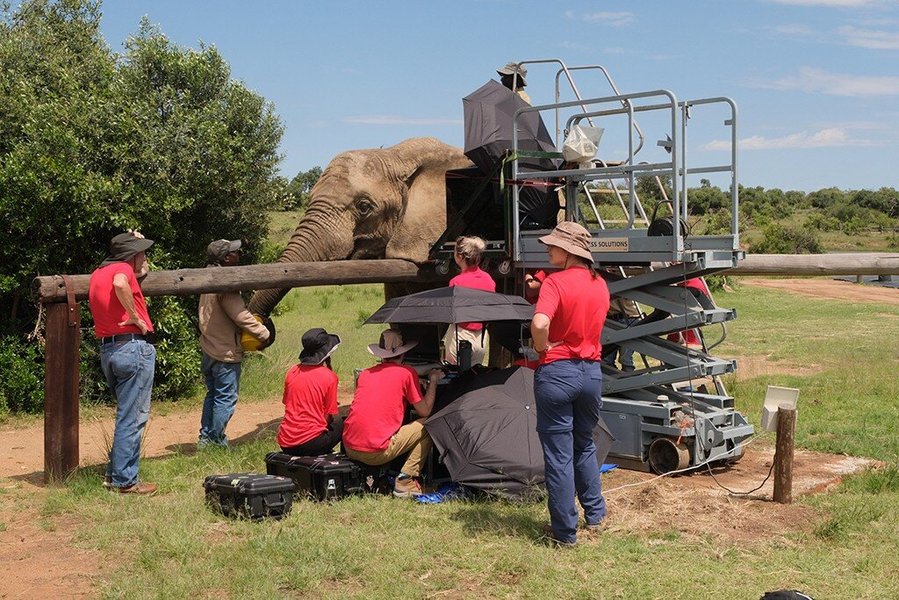
Key Highlights
- Comprehensive Experimental Setup: Designing controlled environments, using geophones and seismic shakers to replicate natural low-frequency signals.
- Multi-Modal Data Collection: Observing behavioral responses, employing video monitoring, and analyzing movement patterns to correlate seismic reception.
- Controlled Variables for Validity: Ensuring isolation of air and ground signals with rigorous controls and replication to distinguish true seismic perception.
Experimental Design Overview
To determine whether elephants can detect and interpret the calls of other elephants through the ground, I would design an experiment that carefully isolates seismic communication from traditional airborne auditory signals. This experiment integrates both behavioral observation and scientific instrumentation to produce reliable data on the sensitivity of elephants to low-frequency ground vibrations. By simulating natural communication patterns and employing a combination of geophones, controlled seismic stimulus generators, and video recording equipment, the experiment would allow for a detailed analysis of how elephants respond to ground-borne signals.
Detailed Experimental Setup
1. Establishing the Controlled Environment
The experiment would be conducted in an environment where the elephants’ natural habitat is simulated as closely as possible. A significant component of the setup would be the isolation of the ground as the sole medium for signal transmission. The test site would be selected such that it contains ample open space with varied ground surfaces (e.g., soft loam, sand, and clay) to investigate how different substrates may affect the travel of seismic waves.
Location and Setup
The experimental site would be divided into two main areas. One area, referred to as the “test group,” will be exposed to artificially generated ground vibrations while another “control group” will be isolated from these induced vibrations. Both groups of elephants would be maintained in separate but similar enclosures to ensure environmental conditions, such as light, temperature, and humidity, are homogeneous. The separation is crucial to ensure that any response observed in the test group can be confidently attributed to seismic signal detection rather than ambient acoustic cues.
2. Signal Generation and Equipment
The experiment hinges on the capacity to create realistic, low-frequency vibrations similar to those produced by elephant vocalizations. In order to achieve this:
- Seismic Transducers: Employ electronic shakers or specially designed transducers that can simulate the frequency range typical of elephant vocalizations, particularly low-frequency alarm and rumble calls. These seismic devices would be buried within the soil to mirror ground-coupled vibrations.
- Geophones and Accelerometers: Multiple geophones would be evenly distributed across the test area at various distances from the signal source. These sensors are sensitive to ground vibrations and allow the recording of the amplitude, frequency, and propagation speed of the seismic waves.
- Vibration Isolation: To ensure that the control group is not inadvertently exposed to the transmitting signals via air conduction, soundproof barriers and carefully calibrated speakers would be positioned to minimize airborne transmission. This ensures that the only perceptible signal for the test group is the ground vibration.
Calibration and Validation
Prior to performing the actual observational trials involving the elephants, a calibration phase would be conducted. During calibration, the geophones and other sensors will measure seismic wave propagation under various conditions, documenting how the ground's properties affect vibration quality. This baseline ensures the experimental stimuli are consistent and measurable.
Observations and Behavioral Data Collection
Once the controlled environment is established and the stimulus is calibrated, the next phase is to record and analyze the elephants’ behavioral responses.
3. Behavioral Observation and Data Recording
Behavioral Metrics: The experiment would document diverse behavioral responses including, but not limited to:
- Directional movement towards or away from the source of the vibration.
- Changes in posture and alertness levels, as captured by video and motion detection systems.
- Vocal responses that might indicate recognition or alarm, such as rumbling or trumpeting.
- Additional subtle signals such as raising their heads, curling their trunks to the ground, or any tactile exploration.
Video and Sensor Integration
High-definition video cameras and motion detectors would be installed at strategic points around both enclosures. This equipment will document the behavioral shifts in real-time. Synchronizing the timestamps of the seismic signals with video recordings ensures that any reaction, no matter how subtle, is associated accurately with the timing of the ground vibrations. The integration of these data sources allows for a comprehensive analysis of cause and effect.
4. Integration of Data and Replication
To rigorously analyze the effectiveness of seismic communication, the experiment is designed to be repeated under various conditions. Data collection would extend over several trials to account for changes in elephant behavior due to environmental conditions or habituation to the experimental stimuli.
Statistical Analysis: Advanced statistical methods will be employed to analyze reaction times, movement patterns, and changes in vocalization frequencies. This includes regression analyses and possibly machine learning-based pattern recognition to correlate seismic measurements with observable behavioral changes. Control tests, where elephants are left exposed only to ambient noises and no artificial vibrations, would be instrumental in distinguishing genuine responses to ground-borne signals.
Visualization of Experimental Components with a Radar Chart
The following radar chart represents an evaluative view of some key parameters considered crucial for the experiment. These include sensor sensitivity, control of signal purity, behavioral responsiveness, calibration accuracy, and replication consistency. Each parameter has been subjectively scored based on the overall experiment design and anticipated operational factors.
Data Collection and Analysis Framework
The experiment’s success relies on systematic data collection. The following table represents a comprehensive guide to the various metrics and observational variables monitored during the trial:
| Measurement Aspect | Instrument/Method | Observational Data | Purpose |
|---|---|---|---|
| Seismic Wave Frequency | Geophones, Accelerometers | Wave amplitude, frequency, propagation speed | Quantify the characteristics of the ground vibrations |
| Behavioral Response | Video Cameras, Motion Sensors | Directionality of movement, vocalizations, changes in posture | Assess the recognition and interpretation of seismic signals |
| Control vs. Test Conditions | Observation Logs | Comparative behavior between isolated control and test groups | Ensure responses are due solely to the seismic stimulus |
| Environmental Variables | Sensors for Temperature, Humidity | Ambient conditions | Verify consistency of environmental factors across trials |
| Calibration Metrics | Pre-Trial Equipment Testing | Baseline seismic readings on different substrates | Ensure accuracy and reliability of the stimulus generators |
This table provides a clear framework for capturing and analyzing the vast amount of data that the experimental design entails, ensuring that every variable is accounted for with precision.
Embedded Multimedia Resource
To further illustrate the principle behind elephant seismic communication and experimental design, the following video provides an insightful explanation and real-world examples of similar experiments. The material complements our study by highlighting how elephants use their feet and trunks to detect ground-borne signals.
FAQ
References
- Studying Elephant Communication - BioInteractive
- Looking for Earth-Shaking Clues to Elephant Communication - Stanford News
- Talking Through the Ground | Science - AAAS
-
Scientists Unravel the Secret World of Elephant Communication - Phys.org
- Keeping an “Ear” to the Ground: Seismic Communication in Elephants - American Journal of Physiology
Recommended Queries for Further Exploration

Last updated April 3, 2025