
The Rhythmic Heart: Exploring Emotional Intelligence in India's Classical Dancers
How the ancient art of Indian classical dance shapes the emotional landscape of its professional performers, viewed through Goleman's lens.
Indian classical dance is more than intricate footwork and graceful movements; it's a profound language of emotion. Professional dancers in India dedicate years to mastering forms like Bharatanatyam, Kathak, Odissi, and others, disciplines deeply rooted in expressing the human condition. This exploration delves into the relationship between this demanding art form and emotional intelligence (EI), particularly as conceptualized by Daniel Goleman, synthesizing insights from various studies and observations.
Essential Insights
- Enhanced EI Components: Research suggests professional Indian classical dancers often exhibit higher levels of key emotional intelligence competencies, such as self-awareness, empathy, and emotional regulation, compared to non-dancers.
- The Power of Navarasas: The traditional framework of Navarasas (nine core emotions) central to Indian classical dance provides a direct training ground for recognizing, embodying, and expressing a wide emotional spectrum, aligning closely with EI development.
- Goleman's Framework Relevance: While a dedicated meta-analysis specifically using Daniel Goleman's model for this group is scarce, the core principles of his framework resonate strongly with the skills honed through rigorous classical dance training and performance.
Understanding Daniel Goleman's Emotional Intelligence Model
A Framework for Emotional Competence
Daniel Goleman, while popularizing the concept, built upon earlier work to present a model of emotional intelligence that significantly impacted leadership and personal development fields. His framework, particularly detailed in his influential 1995 book, emphasizes that EI can be as crucial, if not more so, than traditional measures of intelligence (IQ) for success and well-being. Goleman's model is often broken down into key areas:
Core Components (Often Grouped into Domains):
- Self-Awareness: Understanding one's own emotions, strengths, weaknesses, drives, values, and goals, and recognizing their impact on others.
- Self-Regulation: Controlling or redirecting disruptive emotions and impulses; adapting to changing circumstances.
- Motivation: Being driven to achieve for the sake of achievement; utilizing emotional factors to pursue goals with energy and persistence.
- Empathy: Considering others' feelings, especially when making decisions; understanding different perspectives and sensing others' emotions.
- Social Skills: Managing relationships effectively to move people in desired directions; proficiency in managing networks and building rapport.
Goleman later refined this into a model featuring four domains (Self-Awareness, Self-Management, Social Awareness, Relationship Management) encompassing twelve specific competencies. This framework provides a valuable lens through which to examine the emotional skills potentially cultivated by professional Indian classical dancers.
Indian Classical Dance: An Embodiment of Emotion
Navarasas and Abhinaya: The Soul of Expression
Indian classical dance forms are intrinsically linked with the expression and communication of emotion. Central to this is the concept of Rasa (aesthetic flavor or sentiment) and Bhava (the emotion itself). Dancers strive to evoke specific Rasas in the audience through their performance, primarily through Abhinaya (the art of expression).
Abhinaya involves four aspects: bodily movements (Angika), voice/song (Vachika), costume/makeup (Aharya), and the internal emotional state (Sattvika). The dancer must deeply understand and embody the emotions they portray. This is where the Navarasas, or nine primary emotions, come into play:
- Shringara (Love, Eroticism)
- Hasya (Laughter, Comedy)
- Karuna (Sorrow, Compassion)
- Raudra (Anger, Fury)
- Veera (Heroism, Courage)
- Bhayanaka (Fear, Terror)
- Bibhatsa (Disgust, Aversion)
- Adbhuta (Wonder, Amazement)
- Shanta (Peace, Tranquility)
Mastering the portrayal of these Navarasas requires immense emotional sensitivity, control, and awareness – skills that directly map onto the components of emotional intelligence.
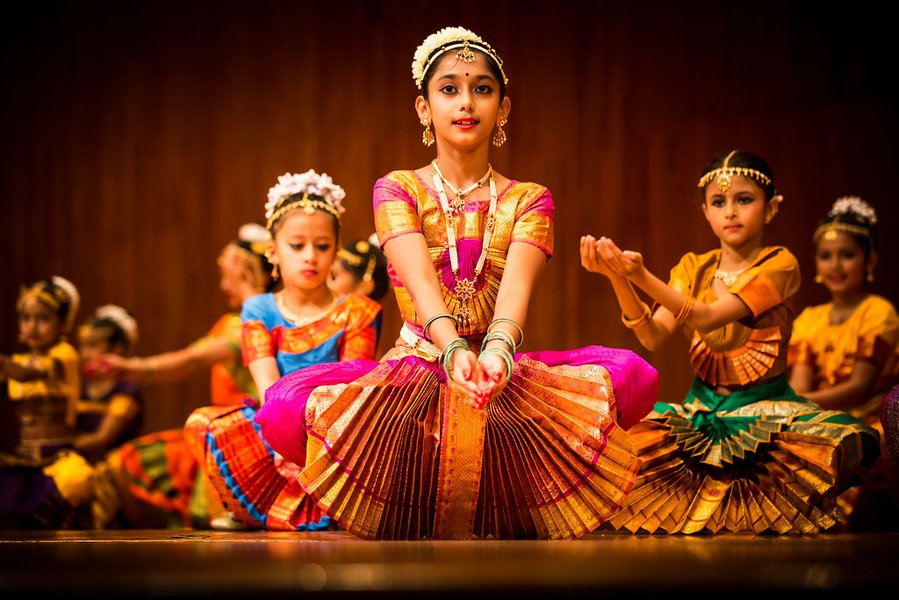
An Indian classical dancer performs, showcasing intricate hand gestures (mudras) and facial expressions central to Abhinaya.
Visualizing the Connection: Dance, Emotion, and EI
A Mindmap Overview
This mindmap illustrates the interconnectedness between the practice of Indian classical dance, its core expressive elements, the components of Daniel Goleman's Emotional Intelligence model, and the resulting benefits observed in professional dancers.
(Professional Practice in India)"] id1["Core Elements"] id1a["Abhinaya
(Art of Expression)"] id1b["Navarasas
(Nine Emotions)"] id1c["Rasa & Bhava
(Aesthetic Sentiment & Emotion)"] id1d["Rigorous Training
& Discipline"] id1e["Storytelling
& Narrative Embodiment"] id2["Links to Goleman's EI Model"] id2a["Self-Awareness
(Recognizing Internal States for Portrayal)"] id2b["Self-Regulation
(Emotional Control, Managing Performance Anxiety)"] id2c["Motivation
(Artistic Dedication, Intrinsic Drive)"] id2d["Empathy
(Understanding Characters, Audience Connection)"] id2e["Social Skills
(Collaboration, Communication through Art)"] id3["Observed Outcomes & Benefits"] id3a["Enhanced EI Components"] id3b["Improved Psychological Well-being"] id3c["Increased Self-Esteem"] id3d["Stress Reduction & Resilience"] id3e["Better Quality of Life"] id4["Research Context"] id4a["Studies Show Positive Correlation"] id4b["Cultural Significance in India"] id4c["Lack of Specific Meta-Analysis
(Goleman Model Focus)"]
Emotional Intelligence Components in Dancers: A Closer Look
Synthesizing Research Findings
While a formal meta-analysis quantifying EI specifically through Goleman's lens for professional Indian classical dancers in India is lacking, numerous studies point towards heightened emotional competencies in this group. Here's a synthesis structured around Goleman's core components:
Self-Awareness
The very nature of *Abhinaya* requires dancers to delve deep into their own emotional reservoirs to authentically portray the Navarasas. This constant introspection, needed to understand and differentiate subtle emotional nuances for performance, cultivates profound self-awareness. Studies suggest dancers, particularly those trained in Indian classical forms, score higher on measures related to recognizing their internal states and understanding how emotions manifest physically and mentally.
Self-Regulation
The rigorous discipline inherent in classical dance training demands significant emotional control. Dancers must manage performance anxiety, maintain focus during long practice hours, channel emotions constructively into their art, and regulate their physical and emotional expression precisely. Research indicates that the structured, mindful nature of classical dance practice contributes to enhanced emotional regulation, stress management, and impulse control.

Dancers often perform in groups, requiring coordination and shared emotional expression, highlighting social skills.
Motivation
Achieving proficiency in Indian classical dance requires years of dedicated practice and unwavering commitment. This sustained effort points to high levels of intrinsic motivation. The spiritual and philosophical underpinnings of many classical forms can further fuel this drive, connecting the dancer's personal journey to broader cultural and artistic goals. Studies correlating EI with quality of life in dancers often highlight motivation as a key factor contributing to their persistence and resilience.
Empathy
Indian classical dance is fundamentally a storytelling art form. Dancers must not only understand the emotions of the characters they portray but also connect emotionally with their audience, conveying complex narratives and evoking specific Rasas. The process of embodying different characters and perspectives, central to *Abhinaya*, naturally fosters empathetic understanding. Research indicates dancers demonstrate higher levels of empathy, likely honed through the constant practice of interpreting and expressing diverse emotional states.
Social Skills
While often perceived as a solo art, Indian classical dance frequently involves group performances, collaborations with musicians, and interactions with teachers (gurus) and audiences. These dynamics necessitate effective communication, teamwork, and relationship management. The ability to connect with an audience non-verbally through emotional expression is itself a powerful social skill. Studies have noted improved social skills and emotional maturity in dancers, linked to the collaborative and communicative aspects of their training and performance environments.
Manifestation of EI Components: A Summary Table
Goleman's Framework in the Context of Indian Classical Dance
This table summarizes how Daniel Goleman's core emotional intelligence components are often observed and cultivated within the practice of professional Indian classical dance in India, based on synthesized research findings.
| Goleman's EI Component | Brief Definition | Manifestation in Professional Indian Classical Dancers |
|---|---|---|
| Self-Awareness | Recognizing one's own emotions and their effects. | Deep introspection required for Abhinaya; heightened awareness of internal states to portray Navarasas accurately; understanding personal triggers and emotional responses during practice and performance. |
| Self-Regulation | Managing disruptive emotions and impulses. | Disciplined control over emotional expression; managing performance anxiety and stress; maintaining focus during rigorous training; channeling emotions constructively into performance. |
| Motivation | Emotional tendencies guiding or facilitating goal achievement. | High intrinsic drive fueled by artistic passion and dedication; persistence through years of demanding training; commitment to cultural and personal goals embedded in the art form; resilience in facing challenges. |
| Empathy | Understanding others' emotions and perspectives. | Ability to embody diverse characters and their emotional journeys; skill in conveying emotions non-verbally to connect with audience feelings; sensitivity to the emotional nuances required by Navarasas and storytelling. |
| Social Skills | Managing relationships and building networks. | Effective non-verbal communication with audiences; collaboration within dance troupes and with musicians; strong guru-shishya (teacher-student) relationships; building rapport through shared artistic expression. |
Mapping Emotional Competencies: A Comparative View
Relative EI Strengths in Dancers
Based on the synthesis of available research, this radar chart offers a conceptual visualization of how professional Indian classical dancers might hypothetically score across Goleman's five core EI components compared to a general population baseline. It suggests that the specific demands of their art form may lead to particularly pronounced strengths in areas like Self-Awareness, Self-Regulation, and Empathy, while still showing elevated levels across all components.
Note: This chart is illustrative, representing trends suggested by research rather than precise quantitative data from a specific meta-analysis.
The Power of Expression: Storytelling Through Dance
Connecting with Audiences Emotionally
Indian classical dance transcends mere physical performance; it is a powerful medium for storytelling and emotional connection. Dancers use intricate gestures (mudras), facial expressions (*abhinaya*), and body language synchronized with rhythm and music to convey complex narratives, often drawn from mythology and epics. This ability to be an "empathic storyteller," as highlighted in the video below, is deeply intertwined with emotional intelligence – particularly empathy and social awareness.
This video features Aishwarya Balasubramanian demonstrating how Bharatanatyam, an ancient Indian classical dance form, serves as a vehicle for empathic storytelling. Her performance and explanation exemplify how dancers utilize highly developed emotional expression skills – a cornerstone of both the art form and emotional intelligence – to communicate narratives and connect with the audience on a profound level.
Research Landscape and Future Directions
Acknowledging the Gaps
While individual studies consistently suggest a positive link between professional Indian classical dance practice and heightened emotional intelligence components, it's crucial to reiterate that a comprehensive meta-analysis specifically employing Daniel Goleman's framework for this population in India is currently scarce in the readily available literature (as of May 3, 2025). Existing research often uses different EI measurement tools (like the Trait Emotional Intelligence Questionnaire) or focuses on specific aspects like empathy or emotional regulation rather than Goleman's complete model.
Studies have found significant positive correlations, such as one reporting a correlation coefficient (\(r = 0.337\), \(p < 0.001\)) between EI and quality of life among professional dancers, lending quantitative support to the observed benefits. Research also indicates that dancers with longer training durations tend to exhibit higher EI levels. However, the field would benefit immensely from:
- Standardized Meta-Analyses: Systematically aggregating data from various studies using consistent EI measures, ideally aligned with Goleman's model, to provide robust statistical conclusions.
- Longitudinal Studies: Tracking EI development in dancers over time to better understand the causal relationship between training and emotional competence.
- Cross-Cultural and Cross-Disciplinary Comparisons: Comparing EI profiles of Indian classical dancers with those in other dance forms and cultural contexts.
Despite these gaps, the confluence of evidence strongly supports the idea that the demanding, expressive, and introspective nature of Indian classical dance significantly fosters the development of emotional intelligence, contributing to the well-being and artistic mastery of its practitioners.
Frequently Asked Questions (FAQ)
What are the Navarasas in Indian classical dance?
The Navarasas are the nine primary emotions or aesthetic sentiments central to Indian arts, including classical dance. They are Shringara (Love), Hasya (Laughter), Karuna (Sorrow), Raudra (Anger), Veera (Heroism), Bhayanaka (Fear), Bibhatsa (Disgust), Adbhuta (Wonder), and Shanta (Peace). Dancers train rigorously to embody and express these emotions authentically through *Abhinaya* (expression).
How does practicing classical dance enhance empathy?
Indian classical dance often involves portraying characters and narratives rich in emotional depth. Dancers must step into the shoes of these characters, understand their motivations and feelings (empathy), and then convey these emotions convincingly to the audience. This constant practice of interpreting and embodying diverse emotional perspectives is believed to strengthen a dancer's empathetic abilities.
Is Daniel Goleman's model the only way to measure Emotional Intelligence?
No, Daniel Goleman's model (often referred to as a "mixed model" combining abilities and traits) is one of the most popular, but not the only one. Other prominent models include the Ability Model (e.g., Mayer-Salovey-Caruso EI Test - MSCEIT), which views EI as a cognitive ability, and Trait EI models (e.g., TEIQue), which see EI as a collection of personality traits and self-perceptions. Different studies on dancers may use different models and measurement tools.
Why isn't there a specific meta-analysis focused on Goleman's model for Indian classical dancers?
Meta-analyses require a sufficient number of primary studies investigating the same specific relationship (Goleman's EI in Indian classical dancers) using comparable methodologies and measures. It's possible that not enough studies have focused precisely on this combination yet, or existing studies use varied EI models (like Trait EI) making direct comparison difficult for a meta-analysis centered strictly on Goleman's framework.
Recommended Further Exploration
- How does specific training in Navarasas impact the emotional regulation skills of performers?
- Are there differences in emotional intelligence profiles among dancers of Bharatanatyam, Kathak, Odissi, and other forms?
- How does the duration of professional classical dance training correlate with measured levels of empathy?
- What is the role of Indian classical dance practice in promoting mental well-being and reducing stress among professionals?
References
Last updated May 3, 2025