
Comprehensive Analysis of Hairdryer Energy Balance and Ice Melting Entropy
Integrated study of energy processes and entropy changes
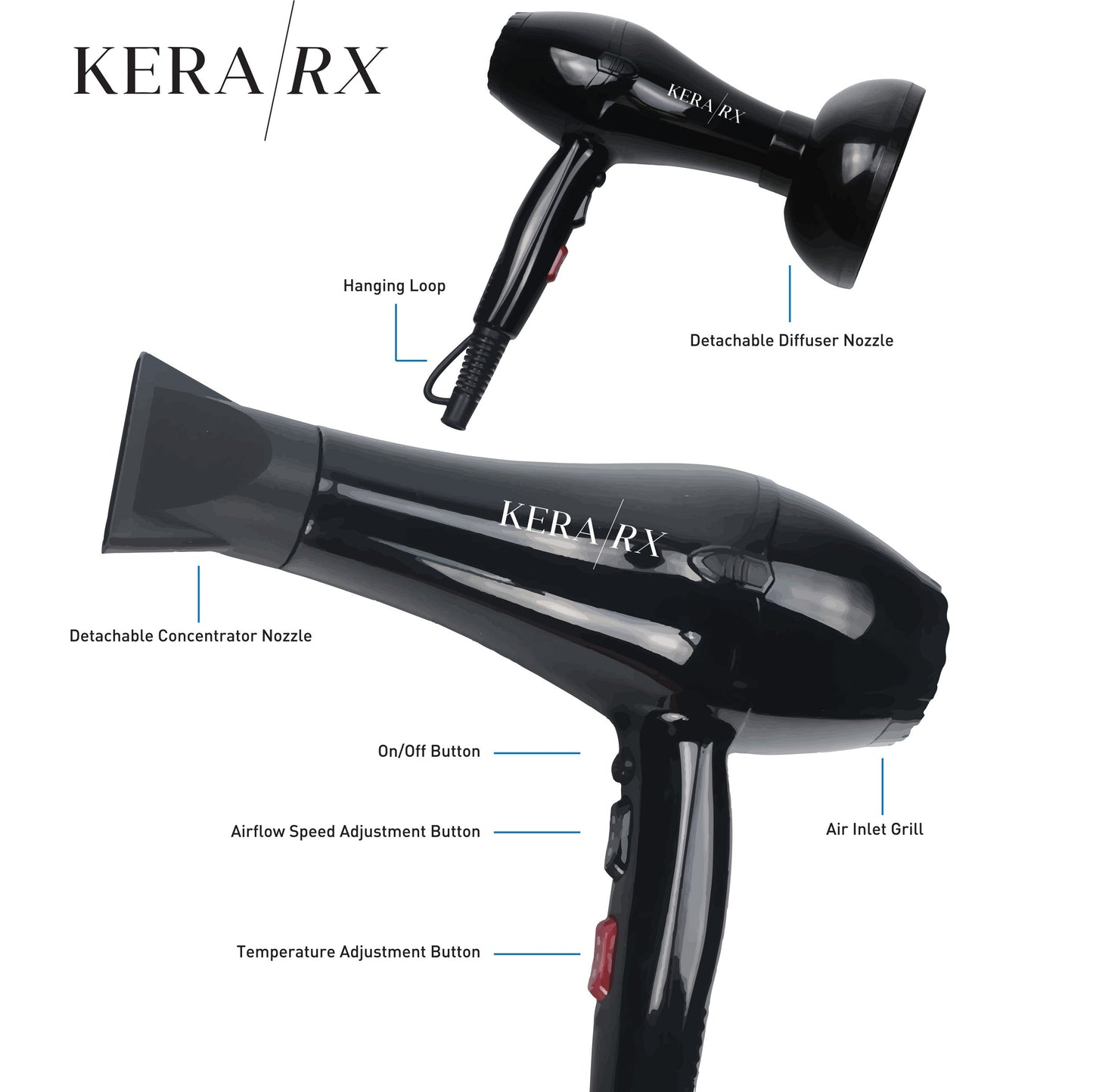
Key Highlights
- Energy Balance Measurements: Determining electrical work, air enthalpy change, and heat losses are essential for analyzing a hairdryer's performance.
- Major Error Sources: Measurement inaccuracies, heat losses, and airflow assumptions significantly influence the experimental verification of the first law of thermodynamics.
- Entropy in Ice Melting: The transition from solid ice to liquid water increases disorder, and different environmental and liquid properties affect melting rates and entropy balance.
I. Hairdryer Energy Balance Analysis
A. Measurements Necessary for Analyzing the Energy Balance
To accurately analyze the energy balance of a hairdryer, several measurements are required that ensure a comprehensive understanding of energy input, transformation, and loss. The process involves capturing electrical input data, characterizing the thermal properties of the moving air, and assessing the heat transfer to ambient surroundings.
1. Electrical Work Input
Measuring the electrical work input begins with determining the voltage (V) across and the current (I) passing through the hairdryer. This is typically achieved using instruments such as wattmeters or multimeters capable of capturing live voltage and current data. The electrical power input (P) in watts is calculated as:
\( \text{P} = \text{V} \times \text{I} \)
The total electrical energy used over a period of time is then found by multiplying the power by the time of operation (in seconds or hours). This gives the electrical work input:
\( \text{W} = \text{P} \times \text{Time} \)
This energy is a crucial input for comparing against the energy transformations that occur within the hairdryer.
2. Change in Enthalpy of the Air
To determine the change in the enthalpy of the air, one must measure the temperatures and mass flow rate of the air at both the inlet and the outlet of the hairdryer. The key steps involve:
- Temperature Measurements: Use thermocouples or digital thermometers at the inlet (T₁) and outlet (T₂) to record precise temperatures.
- Mass Flow Rate: Measure the air velocity using a hot wire anemometer or similar device and calculate the volumetric flow rate. The mass flow rate \( \dot{m} \) is then determined by multiplying the air density (considering the inlet temperature and pressure) with the volumetric flow rate.
The change in enthalpy (ΔH) for the moving air is then calculated using:
\( \Delta H = \dot{m} \times c_p \times (T_{outlet} - T_{inlet}) \)
where \( c_p \) is the specific heat capacity of air at constant pressure, generally around 1005 J/(kg·K). This formulation links the measured temperature difference to the increase in kinetic energy carried by the heated air.
3. Heat Transfer to Ambient Surroundings
Apart from the useful energy in the heated air, some energy is inevitably lost as heat to the surrounding environment. Assessing this heat transfer involves:
- Surface Temperature Measurement: Monitor the temperature of the hairdryer’s exterior using appropriate sensors.
- Convective Heat Transfer Calculation: Employ convective heat transfer considerations, where the heat transfer (Q) is estimated using:
\( Q = U \times A \times \Delta T_{surface} \)
Here, U signifies the overall heat transfer coefficient, A represents the surface area of the hairdryer, and \( \Delta T_{surface} \) is the temperature difference between the hairdryer surface and the ambient air.
B. Linking Measurements with the First Law
In the energy balance analysis of the hairdryer, the electrical energy supplied fundamentally equates to the sum of the energy transformed into useful work (in the form of increased enthalpy of the air) and energy lost as heat to the surroundings. This application of the first law of thermodynamics (conservation of energy) is mathematically expressed as:
\( \text{Electrical Work Input} = \Delta H_{air} + Q_{loss} \)
This equation underlines that all energy supplied by the hairdryer is accounted for by an increase in the internal energy of the air and any extrinsic heat loss.
II. Major Sources of Error in the Hairdryer Experiment
A. Identification of Error Sources
Experimental accuracy is pivotal for validating the energy balance. Several sources of error must be considered to refine measurements and reduce discrepancies:
1. Measurement Inaccuracies
One of the most significant sources of error is the inherent inaccuracy of measurement devices:
- Temperature Sensors: Errors in readings from thermocouples or digital thermometers can lead to significant mistakes, particularly given that changes in enthalpy rely critically on the temperature difference between inlet and outlet.
- Airflow Monitors: Inaccurate measurements of the air velocity and consequently the mass flow rate ( \( \dot{m} \) ) lead to overall error in calculating the change in enthalpy.
- Electrical Measurements: Voltage and current readings must be precise; errors here directly affect the computed electrical work input.
2. Assumptions about Airflow and Heat Loss
Certain simplifications are often made in experimental designs which can introduce errors:
- Uniform Airflow Assumption: The experiments may assume a uniform airflow through the hairdryer when in reality, variations occur due to design limitations or external influences. This deviation can skew the mass flow rate calculation.
- Neglected Heat Transfer: Assuming negligible heat loss to the surroundings can lead to overestimations of energy transfer efficiency in the hairdryer. Failure to account for this lost energy results in deviations from the energy balance equation.
3. Calibration and Instrument Drift
Equipment calibration is vital. Over time, instruments may experience drift, resulting in systematic errors that may not be immediately evident if not periodically recalibrated.
B. Impact on Energy Balance and Thermodynamic Verification
The presence of these sources of error impacts the calculation of the energy balance in several ways:
- Discrepancies in Energy Conservation: When measurement errors and erroneous assumptions accumulate, the electrical work input may not equate exactly to the sum of the computed enthalpy change and heat losses. This apparent imbalance can lead to challenges in verifying the first law of thermodynamics accurately.
- Propagation of Uncertainties: Small errors in fundamental measurements, such as temperature or airflow, propagate through the calculations of ΔH and Q, possibly resulting in considerable uncertainties in the final energy balance.
- Over- or Under-estimation: Specifically, underestimating heat losses or inaccurate assessments of mass flow rate can lead to an over- or under-estimation of the effective energy transformed in the system.
Ultimately, these errors may compromise the experimental goal of demonstrating that energy is conserved in accordance with the first law of thermodynamics.
III. Ice Melting and Entropy Change
A. Increase in Entropy during Ice Melting
The melting of ice is a classic example of a process that demonstrates the increase in entropy inherent in natural phase changes. Entropy, often conceptualized as a measure of disorder, increases as ice transitions from the highly structured crystalline form to the less ordered state of liquid water.
1. Structural Change and Molecular Freedom
In solid ice, water molecules are arranged in a well-organized lattice maintained by hydrogen bonds. This ordered structure ensures that each molecule is locked into a fixed location, which corresponds to a relatively low entropy state. When ice melts:
- Disruption of the Crystal Lattice: As the ice absorbs heat, the rigidity of the hydrogen-bond network diminishes, enabling water molecules to break free from their fixed positions.
- Increased Randomness: Freed from their lattice constraints, water molecules exhibit greater freedom of movement, resulting in a more disordered configuration. Consequently, the entropy of the liquid water increases.
This transformation from a constrained to a less constrained state is quantified by the formula:
\( \Delta S = \frac{Q}{T} \)
where \( Q \) represents the heat absorbed during melting and \( T \) is the absolute temperature at which the process occurs (approximately 273.15 K at 0°C). Because the liquid state has many more accessible configurations, its entropy is inherently higher than that of ice.
B. Role of Thermal Conductivity and Specific Heat in Ice Melting
The melting rate of ice is not solely dependent on the energy available for melting, but also on the properties of the liquid medium surrounding it. Two key properties determine how efficiently heat is transferred to the ice:
1. Thermal Conductivity
Liquids with high thermal conductivity (for example, water) can transfer heat much more rapidly to the ice interface compared to liquids with lower thermal conductivity (such as oil or alcohol). A high thermal conductivity medium ensures:
- Efficient Energy Transfer: Quick propagation of thermal energy facilitates faster heating, which can cause the ice to melt at an accelerated rate.
2. Specific Heat Capacity
The specific heat capacity of a liquid determines the amount of heat required to raise its temperature by one degree Kelvin. A higher specific heat capacity allows the liquid to absorb substantial amounts of heat with only a small increase in temperature. This effect influences the melting process by:
- Moderated Temperature Change: Liquids such as water, with a high specific heat capacity, can absorb extra energy without a dramatic temperature rise, thereby providing steady energy transfer which enhances the melting rate.
In contrast, liquids with lower specific heat capacities will exhibit more significant temperature changes with the same amount of energy transfer, potentially reducing the efficiency if the temperature gradient diminishes.
C. Ambient Temperature Impact on Entropy Change
The environment surrounding the melting ice also plays a crucial role in determining the net entropy change. The temperature of the ambient environment influences both the rate of melting and the entropy change of the surroundings:
1. System and Surroundings Interaction
When ice melts, it absorbs heat from its surroundings, which leads to:
- Entropy Increase in the Ice: As discussed, the transition to a liquid state increases the randomness and thus yields a positive change in entropy.
- Entropy Decrease in the Surroundings: The surroundings lose heat during this process. The decrease in entropy of the surroundings is quantified by:
\( \Delta S_{surroundings} = -\frac{Q}{T_{surroundings}} \)
If the ambient temperature is high, the magnitude of the associated entropy decrease in the surroundings is smaller compared to a lower ambient temperature. As long as the increase in the system's entropy exceeds the absolute value of the decrease in the surroundings, the overall entropy change remains positive, aligning with the second law of thermodynamics.
IV. Integrated Data Overview
| Parameter | Measurement / Calculation | Relevant Formula/Concept |
|---|---|---|
| Electrical Work Input | Voltage (V) and Current (I) measurements; Operation time | \( \text{P} = \text{V} \times \text{I}; \quad \text{W} = \text{P} \times \text{Time} \) |
| Change in Enthalpy of Air | Inlet & outlet temperatures; Mass flow rate | \( \Delta H = \dot{m} \times c_p \times (T_{outlet} - T_{inlet}) \) |
| Heat Transfer to Surroundings | Surface temperature; Area; Ambient temperature | \( Q = U \times A \times \Delta T \) |
| Entropy Change in Melting Ice | Heat absorbed by ice; Ambient temperature | \( \Delta S = \frac{Q}{T} \) |
V. References
- Entropy Changes in State Transitions - LibreTexts
- Hair Dryer Experiment Instructions - Course Hero
- Reversible Ice Melting Discussion - Physics Stack Exchange
- Hair Dryer Energy Consumption - Santanna Energy Services
- Hair Dryer Electricity Use - Hair Speaks
VI. Recommended Further Exploration
Last updated March 18, 2025