
Entropy: Understanding the Measure of Disorder and Energy Distribution
Unlocking the Secrets of Entropy for High School Students
Key Takeaways
- Entropy measures the degree of disorder or randomness in a system.
- Natural processes tend to increase entropy, leading systems towards greater disorder.
- Understanding entropy is crucial for explaining everyday phenomena and the flow of energy.
1. What is Entropy?
Defining Entropy
Entropy is a fundamental concept in physics and chemistry that describes the level of disorder or randomness within a system. More precisely, it quantifies the number of ways energy can be distributed among the particles of a system. A higher entropy value indicates a greater number of possible microstates, meaning the energy is more spread out and the system is more disordered.
Entropy as Disorder
While entropy is often simplified as a measure of "disorder," this definition can be somewhat misleading. It's more accurate to view entropy as a measure of the number of possible configurations that a system can have. For instance, a neatly organized room has lower entropy because there's only a limited way to arrange everything neatly. Conversely, a messy room has higher entropy due to the vast number of possible disordered arrangements.
2. The Second Law of Thermodynamics
Understanding the Second Law
The Second Law of Thermodynamics is a fundamental principle that states that in any natural process, the total entropy of a system and its surroundings always increases over time. This means that systems naturally evolve towards states with higher entropy. Essentially, energy tends to disperse or spread out unless external work is performed to concentrate it.
Implications of the Second Law
This law explains why certain processes are irreversible. For example, once ice melts into water, it won't spontaneously reassemble into ice without external intervention. Similarly, heat naturally flows from hot objects to cold ones, increasing the overall entropy of the system.
3. Everyday Examples of Entropy
Melting Ice
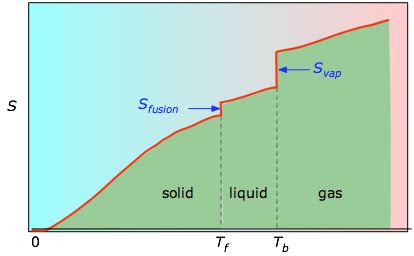
Consider an ice cube melting in warm water. The ice has a highly ordered molecular structure, representing low entropy. As it melts, the molecules move more freely, increasing the system's entropy. This transition from solid to liquid demonstrates how entropy increases when order diminishes.
Mixing Substances
When sugar is dissolved in tea, the sugar molecules spread out uniformly throughout the liquid. Initially, the sugar is ordered, but upon mixing, the molecules disperse randomly, thereby increasing the system's entropy.
Breaking Objects
Dropping a plate causes it to shatter into numerous pieces. The intact plate represents a low-entropy state with limited configurations. Once broken, the pieces scatter, creating a high-entropy state due to the vast number of possible arrangements.
Perfume Spreading in a Room
When perfume is sprayed in one corner of a room, the scent molecules gradually disperse throughout the entire space. Initially concentrated, the perfume spreads out, increasing the system's entropy.
4. Mathematical Representation of Entropy
Boltzmann's Entropy Formula
For those interested in the mathematical aspect, entropy (\( S \)) can be defined using Boltzmann's equation:
\[ S = k \ln(W) \]
Where:
- S is entropy.
- k is the Boltzmann constant.
- W is the number of microstates.
Interpreting the Equation
This equation illustrates that entropy increases logarithmically with the number of possible microstates (\( W \)). A larger number of microstates signifies greater disorder and higher entropy.
5. Entropy in Different States of Matter
Comparing Solids, Liquids, and Gases
| State of Matter | Particle Arrangement | Entropy Level |
|---|---|---|
| Solid | Particles are tightly packed in a fixed, orderly structure. | Low Entropy |
| Liquid | Particles are less orderly and can move around each other. | Moderate Entropy |
| Gas | Particles are far apart and move freely and randomly. | High Entropy |
Entropy Progression
As matter transitions from solid to liquid to gas, entropy increases. This progression aligns with the increasing freedom of particle movement and the corresponding rise in possible microstates.
6. Why Entropy Matters
Explaining Natural Processes
Entropy helps explain why certain processes occur spontaneously while others do not. For example, it clarifies why heat flows from hotter objects to cooler ones and why mixing substances happens naturally.
Energy Efficiency and Limitations
Understanding entropy is essential for grasping the limitations of energy transformations. It highlights why 100% energy efficiency is impossible, as some energy will always disperse, increasing entropy.
The Arrow of Time
Entropy is often associated with the "arrow of time," indicating the direction in which time flows from past to future. This concept explains why events have a chronological order, as entropy tends to increase over time.
7. Visualizing Entropy
Entropy Demonstrations
Visual aids and hands-on activities can make the concept of entropy more tangible:
-
Two Jars of Candies: One jar has candies neatly stacked, while the other has them randomly mixed. Students can observe that the mixed jar represents a state of higher entropy.
-
Particle Diagrams: Drawing particles in solid, liquid, and gas states helps illustrate how entropy increases with particle movement freedom.
-
Interactive Simulations: Online tools and simulations can demonstrate entropy changes in real-time, offering dynamic learning experiences.
Entropy and Probability
Understanding entropy also involves grasping the concept of probability. States with higher entropy are more probable because there are more ways to achieve them. This probabilistic nature underscores the inevitability of entropy increase in natural processes.
8. Avoiding Common Misconceptions
Misconception 1: Entropy Equals Disorder
While entropy is related to disorder, it's more accurately a measure of the number of possible configurations or the distribution of energy within a system. A system can become more disordered by increasing entropy, but the two concepts are not identical.
Misconception 2: Entropy Can Decrease Locally Without External Influence
In isolated systems, entropy cannot decrease. While local decreases in entropy are possible, they require external energy input, ensuring that the total entropy of the system and its surroundings still increases.
Misconception 3: Entropy is Always Bad
Entropy is a natural and essential part of physical processes. It drives changes and the flow of energy, making it crucial for life and technological advancements. It's not inherently negative but rather a fundamental property of systems.
9. Advanced Topics in Entropy
Entropy and Information Theory
Beyond thermodynamics, entropy plays a vital role in information theory, where it measures the uncertainty or information content. This crossover highlights the versatility of the entropy concept across different scientific fields.
Statistical Mechanics
In statistical mechanics, entropy links the microscopic behavior of particles to macroscopic properties of materials. This connection bridges the gap between quantum-level interactions and observable phenomena.
10. Practical Applications of Entropy
Refrigeration and Heat Engines
Entropy principles are fundamental in designing refrigeration systems and heat engines. These technologies rely on controlled entropy changes to transfer heat and perform useful work efficiently.
Biological Systems
In biology, entropy is crucial for understanding metabolic processes and the organization of living organisms. It explains how energy flows through biological systems and how complex structures are maintained despite natural entropy increases.
Environmental Science
Entropy concepts help in understanding ecological balance and energy distribution in ecosystems. They are essential for analyzing energy flow and sustainability in environmental systems.
Conclusion
Entropy is a pivotal concept that bridges various scientific disciplines, offering insights into the fundamental behavior of systems. For high school students, grasping entropy enhances their understanding of natural processes, energy flow, and the intrinsic order within chaos. By exploring everyday examples, mathematical formulations, and practical applications, students can appreciate the profound role entropy plays in shaping the world around them.
References
Last updated January 18, 2025