
The Interrelationship of Temperature, Entropy, and Energy in Thermodynamics
Exploring the foundational principles that govern energy distribution and system disorder
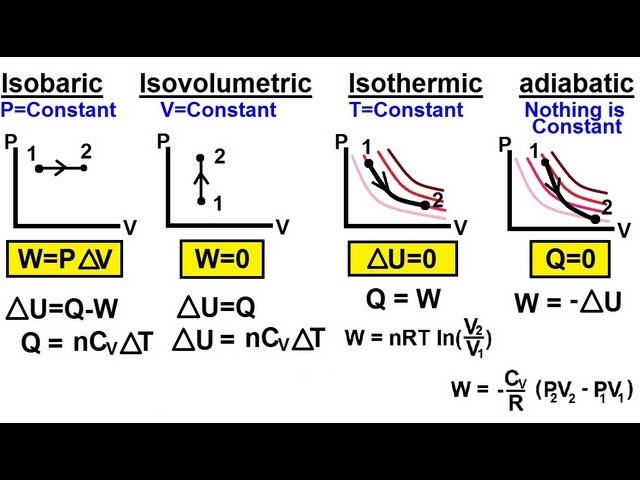
Key Takeaways
- Temperature directly influences the distribution of energy within a system, affecting its entropy.
- The second law of thermodynamics dictates that entropy in an isolated system never decreases, highlighting the natural progression towards disorder.
- Energy transfer processes, such as heat exchange, play a crucial role in determining changes in both temperature and entropy.
Understanding the Fundamental Concepts
Temperature: A Measure of Kinetic Energy
Temperature is a fundamental physical quantity that measures the average kinetic energy of the particles within a substance. In essence, it quantifies how much the particles in a system are moving. The higher the temperature, the greater the motion and energy of the particles. This increased kinetic energy facilitates more vigorous interactions among particles, leading to higher levels of disorder or randomness within the system.
Entropy: The Measure of Disorder
Entropy, denoted by the symbol S, is a thermodynamic property that quantifies the degree of disorder or randomness in a system. It represents the number of microscopic configurations (microstates) that correspond to a system's macroscopic state. A higher entropy indicates a greater number of possible microstates, signifying more disorder. Conversely, lower entropy signifies a more ordered state with fewer possible configurations.
Energy: The Capacity to Perform Work
Energy, symbolized by E, is the capacity of a system to perform work or produce heat. It exists in various forms, including kinetic energy, potential energy, thermal energy, and internal energy. The internal energy of a system encompasses the total energy contained within it, accounting for both the kinetic and potential energies of its constituent particles.
The Relationship Between Temperature, Entropy, and Energy
Temperature and Entropy
The relationship between temperature and entropy is intricately linked through the fundamental thermodynamic equation:
$$ \Delta S = \frac{\Delta Q}{T} $$
Here, ΔS represents the change in entropy, ΔQ is the heat added to the system, and T is the absolute temperature in Kelvin. This equation illustrates that for a given amount of heat transfer, the change in entropy is inversely proportional to the temperature. At higher temperatures, adding the same amount of heat results in a smaller increase in entropy compared to lower temperatures. This is because, at higher temperatures, the system already has a large number of accessible microstates, so the relative increase in disorder is less pronounced.
Energy and Entropy
Energy and entropy are connected through the second law of thermodynamics, which states that the total entropy of an isolated system can never decrease over time. When energy is transferred as heat, it tends to disperse and spread out, leading to an increase in entropy. This dispersal of energy means that the energy becomes more uniformly distributed among the particles of the system, increasing the number of possible microstates and thereby the entropy.
The fundamental thermodynamic relation for a simple system is given by:
$$ dE = T dS - P dV $$
In this equation, dE is the change in internal energy, T is the temperature, dS is the change in entropy, P is the pressure, and dV is the change in volume. This relation shows how changes in energy are related to changes in entropy and volume, highlighting the interplay between these fundamental quantities in thermodynamic processes.
Temperature as a Derivative of Energy with Respect to Entropy
Temperature can be formally defined as the partial derivative of energy with respect to entropy, keeping other variables constant. Mathematically, this is expressed as:
$$ \frac{1}{T} = \left( \frac{\partial S}{\partial E} \right)_{V,N} $$
This equation signifies that temperature is inversely related to how entropy changes with energy. A high temperature implies that a small increase in energy results in a small increase in entropy, indicating that the energy is already widely distributed among many microstates. Conversely, a low temperature means that the same increase in energy leads to a significant increase in entropy, as the system transitions from fewer to more accessible microstates.
Entropy and the Second Law of Thermodynamics
The Second Law Explained
The second law of thermodynamics is a cornerstone of physical science, asserting that the total entropy of an isolated system can never decrease over time. This law underpins the natural tendency towards disorder and energy dispersal in all processes. It implies that spontaneous processes will always proceed in a direction that increases the total entropy of the universe.
Entropy in Heat Transfer
Consider two objects at different temperatures. When they come into thermal contact, heat naturally flows from the hotter object to the colder one. This flow of heat results in a decrease in entropy for the hot object and an increase in entropy for the cold object. However, the increase in entropy of the cold object outweighs the decrease in entropy of the hot object, leading to a net increase in the total entropy of the system. This process exemplifies the second law of thermodynamics in action.
Spontaneous Processes and Entropy
Spontaneous processes are those that occur without external intervention. According to the second law, these processes are characterized by an increase in the total entropy of the system and its surroundings. For example, when ice melts into water, the system absorbs heat from the surroundings, increasing its entropy. Although the surroundings lose some entropy due to the heat loss, the overall entropy of the combined system increases, making the process spontaneous.
Energy Transfer and Its Impact on Entropy
Heat Transfer and Entropy Change
When heat is transferred into a system, it increases the system's internal energy, leading to an increase in temperature and entropy. The relationship is governed by the equation:
$$ \Delta S = \frac{Q}{T} $$
Here, Q represents the heat added to the system. At constant pressure or volume, adding heat increases the system's entropy. The degree of entropy change depends on the temperature; at higher temperatures, the same amount of heat results in a smaller entropy increase.
Work and Energy Dispersion
In addition to heat transfer, work done on or by a system can also influence its internal energy and entropy. When work is performed on a system, its internal energy increases, which can lead to an increase in temperature and entropy, depending on the nature of the work and the system's properties.
Phase Transitions and Entropy
Phase transitions provide clear examples of the interplay between temperature, energy, and entropy. During a phase transition, such as melting or vaporization, the system absorbs or releases energy without a change in temperature. For instance, when ice melts into water, it absorbs latent heat, resulting in an increase in entropy without a temperature change. Similarly, when water vaporizes into steam, it absorbs heat, leading to a significant increase in entropy as the molecules move from a more ordered liquid state to a more disordered gaseous state.
Mathematical Perspectives on Entropy and Temperature
Differential Forms
The differential forms of the fundamental thermodynamic equations provide deeper insight into the relationship between temperature, entropy, and energy. For a closed system undergoing a reversible process, the first law of thermodynamics can be expressed as:
$$ dU = T dS - P dV $$
In this equation, dU is the change in internal energy, T dS represents the heat added to the system, and P dV accounts for the work done by the system. This equation highlights how changes in entropy and volume contribute to changes in the system's internal energy.
Entropy as a Function of State
Entropy is a state function, meaning it depends only on the current state of the system and not on how the system arrived at that state. This property allows us to define entropy changes between any two states without considering the specific path taken during the transition.
Maxwell Relations
In thermodynamics, Maxwell relations are a set of equations derived from the fundamental thermodynamic equations. They provide relationships between different partial derivatives of thermodynamic quantities. These relations are instrumental in connecting temperature, entropy, and energy, allowing for the derivation of properties that are otherwise difficult to measure directly.
Practical Applications and Implications
Thermodynamic Cycles
Understanding the relationship between temperature, entropy, and energy is crucial in the analysis of thermodynamic cycles, such as those found in engines and refrigerators. These cycles rely on the principles of energy transfer and entropy to convert heat into work or to transfer heat from colder to hotter regions.
Statistical Mechanics Perspective
From the viewpoint of statistical mechanics, entropy is a measure of the number of possible microscopic configurations that correspond to a system's macroscopic state. This perspective bridges the gap between the macroscopic laws of thermodynamics and the microscopic behaviors of particles, providing a deeper understanding of how temperature and energy distributions lead to changes in entropy.
Information Theory Connections
Entropy in thermodynamics has parallels in information theory, where it quantifies the amount of uncertainty or information content. This connection highlights the universal nature of entropy as a measure of uncertainty or disorder, applicable across various scientific disciplines.
Illustrative Table: Phase Transitions and Entropy Changes
| Phase Transition | Heat Transfer (Q) | Temperature (T) | Entropy Change (ΔS) |
|---|---|---|---|
| Melting (Solid to Liquid) | Heat Absorbed | Constant | Increase |
| Vaporization (Liquid to Gas) | Heat Absorbed | Constant | Increase |
| Freezing (Liquid to Solid) | Heat Released | Constant | Decrease |
| Condensation (Gas to Liquid) | Heat Released | Constant | Decrease |
Mathematical Models and Calculations
Calculating Entropy Change
To calculate the change in entropy for a process, the following integral can be used:
$$ \Delta S = \int_{i}^{f} \frac{dQ_{\text{rev}}}{T} $$
Where:
- dQrev is the infinitesimal reversible heat transfer.
- T is the absolute temperature.
- i and f denote the initial and final states, respectively.
Entropy in Adiabatic Processes
In adiabatic processes, where no heat is exchanged with the surroundings (Q = 0), the entropy change depends solely on whether the process is reversible or irreversible:
-
Reversible Adiabatic Process: No change in entropy (ΔS = 0).
-
Irreversible Adiabatic Process: Increase in entropy (ΔS > 0).
Conclusion
The intricate relationship between temperature, entropy, and energy forms the backbone of thermodynamic theory. Temperature serves as a measure of the average kinetic energy within a system, fundamentally influencing the system's entropy, which quantifies its disorder. Energy transfer processes, whether through heat or work, play a critical role in determining how temperature and entropy evolve within a system. The second law of thermodynamics elegantly encapsulates the natural tendency towards increased entropy, emphasizing the universal progression towards disorder in isolated systems. Understanding these relationships is essential not only for theoretical physics but also for practical applications across engineering, chemistry, and beyond.
References
Last updated February 7, 2025