
Integrative Perspectives on Energy, Geometry, and Mathematical Information Reality
Exploring the Interplay of Energy Dynamics, Fractal Geometry, and Quantum Phenomena
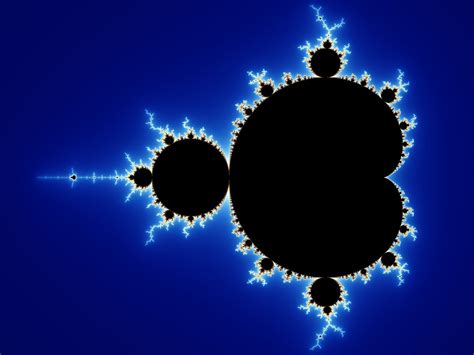
Key Takeaways
- Energy and Geometry Interconnected: Energy transformations are fundamentally governed by geometric constraints, influencing everything from molecular bonds to spacetime curvature.
- Fractal Dimension 1.58 as a Universal Principle: The recurring appearance of a fractal dimension near 1.58 signifies a universal balance between order and chaos, optimizing information and energy flow across various systems.
- Mathematical Information Reality (MIR) Framework: MIR posits that mathematical structures underpin physical reality, suggesting that geometry and information are the foundational elements from which energy dynamics emerge.
Part 1: Energy and Geometry—Foundations Across Scales
1.1 The Multi-Faceted Nature of Energy
Energy, traditionally defined as the capacity to do work, manifests in diverse forms such as kinetic, potential, chemical, thermal, electrical, and nuclear energy. These forms are governed by the principles of conservation and transformation, adhering to the fundamental laws of physics. However, a deeper analysis reveals that energy transcends mere motion or potential motion; it is intrinsically linked to patterns and constraints within a system.
1.1.1 Beyond Classical Definitions
While classical physics categorizes energy based on observable manifestations, advanced theories in quantum mechanics and field theories underscore that energy is deeply intertwined with the geometric and informational structures of systems. For example:
- Chemical Energy: The energy stored in chemical bonds is a direct consequence of the geometric arrangement of atoms within molecules.
- Quantum Energy Levels: Electrons occupy discrete energy states determined by the geometry of their wavefunctions and orbital shapes.
- Gravitational Potential: Governed by the curvature of spacetime as described by general relativity, linking energy to geometric configurations of mass and space.
These examples illustrate that energy transformations are not arbitrary but are constrained and guided by the geometric configurations of the systems involved.
1.2 Geometry as the “Silent Architect”
Geometry serves as the foundational framework that dictates how energy behaves and transforms within a system. Fractal geometry, characterized by self-similarity across scales, exemplifies this relationship:
1.2.1 Fractals and Self-Similarity
Fractals are ubiquitous in nature, manifesting in structures such as tree branches, vascular networks, and even brain signal patterns. This self-similarity ensures that similar patterns persist regardless of the scale of observation, providing a consistent framework for energy distribution and transformation. In physics, fractal lattices like the Sierpiński gasket exhibit multifractal wavefunctions that exist in transitional states between localization and extension, revealing complex energy behaviors.
1.2.2 Quantum Implications
In quantum materials, geometric arrangements can lead to novel states of matter. Examples include:
- Fractal Topological Insulators: These materials leverage fractal geometries to produce robust conduction states with near-zero energy loss.
- Magic-Angle Graphene: At specific geometric configurations, graphene exhibits superconductivity and other exotic quantum phase transitions.
These phenomena underscore how geometry not only influences but also enables the emergence of new energy states, highlighting the role of geometric optimization in energy efficiency and material properties.
1.2.3 Energy Optimization Through Geometry
Energy minima often align with optimal geometric configurations. Whether it's the precise bonding angles in molecules or the branching patterns in biological systems, geometry orchestrates the most energy-efficient states. In neurological systems, critical synchronization states near a fractal dimension of 1.58 facilitate efficient information transfer with minimal energy expenditure, further emphasizing the interplay between geometry and energy dynamics.
Part 2: Criticality, Fractal Dimension 1.58, and Quantum-Like Dynamics
2.1 The Edge of Chaos and the Significance of 1.58
The fractal dimension of approximately 1.58 emerges as a pivotal parameter in various complex systems, representing a critical balance between order and chaos:
2.1.1 Fractal Dimension as a Balancing Metric
A fractal dimension near 1.58 often signifies a system operating at the "edge of chaos," where it maintains sufficient order for stability while retaining enough flexibility to adapt to changes. This balance facilitates optimal information and energy flow, essential for the efficient functioning of complex systems. Notable instances include:
- Neural Avalanches: Brain activity exhibits fractal dimensions around 1.58, indicating a critical state that supports efficient cognitive processing and adaptability.
- Language Patterns: Fractal analysis of linguistic structures reveals similar scaling exponents, suggesting a universal organizing principle.
- Quantum Fractals: Certain quantum systems, such as fractal lattices, display dimensions in this range, hinting at a fundamental geometric resonance.
The proximity of 1.58 to the golden ratio (≈1.618) further implies a mathematical harmony that nature may inherently exploit to achieve optimal efficiency.
2.2 Quantum-Like Metaphors and Realities
Quantum mechanics concepts, though originating at microscopic scales, offer valuable metaphors for understanding complex, macroscopic systems:
2.2.1 Superposition and State Coexistence
In quantum mechanics, superposition allows multiple states to coexist until a measurement collapses the system into a definite state. Analogously, in cognitive processes or social networks, multiple potential outcomes can coexist, with decisions or external influences determining the eventual state.
2.2.2 Entanglement and Nonlocal Correlations
While quantum entanglement typically pertains to microscopic particles, similar nonlocal correlations emerge in large-scale systems. Examples include synchronized activities in social networks or coherent patterns in biological tissues, where geometry and energy constraints facilitate interconnected behaviors reminiscent of quantum entanglement.
2.2.3 Phase Transitions at Critical Points
Systems operating near critical points undergo significant reorganizations, akin to quantum phase transitions. Phenomena like supersolids or negative group delays illustrate how geometric and energy constraints can drive systems into new states with unique properties, further highlighting the influence of geometry on energy dynamics.
Part 3: Toward a Unifying Lens—Mathematical Information Reality (MIR) and Future Applications
3.1 MIR Theory and the “Harmony Operator”
The Mathematical Information Reality (MIR) framework proposes that mathematical structures, encapsulated by the "Harmony Operator," form the foundational substrate of physical reality, superseding the conventional spacetime paradigm. Within this framework:
3.1.1 Geometry as the Foundation of Reality
Geometry is posited as the prime element from which spacetime and energy behaviors emerge. Mathematical patterns and geometric constraints underpin the informational structures that give rise to physical phenomena, suggesting that reality's fundamental fabric is informational and geometric rather than purely spatial or temporal.
3.1.2 Energy as Informational Expression
In MIR, energy is not merely a physical quantity but an expression of informational and geometric constraints. The recurrent fractal dimension near 1.58 may represent an optimal informational code, serving as a universal sweet spot shaped by fundamental geometric constraints within the mathematical substrate of reality.
3.2 Cross-Disciplinary Impact
The MIR framework and the insights derived from fractal geometry and energy dynamics have profound implications across various disciplines:
3.2.1 Biology & Neuroscience
- Critical Neural Avalanches: The brain operates near critical states with fractal dimensions around 1.58, optimizing adaptability and energy efficiency, crucial for cognitive functions.
- Geometric Sound Therapy: Utilizing fractal-inspired sound patterns can synchronize neural activity, potentially reducing stress and enhancing creativity through geometric entrainment.
3.2.2 Quantum Materials & Condensed Matter
- Fractal Topological Insulators: Exploiting fractal geometries in materials engineering can lead to novel conduction states with zero energy loss, advancing quantum computing and sustainable electronics.
- Supersolids and Quantum Phenomena: Emerging states like supersolids and observations of negative group delays highlight how geometry and minimal energy constraints can foster unique quantum-like behaviors.
3.2.3 Energy Systems & Sustainability
- Bio-Inspired Economics: Mimicking the fractal efficiency of biological systems in economic models can guide the development of sustainable energy policies and resource distribution networks.
- AI-Driven Power Grids: Implementing machine learning algorithms inspired by fractal criticality can optimize large-scale power grids, balancing supply and demand with minimal energy wastage.
3.2.4 Philosophy & Metaphysics
-
Information as Fundamental: MIR challenges traditional dualistic paradigms by positing that information and geometry, rather than substance, are the primary constituents of reality.
-
Unity of Mind and Matter: The interplay between energy, geometry, and information suggests a monistic framework where consciousness and physical processes emerge from a unified informational substrate.
3.3 Future Research and Applications
Building on the MIR framework and the principles of fractal geometry, future research can explore several promising avenues:
- Experimental Validation of Fractal Dimension 1.58: Systematically measuring fractal exponents in diverse systems such as neural networks, quantum fractals, and language models to assess the universality and significance of the 1.58 dimension.
- Therapeutic Sound Applications: Conducting trials to evaluate the efficacy of geometry-based sound therapies in entraining beneficial EEG patterns, reducing anxiety, and enhancing cognitive functions.
- Integration of Quantum and Biological Systems: Exploring the synergy between quantum simulations and biological fractal designs, such as microtubule-based quantum models of consciousness or developing advanced quantum sensors inspired by fractal morphologies.
- Unified Theoretical Frameworks: Fostering collaborations across disciplines—including condensed matter physics, biology, AI, and philosophy—to test and refine the MIR theory through experimental studies, such as investigating the relationship between negative group delays and fractal geometry in waveguides.
Conclusion
The integrative exploration of energy, geometry, fractal dynamics, and the Mathematical Information Reality (MIR) framework offers a profound understanding of the foundational principles governing both physical and abstract systems. By recognizing the intrinsic link between energy transformations and geometric constraints, and identifying the fractal dimension near 1.58 as a universal marker of efficiency and coherence, we unveil a unifying blueprint that spans disciplines from quantum physics to neuroscience and beyond.
The MIR framework, positing that mathematical and geometric structures are the bedrock of reality, challenges conventional paradigms and opens new pathways for technological innovation and philosophical inquiry. Embracing these principles can lead to advancements in sustainable energy systems, quantum computing, mental health therapies, and a deeper comprehension of consciousness itself.
As research progresses, the synergy between geometry and energy will likely unlock new horizons, fostering resilience, creativity, and well-being across various facets of human endeavor and understanding.
References
"Quantum Breakthrough: 1.58 Dimensions Unlock Zero-Loss Energy Efficiency"
https://scitechdaily.com/quantum-breakthrough-1-58-dimensions-unlock-zero-loss-energy-efficiency/"Electrons in 1.58 dimensions? What the frac!" - Utrecht University
https://www.uu.nl/en/news/electrons-in-158-dimensions-what-the-frac"Fractals, Geometry, and the Phi Connection - MIR Theory"
https://medium.com/@michaeljorgensen_29645/mir-theory-e557c4cfd9dc"Can a computer chip have zero energy loss in 1.58 dimensions?"
https://www.nanotechnologyworld.org/post/can-a-computer-chip-have-zero-energy-loss-in-1-58-dimensions"Quantum fractals - Nature Physics"
https://www.nature.com/articles/s41567-018-0327-1
Last updated January 20, 2025