
The Universal Paradox: When Mathematical Proofs Meet Physical Reality
Exploring the intriguing intersection of abstract mathematical truth and the nature of our universe
Key Insights
- Pure mathematical proofs exist in abstract logical frameworks independent of physical reality, but their applications and interpretations can be universe-dependent
- The Mathematical Universe Hypothesis suggests a profound relationship between mathematical structures and physical reality, potentially allowing different "mathematical universes"
- Axiom selection fundamentally determines what can be proven, creating different mathematical "universes" with different provable truths
The Nature of Mathematical Proof
At its core, a mathematical proof is a logical sequence of statements that demonstrates the truth of a proposition based on previously established axioms and rules of inference. Unlike empirical sciences, mathematics doesn't require experimental validation - once proven, a mathematical theorem is considered universally true within its axiomatic system.
However, the relationship between mathematical proofs and the physical universe is more nuanced than it might initially appear. While the internal logic of mathematics exists independently of physical reality, several considerations suggest connections between mathematical proofs and the "universe" in which they operate:
Axiomatic Foundations: Creating Mathematical Universes
Mathematical proofs derive their validity from axioms - statements accepted as true without proof. Different choices of axioms effectively create different "mathematical universes" where certain propositions may be provable in one but unprovable or even false in another.
Examples of Axiom-Dependent Mathematics
| Axiomatic System | Example Theorems | Status in Different "Mathematical Universes" |
|---|---|---|
| Euclidean Geometry | Parallel Postulate | True in Euclidean geometry; rejected in non-Euclidean geometries |
| Set Theory with Axiom of Choice | Banach-Tarski Paradox | Provable with Axiom of Choice; unprovable without it |
| ZFC Set Theory | Continuum Hypothesis | Independent (neither provable nor disprovable) |
| Constructive Mathematics | Law of Excluded Middle | Rejected in intuitionistic logic; accepted in classical logic |
The Banach-Tarski paradox illustrates this dependency perfectly - it proves that a solid sphere can be decomposed and reassembled into two identical copies of the original sphere. This counterintuitive result is provable in systems that accept the Axiom of Choice but would be impossible in systems that reject it.
Gödel's Incompleteness Theorems: Limits of Mathematical Universes
Kurt Gödel's revolutionary incompleteness theorems demonstrated fundamental limits to what can be proven within any sufficiently complex mathematical system. His work showed that:
- Any consistent formal system capable of expressing basic arithmetic contains statements that are true but unprovable within that system
- Such a system cannot prove its own consistency
These results suggest that even within a given "mathematical universe" defined by specific axioms, there exist mathematical truths that depend on perspectives outside that universe. This creates a fascinating parallel to physical cosmology, where certain properties of our universe might only be explainable from a perspective outside our universe.
Mathematical Models and Physical Reality
While pure mathematical proofs might exist in abstract realms, their applications to physical reality introduce another layer of universe-dependency. Mathematical models used in physics, cosmology, and other sciences are constructed to describe our specific universe with its particular properties.
The Applicability of Mathematics to Reality
Physicist Eugene Wigner famously described the "unreasonable effectiveness of mathematics" in describing physical reality. However, the success of a mathematical model depends on how well it captures the properties of the universe it attempts to describe. Different universes with different physical laws would require different mathematical frameworks.
Universe-Dependent Mathematical Applications
The following mathematical results and applications derive their relevance from specific properties of our universe:
- Einstein's Field Equations: Describe gravity as geometric curvature of spacetime, dependent on our universe having 3+1 dimensions and specific properties of matter-energy
- Quantum Mechanics: Mathematical formalism based on Hilbert spaces and wave functions, dependent on the probabilistic nature of our universe at small scales
- Wheeler-DeWitt Equation: Describes quantum gravity and has been used in mathematical models of universe creation from nothing
This radar chart illustrates the comparative characteristics of different mathematical domains, showing how pure mathematics, mathematical physics, and theoretical cosmology differ in their relationship to the universe.
The Mathematical Universe Hypothesis
Physicist Max Tegmark proposed the Mathematical Universe Hypothesis (MUH), suggesting that the physical universe is not merely described by mathematics but is mathematics. This hypothesis offers a fascinating framework for considering how mathematical proofs might relate to different possible universes.
Implications of the MUH for Mathematical Proofs
If the MUH is correct, then different mathematical structures would correspond to different possible universes. Mathematical proofs would not only be statements about abstract structures but would have direct implications for the properties of these different universes. Consider these implications:
Computable Universe Hypothesis
Tegmark also proposed the Computable Universe Hypothesis (CUH), suggesting that only computable mathematical structures can correspond to physical realities. This introduces a constraint on which mathematical "universes" might be physically realizable, potentially creating a distinction between provable mathematics that corresponds to possible physical universes and provable mathematics that doesn't.
The Challenge of Gödel's Theorems to the MUH
Piet Hut and Mark Alford have argued that the MUH may be incompatible with Gödel's incompleteness theorem. If mathematical structures contain undecidable statements (as Gödel proved), then how could a physical universe corresponding to such a mathematical structure handle these undecidable propositions?
This mind map illustrates the complex relationships between mathematical proofs and different conceptions of "universe" - from pure mathematical universes defined by axioms to physical universes that may correspond to mathematical structures.
Practical Implications in Mathematical Physics
Theoretical physics offers concrete examples where mathematical proofs depend on specific models of the universe:
Existence Proofs in Theoretical Physics
Many results in theoretical physics take the form of "existence proofs" - demonstrations that certain entities like black holes or quantum particles can exist given the mathematical frameworks describing our universe. These proofs depend crucially on the specific properties of our universe:
This video explores revolutionary mathematical proofs in physics, showing how mathematical structures can reveal profound insights about our universe through formal proofs that depend on the physical properties we observe.
Visualizing Mathematical Models of Multiple Universes
The concept of multiple universes or a multiverse is deeply connected to the question of universe-dependent mathematical proofs. Different mathematical frameworks might describe different possible universes with different physical laws.
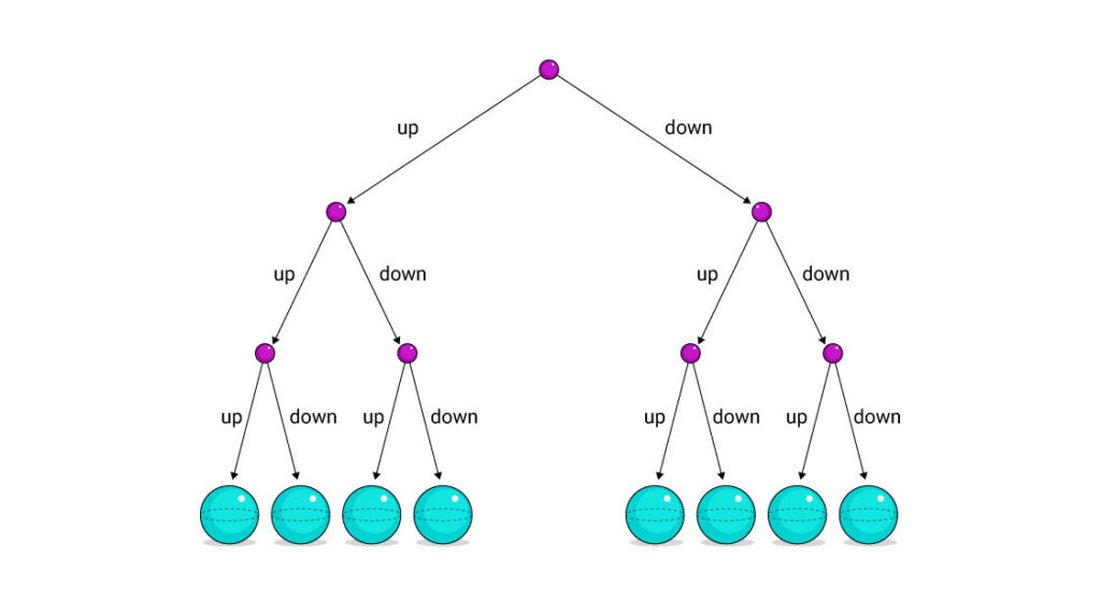
Visual representations of the multiverse concept help illustrate how different mathematical structures could correspond to different universes with varying physical laws and constants. Each of these potential universes would operate according to its own mathematical framework, potentially allowing different theorems to be proven or applicable.
Contextual Representation in Mathematics
While mathematical proofs themselves may be abstract, their interpretation and application often depend on contextual representation - how mathematical concepts map to real-world phenomena. This creates another layer of universe-dependency:
Educational and Practical Contexts
Contextual representation applies mathematics in real-world situations. The validity and usefulness of a mathematical model depend on how well it represents actual phenomena in the universe we inhabit. For example, understanding Einstein's famous equation E=mc² requires grasping that energy, mass, and the speed of light have real values in our physical world.
This connection between abstract mathematics and physical reality creates a bidirectional relationship - mathematical models are developed to describe physical reality, but our understanding of physical reality is increasingly expressed through mathematical language.
Frequently Asked Questions
References
- A Mathematical Proof That The Universe Could Have Formed Spontaneously From Nothing - The Physics arXiv Blog
- The Mathematical Universe - HowStuffWorks
- Problem with the Dependence of Informal Proofs on Formal Proofs - Philosophia Mathematica
- Can a mathematical proof be right in one universe and wrong in another? - Quora
- Tegmark's Mathematical Universe Defeats Arguments for God - Astral Codex Ten
- Mathematical Universe Hypothesis - Wikipedia
- Real-world context in mathematics - Calculate
Recommended Searches
Last updated April 6, 2025