
Beyond the Tailpipe: Unpacking the Hidden Environmental Costs and Complexities of Electric Vehicles
Examining the challenges EVs introduce to automotive supply chains and global pollution dynamics, challenging the 'zero-emission' narrative.
Highlights
- Manufacturing Burden: Producing EV batteries is significantly more energy-intensive than manufacturing traditional cars, resulting in a higher initial carbon footprint.
- Resource Extraction Toll: Mining critical minerals like lithium and cobalt for batteries carries substantial environmental costs, including habitat destruction, water pollution, and potential increases in pollutants like sulfur dioxide.
- Grid Dependency & Non-Exhaust Emissions: The true environmental benefit of EVs hinges on clean electricity sources, and their increased weight contributes to higher particulate pollution from tire and brake wear.
Introduction: Reframing the EV Narrative
The global push towards electric vehicles (EVs) is often presented as a definitive step towards sustainable transportation and a key strategy in mitigating climate change. Within the framework of transforming automotive supply chains and analyzing the impact of EVs and Artificial Intelligence (AI) on global business dynamics, this shift appears pivotal. However, a closer examination of the literature reveals a more complex picture. Several studies and reports argue that EVs, while eliminating tailpipe emissions, introduce a distinct set of environmental challenges and supply chain complications that may, in some respects, exacerbate pollution issues rather than simply solving them. This review delves into these critical perspectives, synthesizing arguments that challenge the straightforward narrative of EVs as an unequivocally 'green' solution.
We will explore concerns ranging from the energy-intensive manufacturing processes, particularly for batteries, to the environmental degradation associated with raw material extraction, the dependency on potentially fossil-fuel-heavy electricity grids, issues surrounding non-exhaust emissions, and the end-of-life challenges posed by batteries. Furthermore, we will touch upon the significant disruptions and vulnerabilities introduced into the automotive supply chain, a critical aspect of the thesis "Transforming Automotive Supply Chain: The Impact of Electric Vehicles and AI on Global Business Dynamics."
The Manufacturing Footprint: More Than Meets the Eye?
The Energy Cost of Battery Production
One of the most significant counterarguments to the environmental benefits of EVs lies in their manufacturing phase. Multiple sources indicate that producing an EV, primarily due to its battery, generates substantially more greenhouse gas (GHG) emissions than producing an internal combustion engine (ICE) vehicle. Studies suggest that the energy required for battery production alone can result in a significant upfront carbon debt for EVs.
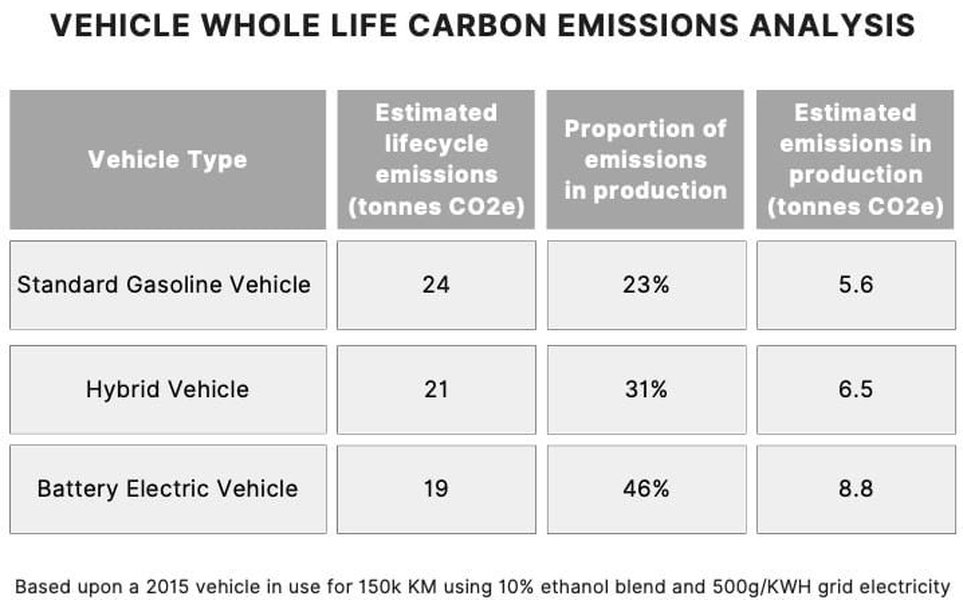
Lifecycle Emissions Comparison
This image illustrates the lifecycle carbon emissions, highlighting the significant portion attributed to battery production in EVs compared to ICE vehicles.
Quantifying the Impact
Some analyses estimate that around 4 tonnes of CO2 are released during the production of a single average electric car battery. A 2021 study cited in Answer A found that a staggering 46% of an EV's lifetime carbon emissions can stem from the production process, compared to just 26% for a conventional ICE vehicle. This initial environmental cost means that an EV must operate for a certain period, using relatively clean electricity, to "pay back" its manufacturing emissions debt and achieve a net environmental benefit over its ICE counterpart. Estimates for this break-even point vary, with one source suggesting an average of 2.2 years for an EV produced in the U.S. in 2023, but this is highly dependent on the grid's carbon intensity.
Extracting the Future: The Environmental Toll of Raw Materials
The True Cost of Critical Minerals
EV batteries rely heavily on minerals such as lithium, cobalt, nickel, and manganese. The extraction and processing of these materials are fraught with environmental and ethical concerns. Mining operations are often water-intensive and can lead to significant habitat destruction, soil erosion, and water contamination through the leakage of toxic chemicals.
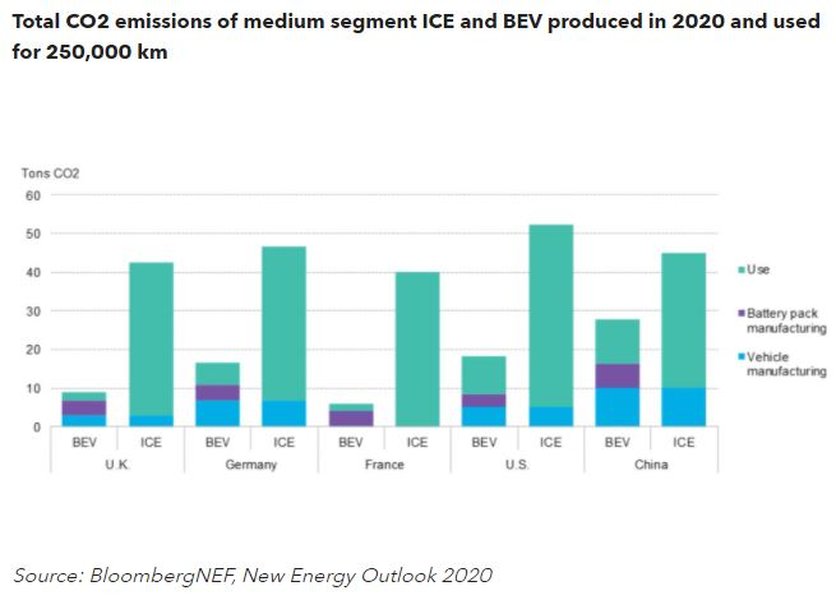
Visualizing EV Lifecycle Emissions
This graphic breaks down the lifecycle emissions associated with EVs, often showing significant contributions from material extraction and processing alongside manufacturing.
Pollution Hotspots and SO2 Concerns
Regions involved in the intensive mining and refining of these minerals often suffer from localized pollution. For instance, the refining processes can release harmful pollutants into the air and water. Research highlighted in Answer A and C points to potential increases in sulfur dioxide (SO2) pollution, a contributor to acid rain and respiratory problems, particularly if EV supply chains are domesticated in regions heavily reliant on coal power (like potentially China and India) without implementing cleaner production strategies. The environmental impact isn't limited to pollution; reports like "Blood in the EV Supply Chain" (Answer B, C) detail concerns about human exploitation and environmental degradation at various stages of the mineral supply chain.
The Grid Connection: Clean Power or Hidden Pollution?
Where Does the Electricity Come From?
The environmental credentials of an EV during its operational phase are inextricably linked to the source of the electricity used to charge it. While EVs themselves produce no tailpipe emissions, the power plants generating the electricity might. If an EV is charged predominantly using electricity generated from fossil fuels like coal or natural gas, its overall lifecycle emissions may not be significantly lower—and in some cases could even be higher—than those of an efficient gasoline car.
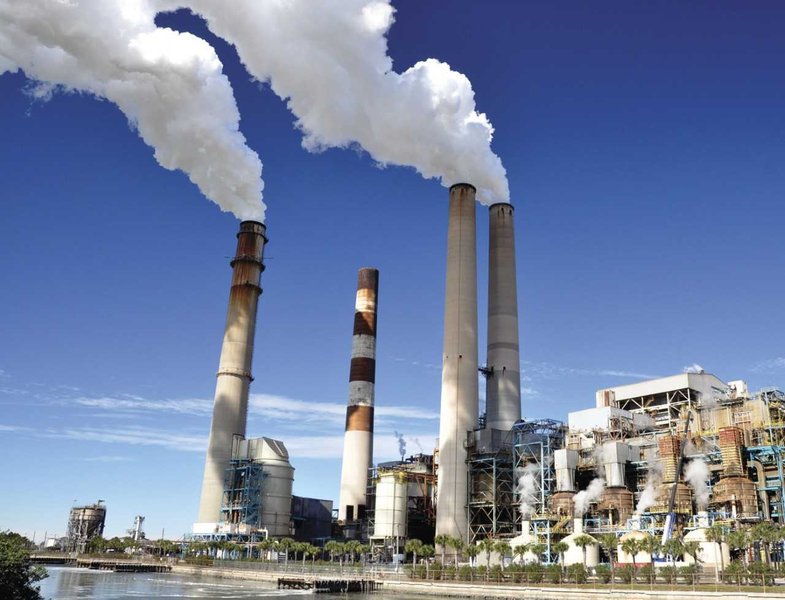
The Source Matters
Charging EVs with electricity generated from coal-fired power plants, like the one pictured, significantly diminishes their environmental advantage over gasoline cars.
Regional Variances
The environmental benefit of driving an EV varies greatly depending on the regional electricity grid's carbon intensity. In areas with a high percentage of renewable energy sources (like hydropower, wind, or solar), EVs offer substantial emissions reductions. Conversely, in regions heavily reliant on coal, the benefits are minimized, and the pollution burden is effectively shifted from urban centers (tailpipes) to power plant locations.
Beyond Exhaust: The Rise of Non-Tailpipe Emissions
The Problem of Particulates
While EVs eliminate exhaust emissions, they contribute to another form of air pollution: non-exhaust emissions (NEE), primarily particulate matter (PM2.5 and PM10) from tire wear, brake wear, and road surface abrasion. Critically, EVs tend to be significantly heavier than their ICE counterparts due to the weight of their large battery packs.
Weight and Wear
This increased weight leads to faster tire degradation and potentially higher brake wear (though regenerative braking can mitigate brake wear to some extent). Several sources (Answer B, C, D) highlight that this increased wear can result in higher emissions of harmful particulate matter. Some studies suggest that NEE from heavier EVs could become a dominant source of traffic-related PM pollution, potentially offsetting some of the air quality benefits gained from eliminating exhaust fumes, especially in urban areas.
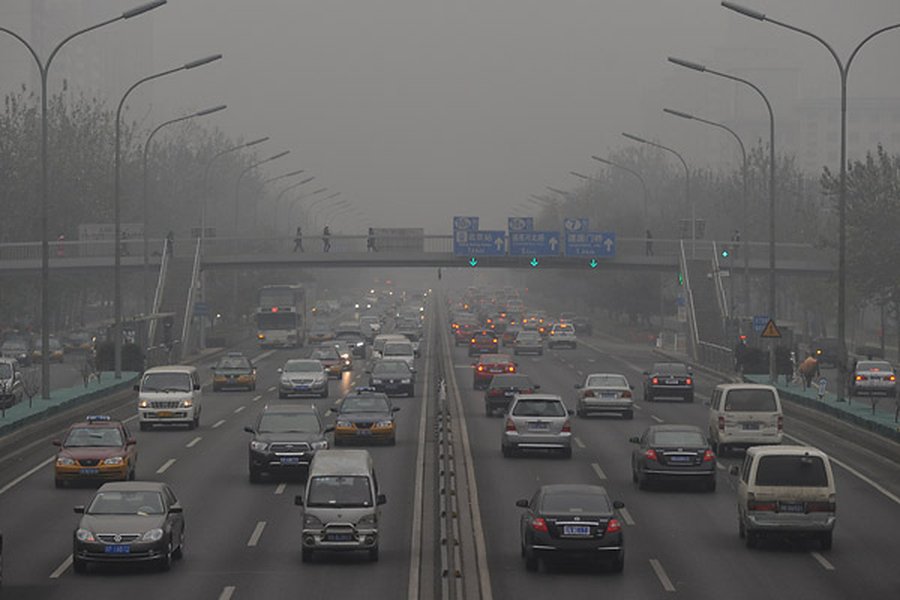
Urban Air Quality Concerns
Even without exhaust, dense traffic involving heavier EVs can still contribute significantly to particulate air pollution through tire and brake wear.
End-of-Life Dilemmas: The Battery Disposal Challenge
Recycling Hurdles and Waste Concerns
The disposal and recycling of EV batteries at the end of their lifespan present another significant environmental challenge. These batteries contain valuable but also hazardous materials. Current recycling processes are complex, energy-intensive, and not yet economically viable or scaled sufficiently to handle the projected volume of end-of-life batteries.
The Recycling Gap
Inefficient recycling means valuable resources are lost, and potentially hazardous materials could end up in landfills if not managed properly, posing risks of soil and water contamination. While battery technology and recycling methods are continuously improving, the challenge of creating a truly circular economy for EV batteries remains substantial.
Supply Chain Under Stress: Vulnerabilities and Disruptions
Navigating Complexity and Risk
The transition to EVs fundamentally reshapes the automotive supply chain, introducing new complexities and vulnerabilities. This is a central theme for the thesis "Transforming Automotive Supply Chain: The Impact of Electric Vehicles and AI on Global Business Dynamics." Key challenges include:
- Raw Material Concentration: The geographic concentration of critical minerals like lithium and cobalt in a few countries creates geopolitical risks and potential supply bottlenecks.
- Processing Dominance: China currently dominates the processing of many battery materials and the manufacturing of battery components, creating dependencies.
- Supplier Transition: Traditional suppliers of ICE components face significant disruption and need to adapt or risk obsolescence.
- Market Volatility: Fluctuations in demand and supply for critical minerals can lead to price volatility and planning uncertainties.
- Ethical Sourcing: Ensuring that materials are sourced responsibly, without environmental damage or human rights abuses, adds complexity.
These factors complicate global business dynamics, potentially increasing costs and risks for automotive manufacturers. AI is being explored to optimize logistics and predict demand, but it must navigate these inherent complexities, potentially struggling to balance efficiency with sustainability and ethical considerations if not carefully implemented.
Visualizing EV Supply Chain Complexities
The mindmap below illustrates the interconnected challenges within the EV supply chain, highlighting key areas of concern discussed in the literature, from resource extraction to end-of-life management and the influence of geopolitical factors.
Comparative Pollution Aspects: EV vs. ICE
A Nuanced Comparison
Simplifying the environmental comparison between EVs and ICE vehicles is misleading. The following table summarizes key pollution aspects discussed, highlighting the complexities and trade-offs involved, based on the critical perspectives found in the literature.
| Pollution Aspect | Internal Combustion Engine (ICE) Vehicle | Electric Vehicle (EV) | Key Complicating Factors for EVs |
|---|---|---|---|
| Manufacturing Emissions | Lower initial footprint (vehicle body, engine) | Higher initial footprint (esp. battery production) | Energy intensity of battery manufacturing; CO2 and potential SO2 emissions depending on supply chain location/practices. |
| Operational Emissions (Tailpipe) | Direct emissions (CO2, NOx, PM, etc.) | Zero direct emissions | Indirect emissions depend entirely on the electricity generation source (grid carbon intensity). |
| Operational Emissions (Non-Exhaust) | Particulates from tire/brake/road wear | Potentially higher particulates from tire/brake/road wear | Increased vehicle weight due to heavy batteries leads to faster tire wear. |
| Resource Extraction | Fossil fuel extraction impacts | Significant impacts from mining critical minerals (lithium, cobalt, etc.) | Habitat destruction, water pollution, toxic leaks, energy/water intensity, ethical concerns, geographic concentration. |
| End-of-Life | Established recycling infrastructure (metals); issues with fluids/plastics. | Complex and costly battery recycling; hazardous materials management. | Lack of scaled recycling infrastructure; potential for landfilling hazardous waste; resource recovery challenges. |
Lifecycle Impact Assessment: A Visual Comparison
Comparing Environmental Profiles
The radar chart below offers a conceptual visualization comparing the relative environmental impacts across different lifecycle stages for a typical ICE vehicle, an EV charged predominantly on a fossil-fuel-heavy grid ('Dirty Grid EV'), and an EV charged predominantly on a low-carbon grid ('Clean Grid EV'). The scores are illustrative, based on the arguments presented in the literature, highlighting how different factors contribute to the overall profile. Higher scores indicate a greater environmental impact in that category.
Interpreting the Profiles
This chart visually reinforces the arguments: EVs consistently show higher impacts in manufacturing and resource depletion compared to ICE cars. Their operational impact varies dramatically with grid cleanliness. Non-exhaust pollution is potentially higher for EVs due to weight, and end-of-life management remains a significant challenge across EV types. This highlights that simply switching to EVs doesn't guarantee environmental improvement without addressing the entire lifecycle and energy infrastructure.
Video Insights: The Dark Side of EV Batteries
Examining Supply Chain Realities
The following video delves into some of the often-overlooked consequences associated with the production of electric car batteries, focusing on the environmental and social costs within the supply chain. It provides context on the challenges related to mineral extraction, pollution, and the broader implications of the energy transition, aligning with the critical perspectives discussed in this review.
Context and Relevance
This video ("Energy transition: The dark side of the electric car battery...") directly addresses concerns about pollution and potential corruption linked to the sourcing of materials essential for EV batteries. It underscores the argument that the shift to electric mobility involves significant environmental trade-offs, particularly in the upstream segments of the supply chain. Understanding these "dark side" elements is crucial for a balanced assessment of EVs' impact on global business dynamics and environmental sustainability.
Frequently Asked Questions (FAQ)
Addressing Common Queries
+ Are EVs always cleaner than gasoline cars?
+ Isn't battery production the only real environmental issue with EVs?
+ Does the heavier weight of EVs really increase pollution significantly?
+ What about battery recycling? Doesn't that solve the end-of-life problem?
References
- EV batteries hurt the environment. Gas cars are still worse - NPR
- The Dark Side of Electric Vehicles: A Hidden Pollution Problem - SciTechDaily
- Environmental Impact of Battery Production for EVs - Earth.org
- Electric vehicles and supply chain: Risks to auto suppliers during the transition - PwC
- EV tires wear down fast, and that’s a pollution problem - Canary Media
- Electric Vehicles Beat Gas Cars on Climate Emissions Over Time - Scientific American
- Domesticating electric vehicle supply chains increases sulfur dioxide pollution in India and China - Nature Communications
Recommended
Last updated April 13, 2025