
Properties of Fluids in Fluid Mechanics
An In-Depth Analysis of Fluid Behavior and Fundamental Characteristics
Key Highlights
- Interconnected Nature: Fluid mechanics encompasses both static and dynamic behaviors, relying crucially on interdependent properties.
- Essential Properties: Density, viscosity, surface tension, and capillarity serve as the cornerstone parameters in analyzing fluid phenomena.
- Applications in Engineering: Understanding fluid behavior is imperative for designing systems ranging from pipelines and hydraulic systems to aerospace vehicles.
Introduction to the Properties of Fluids in Fluid Mechanics
Fluid mechanics, a crucial domain in physics and engineering, studies the behavior, interaction, and characteristics of fluids – both liquids and gases – under various conditions. Fluids, by nature, lack a fixed shape, always conforming to the boundaries of their containers. This inherent characteristic demands specialized approaches to describe their motion, pressure distribution, and energy transfer processes. At the heart of fluid mechanics lies the delicate balance between fluid statics, which focuses on fluids at rest, and fluid dynamics, which considers fluids in motion.
Fluid properties are foundational to both theoretical and applied aspects of fluid mechanics. Engineers and scientists utilize these properties to analyze how fluids respond to forces, interact with their surroundings, and enable a range of technology solutions. The study of these properties is not merely academic; it directly translates into the design and optimization of systems in various industries. Fluid mechanics informs the construction of pipelines, enhances the aerodynamic designs of vehicles, improves hydraulic system efficiencies, and even contributes to weather forecasting and environmental simulation. Each of these systems demands a detailed understanding of how fluids behave under different conditions, whether under static equilibrium or in active flow.
The scope of fluid mechanics extends from small-scale phenomena in microfluidics to large-scale processes in geophysical flows. For instance, the same properties that allow insects to skate on water due to surface tension enable engineers to create water-repellent materials or develop efficient inkjet printers. The balance of forces in fluid statics explains why atmospheric pressure decreases with elevation, impacting weather patterns and the design of high-altitude research equipment. Similarly, understanding viscosity is paramount for predicting how fluids will flow through pipes or around obstacles, which in turn affects the integrity and design of civil structures and machinery.
Theoretical Foundations
The study of fluid mechanics is deeply rooted in several fundamental physical principles. The conservation laws – mass, momentum, and energy – underpin analyses in fluid dynamics. Fluid density, which is the mass per unit volume, is essential for expressing these conservation laws, especially in the Navier-Stokes equations that govern fluid flow. Meanwhile, viscosity quantifies the internal friction within a fluid, serving as a bridge to understand energy dissipation and flow resistance. Surface tension, a manifestation of cohesive forces among fluid molecules, plays a critical role in phenomena observed at the interface between different phases. Finally, capillarity highlights the role of adhesive forces in allowing fluids to migrate through small spaces.
These theoretical underpinnings facilitate the mathematical modeling and simulation of fluid behavior. The use of differential equations and advanced computational methods has allowed engineers to predict complex fluid phenomena with remarkable accuracy. Whether simulating the turbulent flow over an aircraft wing or predicting the behavior of biofluids in microchannels, fluid mechanics employs a variety of tools that rest on these key properties.
Practical Applications and Engineering Significance
Practical applications of fluid mechanics are ubiquitous, spanning across industrial and research settings. In aerospace engineering, the behavior of air as it flows past wings or fuselages directly impacts flight dynamics and fuel efficiency. In the automotive industry, advancements in hydrodynamic and aerodynamic design have led to improvements in vehicle performance and safety. Even in the realm of civil engineering, fluid mechanics is indispensable for designing irrigation systems, wastewater treatment plants, and flood control infrastructures.
Additionally, in the biomedical field, fluid mechanics contributes to understanding blood flow in arteries and veins, enabling the development of both diagnostic and treatment strategies. In environmental engineering, the principles of fluid flow assist in modeling pollutant dispersion in air and water, helping to formulate effective remediation strategies. In each case, the interplay between the different properties of fluids—such as density variations due to temperature gradients or changes in viscosity due to pressure differences—profoundly influences system behavior.
Introduction to Fluid Density, Viscosity, Surface Tension, and Capillarity
Following a broad overview of fluid mechanics, it is essential to delve into the four primary properties that dictate fluid behavior in detailed scenarios: fluid density, viscosity, surface tension, and capillarity. Although these properties are interrelated, each plays a distinct role in defining how a fluid responds to external forces and interacts within its environment.
The first property, density, represents the mass contained within a unit of volume of a fluid. It is a fundamental quantitative measure that influences buoyancy, pressure distributions, and modal flow patterns. In most practical scenarios, fluid density is a function of temperature and pressure; for example, gases typically exhibit significant variations in density with temperature changes, whereas liquids often show more constant behavior under moderate conditions.
Fluid Density
Fluid density is commonly expressed by the symbol ρ (rho) and measured in kilograms per cubic meter (kg/m³) within the SI system. Its importance is highlighted in a multitude of applications, ranging from designing the hulls of ships and submarines—where it determines buoyant forces—to calculating the pressure head in hydraulic systems. The role of density extends to natural phenomena, such as the rising of warm air in atmospheric science or the stratification of water layers in oceanography.
In many engineering calculations, fluid density is a key parameter. For instance, the equation for hydrostatic pressure (P = ρgh, where g is the acceleration due to gravity and h is the height of the fluid column) directly links density to the pressure experienced within a fluid at rest. This integration of density into both theoretical and practical equations underscores its central role in fluid mechanics.
Viscosity
Viscosity is the measure of a fluid's resistance to deformation under shear or tensile stress. Essentially, it describes the internal friction between layers of fluid in relative motion. High viscosity fluids, such as tar or glycerin, flow slowly and resist motion. In contrast, low viscosity fluids, like water or ethanol, flow easily and with less resistance. Viscosity is pivotal in processes such as lubrication, where it ensures a thin film that minimizes friction between moving parts.
The concept of viscosity is further divided into dynamic viscosity (absolute viscosity) and kinematic viscosity. Dynamic viscosity quantifies the resistive force per unit area experienced by a moving fluid, while kinematic viscosity normalizes dynamic viscosity by the fluid's density. The temperature dependence of viscosity is particularly significant: most fluids tend to decrease in viscosity as temperature increases, thereby affecting performance in systems like engines and heat exchangers.
Surface Tension
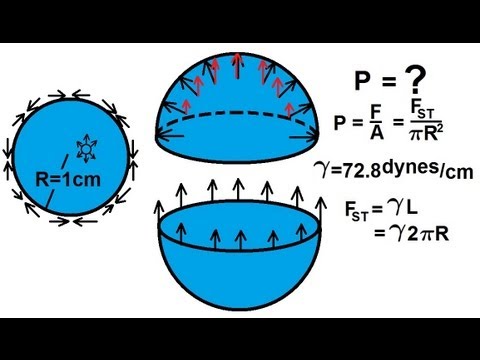
Surface tension arises from the imbalance of intermolecular forces at the boundary of a fluid. At the surface, molecules experience a net inward force, causing the fluid to minimize its exposed surface area. This phenomenon can be observed in everyday life when water beads on a waxed surface or in the ability of small insects to walk on its surface. From an engineering perspective, surface tension is critical in the formation of droplets, the behavior of emulsions, and the design of microfluidic devices.
In fluid mechanics, surface tension is quantified as the force per unit length acting along the surface. It plays an essential role in capillary action, affecting how fluids move within porous materials or narrow channels. Additionally, surface tension can be manipulated through additives like surfactants, which lower the cohesive forces between molecules and thus alter the fluid's behavior in complex systems, such as in detergent applications or in the stabilization of foams.
Capillarity
Capillarity, or capillary action, is the ability of a fluid to flow into narrow spaces against external forces like gravity. This phenomenon results from the combined effect of adhesive forces between the fluid and the solid surfaces surrounding it, and the cohesive forces within the fluid itself. Capillarity is particularly exemplified when observing the rise or depression of a liquid in a thin tube, where the height of the fluid column is directly related to the balance of these forces.
Capillarity is significant both in natural and engineered systems. In nature, it is responsible for the upward movement of water through soil and into plant stems, facilitating vital biological processes such as transpiration and nutrient transport. In engineered systems, capillary action is exploited in applications like inkjet printing, microfluidic devices, and even in the design of self-wetting surfaces. By controlling surface tension and contact angles, designers can customize the capillary behavior within various devices to achieve specific fluidic performance.
Summary Table of Major Fluid Properties
| Property | Description | Key Factors Affected |
|---|---|---|
| Density (ρ) | Mass per unit volume; critical for pressure and buoyancy. | Temperature, pressure, composition |
| Viscosity | Internal resistance to flow; measures fluid friction. | Temperature, molecular structure, shear rate |
| Surface Tension | Force causing the liquid surface to contract; results from intermolecular forces. | Temperature, presence of surfactants |
| Capillarity | Ability to flow in narrow spaces due to adhesive and cohesive forces. | Tube diameter, fluid-surface interaction, surface tension |
In-Depth Application of Concepts
Fluid Density Applications
In engineering and natural systems, fluid density plays a pivotal role. For instance, in the oil and gas industry, accurate density measurements are crucial for guiding the flow of hydrocarbons through pipelines. Buoyancy, which is central to ship design, depends on the delicate interplay between the density of the ship and the surrounding water. Density also influences the design of storage tanks and the prediction of weather systems in meteorology. Engineers use sophisticated sensors and mathematical models to account for density fluctuations due to changes in temperature and pressure.
Viscosity in Technology and Industry
Viscosity has far-reaching implications in practical applications. In automotive engineering, the proper viscosity of engine oils ensures smooth and efficient machinery operation. When fluids flow through pipes, viscosity determines the resistance encountered, which is crucial for calculating pressure drops and optimizing pump performance. In biomedical engineering, the viscosity of blood is a critical parameter in diagnosing circulatory issues and designing artificial organs. Industries that deal with lubricants, paints, and chemicals must carefully control fluid viscosity to achieve desired flow properties and product consistency.
Significance of Surface Tension
Surface tension's control over fluid interfaces is utilized in myriad technological innovations. For example, in microgravity environments such as outer space, surface tension becomes the dominant force affecting fluid behavior, influencing experiments and the design of spacecraft liquid systems. Moreover, surface tension is a key parameter in producing emulsions and foams, which are critical in the food, cosmetic, and pharmaceutical industries. The manipulation of surface tension through surfactants has enabled breakthroughs in cleaning products, enhancing the dissolution of dirt and oil on surfaces.
The Role of Capillarity
Capillarity manifests in both everyday phenomena and advanced technology. In nature, capillary action drives the movement of water in soil and supports the life cycle of plants, providing water to roots and leaves even in the absence of rainfall. In technology, particularly in the burgeoning field of microfluidics, capillary-driven flows are exploited for their precision and reliability. Devices operate by harnessing capillary forces to transport very small volumes of liquids without relying on mechanical pumps, paving the way for innovations in medical diagnostics and chemical analysis.
Together, density, viscosity, surface tension, and capillarity describe a rich tapestry of fluid behavior that is fundamental to understanding both natural and engineered processes. These properties do not act in isolation; rather, they interact in complex ways to create the diverse behaviors observed in fluid mechanics. An integrated approach to studying these characteristics allows engineers and scientists to devise more effective systems and models that mimic natural phenomena or improve industrial processes.
Conclusion and Final Thoughts
In summary, the study of fluid mechanics is essential for understanding the behavior of both liquids and gases. The introduction to the properties of fluids provides a comprehensive framework that integrates fluid statics and fluid dynamics, underpinned by the conservation of mass, momentum, and energy. This holistic view encompasses key parameters like density, which governs buoyancy and pressure; viscosity, which explains internal friction and flow resistance; surface tension, which defines the unique behaviors at fluid interfaces; and capillarity, which describes the movement of fluids in confined spaces.
Each of these properties, while distinct, works together to contribute to the dynamic behavior of fluids in both natural environments and engineered systems. By gaining a deep understanding of these parameters, professionals are able to design and implement solutions that respond to real-world challenges—from optimizing pipeline flow and energy transfer, to developing innovative medical devices and sustainable environmental practices. The interplay among density, viscosity, surface tension, and capillarity ensures that fluid mechanics remains a vibrant field of research and practical application, continuously evolving as new technologies and computational methods emerge.
As our understanding of fluid properties continues to grow, it paves the way for more efficient, safe, and environmentally friendly designs that not only harness the power of fluids but also mitigate the challenges that arise when interacting with complex fluid systems. The theoretical foundations and practical insights provided by fluid mechanics have already transformed industries and will undoubtedly continue to do so as expertise in this area expands.
References
- Discover Engineering - Properties of Fluids and Surface Tension
- Pipe Flow - Fluid Density
- Leeds Fluid Dynamics - Surface Tension
- Modern Physics - Capillarity in Fluids
Recommended
Last updated February 21, 2025