
From Gothic Labs to Shadow Dimensions: Unpacking Isolation in Frankenstein and Stranger Things
Two centuries apart, two iconic stories reveal the devastating impact of being cast out.
Mary Shelley's 1818 novel *Frankenstein* and the Duffer Brothers' 2016 debut season of *Stranger Things* might seem worlds apart—one steeped in Gothic horror and philosophical questions of creation, the other a nostalgic blend of 80s sci-fi and supernatural mystery. Yet, beneath the surface differences in setting and genre, both narratives resonate powerfully with the timeless and deeply human themes of isolation and exclusion. They explore the profound psychological toll of being separated from society, whether by monstrous creation, extraordinary abilities, or the terrifying vacuum of another dimension, ultimately questioning what it means to belong and the destructive consequences when connection is denied.
Core Insights: The Shared Shadow of Solitude
- Forced vs. Chosen Isolation: Both narratives explore isolation stemming from deliberate choices (Victor Frankenstein's obsessive work) and imposed circumstances (the Creature's abandonment, Eleven's captivity, Will's entrapment).
- The Fear of the 'Other': Societal exclusion is a driving force, with characters like the Creature and Eleven being rejected, feared, and hunted primarily because they are different or perceived as dangerous.
- The Desperate Need for Connection: The intense suffering caused by isolation underscores a fundamental human (or sentient) need for companionship, empathy, and acceptance, the absence of which fuels despair and sometimes violence.
Frankenstein's Legacy of Loneliness
In Mary Shelley's seminal work, isolation is not merely a theme but the very engine driving the tragedy. It affects both the creator and the created, weaving a dark thread through their intertwined destinies.
Victor Frankenstein: The Architect of His Own Solitude
Ambition's Price
Victor Frankenstein's isolation begins as a self-imposed exile. Consumed by his groundbreaking, yet ethically dubious, scientific ambition, he deliberately withdraws from his family, friends, and the warmth of human society. His studies become an obsession, conducted in secret and seclusion. This chosen solitude allows him to achieve his goal—creating life—but it comes at a steep psychological cost, fostering paranoia, guilt, and ultimately leading to profound emotional and mental deterioration. His isolation is the fertile ground from which the tragedy springs.
The Creature: Condemned to Isolation
Abandoned at Birth
If Victor chooses isolation, his Creature has it thrust upon him from the moment of his unnatural birth. Awakened to consciousness, he is immediately met with horror and rejection by his own creator, who flees in disgust. This initial abandonment sets the pattern for the Creature's existence. Despite possessing intelligence, sensitivity, and an innate desire for companionship and understanding, his grotesque appearance makes him an object of fear and hatred wherever he goes.
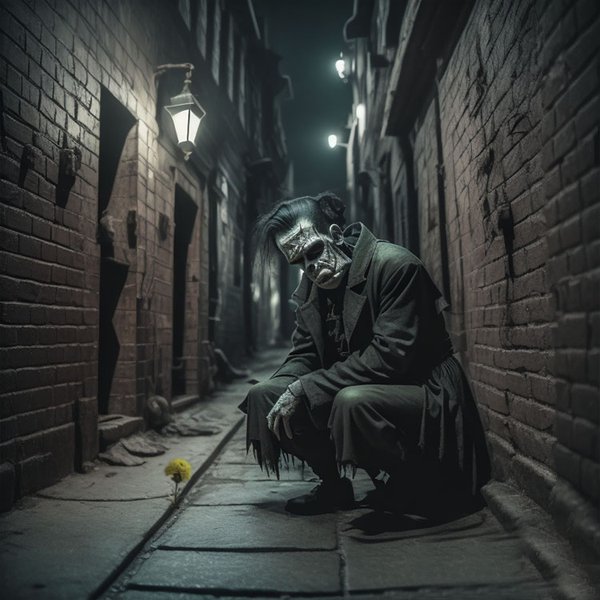
Frankenstein's Creature, often depicted as a figure of tragedy defined by his forced isolation.
The Psychology of Rejection
The Creature's journey is a harrowing exploration of the psychological consequences of chronic isolation and exclusion. Initially benevolent, he learns about human society and emotion by observing the De Lacey family, developing empathy and a yearning for connection. However, his attempts to reveal himself are met with violence and terror. Repeated rejection by villagers, the De Laceys, and ultimately Victor's refusal to create a female companion for him, extinguishes his hope. Deprived of the social bonds essential for psychological well-being, his initial capacity for kindness corrodes into bitterness, despair, and a burning desire for vengeance against the creator and the society that cast him out. Shelley powerfully illustrates how profound loneliness and alienation can warp even a potentially noble spirit, transforming a victim of exclusion into a perpetrator of violence. The murders and despair that follow are explicitly linked to this fundamental lack of connection.
Stranger Things: Isolation in Hawkins
Set against the backdrop of 1980s Indiana, *Stranger Things* Season 1 introduces its own gallery of isolated figures, exploring loneliness through supernatural horror, government conspiracy, and the dynamics of small-town life.
Eleven: The Captive Turned Fugitive
Product of Experimentation
Eleven (El) is perhaps the most direct parallel to Frankenstein's Creature in her experience of isolation. Raised in the sterile, oppressive confines of Hawkins National Laboratory under the manipulative control of Dr. Brenner ("Papa"), she is isolated from any semblance of normal childhood or human connection. Her life is one of experiments, deprivation, and the weaponization of her psychokinetic abilities. This upbringing leaves her emotionally stunted, wary, and profoundly naive about the outside world.
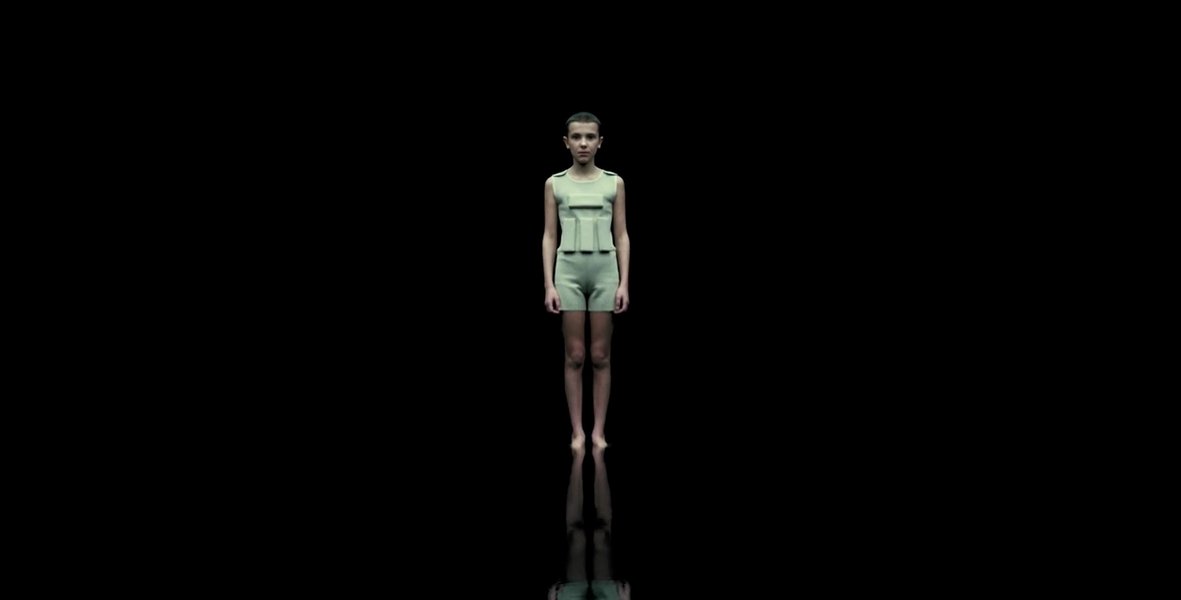
Eleven uses her powers, often finding herself mentally isolated in 'the void'.
Exclusion Through Difference
Upon escaping the lab, Eleven enters a world she doesn't understand, hunted by the very people who created her isolation. Her strange appearance (shaved head, hospital gown) and extraordinary powers immediately mark her as an outsider. Like the Creature, her difference inspires fear and suspicion. While she finds tentative acceptance and friendship with Mike, Dustin, and Lucas, her powers remain a source of otherness, setting her apart and making true integration difficult. Her isolation is both a product of her past captivity and the ongoing threat her existence poses to the perceived normality of Hawkins.
Other Forms of Isolation in Hawkins
Will Byers and the Upside Down
Will Byers experiences perhaps the most extreme form of physical isolation when he is abducted and trapped in the Upside Down—a terrifying, desolate parallel dimension. Cut off entirely from his family and friends, his existence is one of solitary fear and survival, highlighting the primal horror of being utterly alone and disconnected from the known world.
The Party as Outsiders
The core group of friends—Mike, Lucas, and Dustin—while deeply bonded, exist somewhat on the fringes of the school's social hierarchy. Labelled as "nerds" for their interests in Dungeons & Dragons and science, their friendship provides a sanctuary against broader peer exclusion, making them more receptive to accepting another outsider like Eleven.
Joyce Byers' Isolated Grief
Will's mother, Joyce, experiences social isolation as she desperately tries to convince authorities and the community that her son is alive and communicating with her through supernatural means. Initially dismissed as hysterical or delusional, she is isolated in her grief and conviction, battling skepticism alongside the terrifying reality she faces.
Comparative Threads: Exclusion and Its Consequences
While separated by time and context, both narratives powerfully illustrate how societies create and perpetuate exclusion, often with devastating results.
Societal Rejection vs. Institutional Secrecy
In *Frankenstein*, the Creature's exclusion is primarily societal, driven by widespread, visceral fear and prejudice based on his physical appearance. He is rejected by individuals, families, and communities – a broad social ostracization. In *Stranger Things*, Eleven's exclusion is initially institutional, orchestrated by a secretive government agency (Hawkins Lab) seeking to control and exploit her abilities. While she does face fear from some in the wider community upon discovery, the primary force isolating her is the deliberate secrecy and manipulation by figures of authority like Dr. Brenner. This reflects a shift from gothic fears of the unnatural 'other' to modern anxieties about government overreach and hidden experiments.
Character Parallels in Isolation
The following table highlights key parallels between characters facing isolation and exclusion in both stories:
| Character Role | Frankenstein | Stranger Things (S1) | Nature of Isolation/Exclusion |
|---|---|---|---|
| The 'Created'/Experiment | The Creature | Eleven (El) | Abandoned/Escaped creator/captor; feared for appearance/abilities; yearns for connection; initially benevolent but shaped by rejection/captivity. |
| The Creator/Guardian Figure | Victor Frankenstein | Dr. Martin Brenner ("Papa") | Responsible for the 'other's' existence; abandons/exploits them; driven by ambition/control; contributes significantly to the other's isolation. |
| The Literally Lost | N/A (Creature is metaphorically lost) | Will Byers | Trapped in a hostile, alternate environment (Arctic wastes / Upside Down); extreme physical separation from loved ones. |
| The Social Outsiders | N/A (Creature is universally rejected) | Mike, Dustin, Lucas | Exist on the fringes of mainstream peer groups ("nerds"); find strength and belonging within their own small group; more accepting of other outsiders. |
| The Isolated Believer | N/A | Joyce Byers | Isolated by grief and seemingly impossible beliefs (communicating with lost son); faces skepticism and disbelief from community/authorities. |
Differing Paths: Despair vs. Hope
A key difference lies in the ultimate outcomes shaped by isolation. *Frankenstein* offers a profoundly tragic vision. The Creature, denied any lasting companionship or acceptance, fully embraces vengeance and finds only further desolation, culminating in his self-immolation in the remote Arctic. His isolation is absolute and destructive. *Stranger Things*, while acknowledging the pain of isolation, offers a glimmer of hope through connection. Eleven finds a chosen family in Mike and his friends. Their acceptance and loyalty provide a counterbalance to her traumatic past and the forces hunting her. While she makes a sacrifice at the end of Season 1, the bonds she formed represent the potential for healing and belonging that the Creature was perpetually denied.
Visualizing Thematic Intensity
To better understand the nuances of isolation and exclusion in both narratives, we can visualize the relative intensity of certain aspects for the key isolated characters: the Creature and Eleven. This radar chart offers an interpretation of these themes, comparing their experiences across several dimensions.
This chart suggests that while both characters endure severe initial isolation and negative influence from their 'creators,' the Creature faces near-total societal rejection based on extreme physical otherness, offering almost no potential for connection. Eleven experiences profound trauma and isolation, but her physical otherness is less extreme, and crucially, she finds a pathway to connection and acceptance within the narrative of Season 1, contrasting sharply with the Creature's tragic trajectory.
Mapping the Web of Isolation
The themes of isolation and exclusion weave complex webs through both stories, connecting characters, actions, and consequences. This mindmap provides a visual overview of how these central themes manifest in *Frankenstein* and *Stranger Things* Season 1.
in Frankenstein & Stranger Things S1"] idF["Frankenstein"] idF1["Victor Frankenstein"] idF1a["Self-Imposed Isolation
(Ambition, Secrecy)"] idF1b["Psychological Decay
(Guilt, Paranoia)"] idF2["The Creature"] idF2a["Forced Isolation
(Abandonment, Appearance)"] idF2b["Societal Rejection
(Fear, Prejudice)"] idF2c["Psychological Impact
(Loneliness, Anger, Vengeance)"] idF2d["Yearning for Connection"] idF2e["Tragic Outcome"] idST["Stranger Things S1"] idST1["Eleven"] idST1a["Forced Isolation
(Captivity, Experiments)"] idST1b["Institutional Exclusion
(Hawkins Lab, Dr. Brenner)"] idST1c["Exclusion via Powers/Otherness"] idST1d["Psychological Impact
(Trauma, Naivety, Resilience)"] idST1e["Finding Connection (The Party)"] idST1f["Hopeful Outcome (Potential)"] idST2["Will Byers"] idST2a["Literal/Physical Isolation
(Upside Down)"] idST2b["Existential Terror"] idST3["Joyce Byers"] idST3a["Social Isolation
(Disbelief, Grief)"] idST4["The Party (Mike, Dustin, Lucas)"] idST4a["Social Outsiders ('Nerds')"] idST4b["Strength in Group Bond"] idST4c["Acceptance of Outsiders (El)"]
This map illustrates how isolation originates differently for characters like Victor (choice) versus the Creature and Eleven (force). It highlights the crucial role of societal or institutional rejection and traces the psychological impacts, leading to divergent outcomes—tragedy in *Frankenstein*, tempered hope in *Stranger Things*—often pivoting on the possibility or denial of meaningful connection.
Frequently Asked Questions
How are Eleven and Frankenstein's Creature similar in their isolation?
Both Eleven and the Creature are products of unnatural circumstances (scientific experimentation/creation) and are initially isolated by their 'creators' (Dr. Brenner/Victor Frankenstein). They enter the world as outsiders, feared or misunderstood due to their unique nature (powers/appearance). Both desperately crave connection and understanding, and their experiences of isolation profoundly shape their identities and actions. Their initial vulnerability and potential for good are tested by the rejection or manipulation they face.
What's the main difference in how exclusion works in the two stories?
In *Frankenstein*, exclusion is primarily broad and societal, stemming from visceral fear and prejudice against the Creature's monstrous appearance. He is rejected by almost everyone he encounters. In *Stranger Things* Season 1, Eleven's exclusion is initially more institutional and targeted, driven by the secrecy and control of Hawkins Lab. While some fear her later, her main exclusion comes from authority figures aiming to exploit or contain her, rather than universal societal revulsion based solely on appearance.
Does Victor Frankenstein experience exclusion like his Creature?
Victor experiences isolation, much of it self-inflicted due to his obsessive secrecy surrounding his creation. This secrecy does alienate him from loved ones who sense his distress but don't know its cause. However, he doesn't face the same kind of active, hostile societal exclusion as the Creature. People aren't repulsed by Victor's appearance or inherent nature; his alienation stems from his actions and the psychological burden he carries, rather than being ostracized by society at large simply for existing.
Why does *Stranger Things* offer more hope regarding isolation than *Frankenstein*?
*Stranger Things* emphasizes the power of friendship and chosen family as a remedy for isolation. Eleven, despite her traumatic past and exclusion, finds genuine acceptance and loyalty within the group of boys (Mike, Dustin, Lucas). This connection provides support, helps her develop trust, and offers a path towards integration and healing. *Frankenstein*, conversely, systematically denies the Creature any form of lasting positive connection, leading him down a path of despair and revenge, ultimately presenting a much bleaker perspective on the potential to overcome profound exclusion.
References
- Isolation Theme in Frankenstein - eNotes
- Family, Society, Isolation Theme Analysis - Frankenstein - LitCharts
-
The Psychology of Isolation and Alienation in Frankenstein’s Creature - Simply Put Psych
- Comparison and Contrast of 'Stranger Things' and 'Frankenstein' - GradesFixer
- Isolation in Frankenstein by Mary Shelley | Theme & Analysis - Study.com
- Stranger Things Netflix Season 1 Episodes Recap Guide - Refinery29
Recommended Reading
Last updated April 23, 2025