
Unpacking Global Trade: How Barriers and Blocs Reshape Economic Fortunes
A deep dive into the intricate dance of tariffs, sanctions, quotas, and the strategic maneuvers of major trade alliances.
Key Insights: Navigating the Global Trade Maze
- Trade barriers like tariffs, sanctions, and quotas significantly impact economies, with developing nations often facing the steepest challenges to market access and economic growth.
- Major trade blocs such as BRICS, EU, AfCFTA, and USMCA exhibit diverse policy approaches, each with unique strengths in fostering cooperation and distinct weaknesses related to internal cohesion or external pressures.
- The dynamics of international trade are increasingly shaped by themes like rising trade tensions, the quest for enhanced factor mobility (capital, labor, technology), and the strategic positioning of emerging economic powers like the expanded BRICS+.
Q1: The Double-Edged Sword: Examining Trade Barriers
Trade barriers are government-imposed restrictions on international trade, primarily taking the form of tariffs, sanctions, and quotas. These measures, while sometimes intended to protect domestic interests, invariably ripple through the global economy, affecting nations at different stages of development in distinct ways. Understanding these impacts is crucial for grasping the complexities of international trade and competitiveness.
Trade barriers like sanctions can escalate trade tensions and impact global supply chains.
Tariffs: The Price of Protection
Tariffs are essentially taxes levied on imported goods and services. By increasing the price of foreign products, they aim to make domestically produced goods more competitive. However, their effects are multifaceted:
Impact on Different Economies:
- Developed Countries: Often use tariffs strategically to shield key domestic industries (e.g., agriculture, steel) from foreign competition. While this can preserve jobs in the short term, it can also lead to higher prices for consumers, reduced variety of goods, and the risk of retaliatory tariffs from other nations, thereby harming export-oriented sectors. This reflects a strategic trade theory approach, but can also lead to trade tensions.
- Emerging Economies: May employ tariffs as part of an "infant industry" strategy, providing a protective shield for nascent domestic industries to grow and mature before facing full-blown international competition. However, high tariffs can also restrict access to essential imported technologies, capital goods, and consumer products, potentially slowing down overall economic development and hindering their integration into global value chains.
- Developing Countries: Frequently bear the brunt of tariffs. Tariffs imposed by developed nations on agricultural products, textiles, and other key exports from developing countries significantly hinder their ability to access lucrative markets and earn vital foreign currency. While these countries might impose their own tariffs to generate government revenue or protect local, often vulnerable, production, this can also limit consumer choice, increase input costs for domestic businesses, and foster inefficiencies. This impacts their competitiveness and factor mobility.
Sanctions: The Economic Weapon
Sanctions are punitive measures that restrict or prohibit trade and financial transactions with a specific country. They are typically imposed for political or national security reasons and can have severe economic consequences:
Impact on Different Economies:
- Countries Imposing Sanctions (Often Developed): While intended to exert pressure, imposing sanctions can also lead to economic costs for the sender nation. These can include disruptions to established supply chains, loss of export markets, and negative impacts on domestic companies that relied on trade with the targeted country.
- Targeted Countries (Developed, Emerging, or Developing): Sanctions can be economically devastating, irrespective of the country's development stage. They often lead to severe economic hardship, shortages of essential goods (including food and medicine), currency devaluation, hyperinflation, reduced access to international markets and finance, and a general decline in living standards. This severely limits their factor mobility and international competitiveness.
- Neighboring or Trading Partner Countries: Nations that have significant trade ties with a sanctioned country can also experience adverse spillover effects, such as disrupted trade flows, reduced investment, and regional instability.
Quotas: Limiting the Flow
Quotas are quantitative limits imposed on the amount of a specific good that can be imported (or sometimes exported) during a particular period. Their effects include:
Impact on Different Economies:
- Developed Countries: May use quotas to manage the domestic supply of certain products, protect domestic producers from a surge in imports, or as a bargaining chip in trade negotiations. However, quotas can lead to higher prices for consumers due to artificially restricted supply and may benefit only a select group of domestic producers or importers who hold the licenses.
- Emerging Economies: Might utilize import quotas to control their balance of payments by limiting expenditure on foreign goods or to protect strategic domestic industries during their development phase.
- Developing Countries: Similar to emerging economies, they might use quotas to shield vulnerable local industries. However, quotas can stifle competition, limit consumer choice, reduce innovation, and potentially foster black markets if demand significantly outstrips the legally permitted supply. This can hinder long-term competitiveness.
In general, trade barriers contribute to trade tensions globally. They can reduce the overall volume of international trade, lead to inefficient allocation of resources by diverting production away from comparative advantages, and disproportionately harm smaller businesses and lower-income households. While proponents argue for their role in protecting domestic jobs, many trade theories suggest that reduced barriers lead to greater global productivity and growth.
Q2: A Comparative Look at Major Trade Policies and Blocs
The global trade landscape is characterized by various regional and geopolitical trade blocs, each with distinct policies, objectives, strengths, and weaknesses. Understanding these differences is key to analyzing international trade dynamics, ongoing trade tensions, and the evolving influence of groups like BRICS.
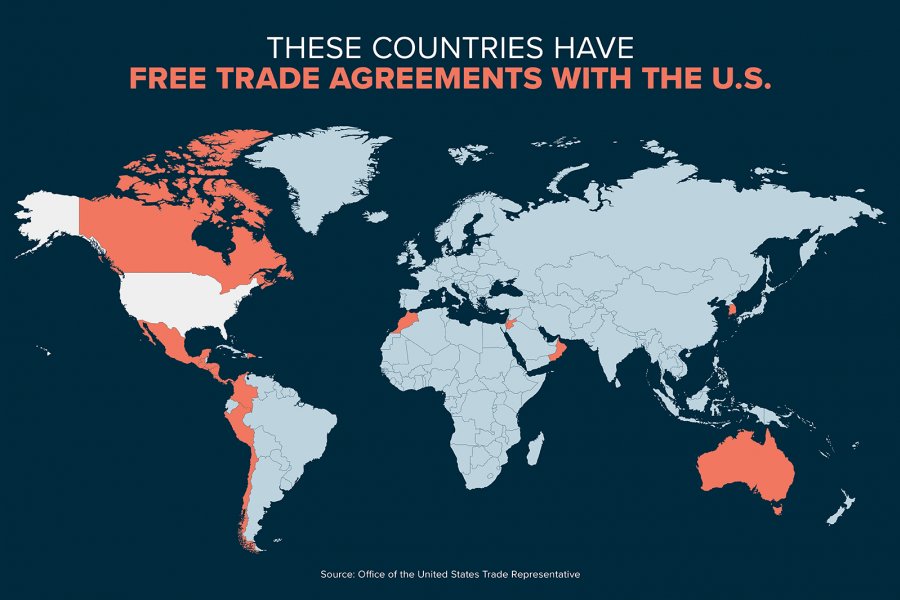
Trade agreements aim to define the rules of commerce between nations and blocs.
BRICS (Brazil, Russia, India, China, South Africa, and recently expanded members)
The BRICS group has emerged as a significant voice for emerging economies, aiming to reshape global economic governance and foster South-South cooperation.
Policies & Focus:
- Pursue diverse trade strategies reflecting individual national priorities but with a collective aim to enhance influence in global forums like the WTO.
- Focus on increasing intra-BRICS trade, investment, and promoting alternative trade and financial platforms.
- Engage in a mix of protectionist measures for sensitive sectors alongside drives for greater openness in others.
Opportunities:
- The "BRICS+" expansion offers a larger platform for trade and industrial development, particularly with developing nations and through initiatives like supporting the AfCFTA.
- Potential to foster more equitable trade relations and provide alternative development models, challenging traditional Western-led economic structures.
- Increased factor mobility (capital, technology) within the expanded group and partner nations.
Weaknesses:
- Lack of a highly formalized institutional structure and internal economic disparities can hinder unified trade policy enforcement and coordination.
- Differing national interests and existing trade imbalances within the bloc can pose challenges to deeper integration.
- Navigating geopolitical trade tensions and protectionist trends from established economic powers.
European Union (EU)
The EU is one of the world's largest and most integrated economic blocs, characterized by a single market and a common commercial policy.
Policies & Focus:
- Maintains a highly integrated single market with free movement of goods, services, capital, and people among member states.
- Advocates for multilateralism and rule-based international trade, with an extensive network of free trade agreements (FTAs).
- Emphasizes high regulatory standards, including in areas like environmental protection, labor rights, and digital trade.
Opportunities:
- Strong institutional framework for stable trade relations and setting global trade norms.
- Capacity to provide political, financial, and technical support for international development and trade initiatives, such as the AfCFTA.
- Significant market size offers considerable bargaining power in trade negotiations.
Weaknesses:
- Complex regulatory environment can sometimes act as a non-tariff barrier for external partners, especially developing countries.
- Maintaining internal cohesion among diverse member states on trade policy can be challenging, potentially slowing agility in responding to global trade tensions.
- Vulnerability to external shocks and trade disputes with major global partners.
African Continental Free Trade Area (AfCFTA)
The AfCFTA is a landmark initiative aiming to create a single market for goods and services across the African continent, boosting intra-African trade.
Policies & Focus:
- Aims to eliminate tariffs on 90% of goods traded within the continent and progressively liberalize trade in services.
- Addresses challenges of currency dependency by promoting the use of local currencies and reducing transaction costs.
- Focuses on enhancing industrialization, regional value chains, and improving Africa's overall competitiveness.
Opportunities:
- Enormous potential for economic transformation, poverty reduction, and increased incomes by significantly boosting intra-African trade.
- Enhanced bargaining power for African nations in global trade negotiations.
- Provides a platform for African countries to integrate more effectively into global value chains and foster partnerships with blocs like BRICS.
Weaknesses:
- Significant implementation challenges due to diverse economic development levels, existing infrastructure deficits, and persistent non-tariff barriers.
- Requires substantial political will and coordination among numerous member states to harmonize regulations and effectively implement protocols.
- Addressing issues of factor mobility, particularly infrastructure for goods and capital movement, is critical.
United States-Mexico-Canada Agreement (USMCA)
The USMCA modernized the North American Free Trade Agreement (NAFTA), governing trade relations between the three North American countries.
Policies & Focus:
- Introduced updated provisions on digital trade, labor standards, environmental protections, and rules of origin, particularly for the automotive sector.
- Prioritizes market access while also incorporating elements aimed at protecting domestic industries and jobs, reflecting a blend of free trade and managed trade principles.
- Includes mechanisms for dispute settlement and aims to create a more level playing field.
Opportunities:
- Strengthens North American trade integration and regional supply chains.
- Encourages higher labor and environmental standards, potentially improving competitiveness based on quality rather than just cost.
- Provides updated rules that reflect the modern economy, particularly in digital commerce.
Weaknesses:
- Complex rules of origin and other provisions can increase compliance costs, especially for small and medium-sized enterprises (SMEs).
- Some provisions, perceived as protectionist, can lead to trade tensions or reduce flexibility for businesses.
- Ongoing challenges in enforcing all provisions consistently across member countries.
Visualizing Trade Bloc Characteristics
The following radar chart offers a comparative visualization of the trade blocs discussed (BRICS, EU, AfCFTA, USMCA) across several key dimensions. These dimensions reflect an analytical assessment rather than definitive quantitative data, aiming to illustrate their general orientations and approaches in the global trade system. The scales are relative, where a higher score generally indicates a stronger emphasis or performance in that dimension.
This chart highlights, for example, the EU's high internal economic integration and global rule-making influence, BRICS's strong focus on South-South cooperation, AfCFTA's aspirational commitment to free trade balanced by current integration levels, and USMCA's moderate scores across several areas, reflecting its regional focus and modernized framework.
Comparative Overview of Trade Policies
The following table provides a summarized comparison of the key features, objectives, opportunities, and weaknesses of BRICS, the EU, AfCFTA, and USMCA. This helps in understanding their distinct approaches to international trade and their roles in shaping global economic dynamics and competitiveness.
| Aspect | BRICS | European Union (EU) | AfCFTA | USMCA |
|---|---|---|---|---|
| Primary Objectives | Enhance collective economic influence, promote South-South cooperation, reform global governance. | Deep economic integration (single market), promote multilateralism, uphold high regulatory standards. | Create a single African market, boost intra-African trade, foster industrialization and economic diversification. | Modernize North American trade rules, strengthen regional supply chains, ensure fair competition and market access. |
| Key Mechanisms/Features | Intergovernmental forums, New Development Bank, Contingent Reserve Arrangement, focus on intra-bloc trade. | Common commercial policy, free movement of goods, services, capital & people, extensive FTAs, strong regulatory framework. | Tariff elimination, trade facilitation measures, protocols on trade in goods, services, investment, intellectual property. | Updated rules of origin, labor and environmental standards, digital trade provisions, dispute settlement mechanisms. |
| Opportunities | Platform for emerging economies, alternative development finance, enhanced trade with AfCFTA and other developing regions, greater factor mobility. | Global standard-setter, large unified market, strong institutional capacity for negotiation and enforcement, support for development. | Significant poverty reduction potential, increased intra-African investment, stronger continental voice in global trade. | Increased regional trade stability, attraction of investment due to clear rules, promotion of higher standards. |
| Weaknesses/Challenges | Internal economic diversity and political differences, lack of a central supranational authority, potential for trade tensions with established powers. | Bureaucratic complexity, maintaining unanimity among member states, adapting to rapid global shifts and trade tensions. | Implementation hurdles (infrastructure, NTMs, varying capacities), reliance on political will, managing diverse economic interests. | Complex rules can be burdensome for SMEs, some provisions may be seen as protectionist, potential for disputes over compliance. |
Mapping the Interconnections: A Mindmap of Global Trade Dynamics
To better visualize the complex interplay of trade barriers, major economic blocs, and the thematic considerations influencing them, the following mindmap provides a structured overview. It connects the dots between specific policies and their broader implications for international trade, competitiveness, and global economic relations.
Taxes on Imports"] id1a1["Impact: Developed
Protect industry, higher consumer prices, retaliation risk"] id1a2["Impact: Emerging
Nurture local industry, limit tech access, affect competitiveness"] id1a3["Impact: Developing
Hinder exports, revenue source, restrict choice, global inequality"] id1b["Sanctions
Punitive Trade Restrictions"] id1b1["Impact: Imposing Nation
Supply chain issues, lost trade, geopolitical tool"] id1b2["Impact: Targeted Nation
Severe economic hardship, isolation"] id1c["Quotas
Quantity Limits on Imports"] id1c1["Impact: Developed
Manage supply, price increase, protect specific sectors"] id1c2["Impact: Emerging/Developing
Protect industry, stifle competition, potential black markets"] id2["Major Trade Policies & Blocs"] id2a["BRICS & BRICS+"] id2a1["Policy Focus: Collective influence, South-South cooperation, alternative platforms"] id2a2["Opportunities: AfCFTA partnership, industrial development, influencing global norms"] id2a3["Weaknesses: Policy coordination, internal economic disparities, geopolitical pressures"] id2b["European Union (EU)"] id2b1["Policy Focus: Integrated single market, multilateralism, high regulatory standards"] id2b2["Opportunities: Global norm setting, extensive FTA network, AfCFTA support"] id2b3["Weaknesses: Regulatory complexity, internal cohesion on external policy, trade tensions"] id2c["AfCFTA"] id2c1["Policy Focus: Single African market, boost intra-African trade, reduce currency dependency"] id2c2["Opportunities: Poverty reduction, enhanced bargaining power, regional value chains"] id2c3["Weaknesses: Implementation challenges, infrastructure gaps, non-tariff barriers"] id2d["USMCA"] id2d1["Policy Focus: Modernized NAFTA, labor/digital/environmental standards"] id2d2["Opportunities: Strengthened regional supply chains, innovation, updated trade rules"] id2d3["Weaknesses: Complex rules for SMEs, protectionist elements, enforcement challenges"] id3["Key Thematic Considerations"] id3a["International Trade Theories
(e.g., Comparative Advantage, Protectionism, Strategic Trade)"] id3b["Global Trade Tensions
(Causes: protectionism, geopolitics; Consequences: reduced growth, uncertainty)"] id3c["Factor Mobility
(Impact of barriers on capital, labor, technology & goods movement)"] id3d["National & Bloc Competitiveness
(How policies & barriers shape ability to compete globally)"] id3e["Influence of BRICS+
(Shifting global economic balance, challenges to existing order)"]
Understanding Trade Barriers: A Visual Explainer
The following video provides an accessible overview of what trade barriers are, including common types like tariffs and quotas, and how they impact international trade. It serves as a good foundational piece to understand the mechanisms discussed in this analysis.
This video explains how barriers such as tariffs and trading blocs function, impacting everything from consumer prices to international relations. It highlights the tension between protecting domestic industries and fostering global economic efficiency, a core theme in discussions of international trade policy and trade theories like protectionism versus free trade.
Frequently Asked Questions (FAQ)
How do trade theories explain the use of trade barriers?
Trade theories offer various perspectives. For example:
- Mercantilism (historical): Advocated for maximizing exports and minimizing imports through barriers to accumulate national wealth.
- Protectionism (e.g., Infant Industry Argument): Suggests temporary barriers like tariffs can shield new domestic industries in developing or emerging economies from established foreign competitors until they can achieve economies of scale and compete internationally.
- Strategic Trade Theory: Argues that in industries with significant economies of scale or network effects (e.g., aerospace, tech), governments can use subsidies or protection to help domestic firms gain a competitive advantage globally.
- Theory of Comparative Advantage: Generally argues against trade barriers, stating that countries benefit most by specializing in what they produce most efficiently and trading freely. Barriers distort this natural efficiency.
- Political Economy Arguments: Often, trade barriers are implemented due to political pressure from domestic interest groups seeking protection, even if it's not economically optimal for the country as a whole. This can lead to trade tensions.
What are the primary goals of the AfCFTA, and what are its main challenges?
Primary Goals of AfCFTA:
- Create a single continental market for goods and services, with free movement of business persons and investments.
- Boost intra-African trade significantly (currently low compared to other regions).
- Promote industrialization, economic diversification, and job creation.
- Enhance Africa's competitiveness on the global stage and strengthen its negotiating position.
- Reduce reliance on the export of raw commodities and foster regional value chains.
- Address issues like currency convertibility and payment systems to facilitate trade.
Main Challenges:
- Infrastructure Deficits: Poor transport (roads, rail, ports) and logistics networks hinder physical trade.
- Non-Tariff Barriers (NTBs): Complex customs procedures, sanitary and phytosanitary standards, and other regulatory hurdles remain significant.
- Implementation and Enforcement: Ensuring consistent application of rules across 50+ diverse member states is a monumental task.
- Varying Levels of Economic Development: Disparities in industrial capacity and competitiveness among member states need careful management.
- Political Will and Coordination: Sustained commitment and effective coordination among national governments are crucial.
- Limited Productive Capacity: Many countries produce similar primary commodities, limiting complementarity in trade.
In what ways does the BRICS group aim to reshape global trade dynamics?
The BRICS group (now expanded) aims to reshape global trade dynamics through several avenues:
- Promoting Multipolarity: Challenging the dominance of traditional Western-led economic institutions and advocating for a more balanced global economic order. This includes seeking reforms in institutions like the IMF and World Bank.
- Enhancing South-South Cooperation: Fostering increased trade, investment, and technological exchange among developing and emerging economies, reducing dependence on developed country markets and capital.
- Developing Alternative Financial Mechanisms: Initiatives like the New Development Bank (NDB) and the Contingent Reserve Arrangement (CRA) aim to provide alternative sources of development finance and financial stability, potentially reducing reliance on traditional lenders and the US dollar in international transactions.
- Increasing Influence in Global Governance: By coordinating positions on key global economic issues, BRICS seeks to amplify the collective voice of emerging markets in international forums like the G20 and WTO.
- Creating New Trade Platforms: Exploring partnerships, such as with the AfCFTA, to build new corridors for trade and investment that align with the development priorities of member states and partner countries.
- Focusing on Sustainable and Inclusive Development: Advocating for development models that are more equitable and environmentally sustainable, reflecting the priorities of its diverse membership.
These efforts collectively represent a push for greater influence and a more diversified global trade and financial architecture, potentially leading to shifts in trade patterns, investment flows, and international competitiveness.
Can trade sanctions be effective, and what are their typical consequences?
The effectiveness of trade sanctions is a widely debated topic, often depending on various factors such as the scope of sanctions, the economic resilience of the targeted country, international support, and the specific goals of the sanctions.
Potential Effectiveness:
- Sanctions can be effective in achieving limited policy changes, especially if they are narrowly targeted and part of a broader diplomatic strategy.
- They can cripple specific sectors of an economy (e.g., defense, oil) if comprehensively enforced by major economic powers.
- Financial sanctions, like freezing assets or restricting access to international banking systems, can exert significant pressure.
Typical Consequences for the Targeted Country:
- Economic Hardship: Often leads to recession, high inflation, currency devaluation, unemployment, and shortages of essential goods.
- Humanitarian Impact: Can disproportionately affect vulnerable populations, leading to food insecurity, reduced access to medicine, and increased poverty.
- Reduced Factor Mobility: Limits access to foreign capital, technology, and markets, hindering development and competitiveness.
- Political Impact: May lead to increased authoritarianism as regimes consolidate power, or conversely, could fuel domestic unrest. Sometimes sanctions entrench the targeted regime by fostering a "rally-around-the-flag" effect.
- Trade Diversion: Targeted countries may seek new trading partners or engage in illicit trade to circumvent sanctions.
Consequences for Sanctioning Countries/Global Economy:
- Economic Costs: Loss of export markets, disruption to supply chains, and potential retaliatory measures.
- Increased Trade Tensions: Can escalate disputes and undermine international cooperation.
Overall, while sanctions can be a powerful tool of foreign policy, their success is not guaranteed, and they often come with significant, sometimes unintended, economic and humanitarian costs, affecting international trade flows and global stability.
Recommended Further Exploration
To delve deeper into the complexities of global trade, consider exploring these related queries:
- Explore the long-term economic consequences of retaliatory tariffs between major economies.
- Investigate the role of international organizations like the WTO in mediating trade disputes and reducing barriers.
- Analyze the impact of digital trade provisions in modern trade agreements on global commerce and factor mobility.
- Examine case studies of how specific developing countries have utilized trade policy to enhance their competitiveness and overcome market access barriers.
References
Last updated May 11, 2025