
Effective Interventions for Teaching Money Concepts in Grade 1 Mathematics
Engaging Strategies to Build Foundational Money Skills in Young Learners
Key Takeaways
- Hands-On Learning Enhances Understanding: Utilizing physical coins and interactive activities helps students grasp money concepts effectively.
- Integrating Real-Life Scenarios Promotes Practical Application: Simulating real-world transactions allows students to apply mathematical skills in meaningful contexts.
- Multi-Sensory Approaches Cater to Diverse Learning Styles: Combining visual, auditory, and tactile methods ensures all students can engage and retain information.
Comprehensive Intervention Strategies
1. Use of Visual Aids and Coin Sorting
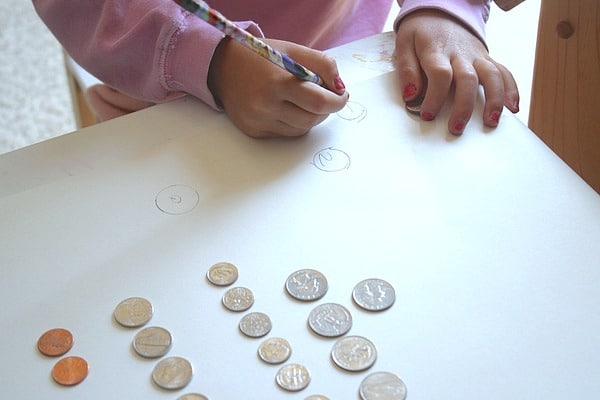
Introducing physical coins and bills in the classroom provides students with a tangible understanding of different denominations. By allowing students to touch and sort coins by type, size, or value, they can better differentiate between various monetary units. Visual aids such as coin charts or anchor charts displaying each coin and its value serve as constant references, reinforcing recognition and comprehension.
2. Interactive Counting Games
Engaging students in counting games that involve reaching specific monetary amounts fosters both counting skills and an understanding of money’s value. Games can include using real or play money to count out quantities, enhancing their ability to add and subtract different denominations. Interactive board games or digital applications that incorporate money counting make learning fun and dynamic.
3. Coin Chart Creation and Value Matching
Encouraging students to create their own coin charts allows them to visualize and memorize the various denominations. Matching exercises where students pair coins with their numerical values reinforce this knowledge. For example, students can match a picture of a quarter with the number "25" to solidify their understanding of each coin's worth.
4. Skip Counting and Systematic Skill Building
Teaching skip counting by 1s, 5s, and 10s lays the foundation for counting money efficiently. Incorporating skip-counting songs, chants, and repeated practice helps students internalize these patterns. Systematically building skills by starting with simpler coins like pennies and gradually introducing more complex denominations ensures a structured learning progression.
5. Hands-On Money Games and Digital Tools
Implementing hands-on games such as "roll and stack" or "roll and fill the bank" engages students in practical application of money concepts. Additionally, utilizing digital learning tools and educational apps that offer interactive money counting activities can provide immediate feedback, making learning both engaging and effective.
6. Real-Life Scenarios and Storytelling
Incorporating real-life scenarios like grocery shopping or running a classroom store helps students see the practical application of money counting and transactions. Storytelling, where characters use money to buy items, makes the concept more relatable and interesting, thereby enhancing engagement and understanding.
7. Worksheet Practice and Flashcards
Providing worksheets with a variety of money-related problems allows students to practice counting and making combinations of coins. Flashcards with images of coins and their values can be used for quick drills, improving quick recognition and recall of money denominations.
8. Peer Learning and Group Work
Encouraging students to work in pairs or small groups on money-related tasks promotes collaborative learning. Peer teaching allows stronger students to assist those who might be struggling, fostering a supportive learning environment and reinforcing their own understanding through teaching others.
9. Tactile Learning Experiences and Multi-Sensory Approaches
Incorporating tactile activities such as coin rubbings, coin-based art projects, and sensory bins filled with play money caters to different learning styles. Combining these with auditory activities like saying coin values out loud and visual components like charts ensures a comprehensive, multi-sensory learning experience that aids in concept retention.
10. Systematic Skill Building and Differentiated Instruction
Adopting a systematic approach by mastering one coin type at a time before introducing others helps build a solid foundation. Differentiated instruction tailored to meet individual student needs ensures that each child progresses at their own pace, addressing specific areas where they might need additional support.
Implementation Table
| Intervention Strategy | Objective | Activities |
|---|---|---|
| Use of Visual Aids and Coin Sorting | Enhance recognition and differentiation of coins | Sorting coins by type, size, or value; creating coin charts |
| Interactive Counting Games | Improve counting and addition skills with money | Counting games using real/play money; interactive board games |
| Coin Chart Creation and Value Matching | Memorize and understand each coin’s value | Creating charts; matching coins with numerical values |
| Skip Counting and Systematic Skill Building | Develop efficient counting patterns | Skip-counting songs; progressive skill-building exercises |
| Hands-On Money Games and Digital Tools | Engage students with practical money applications | “Roll and stack” games; educational apps with interactive activities |
| Real-Life Scenarios and Storytelling | Apply money skills in meaningful contexts | Simulated shopping; stories involving money transactions |
| Worksheet Practice and Flashcards | Reinforce counting and recognition of coins | Money-related worksheets; flashcard drills |
| Peer Learning and Group Work | Promote collaborative learning and reinforce understanding | Pair and group money tasks; peer tutoring sessions |
| Tactile Learning Experiences and Multi-Sensory Approaches | Cater to diverse learning styles for better retention | Coin rubbings; coin art projects; sensory bins with play money |
| Systematic Skill Building and Differentiated Instruction | Ensure strong foundational skills through tailored learning | Mastering one coin type at a time; individualized support plans |
Conclusion
Teaching money concepts to first-grade students requires a multifaceted approach that incorporates visual, auditory, and tactile learning modalities. By utilizing hands-on activities, interactive games, and real-life scenarios, educators can create an engaging and effective learning environment. Systematic skill building and differentiated instruction ensure that each student receives the support they need to master foundational money skills. Implementing these comprehensive interventions not only enhances mathematical understanding but also prepares young learners for practical financial interactions in their daily lives.
References
 missgiraffesclass.blogspot.com
Last updated February 11, 2025