
Unlock Financial Literacy: Where Math Meets Art in Collaborative Classroom Fun!
Engage students with creative, hands-on activities that blend money concepts with artistic expression and teamwork.
Integrating mathematics, specifically concepts related to money, with art provides a dynamic and engaging way for students to learn. Collaborative activities further enhance this by fostering teamwork, communication, and shared problem-solving. This approach transforms abstract financial ideas into tangible, creative experiences, making learning about currency, value, and transactions more memorable and meaningful.
Essential Insights: Why Combine Money, Math, and Art?
- Creative Engagement: Artistic activities like designing currency or creating money-themed crafts capture student interest and make learning financial concepts enjoyable.
- Concrete Understanding: Hands-on projects help students visualize and manipulate concepts like coin values, counting, making change, and budgeting, solidifying their mathematical understanding.
- Enhanced Collaboration: Working in groups encourages students to share ideas, assign roles, communicate effectively, and build teamwork skills crucial for real-world scenarios.
Sparking Creativity: Collaborative Math-Art Activities for Money Concepts
Here are several detailed ideas for collaborative activities that effectively blend the money chapter with artistic creation:
1. Design Your Own Currency: A Group Project
This popular activity challenges students to think critically about the design, value, and function of money.
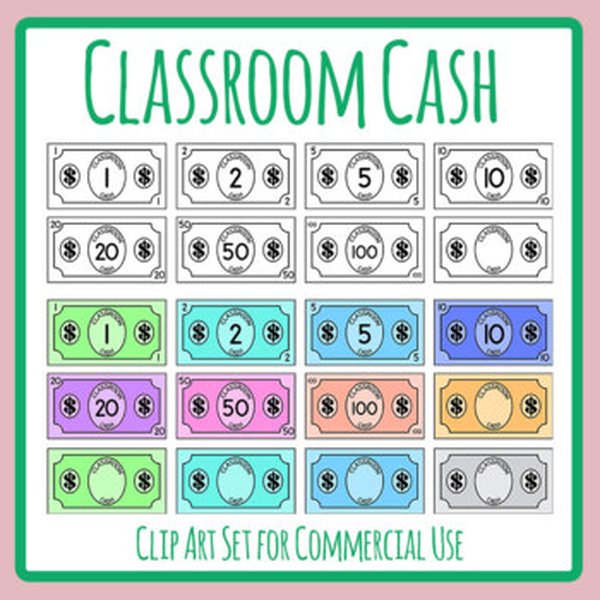
Templates like these can inspire students designing their own classroom currency.
Activity Steps:
- Introduction & Research: Begin with a lesson on real-world currency. Discuss coins (pennies, nickels, dimes, quarters) and bills, their values, and design elements (portraits, symbols, landmarks, security features). Students can briefly research different global currencies.
- Group Formation & Roles: Divide students into small groups (3-4). Assign or let groups choose roles like:
- Lead Designer: Focuses on the artistic elements, drawing, and coloring.
- Mathematician: Ensures correct denominations, calculates total values, and checks mathematical accuracy in related tasks.
- Concept Developer/Historian: Suggests meaningful symbols or themes for the currency design.
- Presenter: Explains the group's currency design and mathematical choices to the class.
- Collaborative Creation: Provide materials (paper, templates, markers, colored pencils). Each group designs a set of unique coins and/or bills. Encourage them to incorporate mathematical concepts like symmetry, geometric shapes, or patterns discussed in art or math lessons. They must clearly label each piece with its fictional value (e.g., 5 'Gloops', 25 'Sparkles').
- Math Integration: Once the currencies are made, assign math problems using their creations. Examples: "Calculate the total value of 3 [Group A's Coin Name] and 2 [Group B's Bill Name]." or "If an item costs 85 [Your Currency Unit], show two different ways to pay for it using your designed money." Groups work together to solve these problems.
- Presentation & Reflection: Each group presents their currency, explaining the design choices, symbolism, and the mathematical thinking behind their denominations. Discuss how art and math worked together in their project.
2. The Collaborative Money Mural or Collage
This large-scale project allows groups to visually represent financial concepts or build collective artwork using money themes.
Activity Variations:
- Financial Concepts Mural: Groups illustrate different aspects of money management (earning, saving, spending, budgeting, donating) on sections of a large paper roll or bulletin board. They can incorporate charts or graphs representing fictional financial data, combining artistic storytelling with data visualization.
- Coin Value Collage: Students use cutouts or drawings of coins (real or designed) to create a large collage. Groups might be responsible for sections representing specific total values (e.g., "Create a design worth $1.50 using only dimes and nickels"). They must calculate and verify the value of their contribution before adding it to the shared artwork. This reinforces coin recognition and addition.
- Money Tree Craft: Collaboratively build a 3D "money tree." Each group could be responsible for decorating branches with crafted "leaves" made of paper coins or bills (real or designed). They calculate the total value of their branches and contribute to finding the tree's overall value.
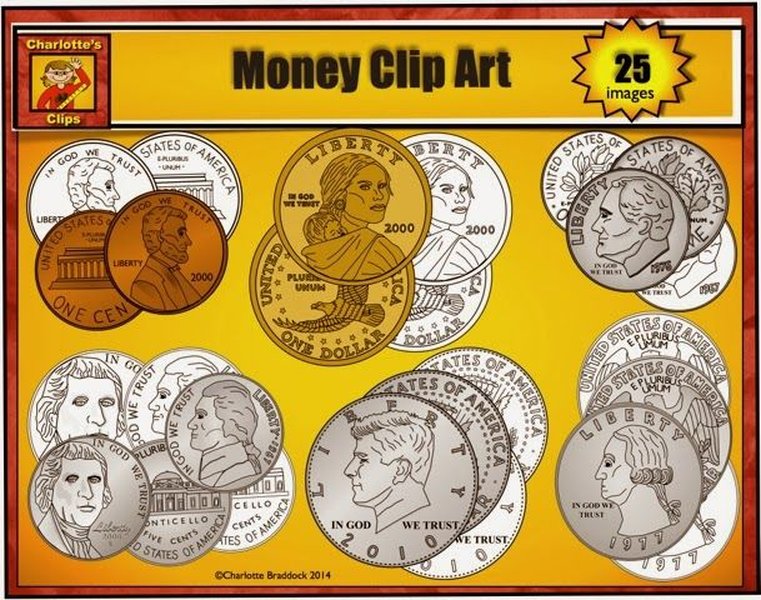
Using images or rubbings of real coins can be integrated into collages or murals.
3. Coin Rubbing & Print Composition
This activity focuses on the physical attributes of coins and uses printmaking techniques.
Activity Steps:
- Coin Rubbing: Students place real coins under thin paper and rub the side of a crayon over them to capture the details (texture, value, imagery). Discuss the revealed attributes.
- Artistic Enhancement: Optionally, students can add a light watercolor wash over the rubbings for contrast or create layered compositions.
- Custom Coin Printing (Extension): Groups can design and carve their own "coins" onto foam sheets or cardboard, incorporating geometric shapes. They assign fictional values, then use ink pads to print these custom coins, perhaps layering them with their real coin rubbings.
- Math Integration: Groups calculate the total value of the coins in their artwork (real or fictional). They can compare attributes ("How many pennies have the same diameter as one quarter?") or solve problems based on their compositions.
4. Tessellations and Currency Patterns
Explore the geometric patterns found on real banknotes and challenge students to create their own.
Activity Focus:
- Examine real currency for intricate patterns, discussing concepts like tessellations (repeating shapes covering a surface without gaps or overlaps) and symmetry.
- Groups design their own tessellating patterns using geometric shapes on paper.
- They can assign monetary values to different shapes within their pattern (e.g., each hexagon = 10 cents, each triangle = 5 cents) and calculate the total value of a section of their design.
- This connects geometry, art, and multiplication/addition in a visually engaging way.
5. Classroom Marketplace or Auction
Simulate a real-world economic scenario where students use money (play money or their designed currency) to buy and sell goods or services.
Setup and Activity:
- Groups can create small crafts, drawings, or offer simple "services" (like organizing a shelf) to "sell."
- Assign prices to items using mixed coin/bill values (e.g., $1.35).
- Provide each student or group with a budget of play money.
- Hold a "market day" or an auction where students practice counting money, making purchases, calculating costs, and giving/receiving change.
- Groups might run "storefronts," collaborating on pricing, advertising (art!), and managing their earnings.
Visualizing Skill Development
Different collaborative math-art activities emphasize distinct skills. The radar chart below offers an opinionated comparison of how activities like 'Currency Design', 'Money Mural', and 'Classroom Auction' might foster various competencies. Note that the actual development depends heavily on the specific implementation and focus of the lesson.
This chart suggests that while all activities promote multiple skills, 'Currency Design' might lean more towards artistic expression and design thinking, the 'Money Mural' could excel in collaborative storytelling and visual representation of concepts, and the 'Classroom Auction' strongly reinforces practical calculation and financial decision-making.
Mapping the Connections: Math, Art, Money, and Collaboration
Integrating these subjects creates a rich learning environment. The mindmap below illustrates how the core concepts connect and branch out into specific activities and learning outcomes.
This map highlights the interconnected nature of these activities, showing how math skills, artistic techniques, collaborative processes, and financial literacy concepts all converge to create a holistic learning experience.
Activity Comparison: A Closer Look
To help choose the best fit for your classroom, here's a table summarizing key aspects of three distinct collaborative activities:
| Activity | Primary Math Focus | Primary Art Focus | Key Collaborative Element | Potential Outcome |
|---|---|---|---|---|
| Design Your Own Currency | Denominations, Value Assignment, Basic Counting | Drawing, Symbolism, Pattern Design, Color Theory | Group decision-making on design and value, Role distribution | Understanding currency features, Creative expression, Team planning |
| Collaborative Money Mural | Counting Totals, Representing Data (optional), Addition | Composition, Illustration, Collage Techniques | Integrating individual contributions into a cohesive whole, Shared narrative | Visualizing financial concepts, Large-scale teamwork, Artistic storytelling |
| Classroom Marketplace/Auction | Addition, Subtraction, Making Change, Budgeting | Crafting items for sale, Designing 'advertisements' (optional) | Negotiation (buyer/seller), Group store management (optional) | Practical application of money transactions, Understanding supply/demand, Communication skills |
Visualizing Arts Integration in Math
Understanding how visual arts can be integrated into math lessons provides a foundation for these activities. This video offers insights and examples of how artistic elements like shapes, symmetry, and composition can enhance mathematical understanding, applicable to money-related projects.
The video discusses using famous artworks to explore mathematical concepts, a technique adaptable to examining the artistry and geometry within currency design. It emphasizes how visual and hands-on approaches can make abstract math concepts more accessible and engaging for elementary students.
Benefits of the Integrated Approach
- Addresses Diverse Learning Styles: Combining visual, kinesthetic, and analytical tasks caters to a wider range of learners.
- Makes Math Relevant: Connecting math to tangible artistic creation and simulated real-world scenarios (like a market) shows its practical value.
- Fosters Higher-Order Thinking: Activities often require students to plan, design, problem-solve, and evaluate, moving beyond rote memorization.
- Increases Engagement and Motivation: The fun, creative nature of these activities can boost student enthusiasm for learning about money.
- Develops Soft Skills: Collaboration inherently builds communication, negotiation, and teamwork abilities.
Implementation Tips for Educators
Setting Up for Success:
- Clear Objectives: Define both the math and art learning goals for the activity.
- Group Wisely: Consider student strengths and personalities when forming groups. Ensure roles are clear.
- Provide Resources: Gather necessary art supplies (paper, markers, crayons, scissors, glue, craft materials) and math manipulatives (play money, templates).
- Scaffolding: Start with simpler concepts (coin recognition) before moving to complex tasks (making change, budgeting).
- Time Management: Break down larger projects into manageable steps with clear timeframes.
- Differentiation: Adapt tasks for varying ability levels. Some students might focus on basic counting, while others tackle multi-step problems or more complex designs.
- Assessment: Evaluate both the process (collaboration, participation) and the product (mathematical accuracy, artistic effort). Use rubrics if helpful.
Frequently Asked Questions (FAQ)
How can these activities be adapted for different age groups?
Younger Grades (K-1): Focus on basic coin recognition (penny, nickel, dime), simple counting, and sorting. Art activities can involve coin rubbings, coloring pre-made templates, or simple crafts like gluing paper coins onto a piggy bank outline. Collaboration might involve sharing materials and working side-by-side.
Middle Grades (2-3): Introduce quarters and dollar bills, counting mixed coins, simple addition/subtraction with money, and the concept of making change. Currency design can be more detailed, and marketplace activities can involve simple transactions. Group roles become more defined.
Older Grades (4-5+): Tackle more complex calculations, multiplication/division with money (e.g., cost per item), budgeting, percentages (discounts), and comparing values. Currency design can incorporate more sophisticated security features or historical themes. Collaborative projects can involve more complex planning and problem-solving.
What materials are typically needed?
Materials vary by activity but commonly include:
- Paper (various sizes, colors, construction paper)
- Drawing/Coloring tools (crayons, markers, colored pencils)
- Scissors, glue, tape
- Play money or real coins (for rubbing/reference)
- Optional: Craft supplies (foam sheets, cardboard, yarn), watercolor paints, ink pads, templates, calculators.
How can I assess student learning in these collaborative activities?
Assessment should be multi-faceted:
- Observe Collaboration: Watch how groups work together, communicate, share tasks, and resolve conflicts. Use a simple checklist or anecdotal notes.
- Check Math Accuracy: Review calculations within the project (e.g., currency values, transaction totals, change given). Collect worksheets or review final products.
- Evaluate Artistic Effort: Assess creativity, effort, and application of art concepts (design, patterns, neatness) based on age-appropriate expectations.
- Group Presentations: Listen to how well groups explain their work, demonstrating understanding of both math and art components.
- Self/Peer Assessment: Have students reflect on their own contribution and their group's process.
What if some students are stronger in math and others in art?
This is where collaborative grouping and role assignment shine! Intentionally create mixed-ability groups where students can leverage their strengths and support each other. Assign roles that align with strengths (e.g., the 'Mathematician,' the 'Lead Designer') but encourage all members to participate in every aspect. The goal is for students to learn from each other and appreciate diverse skills within the team.
Recommended Further Exploration
- How does integrating art improve math retention in elementary students?
- Can you provide examples of using real-world currency design to teach geometry concepts like symmetry and tessellations?
- What are effective strategies for managing collaborative group work in a classroom setting?
- What are some creative ways to assess student learning in project-based math and art activities beyond traditional tests?
References
Last updated April 29, 2025