
Graph Theory in Applied Mathematics
Exploring networks and connections in technology and beyond
Key Takeaways
- Fundamental Structure: Graph theory focuses on nodes and edges and is central to understanding complex networks.
- Real-World Applications: It is applied in analyzing social networks, the internet, and logistical systems.
- Conceptual Approach: Emphasizes qualitative insights over intensive equation solving, ideal for a general education course.
Overview of Graph Theory
Graph theory is the study of discrete structures known as graphs, which consist of nodes (or vertices) connected by edges. In this approach, the focus is not on detailed numerical computations but on the understanding of relationships, linkages, and patterns that emerge in various systems.
As a college student enrolled in a general education course on applied mathematics in technology—with prerequisites including precalculus and trigonometry—your exploration into graph theory will center on grasping how networks are structured and how information flows within them. This course emphasizes conceptual understanding rather than intricate equations, allowing you to appreciate both the beauty and functionality of mathematical structures inherent in real-world problems.
Detailed Exploration of Graph Theory in Technology
Understanding the Concept
In graph theory, the primary objects of study are graphs, which are mathematical representations used to model pairwise relationships between objects. A graph is formally defined as a set of vertices (nodes) and a set of edges (connections) that link pairs of vertices. Unlike subjects that require complex algebraic manipulation, graph theory provides a clear and visual way to comprehend interactions within a network. For example, in the context of technology, each vertex might represent a computer or a server, and each edge could symbolize a data connection between these devices.
The conceptual nature of graph theory makes it particularly suitable for introductory level courses in applied mathematics for technology students. Through graph theory, you learn to recognize patterns, such as clusters, hubs, and bridges, which can illuminate the structure and vulnerability of networks. This insight is pivotal in areas like cybersecurity, where monitoring network robustness is essential, or in social network analysis, where influencers and communities emerge from the interconnections of nodes.
Key Components and Terminology
The world of graph theory is enriched by several fundamental concepts including:
- Vertices (Nodes): The individual entities within a graph that represent real-world objects or data points.
- Edges (Links): The lines connecting vertices, indicating relationships or interactions between nodes.
- Degree: The number of edges incident to a vertex, which often reflects the importance or centrality of that node within the network.
- Path: A sequence of vertices where each adjacent pair is connected by an edge, representative of routes through a network.
- Cycle: A path in which the start and end vertex are the same, hence forming a loop.
- Tree: A type of graph that is connected and has no cycles, often used to represent hierarchical structures.
These components form the vocabulary of graph theory and equip you with a framework for analyzing how systems are interlinked. Understanding these terms provides a solid conceptual foundation for more advanced analyses in applied mathematics and computer science.
Applications in Technology
Applied mathematics, especially in the context of technology courses, often illustrates how abstract mathematical theories have very tangible applications. Graph theory stands out due to its extensive relevance in multiple technology-driven domains:
Networking and Communication
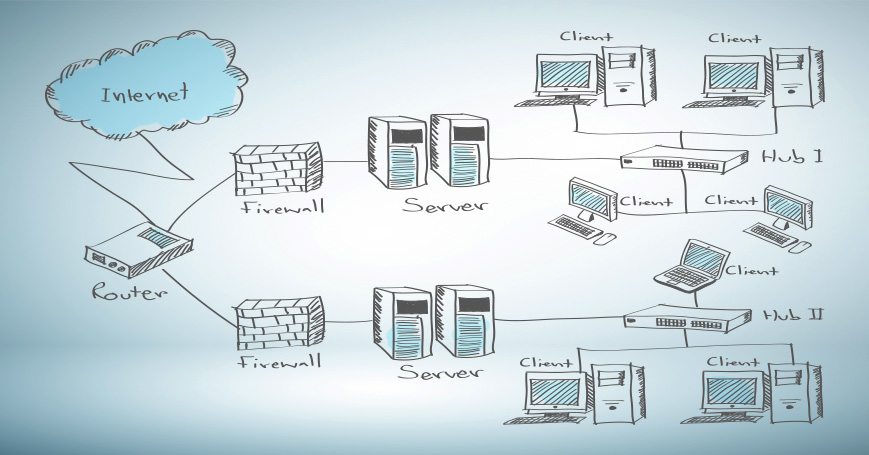
In computer science, graph theory is at the heart of networking. The internet, for example, can be modeled as a graph where nodes represent servers or routers, and edges represent the physical or virtual connections between them. By analyzing these graphs, engineers can optimize routing protocols, balance network loads, and design systems that are resilient to failures.
Social Network Analysis
Social media platforms leverage graph theory to interpret and predict user behavior. Each individual on the network is represented as a node, and interactions (such as friend requests or followings) are the edges connecting these nodes. This form of analysis reveals clusters of users with common interests, identifies influential personalities, and even helps in detecting anomalies that might signify security breaches or misinformation campaigns.
Transportation and Logistics
Graph theory also plays a crucial role in optimizing transportation networks. In this application, nodes can represent various transit hubs such as airports, train stations, or intersections, whereas edges represent the routes linking these hubs. The analysis helps planners devise optimal routes that reduce travel time and operational costs, and is instrumental in emergency response planning to reroute traffic during disruptions.
Graph Theory’s Role in Decision-Making
The utility of graph theory extends into decision-making and predictive analytics. By examining the connectivity and structure of graphs, one can predict the behavior of complex systems. Whether it’s determining the "small-world" properties in neural networks or identifying bottlenecks in supply chains, graph theory provides a conceptual framework that aids in making smarter decisions in both business and technology.
Graph Theory in Educational Curricula
Since your course on applied mathematics in technology emphasizes conceptual learning over advanced calculations, graph theory is an ideal fit. It provides an intuitive understanding of how data and relationships can be visually and logically represented, fostering analytical thinking. The simplicity of its basic components allows for a gradual introduction, while its vast applications encourage students to explore multiple avenues in technology and science.
The course typically covers topics like basic graph terminology, properties of graphs, and fundamental algorithms used to traverse and analyze graphs (e.g., depth-first search and breadth-first search). The accessibility of these topics means that even students with only a precalculus and trigonometry background can appreciate how powerful mathematical ideas are used to solve everyday technological problems.
Examples of Graph Theory Concepts in Action
To further illustrate the versatility of graph theory, consider the following table that outlines common applications across different fields:
| Application Area | Description | Real-World Example |
|---|---|---|
| Social Networks | Representation of individuals as nodes and their interactions as edges; analysis helps in community detection and influence measurement. | Facebook friend network analysis |
| Internet Infrastructure | Router and server interconnections modeled as graphs; used for optimizing routing protocols and network resilience. | Data packet routing on the internet |
| Transportation | Mapping of transportation hubs and transit paths to optimize travel routes and manage congestion. | City metro or airport traffic networks |
| Biology | Analysis of networks such as neural or protein interaction networks; helps understand the connectivity and functionality of biological systems. | Brain connectivity maps or protein interaction studies |
These examples highlight how graph theory's abstract concepts translate into practical applications that drive efficiency and innovation across various sectors.
Integration with Other Mathematical Concepts
While graph theory is a powerful independent field, it often intersects with other areas of applied mathematics and computer science. For instance, algorithms fundamental to graph traversal and shortest path finding (such as Dijkstra’s and Kruskal's algorithms) borrow heavily from areas like combinatorics and optimization theory. This synergy underscores the interconnected nature of modern mathematics and how various branches work together to provide elegant solutions to complex problems.
Incorporating graph theory into your studies not only deepens your analytical toolkit but also broadens your understanding of how mathematical reasoning is applied to diverse challenges. This integrative approach is a hallmark of applied mathematics in technology, presenting an environment where theoretical models effectively guide practical decision-making.
Advanced Topics and Further Study
Beyond the Basics
For students interested in diving deeper beyond the introductory aspects of graph theory, advanced topics include network flow problems, matching theory, and spectral graph theory. These subjects further explore how the algebraic properties of graphs can be used in fields such as quantum computing, optimization problems in operation research, and algorithms that scale with big data.
Advanced graph theory also studies concepts like planar graphs, graph coloring, and connectivity properties that are pivotal in modern computational applications. Learning these concepts can provide further insights into solving real-world problems such as scheduling, resource allocation, and even the intricate network structures observed in protein-protein interactions in bioinformatics.
Collaborative and Interdisciplinary Learning
Graph theory serves as an excellent bridge between mathematics and technology, enabling interdisciplinary collaborations. Researchers, computer scientists, and engineers often rely on graph theory to model phenomena ranging from traffic flows in smart cities to the modeling of temporary connections in wireless sensor networks. Such cross-disciplinary studies not only enrich your learning experience but also prepare you for solving multifaceted problems in your future career.
Graph Theory: A Step Towards Practical Application
The foundational understanding of graph theory that you gain in your general education course can be a stepping stone towards more complex and specialized fields. Whether you pursue further studies in computer science, data analytics, or even network security, the insights from graph theory will provide the conceptual framework to interpret and solve dynamic problems where structure and connectivity play critical roles.
In summary, graph theory is not just about drawing nodes and lines—it is a powerful conceptual tool that enables the analysis of networks that underpin modern technological and social systems. Its emphasis on relationships and connectivity aligns perfectly with a curriculum that values understanding over memorization of formulas, making it a critical area of study within applied mathematics in technology.
References
- Applied Mathematics - Wikipedia
- Why Math is Important in Today’s Technologies - Fintech Weekly
- Real Life Application of Maths in Technology - GeeksforGeeks
- Mathematical Concepts Important for Machine Learning - KnowledgeNile
- What is Applied Mathematics? - Northwestern University
Recommended Further Queries
Last updated March 11, 2025