
Unraveling the Presence of Henri Franken in the Belgian Congo: A Historical Inquiry
Exploring available records and historical context surrounding Dutch individuals and the complex colonial era of the Belgian Congo.
The query regarding a Dutchman named Henri Franken in the Belgian Congo prompts an investigation into colonial archives and historical narratives. While direct, prominent records for an individual precisely matching this description and context are elusive in general historical summaries, we can explore related information concerning individuals with similar names, the role of Dutch nationals during that period, and the broader history of the Belgian Congo.
Key Insights from the Investigation
- No Direct Prominent Record: Current historical information readily available does not prominently feature a Dutchman specifically named Henri Franken playing a significant, documented role in the Belgian Congo.
- Potential Connection - Henri Arthur Cornelis: One avenue of inquiry points towards Henri Arthur Cornelis, the last Governor-General of the Belgian Congo (1958-1960), who was reportedly of Dutch descent. While his surname is Cornelis, not Franken, this is the closest link found to a high-ranking individual of Dutch background in the Belgian Congo's administration during its final years.
- Broader Context of European Presence: The Belgian Congo attracted individuals from various European nations, including the Netherlands, for administrative, commercial, or missionary work, though their roles might not always be extensively documented unless they held significant positions.
Investigating Henri Franken in the Belgian Congo
The Search for Henri Franken
Searches for a Dutchman named Henri Franken with a clear, documented connection to activities or residence in the Belgian Congo (1908-1960) do not yield immediate, conclusive results in mainstream historical records. The name "Henri Franken" itself does appear in various genealogical contexts, often linked to the Netherlands or Dutch colonial history elsewhere, but not specifically within the Belgian Congo narrative.
Genealogical Mentions
Instances of individuals named Henri Franken or variations thereof include:
- Henri Cornelis Franken (1920–2008): Documented as born in the Netherlands, with no explicit link to the Belgian Congo in readily available records.
- Hendrick Andriese Francken (c. 1720–1795): A Dutch colonial figure, but his activities were centered in North America (New York) and Jamaica, not Africa.
- Other genealogical records: The Franken surname appears in Dutch contexts, but specific ties to the Belgian Congo for a "Henri Franken" are not apparent in the provided information.
This lack of direct mention suggests that if a Dutchman named Henri Franken was present in the Belgian Congo, his role might have been minor, undocumented in broader historical accounts, or his records may reside in more specialized colonial archives not covered by general searches.
A Potential, Though Unconfirmed, Link: Henri Arthur Cornelis
One individual of note who emerges with a Dutch connection is Henri Arthur Cornelis. He served as the final Governor-General of the Belgian Congo, from July 12, 1958, until the Congo's independence on June 30, 1960. Some sources suggest he was of Dutch descent.
While his surname is Cornelis, not Franken, the Dutch heritage and high-ranking position make him a figure of interest. It's conceivable that names or details could be conflated or misremembered over time. Governor-General Cornelis presided over the tumultuous period leading to the Congo's independence, a time marked by rising nationalist sentiment and political upheaval.
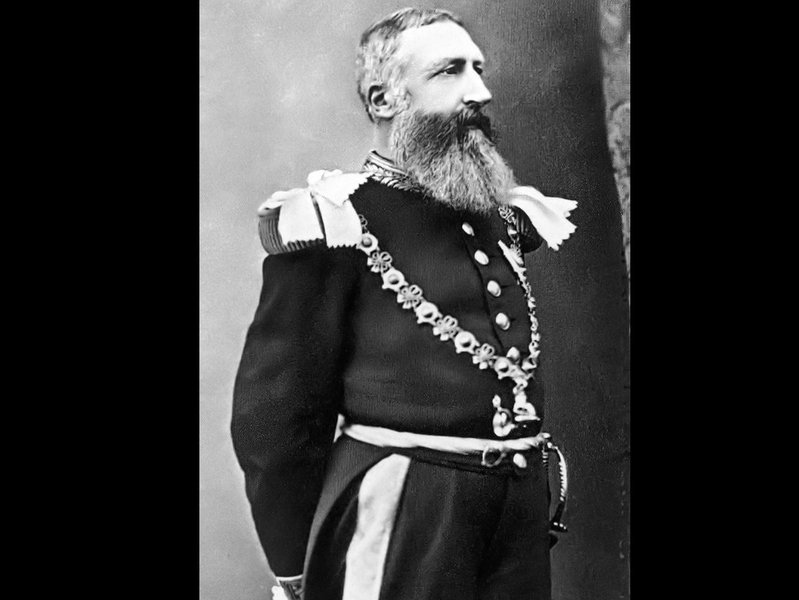
King Leopold II, whose personal rule over the Congo Free State preceded the Belgian Congo era.
His tenure was critical, occurring after the Léopoldville riots in January 1959, which significantly accelerated the Belgian government's decision to grant independence. His administration was therefore deeply involved in the final transitional phases from colonial rule to a sovereign state.
The Historical Tapestry: The Belgian Congo (1908-1960)
Understanding the context of the Belgian Congo is crucial when searching for individuals within its history.
From King Leopold II's Private Domain to Belgian Colony
Prior to becoming the Belgian Congo in 1908, the territory was known as the Congo Free State (1885-1908). This was not a Belgian colony in the traditional sense but a private domain ruled by King Leopold II of Belgium. His regime was notorious for its brutal exploitation of the Congolese population, particularly in the extraction of rubber and ivory. Forced labor, mutilations, and mass killings led to a significant depopulation and immense suffering. International outcry over these atrocities, fueled by figures like Edmund Dene Morel and Roger Casement, eventually compelled the Belgian government to annex the territory in 1908, transforming it into the Belgian Congo.
Colonial Administration and Economic Exploitation
Under Belgian rule, the administration, while less overtly brutal in some aspects than Leopold II's direct rule, remained paternalistic and focused on economic exploitation. The colony was rich in natural resources, including copper, cobalt, diamonds, gold, tin, and agricultural products like palm oil and cotton. Belgian companies, often with state backing, dominated these sectors. The system of governance was hierarchical, with a Governor-General at the apex, appointed by Brussels. Belgians held all positions of power, and Congolese participation in governance was minimal until the very late stages of colonial rule. Infrastructure development, such as railways and roads, was primarily aimed at facilitating resource extraction.
The Path to Independence
The post-World War II era saw a rise in anti-colonial sentiment globally. In the Belgian Congo, educated Congolese (évolués) began to demand greater rights and participation in governance. Political parties emerged in the late 1950s, advocating for independence. The aforementioned Léopoldville riots of January 1959 were a turning point, convincing Belgian authorities that the transition to independence needed to be swift. A series of conferences and negotiations led to the declaration of independence on June 30, 1960, with Patrice Lumumba as the first Prime Minister and Joseph Kasa-Vubu as President. However, the hasty transition left the new nation ill-prepared for self-governance, leading to a period of instability known as the Congo Crisis.
Dutch Involvement in Colonial Africa and the Congo
The Netherlands had its own significant colonial empire, primarily centered in Asia (Dutch East Indies, now Indonesia) and the Americas (Suriname, Netherlands Antilles). Their direct colonial involvement in Africa was less extensive compared to powers like Britain, France, or Belgium. While the Dutch had historical trading posts and a colony at the Cape of Good Hope (later taken by the British), their footprint across much of sub-Saharan Africa during the high colonial period (late 19th-20th century) was not characterized by large territorial possessions like the Belgian Congo.
However, this does not preclude the presence of Dutch individuals in colonies administered by other European powers. Dutch citizens might have worked in the Belgian Congo as missionaries, traders, technicians, or in other private capacities. The proximity of Belgium and the Netherlands, and sometimes shared linguistic elements (Flemish in Belgium being closely related to Dutch), could facilitate such movements. If Henri Franken was indeed a Dutchman in the Belgian Congo, he would likely have been an expatriate worker or resident, rather than an official of a Dutch colonial administration there.
Visualizing the Entities: A Mindmap
This mindmap helps to visualize the relationships between the primary subject of the query, potential connections, and the broader historical context of the Belgian Congo.
Comparing Colonial Phases in the Congo
The following radar chart offers a comparative visualization of different phases of colonial presence in the Congo, based on qualitative assessments of key characteristics. This is an interpretive analysis rather than one based on precise quantitative data, aiming to illustrate general trends and differences.
This chart suggests that while economic exploitation remained a high focus throughout, overt brutality was highest under Leopold II's Congo Free State. Considerations for local welfare and autonomy gradually, albeit slowly and inadequately, increased in the later colonial period, largely due to international pressure and rising local resistance.
Key Administrative Figures in the Belgian Congo
The administration of the Belgian Congo was headed by Governors-General. The table below lists some of these key figures, including Henri Arthur Cornelis, who is potentially relevant to the original query due to his Dutch background.
| Governor-General | Term of Office | Notable Context |
|---|---|---|
| Baron Théophile Wahis | 1908–1912 | First Governor-General after transition from Congo Free State. |
| Félix Alexandre Fuchs | 1912–1916 | Governed during early World War I period. |
| Eugène Joseph Marie Henry | 1916–1921 | Post-World War I administration. |
| Maurice Lippens | 1921–1923 | Focused on administrative reforms. |
| Martin Rutten | 1923–1927 | Period of economic development and infrastructure projects. |
| Auguste Tilkens | 1927–1934 | Governed during the Great Depression's impact on the colony. |
| Pierre Ryckmans | 1934–1946 | Long tenure covering World War II; emphasized "paternalistic" development. |
| Eugène Jungers | 1946–1951 | Post-WWII era, beginning of more significant social changes. |
| Léo Pétillon | 1951–1958 | Introduced some political reforms; increased African participation in advisory councils. |
| Henri Arthur Cornelis | 1958–1960 | Last Governor-General; oversaw the final transition to independence. Reportedly of Dutch descent. |
The Brutal Legacy of Colonial Congo: A Deeper Look
The history of the Congo under European control, particularly during the era of King Leopold II's Congo Free State, is one of extreme brutality and exploitation. The insatiable demand for rubber led to a reign of terror where Congolese communities were forced to meet impossible quotas. Failure to do so resulted in horrific punishments, including murder, torture, and the infamous practice of severing hands.
"History's deadliest king" by Georges Nzongola-Ntalaja, discussing King Leopold II's regime in the Congo.
This video provides a crucial overview of the atrocities committed during King Leopold II's rule, highlighting the "Rubber Terror" that resulted in the deaths of millions. While the Belgian Congo period (1908-1960) saw a formal change in administration from Leopold's personal fiefdom to a Belgian state colony, the underlying structures of economic exploitation and racial segregation persisted, albeit with some modifications. The legacy of this era continues to impact the Democratic Republic of Congo today.
Frequently Asked Questions (FAQ)
Recommended Further Exploration
- Explore the role of Henri Arthur Cornelis in the Belgian Congo's final years.
- Investigate the general presence of Dutch nationals in the Belgian Congo.
- Discover primary archival sources for Belgian Congo colonial history.
- Compare the Congo Free State under King Leopold II with the subsequent Belgian Congo.
References
Last updated May 20, 2025