
Exploring Hidden Messages in Famous Art
An Insightful Journey Through Symbolism and Secrets in Timeless Masterpieces
Highlights
- Layered Symbolism: Many masterpieces incorporate hidden symbols, messages, and codes that enrich their meanings beyond the surface narrative.
- Intricate Techniques: Artists have used sophisticated methods, such as clever composition, hidden inscriptions, and even modern technologies like X-rays, to embed secret details.
- Cultural and Historical Insights: These secret messages reflect the societal, political, religious, and personal beliefs of the artists, inviting viewers to delve deeper into art history.
Introduction to Hidden Messages in Art
The fascination with hidden messages in famous artworks is not merely a product of modern speculation; it dates back centuries when artists deliberately hid symbols and messages within their creations to communicate complex ideas about politics, religion, and personal philosophy. Over time, art historians, researchers, and technology experts have uncovered countless subtle details in renowned paintings, revealing layers of meaning that were not immediately evident to the casual observer.
Historical Context and Significance
Within the historical context of art, many artists employed symbolism as a means to bypass censorship, share their personal beliefs, or covertly critique societal norms. Hidden messages served various purposes, including:
- Political and Social Commentary: During periods of political turmoil or strict societal control, artists used allegories and coded language to express dissent or hope for change.
- Religious Allegory: Many artists weaved religious symbols into their work to both honor sacred texts and challenge traditional interpretations of those texts.
- Mysticism and Esotericism: Symbols of secret knowledge or mystical traditions were often integrated to reflect philosophical ideas, posing questions to the viewer about deeper truths.
Notable Examples of Hidden Messages
Leonardo da Vinci’s Masterpieces
The Mona Lisa
Among the most enduring mysteries in art is Leonardo da Vinci’s Mona Lisa. Researchers have used high-resolution imaging technology to reveal what appear to be tiny letters and numbers hidden in the subject’s eyes. Some speculate that these could represent cryptic identifiers or a subtle self-portrait reference by da Vinci himself. This obscured detail invites endless debate: Is it a secret message about the identity of the subject, or is it an intricate play on the concept of observation and hidden reality?
The Last Supper
Another masterpiece by Leonardo, The Last Supper, contains layers of meaning that extend beyond its biblical narrative. Some art analysts propose that the arrangement of objects and portions of the scene correspond to musical notes, resulting in a 40-second hidden melody that aligns with Leonardo’s known interest in music. The positioning of the disciples, the distribution of bread, and even the angles of their gestures have all been scrutinized, suggesting that the painting is not only a visual narrative but an auditory enigma waiting to be unraveled.
Michelangelo’s Sistine Chapel Ceiling
Visual Allegory and Anatomical Secrets
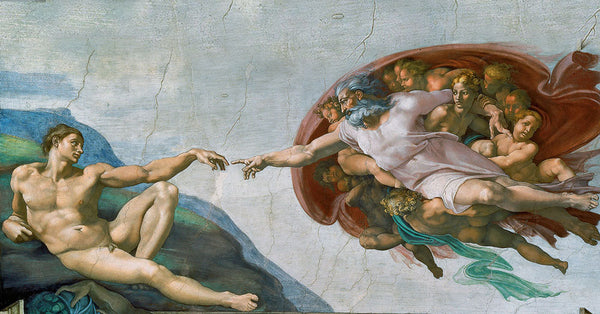
Michelangelo’s work on the Sistine Chapel Ceiling stands as a supreme example of hidden symbolism. In the iconic scene depicting the creation of Adam, the design of the reddish-brown drapery behind God and the angels has drawn considerable attention. Many scholars believe the shape of this cloak remarkably resembles a human brain. This resemblance is interpreted as more than mere coincidence; it could represent the importance of human intellect or even serve as a veiled commentary on the tension between divine revelation and scientific understanding during the Renaissance period. Additionally, anomalies in other parts of the Sistine Chapel hint at further layers of artistic commentary on human anatomy and intellectual capacity.
Jan van Eyck’s The Arnolfini Portrait
Inscriptions and Reflections
Jan van Eyck’s The Arnolfini Portrait is another painting where hidden messages make viewers look twice. In this masterpiece, van Eyck inscribed his own name and the date ("Jan van Eyck was here 1434") discreetly on a wall interior to the composition. This subtle signature is easily overlooked in a painting that was already foregrounded by the detailed depiction of domestic life and symbolism. Furthermore, there is evidence to suggest that the mirror in the background not only extends the spatial depth of the room but also hides a tiny self-portrait of the artist, providing an additional layer of intimacy and personal touch to the work.
Vincent van Gogh’s Café Terrace at Night
Biblical Allusions and Emotional Depth
While Vincent van Gogh is celebrated for his vivid and emotionally charged artworks, Café Terrace at Night also conceals intriguing hidden messages that have fueled much discussion among art critics. Some interpret this painting as a subtle nod to Leonardo da Vinci’s The Last Supper. The careful arrangement of figures and the composition of the scene suggest a deliberate reference to a biblical narrative, with parallels drawn between the social gathering at the cafe and the intimate assembly of Jesus and his disciples. This subtle allusion might reflect van Gogh’s own wrestling with the themes of loneliness, community, and betrayal, as indicated by the arrangement of the individuals in the painting.
Hieronymus Bosch’s Garden of Earthly Delights
Hidden Codes and Cryptic Imagery
The surreal and intricately detailed Garden of Earthly Delights by Hieronymus Bosch has continued to captivate viewers with its bizarre imagery and mysterious content. Among the extraordinary features of this work is the discovery of a concealed musical score in one of its panels. In addition to this, the painting is reputed to contain over a hundred hidden proverbs and obscure symbols, each potentially offering insights into Bosch’s commentary on the human condition, sin, and the consequences of earthly indulgence. Some of these clues are almost imperceptible, requiring not just a sharp eye but occasionally even modern imaging technology to ascertain their presence.
Additional Examples and Interpretations
Hans Holbein the Younger’s The Ambassadors
The Ambassadors by Hans Holbein the Younger is renowned for its use of anamorphosis—a distorted skull painted at the bottom of the composition which only appears in its true form when viewed from a specific angle. This eerie detail is typically understood as a memento mori, a reminder of the inevitability of death, or a subtle comment on the transience of life and earthly achievements. This hidden element invites viewers to consider the juxtaposition of worldly vanity with the ultimate certainty of mortality.
Other Modern Inquiries
In addition to these classical masterpieces, modern art and its analysis have continued to uncover concealed details through advanced imaging techniques such as X-ray fluorescence and infrared reflectography. These technologies allow researchers to look beneath layers of paint, revealing underdrawings, earlier compositions, and even signatures by the artists that have been obscured over time as layers of paint were built up. This intersection of art history with modern science reaffirms that hidden messages in art are not merely relics of the past but continue to speak to current audiences about the complexity of creative expression.
Techniques and Technologies Used for Discovery
The discovery of hidden messages within artworks has evolved dramatically over time. Early observations were based on meticulous visual analysis and documented historical narratives, but as technology has advanced, new methods have emerged:
X-Ray Imaging and Infrared Reflectography
X-ray imaging allows conservators and researchers to view the underlayers of paint that can conceal earlier sketches, inscriptions, or even entirely different compositions beneath the finished work. Infrared reflectography is similarly used to capture details not visible to the naked eye, uncovering underdrawings and subtle brushwork that hint at hidden elements in a painting.
Digital Enhancement and High-Resolution Photography
With the advent of high-resolution photography, even the tiniest details can be magnified and examined. This detailed analysis has led to revelations such as microscopic inscriptions in da Vinci’s Mona Lisa and hidden symbols in other masterpieces. Digital enhancement often brings to light patterns that may have been intentionally obscured or naturally faded over the centuries, adding a new layer of interpretive depth to these artworks.
Multispectral Imaging
Multispectral imaging combines various wavelengths of light to capture information not visible in normal light. This technique has uncovered alterations made by the artists during the creative process as well as hidden messages. Multispectral images reveal a hidden dialogue between the initial sketches and the final compositions, thereby opening up new discussions on the intentions behind an artwork’s design.
Symbolism and Theories Behind Hidden Messages
There are several recurring themes and theories regarding why hidden messages appear in art. These range from deeply personal expressions to coded responses to societal conditions:
Self-Reference and Artist Identity
Many artists inserted their own signatures or even self-portraits into their masters as a way of asserting ownership of their work. For example, inscriptions found in The Arnolfini Portrait or reminders of the artist’s presence in the background of a painting may serve as personal assertions of identity. This self-referential inclusion not only communicates the artist’s presence behind the work but also challenges the viewer to recognize the interplay between subject and creator.
Religious and Mythological Allegory
Religious narratives have long been fertile ground for layered symbolism. From the biblical references subtly echoed in The Last Supper and Café Terrace at Night to the anatomical allegories in Michelangelo’s works, hidden messages often invoke the tension between the sacred and the secular. These artworks may suggest an alternative interpretation of well-known religious stories, invite a critique of established dogma, or even imply a deeper philosophical inquiry into the nature of life, death, and divine intervention.
Philosophical and Political Critique
Hidden messages can be a reaction to the societal and political pressures of an artist’s time. For instance, during eras of intense censorship, symbolism provided a means to communicate dissent without direct confrontation. Moreover, the deliberate arrangement of symbolic elements offers a commentary on the roles, hierarchies, and responsibilities within society. In many cases, uncovering these elements has provided historians with insights into the socio-political contexts that shaped an artist’s creative output.
Comparative Analysis Through a Table
| Artwork | Hidden Element | Interpretation |
|---|---|---|
| The Mona Lisa | Microscopic letters and numbers in the eyes | Potential cryptic self-references and identification codes |
| The Last Supper | Arrangement of objects and figures that resemble musical notes | Formation of a hidden melody and layered biblical symbolism |
| Sistine Chapel Ceiling | Brain-shaped imagery in the drapery | Representation of human intellect and possibly a nod to scientific inquiry |
| The Arnolfini Portrait | Inscription of the artist’s name and date | Assertion of identity and hidden self-portrait via reflective surfaces |
| Café Terrace at Night | Subtle biblical references and compositional parallels | Allusion to The Last Supper alongside emotional themes |
| Garden of Earthly Delights | Hidden musical score and multiple symbolic elements | Complex commentary on sin, human condition, and earthly indulgence |
| The Ambassadors | Anamorphic skull | Reminder of mortality and the transient nature of life |
Deeper Interpretive Themes
Beyond the discovery of hidden symbols and messages, the interpretive process of these artworks challenges us to reassess our understanding of artistic intention and communication. The inherent complexity of these masterpieces creates a dynamic dialogue between the artist and the observer, one that spans multiple dimensions of time, culture, and technology.
Interplay of Art and Science
Modern scientific techniques have revolutionized our ability to analyze art, enabling us to see beyond what was once considered the finished product. Through methods such as X-ray imaging and multispectral analysis, researchers have mapped underdrawings and invisible repairs, raising fascinating questions about the creative process. The use of these methods illustrates how art serves as a living record of technical innovation and human endeavor.
The Role of Viewer Perception
The discovery of hidden messages often depends on the viewer’s perspective. What one person sees as a subtle flourish, another might interpret as an elaborate code. This subjectivity adds a rich layer of debate that is key to the lasting intrigue of these works. The evolving interpretations remind us that art is not static; its meanings can shift as societal contexts change, and as our technological and intellectual capabilities expand.
Emotional and Psychological Dimensions
The emotional impact of hidden symbols in art speaks to our intrinsic desire to search for meaning. The process of uncovering a secret embedded within a painting can be profoundly moving—almost as if the artist is communicating directly with us. This intimate dialogue between creator and observer fosters a personal connection to the work, allowing each individual to find their own resonance within the layers of art.
Modern Perspectives on Hidden Art Messages
Present-day analysis of hidden messages in art extends beyond traditional interpretations to include the interplay of digital technology, intellectual property debates, and the concept of authorship. Many contemporary art experts argue that a work of art is never truly finished; it is a constantly evolving conversation that invites reinterpretation by each successive generation.
Digital Conservation and Preservation
Digital technologies now play a crucial role in both preserving and analyzing artworks. High-definition scans and digital archiving allow experts to revisit details that were previously obscured by time. As a result, new layers of interpretation are emerging as experts use digital tools to accurately document previously hidden brush strokes, underdrawings, and subtle inscriptions that have fascinated viewers for centuries.
Cultural Relevance and Continuing Discoveries
Each decade brings fresh insights as both historians and technologists reassess celebrated works in light of new evidence and methods. For example, what might once have been dismissed as mere background detail in a Renaissance painting is now reconsidered for its potential symbolic significance. These evolving discoveries fuel public fascination with art by connecting traditional aesthetics with modern explorations of visual culture, history, and technology.
Interdisciplinary Dialogue
The study of art’s hidden messages benefits from interdisciplinary approaches, incorporating the fields of art history, neuroscience, and even mathematics. Researchers work together to analyze the structure and composition of artworks, sometimes uncovering deliberate patterns—such as geometric formulations or proportional outlines—that reveal the intellectual rigor behind artistic creation. This interdisciplinary dialogue fosters collaborations that not only enhance our understanding of iconic artworks but also push the boundaries of how art is contextualized in both historical and modern settings.
Conclusion and Final Thoughts
The exploration of hidden messages in famous artworks invites us on a multifaceted journey that bridges the gap between the visible and the esoteric, the historical and the modern. From Leonardo da Vinci’s cryptic markers hidden within the gaze of the Mona Lisa to the multifarious symbols in Michelangelo’s Sistine Chapel, these masterpieces challenge the conventional boundaries of interpretation. As technology advances and our methods of engaging with art become increasingly sophisticated, every layer uncovered enriches our understanding of the artist's intent and the cultural, philosophical, and emotional narratives woven into the fabric of history.
These hidden elements are not merely artistic adornments but are fundamental expressions of the artist’s interaction with the social, political, and religious forces of their time. They serve as silent yet profound testimonies to the enduring power of art in communicating complex ideas in ways that transcend language and time. As we continue to delve into the enigma presented by these works, we are reminded of how art continually evolves, inviting fresh interpretations and new discoveries. Ultimately, the secret messages hidden within these masterpieces highlight a universal truth: art is a dialogue, one that remains open-ended and perpetually relevant as it adapts to the evolving perceptions of new generations.
References
- Secrets in Famous Paintings - Reader's Digest
- Hidden Messages in Art - HowStuffWorks
- Famous Paintings With Hidden Meanings - Art in Context
- Art and Hidden Messages - The Geographical Cure
- Actual Hidden Messages in Art - History Collection
- Unveiling Hidden Secrets in Art - RevArt Blog
Recommended
Last updated February 21, 2025