
Experimental Techniques for Hydrokinetic Turbine Optimization
A comprehensive exploration of experimental and numerical testing strategies
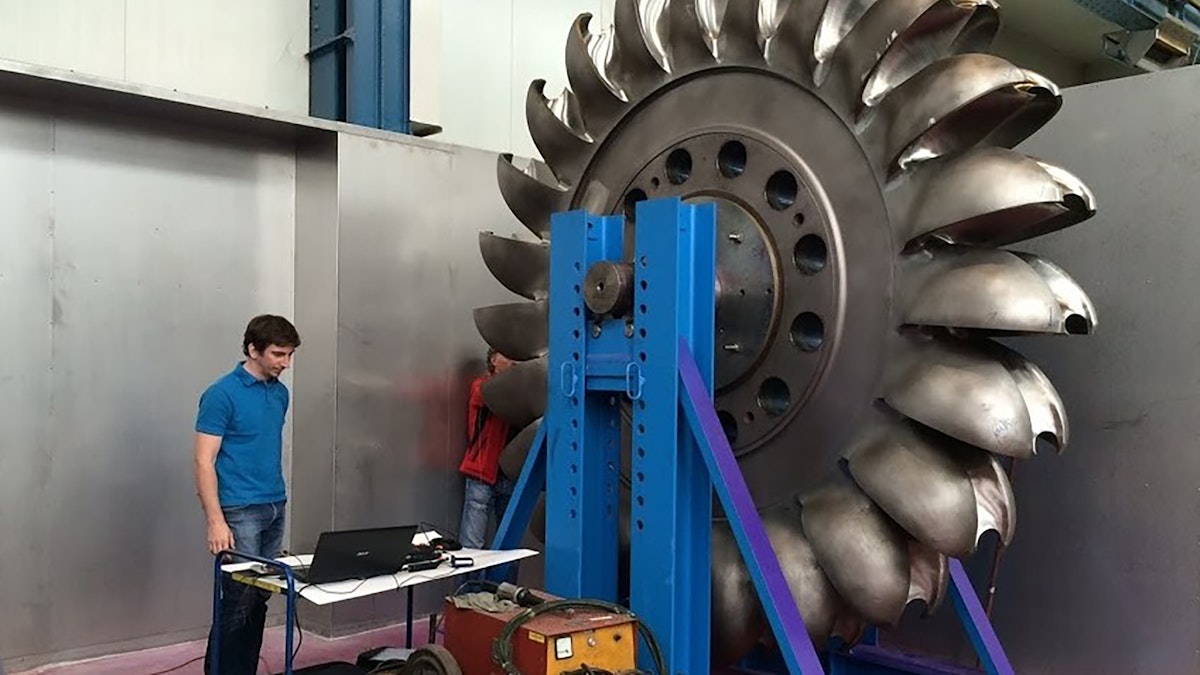
Key Highlights
- Controlled Experimental Testing: Utilizing water channels, flumes, and field tests to measure performance parameters.
- Integration with Numerical Methods: Leveraging CFD, response surface methodologies, and optimization algorithms.
- Iterative Design and Rapid Prototyping: Employing 3D printing and adaptive testing techniques for quick modifications and iterations.
Overview
Hydrokinetic turbines convert the kinetic energy of moving water into electricity. To maximize the energy capture efficiency, extensive experimental techniques are used for optimization. These methods combine controlled laboratory experiments with sophisticated numerical simulations and adaptive design methodologies. By testing turbine prototypes in simulated channel flows and actual field conditions, researchers are able to characterize performance parameters such as pressure, water velocity, torque, and rotational speed. The objective is to refine turbine design and establish optimal operation modes even under varying environmental conditions.
Experimental Testing Approaches
Controlled Environment Experiments
A critical step in optimizing hydrokinetic turbines is performing tests in controlled laboratory settings. These experiments allow for precise manipulation of variables such as flow velocity, water turbulence, and simulated environmental conditions. Techniques used include:
Water Channels and Flumes
Experimental water channels and flumes are engineered to mimic real-world water flows. With the help of sensors, researchers measure parameters including the blade tip speed ratio (TSR), pressure differential, rotational speed, and torque. These parameters enable the mapping of performance curves, often represented by the power coefficient (\(C_P\)) versus TSR diagram.
Cavitation Tunnels
Cavitation tunnels are employed to study the influence of cavitation on turbine blades, an important phenomenon that can impact efficiency and durability. Researchers can adjust flow regimes and measure cavitation effects to further optimize the design.
Field Testing of Prototypes
In addition to laboratory experiments, full-scale field tests are vital. These real-world tests gather data on turbine performance under natural water conditions as found in rivers or tidal environments. Field tests:
- Assess long-term reliability and durability.
- Validate simulation models used in design optimization.
- Provide empirical data that informs design adjustments for variable water conditions.
Numerical and Simulation Techniques
Computational Fluid Dynamics (CFD)
CFD is integral in the design optimization process. It enables the simulation of fluid flow patterns around turbine blades and structures to predict performance without the need for every incremental physical modification. Specific techniques include:
Reynolds-Averaged Navier–Stokes (RANS) Modeling
Using RANS models, engineers simulate average fluid flow patterns and turbulence effects around the turbine. The unsteady variants (URANS) offer further precision by capturing time-dependent changes in the flow. These simulations assist in understanding flow separation, vortex formation, and pressure differentials.
Integration with Experimental Data
CFD models are routinely validated and refined using experimental data from laboratory setups and field tests. The synergy between experimental observations and numerical simulations allows for more accurate performance predictions and design modifications.
Optimization Algorithms and Methodologies
Several advanced computational techniques have been developed to optimize turbine designs by iterating through various design configurations and assessing their performance. Notable techniques include:
Response Surface Methodology (RSM)
RSM is a statistical tool used to create predictive models that express performance metrics, such as the power coefficient (\(C_P\)), in relation to design variables, including blade number, helix angle, and aspect ratio. By systematically varying these parameters, RSM helps identify the optimal design configuration that maximizes efficiency.
Genetic Algorithms
Genetic algorithms simulate the process of natural selection by iteratively testing and evolving design parameters. This technique efficiently identifies optimal turbine configurations by promoting the best designs over successive iterations.
Gradient-Based Optimization
Gradient-based optimization involves calculating the gradients of performance metrics with respect to design variables. This approach assists in quickly converging on optimum solutions within high-dimensional design spaces.
Rapid Prototyping and Adaptive Testing
3D Printing for Rapid Prototyping
The advent of 3D printing has considerably accelerated the development and optimization of turbine designs. By enabling rapid prototyping, researchers can fabricate turbine models with a variety of blade geometries and configurations. This allows for quick transition from a digital simulation phase to tangible testing, ensuring that theoretical improvements translate into practical gains.
Adaptive Response Surface Methodologies
Adaptive testing methodologies blend iterative experimentation with statistical techniques. An example is the adaptive response surface method, which systematically adjusts multiple design parameters concurrently. This approach not only identifies optimal configurations but also builds a dynamic understanding of how different parameters interact under varying flows.
Comparative Analysis and Integration
Successful optimization strategies for hydrokinetic turbines require a multifaceted approach. This involves comparing various blade geometries, testing across lab and field conditions, and integrating the strengths of both experimental and numerical methods. The following table summarizes the major techniques and their applications:
| Method | Description | Key Parameters | Applications |
|---|---|---|---|
| Water Channels/Flumes | Controlled experiments under simulated water flow conditions | Flow velocity, pressure, rotational speed, TSR | Performance curve mapping, cavitation analysis |
| Cavitation Tunnels | Testing the impact of flow-induced cavitation | Cavitation intensity, pressure distribution | Blade durability, efficiency under cavitating flows |
| Field Testing | Full-scale prototyping in real-world environments | Long-term performance, reliability, environmental impact | Validation of laboratory tests and simulation models |
| Computational Fluid Dynamics (CFD) | Numerical simulation of fluid flow around turbines | Pressure fields, turbulence, flow patterns | Design evaluation, performance prediction, optimization validation |
| Response Surface Methodology (RSM) | Statistical analysis to predict optimal design parameters | Blade number, helix angle, aspect ratio | Multi-parameter optimization and performance mapping |
| Genetic Algorithms | Iterative optimization simulating evolutionary processes | Multiple design variables concurrently | Optimal configuration discovery, design iteration |
| 3D Printing | Rapid prototyping of turbine components | Geometric nuances, prototype fidelity | Quick design validation and adjustment |
Integration of Experimental and Numerical Methods
The success of hydrokinetic turbine optimization relies on the harmonious integration of experimental testing and numerical analysis. Laboratory experiments provide the empirical data needed to validate CFD and statistical models, while simulations help refine experimental focus by identifying the most critical design parameters. This synergy ensures that iterative developments drive continuous performance improvements.
For example, a turbine design is first tested in a controlled channel environment to obtain baseline performance metrics. Following this, CFD simulations are run, which reveal subtle flow characteristics and interactions that are not easily captured experimentally. The simulation results, when compared with lab data, lead to refinements in the design parameters, which are then quickly prototyped using advanced manufacturing techniques like 3D printing. Finally, field tests validate that these changes translate into improved performance under natural conditions.
Recommendations for Future Research and Applications
Exploring Complex Fluid Dynamics
As hydrodynamic environments vary greatly, future experiments must account for complex flow phenomena. Advanced CFD techniques like Large-Eddy Simulation (LES) might provide even finer resolutions in flow characteristics around turbine blades. In addition, innovative sensor technologies can further improve the accuracy of experimental measurements in both lab and field settings.
Multi-Disciplinary Team Collaborations
Given the complexity of hydrokinetic turbine optimization, collaboration between experts in fluid dynamics, materials science, and computational modeling is essential. Such multidisciplinary partnerships will help ensure that experimental techniques keep pace with advances in both design innovations and renewable energy applications.
Sustainable Deployment Considerations
Future efforts should also focus on optimizing turbines not just for performance but for environmental sustainability. This includes assessing ecological impacts and ensuring that turbines can operate safely within aquatic ecosystems while delivering consistent and efficient energy extraction.
References
- A Review of Hydrokinetic Turbines and Enhancement Techniques - MDPI
- Hydrokinetic Turbines and Enhancement Techniques - ResearchGate
-
Hydrokinetic Turbine Analysis in Controlled Environments - ScienceDirect
- CFD and Optimization in Hydrokinetics - Nature
-
Hydrokinetic Turbine Optimization Techniques - ScienceDirect
Recommended Related Queries
Last updated March 13, 2025