
Unlocking the Vault: A Deep Dive into the OpenVisualCloud Immersive Video Sample Repository
Discover the technology behind 360° video streaming with Intel's archived yet foundational open-source project.
Key Insights at a Glance
- Dual Framework Approach: The repository offers two distinct samples for immersive 360° video streaming: one based on the OMAF (Omnidirectional Media Format) standard with MPEG-DASH, and another leveraging WebRTC technology with the Open WebRTC Toolkit (OWT) for low-latency applications.
- Advanced Video Encoding: Both samples utilize SVT-HEVC (Scalable Video Technology for HEVC) with MCTS (Motion-Constrained Tile Sets) support, enabling efficient, real-time tiled encoding of high-resolution 4K and 8K video content.
- Archival Status: Intel officially archived this project on December 16, 2024. While no longer actively maintained or updated by Intel, the source code remains publicly available for developers to fork, study, and build upon.
Journey into Immersive Video: Project Overview
The OpenVisualCloud/Immersive-Video-Sample GitHub repository, initiated by Intel, stands as a significant resource for developers and researchers venturing into the realm of immersive 360-degree video. Its primary objective was to provide robust, open-source reference implementations for delivering high-quality, tiled 360° video experiences, catering to both Video on Demand (VOD) and live streaming scenarios. The project is a component of the broader Open Visual Cloud initiative, which aimed to offer optimized software stacks for media, analytics, graphics, and immersive media, tailored for cloud-native deployment on x86 CPU architectures.
At its core, the repository showcases end-to-end pipelines demonstrating advanced techniques in immersive video, such as efficient encoding, adaptive streaming based on the viewer's Field of View (FoV), and low-latency delivery. Though now archived, its contents offer valuable insights into building complex immersive media applications.
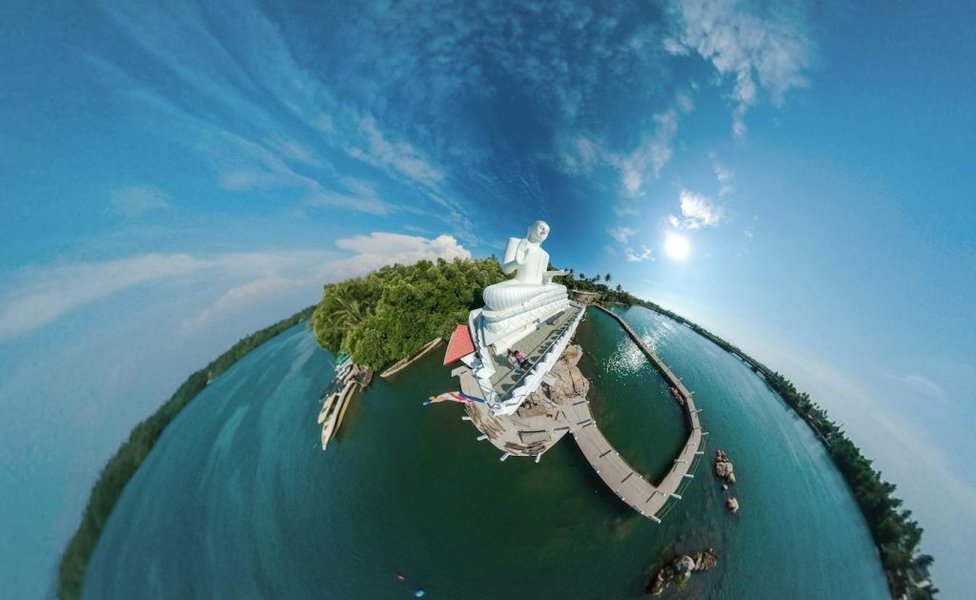
A visual representation of 360-degree video, a core focus of the Immersive-Video-Sample project.
The Two Pillars: OMAF and WebRTC Samples
The repository is structured around two principal samples, each employing a different technological approach to immersive video streaming:
1. The OMAF Sample: Standards-Driven 360° Video Delivery
This sample is engineered around the Omnidirectional Media Format (OMAF) standard (ISO/IEC 23090-2), a specification designed for the storage and delivery of 360° video and associated media. It utilizes MPEG-DASH (Dynamic Adaptive Streaming over HTTP) as its delivery protocol.
Key Features and Technologies:
- Standards Compliance: Adheres to the OMAF standard for broad interoperability.
- Streaming Protocol: Employs MPEG-DASH for adaptive bitrate streaming of tiled 360° video.
- Use Cases: Suitable for both Video on Demand (VOD) and live streaming scenarios where standardization is crucial.
- Encoding: Leverages SVT-HEVC with MCTS for efficient tile-based HEVC transcoding.
- Components: Includes OMAF-compliant streaming packing, a client OMAF DASH access library, and FFmpeg plugins to facilitate setting up end-to-end OMAF-compliant 360° video streaming.
- Deployment: Can be deployed using Kubernetes, as detailed in the repository's documentation.
- License: Primarily licensed under the BSD 3-Clause "New" or "Revised" License. However, specific components like the "FFMPEG Plugins" are provided under the LGPLv2.0 license.
2. The WebRTC Sample: Low-Latency Interactive Experiences
Designed for applications demanding minimal delay, this sample provides an end-to-end 360° video streaming service using WebRTC (Web Real-Time Communication) technology. It integrates with the Open WebRTC Toolkit (OWT) media server framework.
Key Features and Technologies:
- Low Latency: Optimized for real-time interaction, crucial for live events or interactive VR.
- Streaming Protocol: Based on WebRTC for peer-to-peer and server-mediated low-latency streaming.
- Adaptive Streaming: Supports bandwidth-efficient Field of View (FoV) based adaptive streaming. The server can adapt the streamed tiles based on the user's current viewpoint.
- Encoding: Utilizes SVT-HEVC for tile-based transcoding, supporting 4K and 8K resolutions.
- Rendering: Includes an immersive 360° video player for Linux systems capable of HEVC tile decoding and Equirectangular Projection (ERP) video rendering.
- Server Capabilities: The OWT media server supports streaming protocols like RTSP/RTMP from camera sources or various media formats from local files.
- License: Licensed under the Apache License 2.0.
Comparative Analysis: OMAF vs. WebRTC Samples
To better understand the distinct advantages and intended use-cases of the OMAF and WebRTC samples, the following chart provides a comparative overview based on several key performance and feature metrics. These ratings are qualitative assessments for illustrative purposes.
This radar chart illustrates that the OMAF sample excels in standards compliance and VOD suitability, offering moderate latency. In contrast, the WebRTC sample shines with its very low latency and high suitability for interactive live streaming, with slightly less emphasis on formal standardization compared to OMAF but strong FoV-based bandwidth efficiency.
Underlying Technologies and Architecture
Both samples are built upon a foundation of cutting-edge video processing technologies aimed at delivering high-fidelity immersive experiences efficiently.
SVT-HEVC and Tiled Encoding
A cornerstone of this project is the use of SVT-HEVC (Scalable Video Technology for HEVC/H.265). SVT-HEVC is an open-source HEVC encoder implementation that is highly optimized for performance, particularly on Intel Xeon processors. It supports MCTS (Motion-Constrained Tile Sets), which is crucial for 360° video. Tiled encoding involves dividing the video frame into multiple smaller, independently decodable rectangular regions (tiles). This allows for:
- Adaptive Streaming: Only the tiles within the user's current Field of View (FoV) need to be streamed at high quality, significantly reducing bandwidth consumption.
- Parallel Processing: Tiles can be encoded and decoded in parallel, improving processing speed.
- Error Resilience: Errors in one tile do not necessarily affect others.
The samples are designed to handle high resolutions like 4K and 8K, aiming for real-time encoding performance.
Immersive video samples like these enable rich VR experiences.
Open Visual Cloud Context
The Immersive Video Sample project was part of Intel's Open Visual Cloud initiative. This initiative provided a suite of open-source software stacks optimized for cloud-native visual workloads, including media processing, analytics, and graphics. These stacks were often delivered via FFmpeg and GStreamer frameworks and as Docker images to simplify deployment.
Project Structure and Components Mindmap
The repository is organized to provide all necessary components for building and running the immersive video samples. The following mindmap illustrates the key aspects of the project's structure, technologies, and sample types.
(FFmpeg Plugins: LGPLv2.0)"] idD["WebRTC Sample"] idD1["Protocol: WebRTC"] idD2["Framework: Open WebRTC Toolkit (OWT)"] idD3["Use Cases: Low-Latency Live, Interactive"] idD4["Features: FoV Adaptive Streaming, HEVC Tile Decoding"] idD5["License: Apache License 2.0"] idE["Platform & Requirements"] idE1["OS: Linux 64-bit"] idE2["Distributions: CentOS 7.6, Ubuntu 18.04/20.04 LTS"] idF["Project Status (as of May 2025)"] idF1["Archived by Intel (Dec 16, 2024)"] idF2["No Active Intel Maintenance"] idF3["Source Code Publicly Available"] idF4["Community Forking Encouraged"] idG["Part of Open Visual Cloud"] idG1["Intel Initiative"] idG2["Cloud-Native Software Stacks"] idG3["Optimized for x86 Architecture"]
This mindmap visually breaks down the project into its fundamental building blocks, from its overarching goals and the technologies it harnesses, to the specifics of each sample and its current archival status.
System Requirements and Deployment
To build and run the samples from the Immersive-Video-Sample repository, specific system configurations are recommended:
- Operating System: Linux 64-bit.
- Validated Distributions:
- Client-side: CentOS 7.6 or Ubuntu 18.04 Server LTS. The WebRTC sample was also validated on Ubuntu 20.04 LTS.
- Server-side (for OMAF): CentOS 7.6.
The repository includes source code, build scripts (e.g., for Docker), and detailed documentation, such as the Immersive_Video_Getting_Started_Guide.md, to assist developers in setting up the environment and running tests. For instance, the OMAF sample provides instructions for Kubernetes deployment, while the WebRTC sample details server and client configuration, including editing config.xml for the player.
Spotlight on Open Source VR/Immersive Projects
The OpenVisualCloud/Immersive-Video-Sample is one example of how open-source contributions drive innovation in the immersive technology space. While this specific repository is archived, the spirit of open development continues in many other projects. The following video discusses some open-source projects in the related field of VR, highlighting the collaborative nature of this domain.
Exploring various open-source VR projects available to developers.
This video, "The Best Open Source VR Unity Projects," offers a glimpse into the wider ecosystem of open-source tools and frameworks available for creating VR and immersive experiences, similar in spirit to the goals of the Immersive-Video-Sample repository.
Project Status: Archived but Accessible
It is crucial for potential users to understand the current status of the OpenVisualCloud/Immersive-Video-Sample repository. Intel officially archived this project on December 16, 2024. This means:
- No Active Maintenance: Intel is no longer actively developing, maintaining, or providing bug fixes for this project.
- No New Releases or Updates: There will be no new official releases or updates from Intel.
- No Patches Accepted: Intel no longer accepts patches or contributions to this specific repository.
However, the repository remains publicly accessible in a read-only mode. The source code, documentation, issues, and release history are still available for review. Developers who have an ongoing need for this project, wish to continue its development independently, or want to maintain patches for the open-source community are encouraged to create their own fork of the repository on GitHub.
Summary of Key Differences: OMAF vs. WebRTC Samples
The table below provides a concise summary of the main distinctions between the two primary samples offered in the repository, helping to guide which sample might be more relevant for specific immersive video applications.
| Feature | OMAF Sample | WebRTC Sample |
|---|---|---|
| Primary Standard/Technology | OMAF (Omnidirectional Media Format) | WebRTC (Web Real-Time Communication) |
| Streaming Protocol | MPEG-DASH | WebRTC (SRTP/DTLS) |
| Typical Latency | Moderate (suitable for VOD, some live) | Very Low (ideal for interactive live) |
| Primary Use Case | Standardized 360° VOD, Live Streaming | Interactive Low-Latency Live 360° Streaming |
| Adaptive Streaming Focus | Tiled streaming based on OMAF specs | Tiled streaming with Field of View (FoV) adaptation |
| Server Framework | Custom components, FFmpeg plugins | Open WebRTC Toolkit (OWT) Media Server |
| Video Encoding | SVT-HEVC with MCTS | SVT-HEVC with MCTS |
| Primary License | BSD 3-Clause (FFmpeg plugins: LGPLv2.0) | Apache License 2.0 |
Frequently Asked Questions (FAQ)
What was the main purpose of the OpenVisualCloud/Immersive-Video-Sample repository?
The primary purpose was to provide open-source samples and components for immersive 360-degree video delivery. It aimed to demonstrate advanced techniques for encoding (using SVT-HEVC with MCTS for tiled 4K/8K video), streaming (via OMAF/MPEG-DASH and WebRTC), and playback of immersive content for both Video on Demand (VOD) and live scenarios.
What are the key differences between the OMAF and WebRTC samples?
The OMAF Sample is based on the OMAF standard and uses MPEG-DASH for delivery, making it suitable for standardized VOD and live streaming with moderate latency. The WebRTC Sample uses WebRTC and the Open WebRTC Toolkit (OWT) for very low-latency streaming, ideal for interactive live 360° video applications and features like Field of View (FoV) adaptive streaming.
Is the Immersive-Video-Sample project still actively maintained?
No, Intel archived this project on December 16, 2024. This means Intel no longer provides active maintenance, bug fixes, new releases, or accepts contributions. However, the source code remains publicly available for the community to fork and use.
What video encoding technology is highlighted in this repository?
The repository prominently features the SVT-HEVC (Scalable Video Technology for HEVC/H.265) encoder. It specifically utilizes SVT-HEVC with MCTS (Motion-Constrained Tile Sets) support for efficient, real-time tiled encoding of high-resolution (4K, 8K) 360-degree video content.
What are the system requirements for running these samples?
The samples are designed for Linux 64-bit operating systems. They were validated on distributions such as CentOS 7.6 (server for OMAF, client) and Ubuntu 18.04 Server LTS (client). The WebRTC sample was also tested on Ubuntu 20.04 LTS. Detailed requirements can be found in the repository's documentation.
Recommended Further Exploration
If you found the information about the OpenVisualCloud/Immersive-Video-Sample repository insightful, you might be interested in exploring these related topics:
- How does OMAF compare to other 360 video standards for immersive content delivery?
- What are the primary benefits of tiled video streaming for virtual reality applications?
- Explore recent advancements and use cases of WebRTC in modern immersive experiences.
- Discover currently active open-source projects for 360-degree video streaming and processing.
References
Last updated May 14, 2025