
Inventing a Warp Drive: Theoretical Foundations and Future Prospects
Exploring the Frontier of Faster-Than-Light Travel Through Advanced Physics
Key Takeaways
- Warp Drive Concept: Utilizes spacetime manipulation to achieve faster-than-light travel without violating relativity.
- Theoretical Challenges: Enormous energy requirements and the necessity for exotic matter remain significant hurdles.
- Recent Developments: Innovative models and simulation tools are paving the way for potential breakthroughs in warp drive technology.
Introduction to Warp Drive
The concept of a warp drive, a staple of science fiction especially popularized by the Star Trek series, represents a groundbreaking approach to space travel. Unlike conventional propulsion methods that rely on accelerating a spacecraft to high speeds, a warp drive aims to manipulate the fabric of spacetime itself, allowing for faster-than-light (FTL) travel without locally breaching the universal speed limit set by Einstein's theory of relativity.
Historical Background
The theoretical foundation for warp drives was laid by physicist Miguel Alcubierre in 1994. Alcubierre proposed the creation of a "warp bubble" around a spacecraft, wherein spacetime behind the bubble expands and spacetime in front contracts. This mechanism would effectively move the spacecraft at superluminal speeds relative to the rest of the universe, while the spacecraft itself remains within a region of flat spacetime, experiencing no acceleration or relativistic effects.
Theoretical Framework of Warp Drives
Alcubierre Metric and Warp Bubble
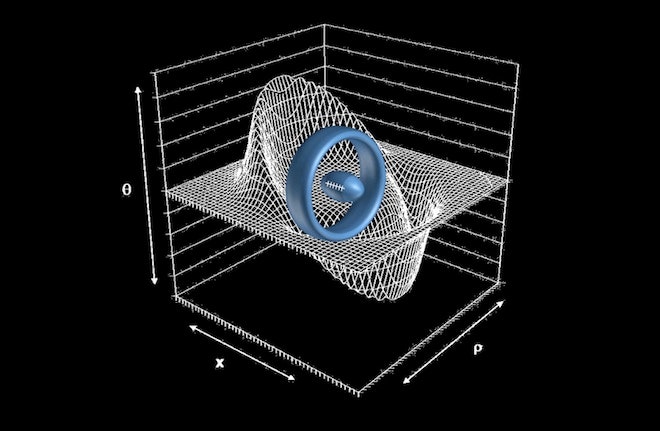
The Alcubierre metric is a solution to Einstein's field equations in general relativity that describes a spacetime geometry allowing for FTL travel. The key component is the warp bubble—a region where spacetime is contracted in front of the bubble and expanded behind it. The spacecraft resides within this bubble, effectively "riding" the distortion of spacetime to traverse vast interstellar distances swiftly.
Mathematical Description
The Alcubierre drive relies on a specific spacetime metric defined by a function that dictates the shape and movement of the warp bubble. The driving equation incorporates a modulation function f(x, t) that determines the extent of spacetime contraction and expansion at various points around the bubble.
While the detailed mathematics involve complex tensor calculus, the overarching principle is the manipulation of spacetime geometry to facilitate superluminal movement without locally accelerating beyond light speed.
Energy Requirements and Exotic Matter
One of the most significant challenges in realizing a warp drive is the astronomical energy required to generate and sustain the warp bubble. Alcubierre's original calculations indicated that the energy needed exceeds the total mass-energy of Earth, making the concept impractical with current technology.
Moreover, the drive necessitates the existence of exotic matter with negative energy density. In classical physics, negative energy is not observed, and its feasibility remains highly speculative. Quantum phenomena like the Casimir effect suggest the possibility of negative energy in limited contexts, but scaling this to the levels required for a warp drive is unresolved.
Recent Theoretical Advances
Physicist Erik Lentz proposed a novel model in 2024 that potentially circumvents the need for negative energy by utilizing hyperbolic spacetime structures. This innovation represents a pivotal shift in warp drive research, although it remains purely theoretical and requires extensive validation through further research and experimentation.
Progress in Warp Drive Research
Experimental Efforts and Simulations
Recent years have seen a surge in theoretical and computational research aimed at making warp drives more feasible. Organizations like the Warp Factory have developed open-source software for simulating warp drive designs, enabling researchers to explore various models and refine the underlying physics.
In 2021, DARPA-funded researcher Harold White claimed to have created a nanoscale warp bubble, though this claim remains controversial and has yet to be independently verified. Such experimental pursuits, while nascent, are crucial for testing the validity of theoretical models and uncovering practical approaches to spacetime manipulation.
Optimization of Warp Bubble Parameters
Researchers are actively investigating ways to optimize the shape, size, and energy distribution of warp bubbles. By adjusting these parameters, the aim is to minimize energy consumption and avoid the need for exotic matter. Computational simulations play a vital role in this optimization process, allowing for the exploration of countless configurations that could potentially lead to practical warp drive designs.
Subluminal Warp Drives
In response to the daunting challenges posed by superluminal warp drives, some scientists have proposed subluminal warp drive models. These models do not achieve FTL speeds but still offer significant improvements over conventional propulsion methods. Subluminal drives utilize conventional matter and adhere to known energy constraints, making them more attainable in the near term.
While they do not provide the dramatic speed enhancements of their superluminal counterparts, subluminal warp drives represent a pragmatic step towards advanced space travel, potentially reducing interstellar travel times from decades to mere decades.
Key Challenges and Considerations
Energy Constraints
The primary obstacle in developing a functional warp drive is the immense energy required. Current technological capabilities fall short by many orders of magnitude, necessitating breakthroughs in energy generation and management. Concepts such as harnessing quantum vacuum energy or developing new energy sources are being explored, but remain speculative.
Exotic Matter and Negative Energy
As previously mentioned, the requirement for exotic matter with negative energy density is a significant barrier. While certain quantum effects suggest the possibility of negative energy, practical methods for generating and maintaining it on a scale necessary for warp drives are nonexistent. Research into quantum field theory and materials science is ongoing to address this gap.
Stability and Control of the Warp Bubble
Creating a stable warp bubble is another formidable challenge. The bubble must remain intact and controllable throughout the journey, requiring precise manipulation of spacetime. Any instability could result in catastrophic failure, making robust control mechanisms essential for the safe operation of a warp drive.
Causality and Relativistic Constraints
Warp drives potentially introduce issues related to causality, such as time travel paradoxes. Ensuring that the warp drive does not violate causality principles is crucial for maintaining the consistency of physical laws. This necessitates careful consideration of the warp bubble's impact on the surrounding spacetime.
Technological Limitations
Beyond theoretical and physical challenges, practical technological limitations must be overcome. This includes developing materials capable of withstanding extreme energy densities, creating precise spacetime manipulators, and integrating these components into a functional spacecraft system.
Future Directions in Warp Drive Research
Advancements in Quantum Physics
Progress in quantum physics is pivotal for the future of warp drive technology. Understanding and harnessing quantum vacuum energy could provide the necessary energy sources, while advances in quantum field theory might unveil new mechanisms for spacetime manipulation.
Quantum Field Manipulation
Manipulating quantum fields to achieve negative energy densities or other exotic states is a promising area of research. Techniques such as quantum entanglement and superconductivity are being explored for their potential applications in warp drive mechanisms.
Material Science Innovations
Developing new materials with properties conducive to spacetime manipulation is essential. These materials must be capable of enduring extreme conditions and facilitating the precise control of energy flows required for maintaining a stable warp bubble.
Nanotechnology Applications
Nanotechnology could play a critical role in constructing the intricate structures necessary for warp drives. Nanoscale engineering allows for the creation of components with unparalleled precision, essential for managing the delicate balance of energies within a warp bubble.
Enhanced Computational Models
Improving computational models and simulation tools is crucial for testing and refining warp drive designs. Advanced simulations can help identify viable configurations, optimize energy distributions, and predict the behavior of warp bubbles under various conditions.
Artificial Intelligence in Warp Drive Design
Incorporating artificial intelligence (AI) into warp drive research can accelerate the discovery of optimal designs. AI algorithms can analyze vast datasets, identify patterns, and propose innovative solutions that might elude human researchers.
Practical Steps Toward Inventing a Warp Drive
| Phase | Objectives | Challenges | Potential Solutions |
|---|---|---|---|
| Theoretical Development | Refine spacetime geometry models and reduce energy requirements | Mathematical complexities and unknown physics | Collaborative research in theoretical physics and advanced mathematics |
| Simulation and Modeling | Create detailed simulations of warp bubble dynamics | High computational demands and model accuracy | Utilize high-performance computing and AI-enhanced simulations |
| Experimental Validation | Test theoretical models through laboratory experiments | Generating and stabilizing experimental warp bubbles | Innovate in quantum field manipulation and energy generation techniques |
| Engineering Development | Design and build warp drive components | Material limitations and energy management | Advanced materials science and energy storage solutions |
| Integration and Testing | Integrate components into a functional system and conduct tests | System stability and control precision | Iterative testing and refinement using feedback from simulations |
Step 1: Theoretical Framework Development
Developing a robust theoretical framework is the foundational step in warp drive invention. This involves refining existing models, such as the Alcubierre metric, to address current limitations like excessive energy requirements and the necessity for exotic matter. Innovations like Erik Lentz's hyperbolic spacetime structures represent promising directions.
Step 2: Advanced Simulations and Modeling
Once theoretical models are established, the next phase involves extensive simulations to test their feasibility. Tools like the Warp Factory software enable researchers to simulate various warp bubble configurations, assess energy distributions, and evaluate the stability of proposed models under different conditions.
Step 3: Experimental Prototyping
With promising theoretical models and simulation data, researchers can begin experimental prototyping. This phase involves creating small-scale warp bubble generators to observe and measure spacetime manipulations. Although current technology limits the scale of these experiments, they provide invaluable insights into practical challenges and areas needing further refinement.
Step 4: Engineering and Material Innovations
Simultaneously, advancements in engineering and material science are crucial. Developing materials capable of withstanding extreme energy densities and facilitating precise control over spacetime distortions is essential. Innovations in nanotechnology and superconducting materials may offer viable solutions for constructing warp drive components.
Step 5: System Integration and Large-Scale Testing
After successful small-scale experiments, the focus shifts to integrating components into a larger system. This stage involves scaling up warp bubble generators, ensuring their compatibility with spacecraft systems, and conducting comprehensive tests to validate overall functionality and safety.
Ethical and Safety Considerations
Causality and Time Paradoxes
Warp drives, by their nature, challenge our understanding of causality. The potential for time travel paradoxes necessitates stringent safeguards to prevent disruptions to the timeline. Ensuring that warp drive operations adhere to causality principles is paramount for maintaining the consistency of physical laws.
Regulatory Frameworks
Developing comprehensive regulatory frameworks is essential to govern the ethical use of warp drive technology. These frameworks should address potential risks, establish safety protocols, and ensure responsible deployment to prevent misuse or unintended consequences.
Energy Management and Environmental Impact
The immense energy requirements of warp drives pose significant challenges for sustainable energy management. Research must focus on developing efficient energy sources and storage systems that minimize environmental impact. Additionally, managing the energy flows within a warp bubble is critical to prevent harmful interactions with the surrounding environment.
Containment and Stability
Effective containment mechanisms must be devised to manage the high-energy fields generated by warp drives. Ensuring the stability of warp bubbles and preventing energy spillover are crucial for the safe operation of warp drives, particularly in populated or sensitive regions of space.
Conclusion
The invention of a warp drive stands as one of the most ambitious endeavors in the realm of theoretical physics and engineering. While the concept remains firmly within the domain of speculation, recent theoretical advancements and ongoing research efforts offer a glimmer of hope for future breakthroughs.
The primary challenges—enormous energy requirements and the need for exotic matter—demand unprecedented innovations in both scientific understanding and technological capability. Nonetheless, the relentless pursuit of knowledge and the collaborative efforts of the scientific community continue to push the boundaries of what is possible.
As research progresses, the dream of faster-than-light travel inch closer to reality, driven by the collective ingenuity and determination to overcome the formidable obstacles that lie ahead. Whether through the refinement of existing models or the discovery of entirely new principles of physics, the journey toward inventing a warp drive embodies the spirit of exploration and the unyielding quest to transcend the limitations of our current understanding.
References
Last updated February 14, 2025