
IoT-Based Air Quality Monitoring System Research Paper
A Comprehensive Analysis and Implementation Approach for Real-Time Pollution Detection
Key Highlights
- Real-Time Data Acquisition: Utilizing sensor networks and wireless communication modules for instant monitoring.
- System Architecture & Scalability: Integrating microcontrollers, cloud platforms, and data analytics to facilitate extensive, distributed monitoring.
- Environmental & Public Health Implications: Providing actionable insights and alert mechanisms to mitigate air pollution risks.
Abstract
Air pollution remains a critical environmental challenge, adversely impacting both public health and ecosystems globally. This research paper presents an in-depth exploration of an IoT-based air quality monitoring system designed to overcome the limitations of traditional monitoring approaches. Through a comprehensive integration of low-cost sensors, microcontrollers, wireless communication modules, and cloud computing, the system provides real-time data acquisition, analysis, and visualization of key air pollutants including particulate matter (PM2.5, PM10), carbon monoxide (CO), nitrogen dioxide (NO₂), and ozone (O₃). Emphasis is placed on system design, sensor calibration, data transmission protocols, and the application of predictive analytics, which collectively contribute to prompt alerts and informed decision-making in urban management and public health.
1. Introduction
Understanding the Problem and the Role of IoT
Air pollution, caused by pollutants such as PM, CO, NO₂, SO₂, and volatile organic compounds, presents a major challenge in urban and industrial areas. Traditional monitoring systems, often expensive and stationary, lack the flexibility and responsiveness required to effectively address localized pollution events. The advent of the Internet of Things (IoT) offers a transformative alternative by enabling the deployment of decentralized, real-time monitoring systems that capture dynamic environmental conditions.
Background of Air Pollution
Increased urbanization and industrial activities have significantly raised the concentration of harmful air pollutants. Exposure to such pollutants is directly linked to respiratory, cardiovascular, and chronic diseases. This necessitates a robust monitoring infrastructure that not only detects but also analyzes pollution trends as they develop. Leveraging IoT enables detailed spatial and temporal resolution in data collection, providing critical insights for preventive strategies and environmental policy formulation.
IoT: A Game Changer in Environmental Monitoring
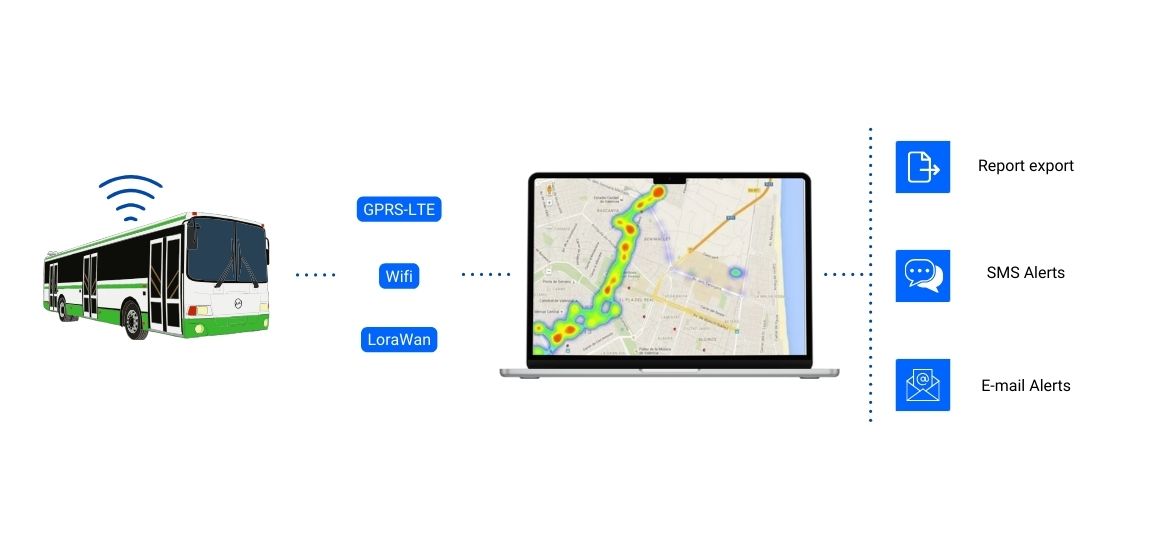
IoT-based air quality monitoring systems represent the convergence of sensor technology, microcontrollers, and cloud computing. These systems continuously collect environmental data, process it locally via microcontrollers or edge computing nodes, and transmit the information to centralized servers using wireless protocols such as Wi-Fi, LoRaWAN, or GSM. The integration of cloud platforms further facilitates advanced analytics, data visualization, and trend prediction, creating a comprehensive ecosystem aimed at improving urban air quality and public health.
2. Literature Review
Surveying Existing Technologies and Their Limitations
Multiple studies have highlighted the effectiveness of IoT-based systems in environmental monitoring, particularly in air quality assessment. Traditional systems often rely on heavy instrumentation and manual data collection, resulting in delayed response times and poor spatial resolution. Recent research emphasizes the benefits of deploying low-cost sensors and integrated IoT devices that offer continuous, scalable, and strategically distributed monitoring capabilities.
Conventional Air Quality Monitoring Systems
Conventional monitoring systems, though accurate, are limited by their high installation and maintenance costs. These systems frequently suffer from fixed locations that do not capture the variability in air quality across diverse urban settings. As a result, these setups are less effective in detecting localized pollution events, undermining public health interventions.
IoT-Enhanced Monitoring: Advances and Advantages
IoT-enhanced systems address these shortcomings by offering real-time data collection and extensive spatial coverage. Notable advancements in sensor technology, including multi-gas sensors and laser-based particulate matter detectors, provide accurate and continuous monitoring. Moreover, the accessible cost structure makes it feasible to deploy multiple nodes across different regions, thereby achieving comprehensive coverage.
3. System Architecture
Design and Integration of the IoT Monitoring System
The architecture of the IoT-based air quality monitoring system is meticulously designed to facilitate seamless data acquisition, processing, and communication. This section delineates the core components and their interactions within the system.
3.1 Sensor Nodes
Sensor nodes are distributed units equipped with a variety of sensors capable of measuring different air quality parameters:
- Particulate Matter Sensors: Monitoring PM2.5 and PM10 levels.
- Gas Sensors: Including metal oxide semiconductor sensors for detecting CO, NO₂, and O₃.
- Supplementary Sensors: Temperature and humidity sensors to provide contextual environmental conditions and assist in proper data calibration.
3.2 Microcontrollers and Data Acquisition
Sensors relay their data to microcontrollers (e.g., Arduino, ESP32) which are responsible for local processing. The microcontroller executes preliminary data validation, normalizes sensor outputs, and establishes calibration routines to offset sensor drift and environmental influences. This preprocessing is critical in ensuring the reliability and accuracy of the data transmitted.
3.3 Wireless Communication
Once the microcontroller processes the data, it is transmitted to a centralized server via wireless communication modules. Commonly used communication protocols include Wi-Fi, LoRaWAN, and GSM, each selected based on the specific requirements of range, power consumption, and environmental interference. Protocols such as MQTT and HTTP are often implemented to ensure efficient energy usage and secure data delivery during transmission.
3.4 Cloud Infrastructure and Data Management
The transmitted data is managed by cloud platforms that provide robust storage, analytics, and visualization capabilities. Cloud-based systems empower users to access real-time air quality data via interactive dashboards. These dashboards offer visualization tools such as time-series graphs, heat maps, and interactive charts that illustrate trends and highlight pollution hotspots.
3.5 Data Analytics and Predictive Modeling
Beyond real-time data visualization, state-of-the-art IoT systems incorporate machine learning algorithms to process historical air quality data. These predictive models are pivotal in forecasting pollution trends and setting up automated alerts. Through techniques such as regression analysis and time-series forecasting, the system can predict impending pollution spikes based on observed environmental conditions and historical patterns.
Table: System Architecture Components and Their Functions
| Component | Function | Technology/Tool |
|---|---|---|
| Sensor Nodes | Data Acquisition (PM, CO, NO₂, O₃, etc.) | Particulate sensors, Gas sensors, Temperature/Humidity sensors |
| Microcontrollers | Data preprocessing and calibration | Arduino, ESP32, Raspberry Pi |
| Wireless Communication | Data transmission to the cloud | Wi-Fi, LoRaWAN, GSM, MQTT/HTTP protocols |
| Cloud Platforms | Data storage, analysis, and visualization | AWS IoT, Google Cloud, ThingSpeak, Adafruit IO |
| Data Analytics | Predictive modeling and real-time alerts | Machine Learning, Time-Series Forecasting |
4. Methodology
Step-by-Step Approach for System Implementation
4.1 Hardware Design and Sensor Calibration
The first phase in developing an IoT-based air quality system entails careful selection and calibration of sensors. Accuracy in sensor data is paramount. Each sensor is initially calibrated in a controlled environment. Calibration coefficients are then computed by comparing sensor outputs with reference-grade instruments, ensuring that sensor drift is minimized during field deployment.
Hardware components such as Arduino and ESP-based microcontrollers are integrated with physical sensors to establish a network of sensor nodes. The arrangement of these nodes is planned strategically to capture spatial variations in air quality across various environments—urban sectors, industrial zones, and residential areas.
4.2 Software Development and Embedded Firmware
A comprehensive software stack is developed to govern data acquisition, processing, and transmission. Embedded firmware running on microcontrollers regulates sensor sampling rates, implements calibration routines, and ensures that preliminary error-checking is performed before data transmission. The firmware often utilizes lightweight protocols optimized for IoT deployments, balancing energy consumption with data accuracy.
Additionally, cloud-based backend systems are implemented using platforms capable of handling high volumes of data. These platforms not only store the influx of sensor data but also facilitate complex queries and analysis. Visualization tools are built as web or mobile applications using modern frameworks, allowing users to interact with dynamic data hosted on an intuitive dashboard.
4.3 Data Management, Analytics, and Alert Systems
Once data reaches the cloud platform, it is catalogued in a time-series database or similar data storage system. Advanced analytics are then applied to detect anomalies and compute moving averages, providing context for short-term fluctuations and long-term trends. Automation of alert systems is a critical component—if pollutant levels exceed safe thresholds, the system immediately dispatches notifications to relevant authorities and subscribed users.
Machine learning techniques are incorporated to further enhance the system’s predictive capabilities. For example, regression models may be used to forecast short-term pollution variations while more robust machine learning algorithms analyze multi-day and seasonal trends in air quality. The integration of predictive models enhances the overall decision-making process, especially in urban management and public health planning.
5. Implementation and Case Studies
Deployment in Real-World Environments
5.1 Urban Deployment and Public Health Monitoring
In urban areas, the IoT-based air quality monitoring system is particularly beneficial for tracking pollution near high-traffic zones, industrial districts, and densely populated residential sectors. Deploying multiple sensor nodes in these locations provides granular insights into localized air quality conditions. For instance, a network of sensors installed along busy roadways can immediately detect the emissions of vehicles and the subsequent spike in particulate matter levels. The real-time data captured not only informs local authorities but also enables the public to take precautionary measures during periods of poor air quality.
One real-world case study involved an urban pilot project where sensor nodes were distributed across residential neighborhoods and near transportation hubs. The system successfully transmitted data at regular intervals, enabling authorities to identify critical hotspots of air pollution. Analysis of the collected data revealed temporal trends—with spikes observed during peak traffic hours—and allowed targeted interventions such as signal adjustments and traffic rerouting.
5.2 Industrial and Remote Monitoring Applications
Industrial environments, such as manufacturing and processing plants, benefit from continuous monitoring of air pollutants produced during operations. IoT-based systems are utilized to ensure compliance with environmental regulations and to maintain worker safety. In one notable case study, an industrial facility integrated an IoT monitoring system to track emissions in real time. The system’s data informed the facility’s maintenance and production schedules, thereby preemptively addressing potential pollution incidents.
Similarly, remote and rural regions have successfully implemented IoT systems using low-power wide-area networks (LPWAN) such as LoRaWAN. These systems provide a scalable and cost-effective solution to monitor air quality in areas where traditional monitoring is impractical. The ability to capture data in such environments enriches regional environmental management strategies.
6. Data Visualization and Analysis
Transforming Collected Data into Actionable Insights
One of the pivotal aspects of an IoT-based air quality monitoring system is its capability to transform raw data into meaningful insights. With the help of modern data visualization tools, large datasets can be represented in user-friendly dashboards that facilitate rapid interpretation.
6.1 Visualization Dashboards
Interactive dashboards provide features like time-series plots, heat maps, and geospatial visualizations. These tools allow stakeholders—ranging from environmental scientists to urban planners—to track pollution patterns over time and space. For example, heat maps can signal areas with consistently high levels of pollutants, prompting reviews of urban design or industrial practices.
6.2 Analytics and Predictive Modeling
A critical step in data analysis involves applying statistical and machine learning models to predict future air quality trends based on historical data. These models not only detect immediate anomalies but also forecast long-term trends, enabling effective policy implementations and timely public alerts. Advanced regression and time-series analytical techniques help in quantifying the correlation between human activities (e.g., peak vehicular traffic) and environmental pollutant levels. With these insights, municipal authorities can schedule proactive maintenance and enforce targeted traffic management strategies.
7. Challenges and Future Directions
Identifying Issues and Charting the Path Forward
While the deployment of IoT-based air quality monitoring systems marks a significant technological advancement, several challenges persist. Addressing these challenges is essential for enhancing system effectiveness and encouraging broader adoption.
7.1 Sensor Calibration and Data Accuracy
Over time, sensor accuracy may degrade due to environmental factors and sensor drift. Regular calibration is required to ensure the fidelity of measurements. Future developments should focus on automated calibration processes and the use of self-correcting sensor algorithms.
7.2 Communication Protocols and Power Management
IoT devices in remote locations face challenges related to secure and efficient data transmission as well as power management. Integrating energy harvesting solutions, such as solar panels, and developing low-power communication protocols can extend the operational life of these devices.
7.3 Integration with Smart City Infrastructures
A promising future direction for IoT-based air quality systems lies in their integration with smart city initiatives. Such integration will enable the holistic management of urban environments where real-time data is used to balance infrastructural development, traffic management, and environmental conservation. Enhanced interoperability between various IoT systems could pave the way for centralized environmental monitoring platforms, further amplifying their impact.
7.4 Emerging Technologies and Innovations
Future research may focus on advanced sensor technologies that offer greater sensitivity and miniaturization. The convergence of IoT with artificial intelligence will continue to drive innovations in predictive analytics and alert systems, ultimately advancing public health and environmental management practices.
8. Conclusion and Final Thoughts
Synthesis of Findings and System Impact
This research paper has explored the multifaceted domain of IoT-based air quality monitoring systems, covering a spectrum from initial system design to real-world implementation. The integration of low-cost sensors, advanced microcontrollers, robust communication modules, and dynamic cloud infrastructure has brought forth a scalable and efficient approach to monitor air quality in real time. These systems not only provide immediate data essential for public health interventions but also contribute to long-term environmental management by leveraging predictive modeling tools.
Notable strengths of the IoT-based approach include enhanced spatial coverage, continuous data availability, and the ability to integrate predictive analytics for forecasting pollution trends. The ability to instantly alert authorities and the public during pollution spikes plays a crucial role in mitigating the negative effects of air pollution on public health. Furthermore, the flexibility of IoT systems allows for easy deployment in disparate environments—from densely populated urban areas to remote industrial sites—ensuring comprehensive monitoring coverage.
Although challenges such as sensor calibration, power management, and data security must be continually addressed, the potential benefits of this technology are immense. By integrating with larger smart city frameworks, future iterations of IoT-based monitoring systems can further enhance environmental governance and contribute to overall urban sustainability. As innovative sensor designs and energy-efficient communication technologies emerge, these systems are expected to become even more reliable and widespread.
In summary, IoT-based air quality monitoring systems offer a timely, cost-effective, and scalable solution to the pervasive problem of air pollution. They empower policymakers with critical data and enable proactive measures that safeguard public health and promote environmental sustainability. As research and technological developments continue, these systems are likely to form the backbone of future environmental management strategies across the globe.
References
- Air Quality Monitoring Using IoT - psiborg.in
- IoT-Based Air Quality Monitoring and AQI Measurement System - GitHub
- What Is IoT Based Air Pollution Monitoring - Robots.net
- IoT Based Air Quality Index Monitoring with ESP8266 & MQ135 - How2Electronics
- Air Quality Monitoring Systems using IoT: A Review - IEEE Xplore
-
Real-time IoT-powered AI system for monitoring and forecasting of ... - ScienceDirect
-
An IoT System for Air Pollution Monitoring with Safe Data Transmission - PMC
-
Open-source Internet of Things (IoT)-based air pollution monitoring ... - ScienceDirect
- Air pollution monitoring and prediction using IoT - IEEE Xplore
-
Implementation of IoT-Based Air Quality Monitoring System for ... - PMC
- Smart Air Quality Monitoring Using IoT - ResearchGate
- Transformational IoT sensing for air pollution and thermal exposures - Frontiersin
- Development of an IoT-Enabled Air Pollution Monitoring and Air ... - Springer
- IoT based Smart Air Pollution Monitoring System - IEEE Xplore
- Development of IoT Technologies for Air Pollution Prevention and ... - Aaqr.org
Recommended Searches
Last updated February 19, 2025