
Integrated Pest Management in Rice Arthropod Control
Harnessing ecological, cultural, and biological tools to sustainably manage rice pests
Key Takeaways
- Synergistic Practices: IPM integrates monitoring, biological allies, cultural practices, and minimal chemical use to manage arthropod pests efficiently.
- Sustainability and Environment: By reducing chemical inputs, IPM not only preserves beneficial arthropods but also enhances soil and water quality.
- Farmer Empowerment: Education and on-field training are crucial for successful implementation and adaptation of IPM strategies tailored to local conditions.
Introduction
Rice stands as a staple crop feeding nearly half of the global population, making its sustainable production key to food security and economic vitality in many countries. However, rice crops are highly vulnerable to a plethora of arthropod pests, including planthoppers, stem borers, leaf folders, rice water weevils, and various other invasive insects. Over the years, the widespread use of chemical pesticides has led to environmental degradation, pest resistance, and collateral damage to beneficial organisms. Integrated Pest Management (IPM) offers a holistic and sustainable way to manage these arthropod pests in rice cultivation. IPM is based on a multifaceted approach that emphasizes careful monitoring, utilization of natural enemies, cultural modifications, and judicious chemical intervention only when necessary.
The essence of IPM lies in its capacity to integrate various pest control techniques into an ecosystem-friendly framework. Rather than simply eliminating pests, IPM aims to manage pest populations below economically damaging thresholds while protecting the environment and maintaining the overall balance of agroecosystems. The dynamic nature of rice ecosystems – marked by seasonal changes, diverse pest populations, and fluctuating environmental conditions – necessitates a flexible yet systematic approach to pest control. This document provides an in-depth exploration of the use of IPM strategies in managing arthropods in rice, describing the core components, practical methods, economic considerations, challenges, and future opportunities for sustainable rice production.
Core Components of IPM for Rice Arthropod Management
Monitoring and Early Identification
One of the foundational steps in IPM is regular field monitoring and pest identification. Continuous surveillance allows farmers to detect pest populations at an early stage and prevent outbreaks. Monitoring techniques may include:
Scouting and Trapping
Field scouting is performed by trained personnel who systematically inspect rice fields for signs of pest damage and egg masses. In addition, pheromone and light traps are deployed to capture and quantify pest species such as planthoppers and rice leaf folders. The collected data on pest density and distribution help in making informed decisions on whether control measures are warranted.
Use of Economic Thresholds
Economic thresholds are predetermined pest population levels at which the cost of treatment is justified by the potential yield loss. By monitoring pest densities relative to these thresholds, farmers can decide when to activate control measures and avoid unnecessary pesticide applications.
Biological Control
Biological control is a cornerstone of IPM and focuses on enhancing natural enemy populations to suppress pest outbreaks. Rice agroecosystems are naturally rich in biodiversity, and numerous beneficial arthropods, including parasitoids, predators, and pathogens, play critical roles in controlling pest populations.
Conservation of Natural Enemies
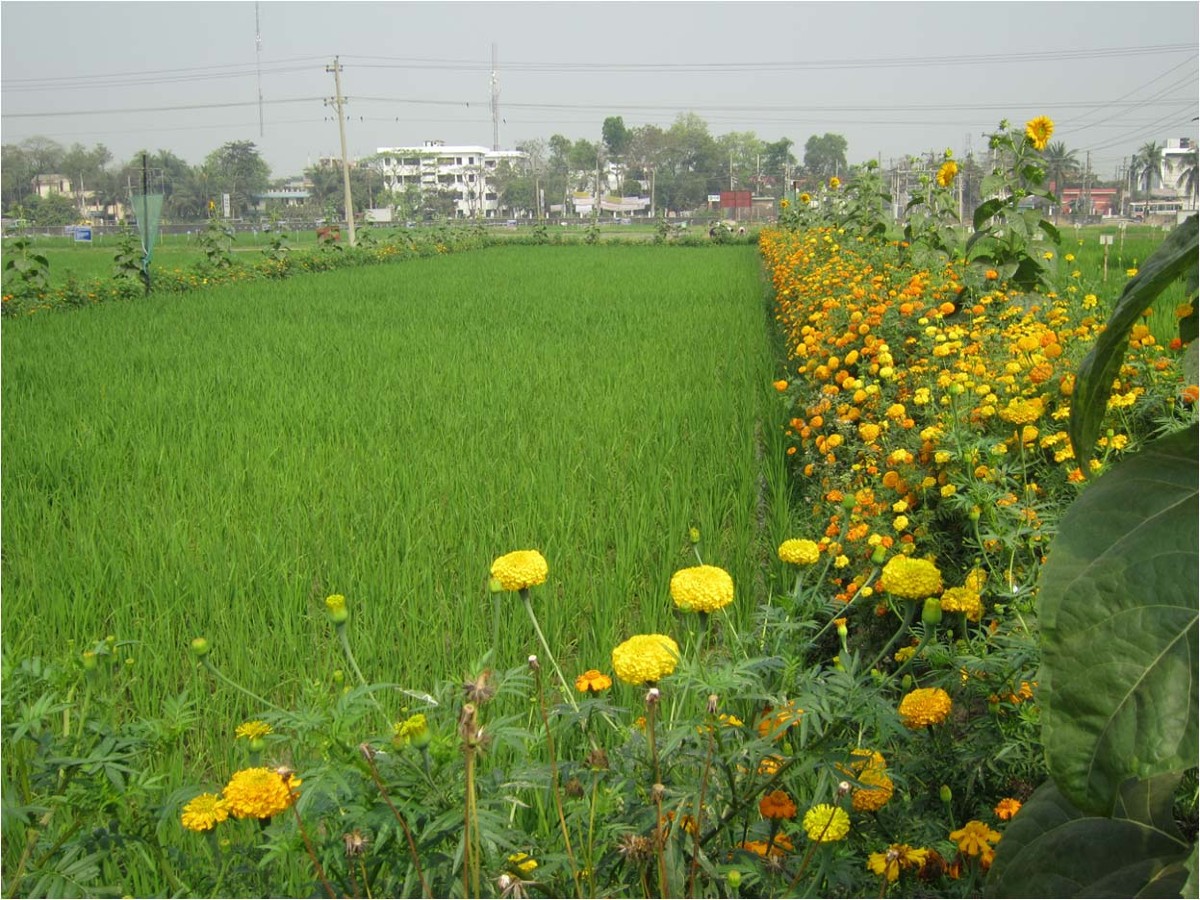
Practices that promote the conservation of natural enemies involve maintaining field margins, providing shelter and alternative habitats for beneficial insects, and avoiding broad-spectrum pesticides that may harm these allies. Common beneficial groups include lady beetles, spiders, parasitic wasps, and predatory bugs, all of which help reduce infestations of rice pests like stem borers and leaf folders.
Augmentative Releases
In situations where natural enemy populations are insufficient, augmentative biological control involves the mass rearing and release of predators or parasitoids. This method complements natural populations and can be particularly effective during peak pest seasons.
Cultural Control Methods
Cultural controls modify the agroecosystem to make it less favorable for pest establishment and proliferation. These practices are cost-effective and sustainable, often resulting in improved crop health and yields.
Adjusting Planting Schedules and Crop Rotation
Altering planting dates can disrupt the life cycles of pests, reducing their ability to establish significant populations. Crop rotation and inclusion of non-host crops also help in breaking pest cycles while improving soil health.
Water Management and Field Sanitation
Rice cultivation often relies on water management practices that can be adjusted to combat pest infestations. For instance, regulated flooding or intermittent drying can suppress some pest species while encouraging beneficial organisms. Additionally, cleaning up crop residues after harvest minimizes habitats for overwintering pests, thus reducing next season’s infestations.
Resistant Varieties
The use of rice varieties that are genetically resistant to common pests can significantly lessen pest pressure. These varieties have been bred to either deter pests or withstand pest damage, thereby reducing the need for external interventions.
Chemical Control as a Last Resort
While chemical pesticides are an important tool in agricultural pest management, their use within an IPM framework is carefully regulated. In IPM, chemicals are applied only when pest populations exceed economic thresholds. Selective pesticides that target specific pests while minimizing harm to beneficial organisms are preferred.
Targeted Application and Timing
Application timing is critical; chemicals are used during pest life stages when they are most vulnerable and beneficial insect activity is at a minimum. This targeted application reduces chemical inputs, lowers production costs, and diminishes the likelihood of pesticide resistance.
Integration with Other Methods
Chemical control is not implemented in isolation but rather combined with other IPM strategies. For example, previous biological and cultural controls can reduce pest populations to levels where only a minimal chemical intervention is required. This integrated approach mitigates the adverse effects of pesticide overuse and fosters long-term sustainability.
Decision-Making and Farmer Empowerment
One of the key strengths of IPM is the empowerment of farmers through education and capacity building. Knowledge dissemination, often via farmer field schools and local extension services, is critical in equipping farmers with the skills to monitor pest populations, identify beneficial arthropods, and implement IPM strategies effectively.
Training and Field Schools
Field schools and training workshops enable farmers to learn integrated techniques that are customized to their local conditions. Training focuses on the biology of pests and natural enemies, environmental considerations, and best practices for monitoring and applying control methods. As a result, farmers become proactive decision-makers, continuously adapting their practices to meet evolving pest pressures.
Decision Support Systems
Advances in technology have given rise to decision support tools that combine field scouting data, weather forecasts, and pest population models. These systems assist farmers in making timely and accurate management decisions, further integrating the scientific foundation of IPM with practical field-level application.
Detailed IPM Strategies and Their Applications
Combining Methods for Robust Pest Management
IPM is not a single approach but a combination of interrelated strategies that work synergistically. The following table summarizes several key IPM methods, their primary functions, and the benefits they offer in the context of rice cultivation:
| IPM Strategy | Description | Benefits |
|---|---|---|
| Monitoring & Scouting | Regular field inspections, use of pheromone and light traps, and deployment of economic thresholds for pest action. | Early detection of pests, informed decision-making, reduced pesticide use. |
| Biological Control | Conservation and augmentative release of natural enemies like predators and parasitoids. | Natural suppression of pest populations, minimal environmental impact. |
| Cultural Control | Cropping practices such as adjusting planting dates, crop rotations, water management, and use of resistant varieties. | Disruption of pest life cycles, enhanced crop vigor, improved soil health. |
| Chemical Control | Selective and targeted application only when pest densities exceed economic thresholds. | Minimized resistance development, preservation of beneficial organisms, cost efficiency. |
| Farmer Education | Training programs and decision support tools for accurately identifying pests and understanding IPM strategies. | Empowered farmers, sustainable practices tailored to local conditions, improved yield outcomes. |
The integrated use of these strategies results in a resilient agroecosystem where each component reinforces the other. For instance, the reduction of chemical pesticide use helps preserve natural predator populations, which in turn bolster the biological control measures in place. Similarly, cultural practices such as appropriate water management can create conditions less favorable to pest multiplication, further reducing reliance on external chemical inputs.
Economic and Environmental Benefits
IPM in rice cultivation plays a pivotal role not only in controlling arthropod pests but also in enhancing the overall sustainability of agricultural production. Economic benefits arise from reduced crop losses, a decrease in the input cost of pesticides, and improved yield stability. Moreover, IPM contributes to environmental conservation by lowering the chemical load in the ecosystem and preserving non-target species including pollinators and natural predators.
When practiced consistently, IPM strategies have been shown to increase yields—in some cases by as much as 40%—compared to conventional methods that rely heavily on pesticides. These improvements are often accompanied by a greater benefit-to-cost ratio, making IPM an economically viable option for small-scale and large-scale farmers alike.
Challenges and Future Opportunities
Despite its benefits, the implementation of IPM in rice cultivation faces several challenges. Effective IPM requires comprehensive training, extensive monitoring, and a deep local knowledge that may be lacking in some regions. Farmers may initially be hesitant to adopt new practices due to the time and effort required for monitoring and the perceived complexity of integrating multiple management strategies.
Future opportunities lie in the continued development of decision support systems, improved pest surveillance methods, and enhanced training programs for farmers. Advances in remote sensing, modeling, and digital agriculture can help streamline the monitoring process, making IPM more accessible and effective. Furthermore, research into new biological control agents and resistant rice varieties holds promise for further reducing chemical dependence.
In addition, the integration of ecological principles with modern agronomic practices can help generate nationwide and even global frameworks for sustainable rice production. As climate change exerts pressure on existing agricultural paradigms, adaptive IPM methodologies can provide the flexibility needed to maintain production while safeguarding environmental health.
Conclusion
Integrated Pest Management represents a well-rounded and environmentally sound strategy to manage arthropod pests in rice cultivation. By harnessing a mix of monitoring, biological and cultural controls, and targeted chemical treatments only when needed, IPM allows farmers to maintain pest populations at manageable levels while simultaneously improving crop yields and conserving biodiversity. Empowering farmers through education and utilizing modern decision support tools are critical factors in the successful implementation of these strategies.
As global challenges such as climate change and environmental degradation continue to impact agriculture, the shift towards integrated pest management in rice not only promises enhanced food security but also sustained economic and environmental benefits. The holistic approach that IPM offers is essential for transitioning towards a more sustainable and resilient agricultural future.
References
- Integrated Pest Management in Rice - Springer
- Integrated Insect Pest Management Techniques for Rice - MDPI Sustainability
- IPM and Its Application in Rice - ResearchGate
-
ScienceDirect Article on IPM in Rice
- IPM in Rice and Climate Resilience - Academia.edu
- UCANR IPM for Rice
- National IPM Packages for Rice
- FAO IPM Guidelines for Rice
- IRRI Knowledge Bank on Pest and IPM
- Holistic Approach to IPM in Rice Cultivation - ResearchGate
More
Last updated February 18, 2025