
Indian Sign Language Recognition using ORB and Machine Learning Algorithms
Unlocking communication barriers through computer vision and intelligent models
Highlights
- Efficient Feature Extraction: ORB provides robust and rotation-invariant keypoint detection vital for recognizing complex hand gestures.
- Advanced Machine Learning: Combining traditional machine learning classifiers and deep learning models significantly enhances recognition accuracy.
- User-Centric Applications: Bridging societal communication gaps while offering real-time translational solutions to the deaf community.
Introduction to Indian Sign Language (ISL)
Indian Sign Language (ISL) is the primary mode of communication among many deaf individuals in India, a country where about 44 million people experience hearing impairment. Unlike several other sign languages, ISL is rich in its use of expressions, movements, and complex two-handed gestures that encapsulate a range of meanings. As technology advances, there is significant interest in developing systems that accurately capture, interpret, and translate these gestures into text or spoken language. This promise not only aids communication but also fosters social inclusion and improved accessibility.
With the advent of computer vision and advanced machine learning algorithms, researchers have been striving to build highly accurate models capable of bridging this communication gap. One particularly potent approach involves the combined use of the Oriented FAST and Rotated BRIEF (ORB) algorithm for feature detection and description alongside machine learning classifiers to recognize ISL gestures.
ORB: Oriented FAST and Rotated BRIEF Feature Extraction
Understanding ORB
ORB is a computer vision algorithm designed to provide a robust and efficient method for detecting keypoints and computing descriptors from images. One of the major advantages of ORB is its invariance to scale, rotation, and lighting conditions. This makes it particularly suited to hand gesture recognition in ISL, where gestures involve dynamic and often nuanced movements.
Key Features of ORB
ORB combines the FAST keypoint detector and the BRIEF descriptor with additional modifications to enhance performance:
- Invariance: Maintains accuracy despite changes in scale, orientation, and lighting. This is crucial when dealing with real-world conditions where ambient lighting can vary significantly.
- Efficiency: ORB is computationally less expensive compared to other similar feature extraction algorithms, making it ideal for real-time applications.
- Robustness: The algorithm can detect numerous feature points, which then can be utilized to recognize complex gestures in ISL.
Steps in Feature Extraction using ORB
1. Image Acquisition
The process starts with capturing images or video frames of ISL signs, often using sensors like Microsoft Kinect. This sensor not only captures color images but, in some cases, depth information which further assists in isolating the hand gestures from the background.
2. Preprocessing
Before applying ORB, images usually undergo preprocessing steps. These include noise removal, conversion to grayscale, and segmentation of the hand from the background. Preprocessing techniques such as Gaussian filtering and adaptive thresholding are employed to enhance image quality and ensure that only the regions of interest (hand gestures) are processed.
3. ORB Keypoint Detection
ORB is then applied to detect keypoints in each image. These keypoints correspond to distinct features of the hand, such as the positions of joints, fingertips, and other critical regions. ORB helps in converting these spatial features into a robust set of feature descriptors.
4. Feature Vector Generation
The detected keypoints are converted into feature vectors. Because the number of keypoints may vary from image to image, a standardization process involving padding or truncation is applied. These feature vectors encapsulate the essence of the hand gesture, making them suitable for feeding into machine learning models.
Machine Learning Algorithms in ISL Recognition
Once robust feature vectors are obtained through ORB, the next step involves classifying these vectors to accurately identify the corresponding ISL gesture. A variety of machine learning algorithms have been deployed for this purpose, each with its strengths and weaknesses.
Traditional Machine Learning Classifiers
Support Vector Machines (SVM)
SVM is a popular choice for classification tasks due to its capability to handle high-dimensional data. In the context of ISL recognition, SVMs have shown excellent performance by efficiently categorizing the feature vectors derived from ORB. SVMs create a decision boundary that maximizes the margin between different classes, which in this case, are the various hand gestures.
k-Nearest Neighbors (k-NN)
The k-NN classifier has been widely used in ISL recognition due to its simplicity and reliability. When combined with ORB feature vectors, k-NN has demonstrated recognition accuracies exceeding 90% in several studies. This algorithm identifies the class of a new gesture based on its closest neighbors in the feature space.
Other Traditional Algorithms
Beyond SVM and k-NN, other classifiers such as Logistic Regression, Random Forest, Bayesian Classifier, and Multilayer Perceptron have also been employed in various systems. These methods differ in computational complexity and the manner in which they generalize from training data. Despite these differences, the common goal remains: to map the ORB-generated feature vectors to the correct gesture categories with high accuracy.
Deep Learning Approaches
In addition to traditional machine learning methods, deep learning models provide a way to automatically extract highly abstract features from images. Convolutional Neural Networks (CNNs) are particularly effective for image recognition tasks due to their layered architecture, which naturally models spatial hierarchies in visual data.
Integration of ORB with CNNs
Some advanced ISL recognition systems integrate ORB features with CNNs. In this hybrid approach, the ORB algorithm provides initial robust feature descriptors, which are then refined by the CNN layers. This allows the system to recognize both simple and nuanced gestures, improving overall recognition accuracy, especially for dynamic gestures that involve motion.
The advantages of using CNNs include their ability to automatically adjust to variations in hand shape, background clutter, and lighting conditions without extensive feature engineering. This makes them powerful when dealing with the inherent variablity in sign language gestures.
Detailed Technical Process
An ORB-based ISL recognition system can be broken down into several interrelated phases. The following sections provide a comprehensive look at each stage of the process:
Data Collection and Image Acquisition
The effectiveness of any sign language recognition system begins with the quality of data collected. High-resolution images, often captured via sensors like the Kinect, provide not only visual data but sometimes depth information. This is particularly beneficial as it allows the system to distinguish the hand from complex backgrounds and account for three-dimensional movements.
Acquisition Devices
Devices such as webcams, smartphones, and specialized sensors are employed to capture gestures. With the increasing ubiquity of high-quality cameras in modern devices, many systems are being developed to operate on readily available hardware, thereby increasing accessibility.
Preprocessing and Hand Segmentation
After acquisition, the raw images must be processed to isolate the hand from the background. Techniques such as Gaussian filtering and adaptive thresholding are used to remove noise and enhance the contrast between the hand and its surroundings. Segmentation is critical because even slight variations in background interference can affect keypoint detection.
Furthermore, color space conversion (for example, converting to grayscale) simplifies the data, ensuring that the subsequent feature extraction phase focuses solely on the shape and movement of the hand.
ORB Feature Extraction and Vector Generation
Once the data is preprocessed, ORB comes into play. The following detailed steps summarize the process:
| Step | Description |
|---|---|
| Detection | Utilize the FAST algorithm to detect keypoints in the image. These are points of interest which reflect corners and unique patterns of the hand. |
| Orientation | Employ oriented techniques to ensure that keypoints are assigned a consistent orientation, making the descriptors invariant to rotation. |
| Description | Use BRIEF descriptors to represent each keypoint in a binary format, creating a distinct signature for each feature. |
| Standardization | Convert the variable-length output into a consistent feature vector. Techniques such as padding are applied so that all vectors can be processed uniformly. |
The generated feature vectors are a concise representation of the sign's physical characteristics, which the machine learning model later uses for classification.
Classification using Machine Learning Algorithms
With a reliable feature vector obtained from ORB, the next stage involves classification. The classification algorithms are trained on labeled datasets of ISL gestures. Each algorithm, whether it is a traditional classifier like SVM or a deep learning model like CNN, is designed to learn the distinctive patterns in the feature vectors that correspond to specific signs.
Accuracy is paramount in classification. Some systems have reported recognition accuracies of over 90% when using algorithms like k-NN, while the integration of deep learning via CNNs can often push the accuracy even higher. Training these models involves splitting data into training, validation, and test sets, ensuring that the models generalize well to new gestures.
Translating Gestures to Text or Speech
The final step in the process involves the conversion of recognized gestures into text or speech outputs. This translation is critical as it serves as the primary communication bridge between deaf signers and the hearing world. Once the classifier identifies the gesture, the corresponding alphabet, word, or phrase is output in a human-readable or audible form.
This conversion is performed using pre-defined dictionaries or models trained on spoken language datasets, making it possible for the technology to assist in real-time communication settings such as educational classrooms, public service areas, or during everyday interactions.
Performance Metrics and Practical Considerations
Studies have shown that using ORB in combination with various machine learning algorithms can lead to remarkably high recognition accuracies. Some experiments have recorded average accuracies exceeding 93%, while more advanced configurations have reached even higher percentages when recognizing digits and specific alphabets in ISL.
However, the practical application of these systems involves addressing challenges like:
- Variability in Gestures: ISL involves regional variations and different stylistic gestures, making it crucial for datasets to be comprehensive and representative.
- Real-Time Performance: For practical applications such as live translation during conversations, the system must process input in real time without significant lag.
- Hardware Integration: Ensuring compatibility and optimal performance of the technology on commonly available hardware like smartphones or accessible sensors remains a key consideration.
These challenges are addressed through continuous model training and data augmentation, ensuring that the system remains robust even in diverse and dynamic real-world scenarios.
Comparative Analysis Table
The table below provides a comparative analysis of various components and methodologies used in ISL recognition systems integrating ORB and machine learning algorithms:
| Component | Description | Advantages | Challenges |
|---|---|---|---|
| ORB Feature Extraction | Detects keypoints and generates invariant descriptors. | Rotation, scale, and lighting invariant; computationally efficient. | Requires proper preprocessing for optimal performance. |
| SVM Classifier | Uses hyperplanes to separate gesture classes. | Effective with high-dimensional data; clear decision boundaries. | May require careful tuning of parameters. |
| k-NN Classifier | Classifies gestures based on the nearest neighbors. | Simplicity and ease of implementation; high accuracy in many cases. | Sensitive to noise and outliers; computational load increases with dataset size. |
| CNNs | Deep learning models that automatically extract features. | Superior performance with large datasets; reduces need for manual feature engineering. | Computationally intensive; requires substantial training data. |
Future Directions and Practical Implications
The integration of ORB with machine learning for ISL recognition is a dynamic field evolving with technological advances. Future directions include:
Enhanced Real-Time Performance
Future systems will focus on reducing latency so that gestures can be recognized in real time, making live translation services more reliable. Improvements in hardware and more efficient algorithms will lead to systems that can cope with fast-moving gestures and dynamic backgrounds.
Incorporation of Multimodal Data
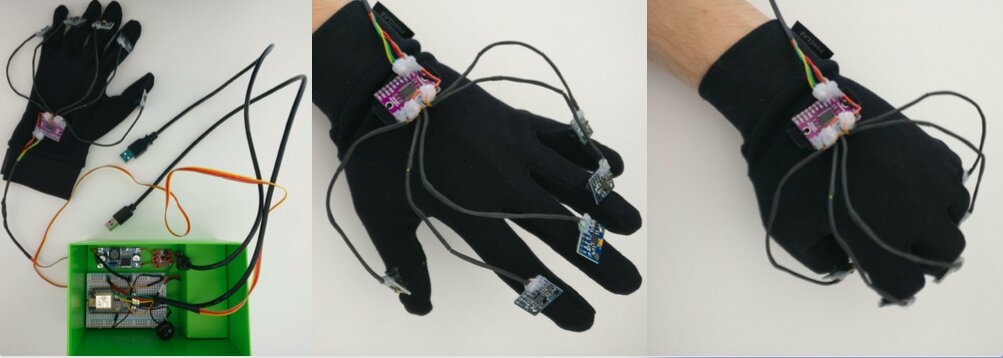
Combining visual data with other sensory inputs, such as depth information or even wearable sensors, can significantly enhance gesture recognition accuracy. This multimodal approach further isolates the hand region, reduces errors due to background noise, and improves overall recognition reliability.
Scalability and Accessibility
Making these systems scalable to operate on low-cost hardware and mobile devices is crucial for widespread adoption. With the increasing prevalence of smartphones and affordable sensors, it is feasible to integrate ISL recognition systems into everyday devices, thereby promoting accessibility and social inclusion at a larger scale.
Cultural and Sociological Impacts
Beyond the technical aspects, ISL recognition has profound sociological implications. By enhancing communication, these systems empower the deaf community, facilitating participation in educational, professional, and social activities. Furthermore, the translation of ISL into text or speech in real time can help eliminate communication barriers that have long isolated segments of the society.
Moreover, as these technologies evolve, there is growing interest in standardizing datasets and creating benchmarks that represent the diversity of ISL across different regions and communities. This initiative can help ensure that the technology is both robust and inclusive.
Conclusion
The integration of ORB and machine learning algorithms for Indian Sign Language recognition stands as a testament to the strides being taken in the fields of computer vision and artificial intelligence. With ORB’s efficient, scale, and rotation-invariant feature extraction capabilities, combined with the robust classification power of machine learning classifiers—from traditional support vector machines and k-nearest neighbors to advanced convolutional neural networks—researchers have developed systems that achieve high accuracy in recognizing complex ISL gestures.
By capturing images via advanced sensors, preprocessing to isolate hand regions, extracting meaningful features with ORB, and applying sophisticated classification models, these systems convert visual cues into text or speech, thereby bridging communication gaps between the deaf and hearing populations. As the technology continues to evolve and overcome challenges related to gesture variability, real-time performance, and hardware integration, the implications for social inclusion and accessibility are profound.
In summary, the comprehensive approach that combines ORB-based feature extraction with machine learning is not only paving the way for improved ISL recognition but is also setting a foundation for numerous future applications. These may range from live translation services in classrooms and public areas to integrated communication aids on everyday mobile devices, ultimately contributing to a more inclusive society.
References
- Recognition of Indian Sign Language Using ORB with Bag of Visual Words by Kinect Sensor - ResearchGate
- Recognition of Indian Sign Language Using ORB with Bag of Visual Words - Taylor & Francis Online
- Recognition of Indian Sign Language Using ORB with Bag of Visual Words - Semantic Scholar
-
Static Hand Gesture Recognition Using ORB Techniques - ScienceDirect
Recommended
Last updated February 22, 2025