
Unlocking K-AUM Exclusions: How Trustee-Controlled Assets Navigate Capital Charges
Discover the critical criteria and practical strategies for exempting trustee-controlled assets from K-AUM capital requirements.
Key Insights into K-AUM Exclusions for Trustee-Controlled Assets
- K-AUM Foundation: K-AUM is a capital requirement for investment firms, typically 0.02% of their Assets Under Management (AUM), designed to mitigate risks posed to clients under prudential regimes like MIFIDPRU.
- Exclusion Criteria: Trustee-controlled assets may avoid K-AUM capital charges if the trustee's role is primarily custodial, non-discretionary, or if investment management is delegated to another entity already reporting K-AUM, preventing double-counting.
- Regulatory Nuances: The applicability of exclusions depends heavily on the specific regulatory jurisdiction (e.g., FCA, SEC), the nature of the trustee's activities (fiduciary duties vs. active investment management), and the firm's classification (e.g., Small and Non-Interconnected firms).
Navigating the complex landscape of K-AUM exclusions for trustee-controlled assets is crucial for investment firms and trustees aiming to optimize capital charges and maintain regulatory compliance. K-AUM, or "Assets Under Management" K-factor, is a key component of prudential regimes like the Investment Firm Prudential Regime (IFPR) in the UK and similar European frameworks. It mandates that investment firms hold capital equivalent to a percentage of their AUM, typically 0.02%, to cover potential risks to clients arising from their asset management activities.
The core challenge lies in understanding when assets managed by a trustee, whether an individual or a corporate entity, can be excluded from these capital calculations. Not all assets under a trustee's control automatically trigger K-AUM charges. The determination hinges on factors such as the degree of discretionary control exercised by the trustee, the nature of the services provided (e.g., custody vs. active investment management), and whether the management responsibilities are formally delegated to another regulated entity.
Demystifying K-AUM: Capital Requirements and Risk Mitigation
K-AUM is a quantitative indicator reflecting the risk an investment firm poses to its customers through its asset management activities. This requirement is fundamental to ensuring financial stability and protecting clients. The calculation typically involves a small percentage (0.02%) of the firm's average AUM, encompassing both discretionary portfolio management and ongoing non-discretionary investment advice.
The concept of AUM generally refers to the total market value of investments managed by a financial institution on behalf of its clients. It includes both discretionary and non-discretionary assets, as these collectively represent the overall value of client funds under the advisor's oversight. An increase in AUM is often viewed as a positive indicator of a firm's growth and performance.
Under prudential regimes, K-factors like K-AUM are part of a broader framework of capital requirements. For instance, in the UK's IFPR, these K-factors fall under "Risk-to-Client" (RtC) capital requirements, alongside K-CMH (client money held), K-ASA (assets safeguarded and administered), and K-COH (client orders handled). These K-factors are applied to non-Small and Non-Interconnected (SNI) firms to determine their minimum capital requirements, which are the higher of the sum of their K-factor requirement, fixed overhead requirement, or permanent minimum capital requirement.
The Trustee's Role in Asset Management and Capital Implications
A trustee is an individual or institution legally responsible for managing assets within a trust according to the trust's terms and for the benefit of its beneficiaries. This role involves significant fiduciary duties, such as taking control of and managing all assets comprising an estate or trust, making investment decisions, and ensuring compliance with legal and tax obligations.
Corporate trustees, such as wealth management and trust companies, are often chosen for high-value or complex trusts due to their specialized expertise, employing professionals like finance experts, attorneys, and accountants. These entities typically charge annual fees, often based on a percentage of the trust's assets (e.g., 0.5% to 2%), and may also have minimum fees. Even individual trustees who don't charge direct fees will incur costs for investment managers, usually asset-based. Trustees are also responsible for reporting and paying taxes, such as Capital Gains Tax, on behalf of the trust.
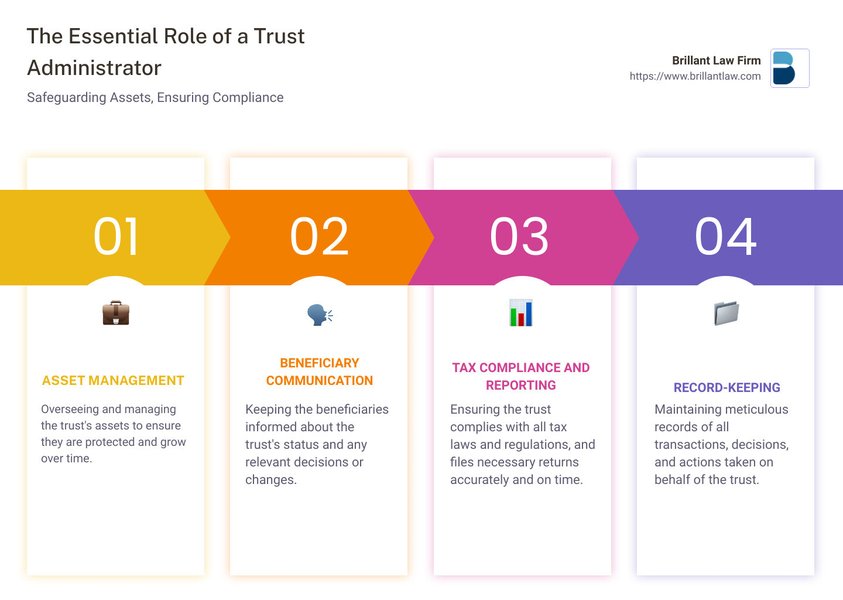
A Trust Administrator’s role in overseeing trust assets and ensuring compliance.
Crucially, a trust only controls assets explicitly held in the name of the trustee. Assets held outside the trust, such as those in joint tenancy, are not governed by the trust's terms and therefore do not fall under the trustee's direct management for the purpose of trust administration. This distinction is vital when assessing K-AUM implications.
Strategic Exclusions: When Trustee-Controlled Assets Avoid K-AUM Charges
The ability of trustee-controlled assets to avoid K-AUM capital charges is not automatic but depends on specific conditions and the regulatory framework. Several key scenarios and principles allow for such exclusions:
No Discretionary Portfolio Management
If a trustee's role is limited to acting on fixed instructions without exercising discretionary portfolio management powers, these assets may be excluded from K-AUM calculations. Regulatory capital frameworks primarily focus on discretionary management when attributing AUM for capital charges. This means that if the trustee merely administers assets or executes predefined investment strategies without making ongoing investment decisions, the assets may not contribute to the K-AUM.
Assets Held Under Custody, Not Management
When trustees solely hold assets in custody (i.e., safeguarding and administering them) without actively managing investment decisions, these assets can be excluded from K-AUM. Regulatory frameworks often distinguish between assets held under custody (K-ASA) and those under active portfolio management. If a trustee's function is purely custodial, distinct from investment management, these assets are typically not included in K-AUM calculations.
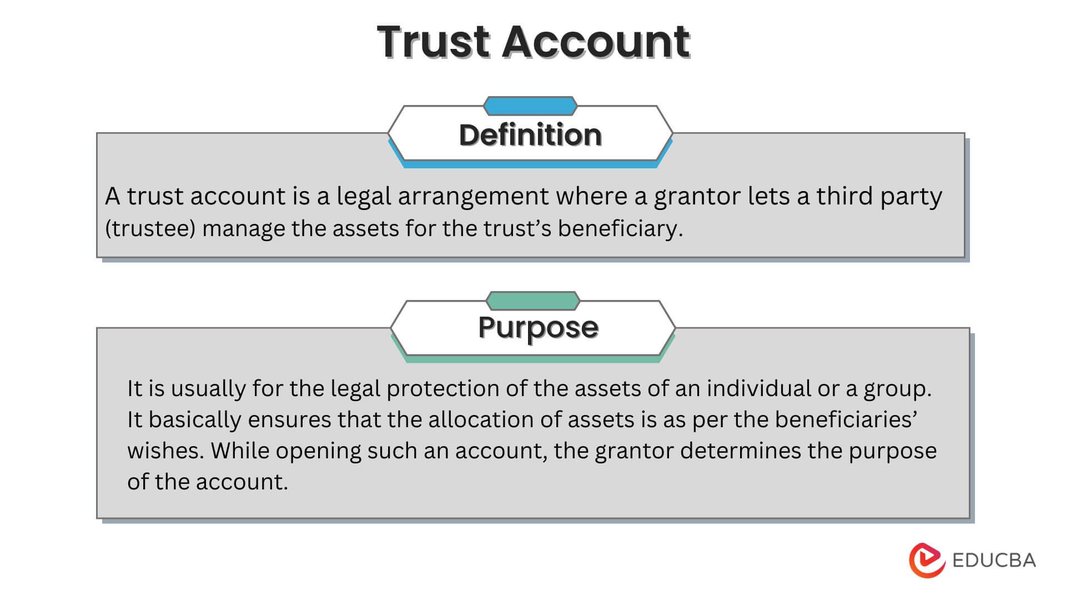
Understanding the definition and purpose of a trust account.
Delegation of Investment Services to Other Firms
A significant exclusion applies when the trustee formally delegates investment management responsibilities to another financial entity that is already subject to and reports K-AUM. This prevents "double-counting" of AUM and avoids redundant capital charges across multiple entities involved in managing the same assets. The delegation must be formal and to a financial entity similar to one governed by MIFIDPRU or an insurance undertaking within the same financial conglomerate. This ensures that the risk is accounted for by the primary investment manager.
Specific Regulatory Exclusions for Trustee Activities
Certain regulatory guidelines, such as those found in the FCA Handbook (e.g., PERG 2.9), specify that activities carried out by trustees when discharging their general obligations, especially in a non-commercial capacity, may be exempt from certain regulated activities. This implies that if a trustee’s role is strictly limited to core fiduciary responsibilities—such as administering assets for beneficiaries without engaging in broader investment firm activities that trigger K-AUM—the assets might not fully contribute to the K-AUM requirement.
Small and Non-Interconnected (SNI) Firm Exemption
Investment firms that qualify as Small and Non-Interconnected (SNI) firms under relevant prudential regimes (e.g., those with AUM below a certain threshold, such as £1.2 billion, and annual gross revenue below £30 million in the UK) are generally exempt from K-factor calculations, including K-AUM. If a firm managing trustee-controlled assets falls into the SNI category, those assets would indirectly avoid the K-AUM capital charge because the firm itself is exempt from these calculations. This is an exclusion for the firm based on its size and activities, rather than a specific exclusion for the assets themselves.
Exclusions for Certain Trust Types
Some family trusts or specifically exempted trust arrangements may be excluded from K-AUM calculations if they do not constitute regulated investment firm activities under prudential regimes. Similarly, for tax purposes, certain trusts with no tax liability are treated as "excluded trusts" for registration with HMRC, though this does not directly extend to K-AUM capital charges.
Practical Roadmap for K-AUM Compliance and Exclusion
To effectively navigate K-AUM exclusions and ensure compliance, investment firms and trustees must adopt a meticulous approach:
Rigorous Asset Classification and Due Diligence
It is paramount to conduct a rigorous assessment of all assets under control to determine if they qualify as K-AUM. The distinction between discretionary management, pure custody, and mere control is critical. Firms must precisely identify whether assets are actively managed for investment purposes or if the trustee's role is primarily administrative or custodial.
Avoiding Duplicative Capital Charges
When trustees delegate portfolio management to registered investment advisers or other firms that are already subject to K-AUM reporting, the trustee should exclude those assets from their AUM calculations. This prevents the imposition of redundant capital requirements on the same underlying assets, leading to more efficient capital allocation.
Comprehensive Regulatory Reporting and Audit Trails
Firms with trustee roles must maintain clear, well-documented policies and audit trails to justify their asset classifications and any applied exclusions when reporting capital requirements to regulatory bodies. This transparency is vital for demonstrating compliance and surviving regulatory audits.
Optimizing Fee Structures and Capital Charge Exposure
Structuring trust arrangements to clearly delineate custodial functions from discretionary portfolio management can significantly reduce capital charge exposure. Trustees may adjust their fee structures to reflect reduced risk and capital requirements when they are not bearing full discretionary management responsibilities. This alignment of fees with actual risk exposure can lead to more efficient operations.
The following radar chart illustrates key considerations for firms and trustees in assessing K-AUM implications and potential exclusions for trustee-controlled assets. This chart provides an opinionated analysis of the relative importance of different factors in determining K-AUM applicability.
The chart illustrates that the formal delegation to a regulated entity and the regulatory jurisdiction specifics are highly critical factors, underscoring the need for clear legal and regulatory alignment. The degree of discretionary control exercised by the trustee and the nature of trustee activities (whether they are custodial or involve active management) are also very important in determining whether an exclusion applies. While firm classification (SNI Status) can provide an exemption for the firm as a whole, it is not a direct exclusion for the assets themselves if managed by a non-SNI firm. Finally, robust documentation and audit trails are essential for substantiating any claims of exclusion.
Understanding Trustee Services and Trust Management Dynamics
The responsibilities of a trustee extend beyond merely holding assets; they involve comprehensive management, reporting, and compliance. This complexity often leads to significant fees, particularly for corporate trustees who provide a breadth of services, including legal, financial, and accounting expertise.
Corporate trustee fees can vary significantly based on the complexity of the trust and the assets involved, often ranging from 0.5% to 2% of the trust's assets annually. Some corporate trustees utilize an "Assets Under Management" (AUM) fee model, similar to banks, where they might charge a tiered percentage. For instance, a higher percentage for the first few million dollars and a reduced rate for amounts exceeding that. Even when an individual family member acts as a trustee without charging a direct fee, there will still be costs for professional investment managers to oversee the trust’s assets, typically around 1% of the assets.
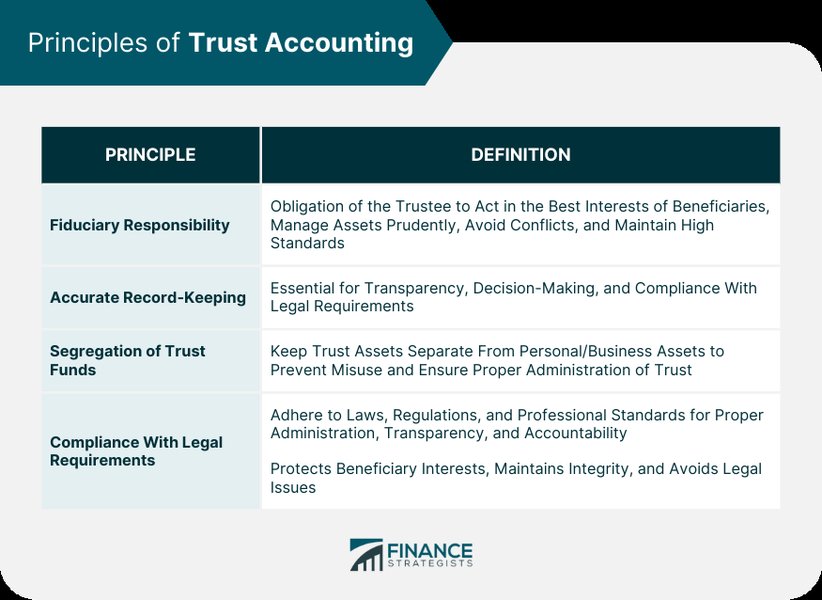
Principles of Trust Accounting and Reporting.
Trustees are also tasked with critical tax responsibilities, such as reporting and paying Capital Gains Tax when assets are placed into or taken out of a trust. This necessitates a thorough understanding of tax laws and diligent record-keeping.
The Role of the Trust Document
The trust deed is the foundational document that outlines the trustee's powers, duties, and limitations. It dictates how assets are to be managed, invested, and distributed. Any actions taken by the trustee must strictly adhere to the terms specified in this document. This legal framework forms the basis for assessing whether a trustee's activities align with criteria for K-AUM exclusion, particularly regarding discretionary versus non-discretionary management.
Challenges and Considerations
One of the challenges in trust administration is managing various asset types, from real estate to investment portfolios. Each type of asset may have distinct implications for K-AUM calculations based on how it is managed and the level of discretionary control involved. For example, a house held in joint tenancy might bypass trust terms entirely upon the death of one owner, while a house transferred into the trust's name prior to death would be governed by its terms and the trustee's responsibilities. This highlights the importance of proper asset titling and trust funding to ensure assets are indeed "trustee-controlled."
Navigating Regulatory Frameworks for Trust Assets
Understanding the interplay between national and international regulatory frameworks is essential for determining K-AUM exclusions. Regulators like the Financial Conduct Authority (FCA) in the UK and the Securities and Exchange Commission (SEC) in the U.S. provide guidelines that impact how trustee-controlled assets are treated.
The FCA's MIFIDPRU rules are specific about the calculation of K-AUM, requiring firms to calculate it on a regular basis (e.g., monthly) to reflect ongoing exposure. Similarly, the SEC Custody Rule (17 CFR § 275.206(4)-2) distinguishes between legal control of funds for custody purposes and discretionary management. This distinction is crucial for trustee-custodians, as it clarifies when their activities might fall outside the scope of AUM-based capital charges.
Cross-border delegations of asset management also add a layer of complexity. For international delegations, the rules of the third country influence whether assets can be excluded from AUM calculations. The third country's regulations must permit such exclusions for the delegating entity for the exclusion to be valid.
The Regulatory Perspective on Risk
K-factors, including K-AUM, are fundamentally designed to align capital requirements with actual risks posed by investment firms. Therefore, activities that involve lower risk, such as simple administration or safeguarding of assets rather than active market participation, are more likely to qualify for exclusions or reduced capital charges. This principle underscores the importance of assessing the true nature of the trustee's engagement with the assets.
The following mindmap illustrates the complex relationships and conditions that influence K-AUM exclusions for trustee-controlled assets. It maps out the core concept of K-AUM and branches into the various factors that determine whether assets can avoid capital charges.
The mindmap visually connects the definition of K-AUM with the specific roles and responsibilities of a trustee. It then branches into the various conditions under which trustee-controlled assets can be excluded from capital charges, such as the absence of discretionary management, the performance of pure custodial functions, or the formal delegation of investment duties to another regulated entity. The mindmap also highlights the firm-level SNI exemption and specific regulatory provisions that facilitate exclusions. Finally, it ties these criteria back to practical implications for compliance and operational efficiency, emphasizing the importance of accurate asset classification and robust reporting.
Comparative Analysis of Trustee Responsibilities and Capital Implications
To further illustrate the nuanced relationship between trustee roles and K-AUM capital charges, the following table compares different scenarios of trustee involvement and their potential impact on capital requirements.
| Trustee Scenario | Description of Role | Discretionary Control | K-AUM Applicability | Potential for Exclusion |
|---|---|---|---|---|
| Professional Corporate Trustee (Active Manager) | Manages trust assets with full discretionary investment authority, making active trading and portfolio decisions. | High | Likely Applicable | Low (unless delegated) |
| Professional Corporate Trustee (Custodian Only) | Holds assets in custody, processes transactions, but does not make investment decisions; acts on instructions. | Low/None | Unlikely Applicable | High (treated as K-ASA) |
| Individual Family Trustee (Passive Oversight) | Oversees trust, approves distributions, but investment decisions are made by a separate, external investment manager. | Low/None | Unlikely Applicable | High (delegation/non-discretionary) |
| Investment Firm acting as Trustee (Non-SNI) | Investment firm that also acts as trustee, managing assets within the trust as part of its broader regulated activities. | High | Likely Applicable | Low (unless assets fall under specific non-discretionary or safeguarded categories within firm's AUM) |
| Investment Firm acting as Trustee (SNI) | Small and Non-Interconnected investment firm acting as trustee. | Varies | Not Applicable to Firm | High (firm-level exemption) |
This table underscores that the degree of discretionary control is a primary determinant. When a trustee actively manages a portfolio with discretion, K-AUM is typically applicable unless those responsibilities are formally delegated to another entity that assumes the K-AUM burden. Conversely, if the trustee's role is purely custodial or limited to non-discretionary actions, the likelihood of exclusion is significantly higher. The firm's SNI status also provides a blanket exemption from K-factor calculations, indirectly excluding trustee-controlled assets from K-AUM if managed by such a firm.
Further Deep Dive into Trust Administration and Capital Protection
To provide a more comprehensive understanding of the intricacies of trust administration and how it relates to capital protection strategies, here is a video that delves into the vital topic of managing trusts effectively and responsibilities of trustees. This video highlights the complex interplay between legal structures, financial management, and tax implications, all of which are essential considerations when assessing K-AUM exclusions.
A look into the disadvantages of a trust fund, covering attorney fees and asset management complexities.
This video provides insights into the operational challenges and costs associated with managing trust assets, including attorney fees and the complexities involved in maintaining control over assets. While it discusses disadvantages, it implicitly touches upon the governance structures and the allocation of responsibilities within a trust, which directly informs how assets are classified for K-AUM purposes. The discussion about attorney fees and asset control highlights the financial and legal frameworks that underpin the determination of whether an asset is "managed" in a way that triggers capital charges, or if it falls under a more administrative or custodial role. Understanding these practical aspects helps bridge the gap between theoretical regulatory frameworks and real-world trust administration challenges.
Frequently Asked Questions (FAQ)
What is K-AUM?
How are trustee-controlled assets usually managed?
When can trustee-controlled assets be excluded from K-AUM calculations?
What is the difference between discretionary and non-discretionary management in the context of K-AUM?
Why is it important to classify assets correctly for K-AUM?
Conclusion
Successfully navigating K-AUM exclusions for trustee-controlled assets is a critical aspect of modern financial compliance and capital management. It requires a deep understanding of regulatory frameworks, meticulous asset classification, and a clear distinction between various types of trustee responsibilities—from active discretionary management to passive custodial roles. By strategically applying the available exclusion criteria, such as the absence of discretionary authority, the delegation of investment services to another regulated entity, or qualifying as an SNI firm, investment firms and trustees can significantly optimize their capital requirements while maintaining robust fiduciary standards. The key lies in diligent documentation, adherence to regulatory guidelines, and a proactive approach to assessing the nature of asset control and management.
Recommended Further Exploration
- Understanding IFPR K-Factors and their impact on investment firms
- Deep dive into FCA MIFIDPRU rules for asset management
- The role of corporate trustees in modern wealth management
- Strategies for optimizing capital requirements in financial institutions