
Why Low-Degree Tests Are Non-Negotiable for Secure Probabilistic Proofs
Unpacking the critical role of low-degree testing in PCP soundness and the risks of omission.
Probabilistically Checkable Proofs (PCPs) represent a cornerstone of theoretical computer science and cryptography, allowing efficient verification of computationally intensive proofs. A common technique involves encoding the witness (the solution or proof) as a low-degree polynomial extension. However, simply receiving such an encoding isn't enough; the verifier must ensure the provided proof *actually* behaves like a low-degree polynomial. This is where the low-degree test comes in, acting as a crucial gatekeeper for the soundness of the PCP system.
Essential Insights
- Low-Degree Tests Enforce Structure: Without a low-degree test, a prover can submit an arbitrary function, not necessarily a polynomial, potentially fooling the verifier by satisfying checks only at queried points.
- Omission Enables Attacks: Lacking a low-degree test allows a malicious prover to construct a "proof" that makes an unsatisfiable statement (like a 3SAT formula) appear satisfiable to the verifier, breaking the PCP's soundness.
- ε-Closeness is Sufficient for Soundness: Tests like Rubinfeld-Sudan guarantee the function is "close" (ε-close) to a low-degree polynomial. This probabilistic guarantee is enough to ensure soundness in PCPs, as it statistically prevents provers from submitting functions that are globally unstructured or incorrect.
Part (a): The Perils of Omitting the Low-Degree Test
What Goes Wrong?
In PCP constructions utilizing low-degree extensions, the witness (e.g., a satisfying assignment for a 3SAT formula) is represented as a low-degree polynomial \( W^* \) over a finite field \( F \). The verifier queries this \( W^* \) at a few random points to check the proof's validity. The core assumption is that \( W^* \) genuinely possesses the properties of a low-degree polynomial.
If the low-degree test is omitted, the verifier has no mechanism to confirm this core assumption. A malicious prover is no longer constrained to providing an actual low-degree polynomial. Instead, they can provide an arbitrary function, let's call it \( \tilde{W}: F^m \rightarrow F \), designed specifically to deceive the verifier.
Loss of Global Structure Verification
The verifier's checks (aside from the low-degree test) typically examine local consistency. For instance, in a PCP for 3SAT, the verifier might check if the values provided by the prover satisfy a specific constraint related to the formula at the queried points. A malicious prover can construct \( \tilde{W} \) such that it provides consistent answers for *any* small set of points the verifier might query, even if \( \tilde{W} \) globally makes no sense as a low-degree polynomial and doesn't correspond to any valid witness.
Constructing a Malicious Attack (Example: 3SAT)
Let's illustrate how a malicious prover could convince a PCP verifier (lacking a low-degree test) that an unsatisfiable 3SAT formula \( \phi \) is actually satisfiable.
- The Setup: We have an unsatisfiable 3SAT formula \( \phi \). The (hypothetical) honest prover would encode a satisfying assignment (which doesn't exist) as a low-degree polynomial \( W^* \). The verifier would query \( W^* \) to check consistency.
- The Malicious Prover's Strategy: Since \( \phi \) is unsatisfiable, no true low-degree extension \( W^* \) corresponding to a satisfying assignment exists. The malicious prover constructs a function \( \tilde{W} \) (the "proof oracle" or proof \( \pi \)) that is *not* a low-degree polynomial.
- Crafting the Deceptive Function: The prover designs \( \tilde{W} \) strategically. Knowing the types of local checks the verifier performs, the prover ensures that for the vast majority of possible (small sets of) queries the verifier might make, the values returned by \( \tilde{W} \) *appear* consistent with a satisfying assignment for \( \phi \). This can be done by "patching" the function values. Since the verifier only queries a tiny fraction of the domain, the prover doesn't need \( \tilde{W} \) to have any global low-degree structure. It only needs to look correct locally where probed.
- Fooling the Verifier: The verifier performs its random queries to \( \tilde{W} \). Because \( \tilde{W} \) was designed to pass these local checks, the verifier finds no inconsistencies in its sampled points. Without the low-degree test to check if \( \tilde{W} \) globally resembles a low-degree polynomial, the verifier concludes (incorrectly) that the proof is valid and accepts \( \phi \) as satisfiable.
- Soundness Violation: The PCP system's soundness property – the guarantee that unsatisfiable instances are rejected with high probability – is fundamentally broken. The verifier accepts a false statement.
Academic sources and problem sets, like those from MIT's advanced cryptography courses, explicitly discuss constructing such malicious PCPs where the absence of a low-degree test allows proving false statements. The low-degree test acts as the essential tool to detect these globally inconsistent, non-polynomial "proofs" by verifying the claimed algebraic structure.
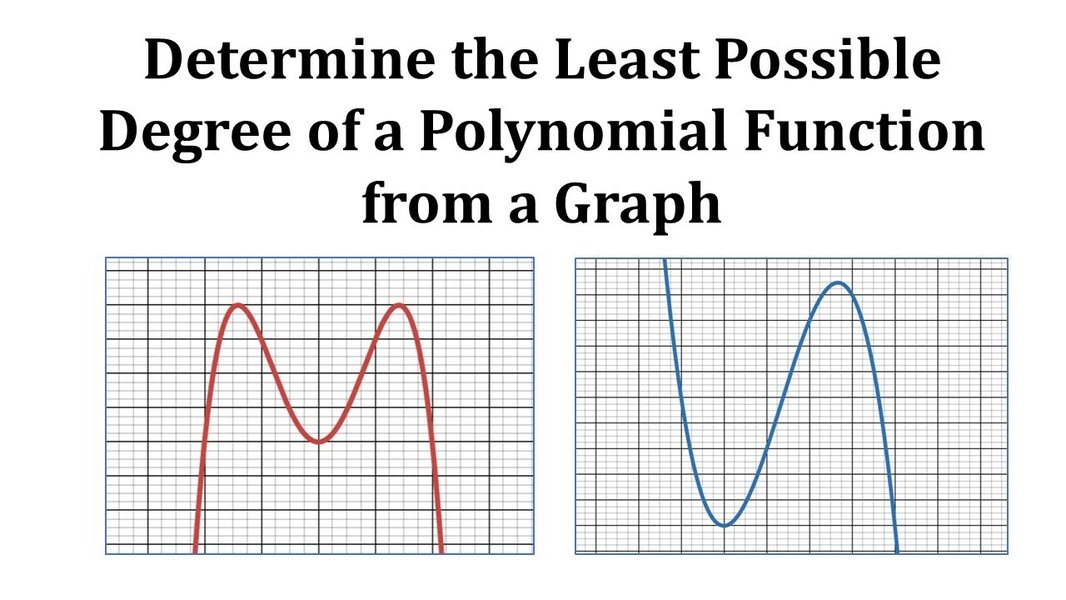
Polynomials exhibit a global structure determined by their degree. Low-degree tests verify if a function adheres to this structure, preventing malicious functions designed to cheat local checks.
Part (b): Why Rubinfeld-Sudan's Guarantees Suffice
Understanding the Guarantees
The Rubinfeld-Sudan low-degree test is a probabilistic algorithm. Given oracle access to a function \( W^*: F^m \rightarrow F \), it checks if \( W^* \) is "close" to *some* polynomial of total degree at most \( d \). Specifically, it guarantees that if \( W^* \) is \( \epsilon \)-close (meaning it differs from some degree-\(d\) polynomial \( P \) on at most an \( \epsilon \) fraction of the inputs), the test accepts with high probability. Conversely, if \( W^* \) is far (say, \( \delta \)-far for \( \delta \gg \epsilon \)) from *all* degree-\(d\) polynomials, the test rejects with high probability.
Comparing Guarantees: GKR vs. Low-Degree Test
You noted that protocols like GKR (Goldreich-Krawczyk-Ron) provide a stronger guarantee when the polynomial is computed honestly: it's an *exact* polynomial of degree \( |H|-1 \) in *each* variable (multilinear or low-degree per variable). The Rubinfeld-Sudan test provides two seemingly weaker guarantees:
- \( \epsilon \)-Closeness: It only guarantees proximity, not exactness. The function \( W^* \) might differ from the closest polynomial \( P \) on a small fraction (\( \epsilon \)) of points.
- Total Degree Bound: It only bounds the *total* degree by \( d \) (often \( d = m \cdot (|H|-1) \)), not the degree in each variable individually.
Despite these differences, the guarantees provided by the low-degree test are sufficient to ensure the soundness of the overall PCP system. Here's why:
1. Enforcing Algebraic Structure
The most crucial aspect is that the low-degree test forces the prover's function \( W^* \) to have *some* underlying algebraic structure resembling a low-degree polynomial. Even if it's only \( \epsilon \)-close, it cannot be an arbitrary, maliciously crafted function designed solely to pass local checks. Polynomials have strong structural properties; for instance, the values of a low-degree polynomial along any line are themselves determined by a univariate polynomial of the same degree. The test leverages this: by checking random lines (or other subspaces), it statistically verifies this global property. A function that is far from any low-degree polynomial will fail these checks with high probability.
2. Probabilistic Soundness and Error Bounds
PCPs operate probabilistically. Soundness doesn't require the verifier to be certain, only to reject false proofs with very high probability. The low-degree test provides exactly this kind of probabilistic guarantee. If the prover submits a function \( W^* \) that is far from any valid low-degree polynomial encoding, the test will detect this deviation and cause the verifier to reject. The \( \epsilon \)-closeness parameter quantifies the "wiggle room" allowed, and PCP constructions are designed to be robust to this small level of error. The soundness error of the PCP can be related to the error probability \( \epsilon \) of the low-degree test. If \( \epsilon \) is sufficiently small, the overall soundness remains high.
3. Sufficiency for Subsequent Checks
In many PCP constructions (including GKR implicitly), after the low-degree test confirms the function is close to a low-degree polynomial \( P \), subsequent steps (like the sum-check protocol) operate on this assumption. While \( W^* \) might not be exactly \( P \), the fact that it's \( \epsilon \)-close is often sufficient for these protocols to function correctly, perhaps with a slight increase in their own error probability, which can be managed by parameter choices (e.g., field size, repetitions). The small number of points where \( W^* \) differs from \( P \) are unlikely to derail the probabilistic checks performed later.
4. Role in Composition and Complexity
Low-degree testing is often a fundamental building block in proving major complexity results like the PCP Theorem (NP = PCP(log n, 1)). The specific guarantee of \( \epsilon \)-closeness to a polynomial of total degree \( d \) is precisely what is needed for these theoretical constructions and for composing different parts of the PCP together while controlling the overall error and verifier complexity. The total degree bound \( d \) is related to the complexity of the computation being verified and the desired efficiency of the verifier.
In essence, the low-degree test acts as a filter. It doesn't guarantee perfection, but it reliably filters out functions that lack the fundamental algebraic structure required for the PCP to work, ensuring that any function passing the test is "close enough" to a legitimate low-degree polynomial for the verifier's probabilistic checks to be meaningful and for soundness to hold.
Visualizing PCP Soundness Factors
The following chart compares key aspects of a PCP system's soundness and efficiency, contrasting scenarios with and without a low-degree test. A higher score indicates a more favorable outcome for the integrity and usability of the PCP.
This visualization underscores the dramatic impact of the low-degree test. Without it, the verifier's confidence, the soundness guarantee, and resistance to attacks plummet, rendering the PCP insecure despite potentially maintaining low query complexity. With the test, the PCP gains robust security and structural enforcement.
Guarantee Comparison Table
This table summarizes the key differences in guarantees provided by protocols like GKR (assuming honest computation) versus the Rubinfeld-Sudan low-degree test.
| Feature | GKR Protocol (Honest Computation) | Rubinfeld-Sudan Low-Degree Test |
|---|---|---|
| Nature of Guarantee | Deterministic (Exact Polynomial) | Probabilistic (Closeness to Polynomial) |
| Function Property | Is exactly a polynomial | Is \( \epsilon \)-close to a polynomial |
| Degree Constraint | Degree \( |H|-1 \) in each variable | Total degree at most \( d = m \cdot (|H|-1) \) |
| Requirement for Soundness | (Stronger than needed for general PCP soundness) | Sufficient for PCP soundness |
| Handles | Ideal theoretical computation | Potential deviations/errors, adversarial settings |
This comparison highlights that while GKR's internal computation yields a stronger structural guarantee, the LDT's probabilistic closeness guarantee is explicitly designed for the adversarial verification setting of PCPs and is adequate for ensuring soundness.
Conceptual Relationships Mindmap
This mindmap illustrates the connections between PCPs, low-degree extensions, the crucial role of low-degree tests, and their impact on soundness, especially in contrast to potential attacks.
The mindmap shows how the LDT acts as a bridge, connecting the LDE technique to the core requirement of PCP soundness by validating the structure needed for reliable verification and preventing attacks that exploit its absence.
Frequently Asked Questions (FAQ)
What exactly does "ε-close" mean in the context of low-degree testing?
A function \( W^*: F^m \rightarrow F \) is said to be \( \epsilon \)-close to a polynomial \( P \) of degree \( d \) if \( W^* \) and \( P \) agree on at least \( (1-\epsilon) \) fraction of the inputs in the domain \( F^m \). In other words, the Hamming distance (the fraction of points where they differ) between \( W^* \) and \( P \) is at most \( \epsilon \). The low-degree test aims to distinguish functions that are \( \epsilon \)-close to *some* degree-\(d\) polynomial from those that are far from *all* degree-\(d\) polynomials.
If the low-degree test only guarantees closeness, can't the prover still cheat on the few points where the function differs?
While the prover's function \( W^* \) might differ from the closest polynomial \( P \) at a small \( \epsilon \) fraction of points, PCP systems are designed with this in mind. The verifier's checks are probabilistic and typically involve querying multiple points or using techniques like the sum-check protocol which aggregate information over large parts of the domain. The small number of differing points (\( \epsilon \) fraction) is unlikely to systematically fool these checks, especially if \( \epsilon \) is small enough. The soundness error of the PCP accounts for this possibility; the verifier might incorrectly accept with a very small probability related to \( \epsilon \), but this probability can be made arbitrarily small by adjusting parameters (like field size or repetitions).
Are there other types of low-degree tests besides Rubinfeld-Sudan?
Yes, the field of low-degree testing has seen significant developments since the original Rubinfeld-Sudan test. Researchers like Arora, Sudan, Friedl, Lund, Motwani, Szegedy, Polishchuk, and Spielman have contributed various improvements and different types of tests. Some tests use planes or higher-dimensional subspaces instead of lines, potentially offering better parameters (e.g., lower query complexity, better error detection). The specific choice of test often depends on the requirements of the PCP construction it's used in, balancing factors like query complexity, proof length, and soundness error.
Why is the total degree bound d = m * (|H| - 1) relevant?
In protocols like GKR, the computation often involves polynomials derived from circuit evaluations or constraints. If a constraint involves \( m \) variables, and each variable's influence corresponds roughly to a degree of \( |H|-1 \) (where \( H \) might relate to a subgroup size or evaluation domain), the resulting polynomial representing the constraint or computation state might have a total degree bounded by the sum of degrees in each variable, which is \( m \cdot (|H|-1) \). The low-degree test needs to verify closeness to polynomials up to this specific degree \( d \) because this is the degree naturally arising from the underlying computation being checked by the PCP.
References
- MIT 6.5630 Advanced Topics in Cryptography Problem Set (2023) - MIT OCW
- Madhu Sudan’s Low-Degree Testing Notes - Harvard University
- Robust Characterizations of Polynomials with Applications to Program Testing - SIAM Journal on Computing (Rubinfeld & Sudan)
- Low Degree Testing - Introduction - MIT CSAIL
- Low degree testing in PCP theorem using bivariate polynomials - CS Theory Stack Exchange
- Improved Low-Degree Testing and its Applications - ACM Digital Library (Arora & Sudan)
Recommended Explorations
Last updated April 17, 2025