
Unlock Your Machine Learning Mastery: The Ultimate Pathway from Novice to Expert
Discover the singular, comprehensive video resource that offers unparalleled depth, practicality, and professional insights in Machine Learning.
Key Highlights for Your ML Journey
- Andrew Ng's Machine Learning Specialization: Widely acclaimed as the definitive comprehensive course, transitioning learners from foundational concepts to advanced ML applications.
- Structured Progression: This video-based specialization meticulously covers everything from supervised and unsupervised learning to neural networks, ensuring a seamless learning curve.
- Practical Application and Professional Relevance: Emphasizes hands-on exercises, real-world case studies, and industry best practices, making it highly valuable for professional development and job readiness.
Machine Learning (ML), a pivotal branch of Artificial Intelligence (AI), empowers computers to learn from data and make intelligent decisions without explicit programming. This transformative field underpins countless modern technologies, from recommendation systems to autonomous vehicles. For individuals seeking a comprehensive, professional, and practical journey into ML, spanning from beginner fundamentals to advanced expertise, the key lies in selecting a resource that combines theoretical depth with hands-on application.
While the vastness of Machine Learning might suggest the need for multiple resources, one stands out as the most cohesive and impactful "video" learning experience for a complete progression: the **Machine Learning Specialization by Stanford University on Coursera, taught by Andrew Ng.**
An introductory preview of the Machine Learning Specialization by Andrew Ng on Coursera. This video highlights the foundational concepts and structure of the course, which is acclaimed for its comprehensive coverage from beginner to advanced levels.
Why This Specialization is the Gold Standard for ML Education
This program is not merely a single video but a meticulously structured video-based specialization that functions as a unified learning experience. It is consistently lauded as the top choice for its unparalleled blend of depth, expert instruction, and practical relevance:
Unrivaled Depth: From Foundational Concepts to Advanced Algorithms
The specialization begins by firmly establishing the core principles of machine learning. Learners are introduced to essential concepts such as:
- Core Principles of Machine Learning: Understanding the nature of ML, its relationship with AI, and the process by which systems learn from data, including project setup, data preparation, modeling, and deployment.
- Types of Machine Learning: A thorough exploration of supervised learning (e.g., linear regression, logistic regression, decision trees, neural networks), unsupervised learning (e.g., clustering, dimensionality reduction, recommender systems), and semi-supervised learning approaches.
- Essential Prerequisites: A strong emphasis on Python programming, which is the industry standard for ML due to its rich ecosystem of libraries. Basic data analysis, linear algebra (particularly matrix and vector operations), and statistics are also covered as fundamental prerequisites.
- Data Handling: Comprehensive guidance on understanding dataset characteristics, preparing high-quality data, and techniques for data collection from diverse sources like databases, text, images, and web scraping.
As the course progresses, it delves into intermediate and advanced topics, ensuring a holistic understanding:
- Machine Learning Algorithms: In-depth analyses of various algorithms, their underlying mechanics, and practical implementation. This includes understanding the critical bias-variance trade-off and strategies to minimize prediction errors.
- Model Evaluation and Tuning: Best practices for evaluating and refining models, adopting a data-centric methodology to enhance performance.
- Neural Networks and Deep Learning: A deep dive into the architecture and function of neural networks, from foundational concepts to building and applying fully connected deep neural networks. It also covers key parameters in their design.
- Advanced Deep Learning Architectures: Exploration of Convolutional Neural Networks (CNNs) for image processing, Recurrent Neural Networks (RNNs) and Long Short-Term Memory (LSTM) for sequential data, and techniques like Adam, Dropout, BatchNorm, and Xavier/He initialization. Advanced topics such as Generative Adversarial Networks (GANs) and deep reinforcement learning are also introduced.
This radar chart compares the Machine Learning Specialization by Andrew Ng with a generic high-quality single video course across several critical dimensions. It visually emphasizes how the Stanford Specialization excels in providing comprehensive theoretical depth, practical implementation skills, expert instruction, and relevance for both beginners and advanced professionals. The chart highlights its balanced strength across all criteria, making it a superior choice for a complete ML learning journey.
Practicality and Professional Relevance
Beyond theoretical understanding, the specialization heavily emphasizes practical application, which is crucial for professional development:
- Hands-On Learning: The curriculum includes programming assignments using Python, real-world case studies, and projects that simulate industry scenarios. This ensures learners not only grasp concepts but can also apply ML in practical settings.
- Real-World Applications: Examples include building movie recommendation systems, spam detectors, and understanding ML's impact on social media.
- MLOps (Machine Learning Operations): Understanding the lifecycle and deployment of ML models, including key technologies like Python, Docker, and MLflow, alongside strategies for deployment and monitoring. This is vital for productionizing and optimizing AI solutions in a professional environment.
- Large Language Models (LLMs): An introduction to LLMs, covering tokens, Transformers, their architecture, and training principles, reflecting the latest advancements in AI.
- Ethical Considerations: Critical thinking about the potential ethical pitfalls of powerful ML models.
- Professional Credential: Completion of the specialization provides a verified certificate, recognized globally, which significantly enhances professional credibility.
The specialization’s structure aligns with leading professional certificates from institutions like IBM, MIT, UC Berkeley, and Google Cloud, demonstrating its commitment to job-ready skills and industry standards. It prepares learners to handle large datasets, create reusable code, and operationalize ML solutions, competencies expected of a Professional Machine Learning Engineer.
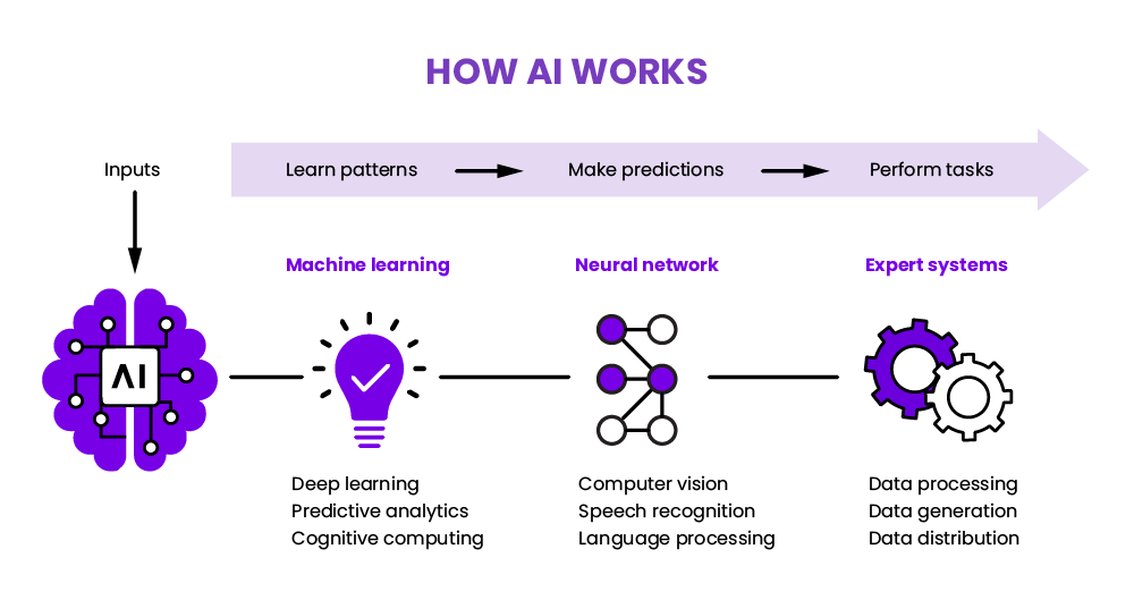
This diagram illustrates the hierarchical relationship between Artificial Intelligence (AI) as the overarching field, Machine Learning (ML) as a subset of AI, and Deep Learning (DL) as a specialized subset of ML. This visual helps contextualize the scope of topics covered in a comprehensive ML curriculum.
Expert Instruction and Program Recognition
The course is taught by Andrew Ng, a globally renowned AI expert, co-founder of Coursera, and a former Chief Scientist at Baidu. His teaching style is celebrated for its clarity, thoroughness, and practical focus, making complex topics accessible without compromising rigor. The program is a collaboration between DeepLearning.AI and Stanford Online, ensuring high-quality, up-to-date content that reflects current industry demands.
Below is a mindmap summarizing the comprehensive learning path offered by the Stanford Machine Learning Specialization:
by Andrew Ng"] Fundamentals["Foundational Concepts"] f1["What is ML & AI?"] f2["Supervised Learning Basics"] f2_1["Linear Regression"] f2_2["Logistic Regression"] f2_3["Decision Trees"] f3["Unsupervised Learning Basics"] f3_1["Clustering (K-Means)"] f3_2["Dimensionality Reduction (PCA)"] f4["Prerequisites (Python, Math, Stats)"] f5["Data Handling & Preparation"] Advanced["Advanced Topics & Deep Learning"] a1["Neural Networks"] a1_1["Architecture & Training"] a1_2["Backpropagation"] a2["Deep Learning Frameworks"] a2_1["TensorFlow"] a2_2["PyTorch"] a3["Advanced Architectures"] a3_1["CNNs"] a3_2["RNNs & LSTMs"] a3_3["GANs"] a4["Reinforcement Learning (Intro)"] a5["Large Language Models (LLMs)"] a5_1["Tokens & Transformers"] Practical["Practical Applications & Professional Skills"] p1["Model Evaluation & Tuning"] p1_1["Bias-Variance Trade-off"] p1_2["Improving Performance"] p2["Real-World Projects"] p2_1["Recommendation Systems"] p2_2["Spam Detectors"] p3["MLOps & Deployment"] p3_1["Lifecycle Management"] p3_2["Python, Docker, MLflow"] p4["Ethical Considerations"] p5["Career Readiness"] p5_1["Professional Certificate"] p5_2["Industry Best Practices"]
This mindmap visually represents the comprehensive curriculum of the Stanford Machine Learning Specialization, illustrating its structured progression from foundational concepts through advanced topics and practical professional skills. It highlights the breadth and depth of the learning journey, covering key algorithms, deep learning architectures, and real-world application techniques.
Comparison of Top Machine Learning Learning Paths
While the Stanford ML Specialization is highly recommended for its comprehensive video-based approach, it's beneficial to understand how it compares to other reputable programs. The table below outlines key aspects:
| Program/Resource | Instructor/Institution | Learning Level | Format/Duration | Key Strengths | Focus/Notes |
|---|---|---|---|---|---|
| Machine Learning Specialization | Andrew Ng (Stanford/DeepLearning.AI) | Beginner to Advanced | Video-based Specialization (Multi-course) | Comprehensive, theoretical & practical, industry-recognized, expert-led. | Gold standard for complete ML journey, strong focus on deep learning. |
| Machine Learning for Everybody – Full Course | freeCodeCamp | Beginner to Advanced | Single Video (3+ hours) | Good depth & breadth for a single video, practical Colab demos, Google-supported. | Excellent concise overview, but less extensive than a multi-course specialization. |
| IBM Machine Learning Professional Certificate | IBM (Coursera) | Beginner to Intermediate | Professional Certificate (Multiple courses) | Job-ready skills, practical focus, covers supervised/unsupervised/deep learning. | Strong for practical applications, may require more self-directed advanced theory. |
| MIT Professional Certificate Program in ML & AI | MIT | Advanced | Modular Short Courses | Deep focus on advanced topics (NLP, predictive analytics), faculty-led. | Suitable for those with existing ML foundations seeking specialized depth. |
| Google Cloud Professional Machine Learning Engineer Certification | Google Cloud | Intermediate to Advanced | Certification Path | Focus on productionizing ML models, using Google Cloud tools, large datasets. | Geared towards MLOps and cloud-based ML deployment. |
This table provides a concise comparison of the Stanford Machine Learning Specialization against other prominent ML learning resources. It highlights each program's instructor, target learning level, format, and key strengths, helping to illustrate why Andrew Ng's specialization is uniquely suited for a comprehensive beginner-to-advanced, professional, and practical learning experience in a video-centric format.
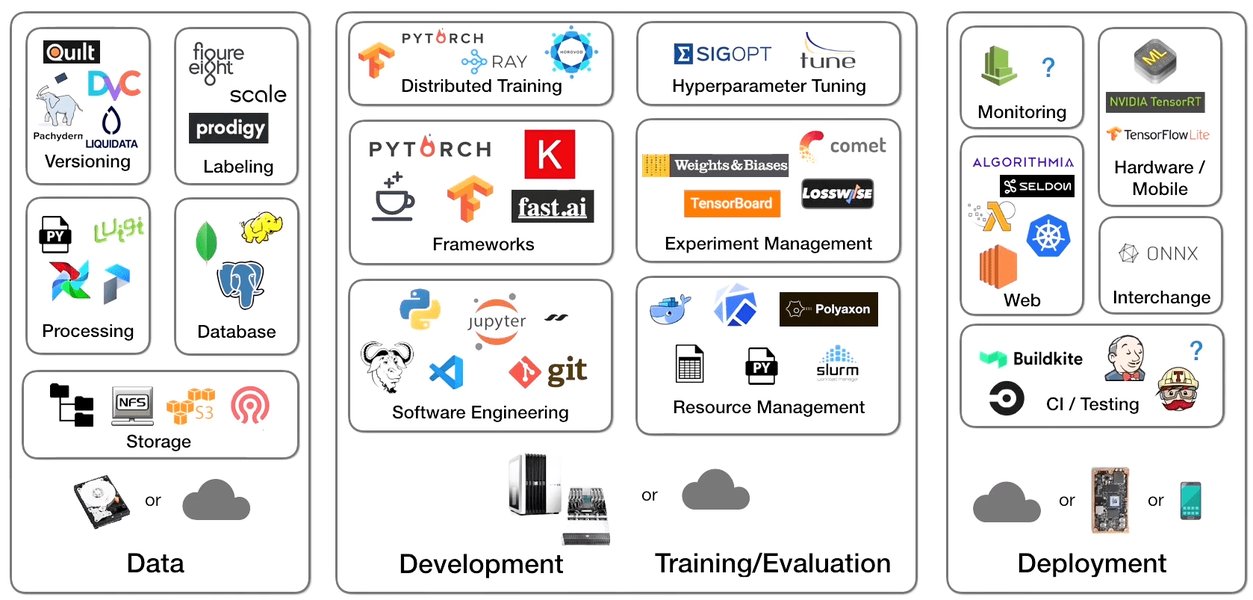
An illustration of key tools and components typically involved in a machine learning project workflow. This visual underscores the practical, tool-oriented learning aspect that is crucial for professional ML development.
Frequently Asked Questions (FAQ)
Is the Stanford Machine Learning Specialization suitable for complete beginners?
How long does it take to complete the Machine Learning Specialization?
Does the specialization include hands-on coding exercises?
Is the certificate from this specialization recognized by employers?
What is the difference between this specialization and a single long ML video on YouTube?
Conclusion
For anyone aspiring to achieve a professional, advanced, and highly practical understanding of Machine Learning from a beginner's starting point, the **Machine Learning Specialization by Stanford University on Coursera, taught by Andrew Ng**, stands as the preeminent video-based learning resource. Its meticulously crafted curriculum, led by a world-renowned expert, bridges the gap between complex theoretical concepts and real-world application, ensuring a comprehensive and deeply enriching educational journey. This specialization not only imparts critical knowledge and skills but also equips learners with a highly recognized credential, paving the way for successful careers in the dynamic field of Machine Learning.
Recommended Further Exploration
- Explore DeepLearning.AI specializations for advanced AI topics and cutting-edge research.
- Discover MLOps best practices and essential tools for deploying and managing ML models in production.
- Examine the ethical implications of artificial intelligence and machine learning in real-world applications.
- Find engaging practical machine learning projects for beginners to apply foundational concepts.