
Mathematical Algorithm for Nuclear Fusion
A Comprehensive Framework to Simulate and Optimize Controlled Fusion Reactions
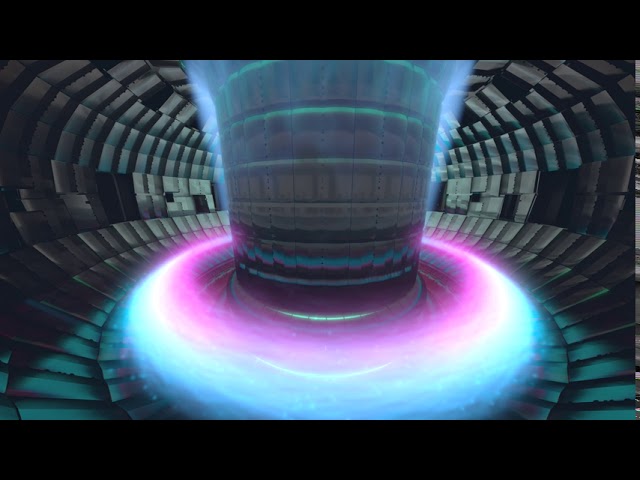
Key Takeaways
- Plasma Confinement: Critical for maintaining the extreme conditions necessary for fusion.
- Fusion Reaction Rates: Governed by complex interactions and calculated using advanced mathematical models.
- Energy Balance and Optimization: Ensuring net positive energy output through precise control and optimization algorithms.
1. Understanding the Physics of Fusion
Fundamental Principles
Nuclear fusion is the process where two light atomic nuclei combine to form a heavier nucleus, releasing a substantial amount of energy. This is the same reaction that powers stars, including our sun. The most commonly studied fusion reaction for energy production is the deuterium-tritium (D-T) reaction:
D + T → He-4 + n + 17.6 MeV
This reaction produces helium-4, a neutron, and releases 17.6 megaelectron volts (MeV) of energy. The challenge in harnessing this energy lies in achieving the necessary conditions for fusion on Earth, specifically high temperatures and pressures to overcome the Coulomb barrier—the repulsive force between positively charged nuclei.
Plasma State
Fusion reactions occur in a state of matter known as plasma, which is an ionized gas consisting of free electrons and ions. Maintaining plasma stability and confinement is crucial for sustained fusion reactions. The behavior of plasma under these extreme conditions is governed by complex physical laws, primarily described by magnetohydrodynamics (MHD).
2. Mathematical Modeling of Fusion Reactions
Rate Equations and Reaction Rates
Mathematical modeling of nuclear fusion involves several key components. One of the fundamental aspects is the reaction rate, determining how often fusion reactions occur within the plasma. For the D-T reaction, the reaction rate per unit volume R is given by:
R = (n₁ n₂ ⟨σv⟩)/(1 + δ)
Where:
- n₁ and n₂ are the number densities of the two reacting species.
- ⟨σv⟩ is the fusion reactivity, representing the cross-section σ multiplied by the relative velocity v, averaged over the Maxwellian velocity distribution of the plasma particles.
- δ is a factor accounting for identical reactants to avoid double-counting reactions.
Energy Balance Equations
Energy balance is critical in determining whether a fusion reactor can achieve net positive energy output. The energy balance equation is expressed as:
P_net = P_fusion – P_losses
Where:
- P_fusion is the power generated from fusion reactions.
- P_losses encompasses all forms of energy losses, including radiation, conduction, and convection.
For successful fusion energy generation, P_net must be greater than zero, indicating that energy produced exceeds energy consumed.
Lawson Criterion
The Lawson Criterion is a fundamental condition that must be satisfied to achieve net energy gain from fusion. It is expressed in terms of the "triple product" of plasma density (n), temperature (T), and energy confinement time (τ):
nTτ ≥ (nTτ)_min
For the D-T reaction, the minimum triple product required is approximately:
nTτ ≈ 10²¹ keV·s/m³
Exceeding this threshold is essential for achieving ignition, where the fusion reactions become self-sustaining.
3. Plasma Physics and Magnetohydrodynamics (MHD)
MHD Equations
Plasma behavior in a fusion reactor is governed by magnetohydrodynamic (MHD) equations, which describe the dynamics of electrically conducting fluids like plasmas. The basic MHD equations include:
Continuity Equation:
\[ \frac{\partial \rho}{\partial t} + \nabla \cdot (\rho \mathbf{v}) = 0 \]
Momentum Equation:
\[ \rho \frac{D\mathbf{v}}{Dt} = -\nabla p + \mathbf{J} \times \mathbf{B} \]
Magnetic Induction Equation:
\[ \frac{\partial \mathbf{B}}{\partial t} = \nabla \times (\mathbf{v} \times \mathbf{B}) \]
Where:
- ρ is the plasma density.
- v is the plasma velocity.
- p is the plasma pressure.
- J is the current density.
- B is the magnetic field.
Plasma Confinement
Confining the plasma is paramount to achieving the necessary conditions for fusion. Two primary confinement methods are:
- Magnetic Confinement: Utilizes magnetic fields to contain the plasma, as seen in tokamak and stellarator designs.
- Inertial Confinement: Uses intense laser or particle beams to compress and heat the fuel pellet rapidly.
The Grad-Shafranov equation is pivotal in determining the magnetic field configuration necessary for stable confinement in tokamak reactors:
\[ \Delta^* \psi = -\mu_0 R^2 \frac{dp}{d\psi} - F \frac{dF}{d\psi} \]
Where:
- ψ is the poloidal flux function.
- μ₀ is the permeability of free space.
- R is the major radius of the tokamak.
- F is related to the toroidal field.
4. Numerical Simulation and Optimization
Simulation Techniques
Simulating nuclear fusion requires solving complex, coupled differential equations that describe plasma behavior, fusion reactions, and energy transfer. Numerical methods such as Particle-in-Cell (PIC) simulations and finite element analysis are commonly employed.
Particle-in-Cell (PIC) Simulations
PIC simulations model the behavior of individual particles within the plasma, tracking their interactions and fusion events. This method is essential for understanding kinetic effects and turbulence in the plasma.
Magnetohydrodynamic (MHD) Solvers
MHD solvers numerically integrate the MHD equations to predict plasma stability, confinement, and response to external magnetic fields. These solvers are critical for designing stable and efficient fusion reactors.
Optimization Algorithms
Optimizing fusion reactor design involves adjusting various parameters to maximize fusion output and ensure plasma stability. Common optimization techniques include:
- Gradient Descent: Iteratively adjusts parameters in the direction of steepest descent to find local minima in the objective function.
- Genetic Algorithms: Mimics natural selection to explore a wide parameter space and identify optimal configurations.
- Reinforcement Learning: Utilizes AI to learn optimal control strategies for maintaining plasma stability and confinement.
Quantum Computing Integration
Emerging research suggests that quantum computing could revolutionize fusion reactor simulations by accelerating the solution of complex equations and optimizing reactor designs at unprecedented speeds. Quantum algorithms can potentially model plasma behavior and optimize magnetic field configurations more efficiently than classical methods.
5. Fusion Reaction Rate Calculations
Calculating ⟨σv⟩
The fusion reactivity ⟨σv⟩ is a critical parameter that quantifies the likelihood of fusion reactions occurring in the plasma. It is calculated by integrating the cross-section σ(E) multiplied by the relative velocity v(E) over the Maxwellian energy distribution:
⟨σv⟩ = ∫₀∞ σ(E) v(E) f(E; T) dE
Where:
- E is the kinetic energy of the interacting nuclei.
- f(E; T) is the Maxwell-Boltzmann distribution at temperature T.
The cross-section σ(E) incorporates the Gamow factor, which accounts for the quantum mechanical tunneling effect necessary for nuclei to overcome the Coulomb barrier:
σ(E) ≈ S(E) exp[-√(E_G/E)] / E
Here, S(E) is the astrophysical S-factor, which varies slowly with energy, and E_G is the Gamow energy, dependent on the charges of the reacting nuclei and fundamental constants.
6. Energy Balance and the Lawson Criterion
Lawson Criterion Detailed
The Lawson Criterion provides a quantitative measure of the conditions needed for net energy gain from fusion. It is expressed as a product of plasma density (n), temperature (T), and energy confinement time (τ):
nTτ ≥ 10²¹ keV·s/m³
Meeting or exceeding this criterion ensures that the plasma produces more energy through fusion than is lost through various mechanisms. Achieving the necessary triple product is a significant challenge and is a focal point of fusion research.
Energy Loss Mechanisms
Energy losses in a fusion plasma arise from several sources:
-
Radiative Losses: Emission of photons from the plasma.
-
Conduction and Convection: Transport of energy out of the plasma through particle and heat flow.
-
Bremsstrahlung: Radiative loss due to electron-ion collisions.
Accurate modeling of these losses is essential for ensuring that the energy produced by fusion reactions exceeds the energy lost, thereby achieving a positive net energy balance.
7. Magnetic Field Configuration and Plasma Stability
Grad-Shafranov Equation
In tokamak reactors, the Grad-Shafranov equation governs the equilibrium configuration of the magnetic fields that confine the plasma:
\[ \Delta^* \psi = -\mu_0 R^2 \frac{dp}{d\psi} - F \frac{dF}{d\psi} \]
This equation relates the poloidal flux function ψ to the plasma pressure p and the function F, which is related to the toroidal magnetic field. Solving this equation is crucial for designing stable and effective magnetic confinement systems.
Stability Analysis
Plasma stability is a paramount concern in fusion reactor design. Instabilities can lead to confinement loss or even plasma disruptions. Stability analysis involves assessing the response of the plasma to perturbations and ensuring that the reactor operates within stable regimes. Techniques such as linear stability analysis and nonlinear simulations are employed to predict and mitigate instabilities.
8. Implementation Steps
Algorithmic Framework
Implementing a mathematical algorithm for nuclear fusion involves several sequential steps:
- Define Physical Conditions: Specify temperature, particle densities, confinement time, and reactor geometry.
- Specify Nuclear Reactions: Determine the fusion reactions and calculate energy yields.
- Develop Reaction Rate Equations: Formulate equations governing reaction rates and fusion reactivity.
- Model Plasma Confinement: Use MHD equations to describe plasma behavior and confinement.
- Calculate Energy Balance: Establish energy input and output, ensuring net energy gain.
- Simulate and Optimize: Employ numerical simulations and optimization algorithms to refine reactor parameters.
- Iterate and Validate: Continuously update models based on simulation results and experimental data.
Sample Pseudo-Code
# Initialize reactor parameters
temperature = initial_temperature
density_D = initial_density_D
density_T = initial_density_T
volume = reactor_volume
confinement_time = initial_tau

while simulation_time < target_time:
    # Compute Maxwellian distribution
    f_E = compute_maxwellian(temperature)

    # Evaluate fusion reactivity
    sigma_v = integrate_sigma_v(f_E, temperature)

    # Calculate reaction rate
    R = (density_D * density_T * sigma_v) / (1 + delta)

    # Compute fusion power
    P_fusion = R * Q * volume

    # Compute energy losses
    P_losses = compute_energy_losses(plasma_parameters)

    # Update energy balance
    delta_E = (P_fusion - P_losses) * delta_t

    # Update plasma parameters based on energy balance
    temperature, density_D, density_T = update_parameters(delta_E, plasma_parameters)

    # Check Lawson criterion
    if (density * temperature * confinement_time) >= Lawson_min:
        print("Ignition achieved!")
        break

    # Adjust confinement parameters if necessary
    adjust_confinement(plasma_parameters)

    simulation_time += delta_t

# Output results
output_results(plasma_evolution, energy_balance)
9. Optimization and Control Strategies
Reinforcement Learning for Plasma Control
Artificial intelligence, particularly reinforcement learning, has been employed to develop advanced control strategies for maintaining plasma stability. These AI-driven algorithms learn optimal control actions by interacting with plasma simulations, adjusting magnetic fields and other parameters in real-time to prevent instabilities and sustain confinement.
AI-Driven Optimization Techniques
AI and machine learning techniques are increasingly integral in optimizing fusion reactor designs. These methods can rapidly explore vast parameter spaces, identify optimal configurations, and predict plasma behavior under various conditions, significantly enhancing the efficiency of the fusion research and development process.
10. Challenges and Caveats
Complexity of Physical Models
Modeling nuclear fusion is inherently complex due to the multitude of interacting physical processes. Accurately capturing plasma dynamics, reaction rates, and energy transfers requires sophisticated mathematical models and significant computational resources.
Computational Demands
Simulating fusion reactors involves solving highly nonlinear, coupled differential equations. This necessitates the use of advanced numerical methods and high-performance computing resources to achieve realistic and accurate simulations within reasonable timeframes.
Stability and Confinement
Maintaining plasma stability and effective confinement over extended periods remains a significant challenge. Instabilities can lead to energy losses and reactor shutdowns, requiring continuous advancements in control algorithms and reactor design.
Integration of Quantum Computing
While promising, the integration of quantum computing into fusion simulations is still in its nascent stages. Developing quantum algorithms that can effectively model plasma behavior and optimize reactor parameters remains an ongoing area of research.
Conclusion
Creating a mathematical algorithm for nuclear fusion involves a multifaceted approach that integrates fundamental physics, complex mathematical modeling, advanced numerical simulations, and cutting-edge optimization techniques. Achieving controlled fusion energy requires meticulous balancing of plasma conditions, precise control of reaction rates, and effective confinement strategies. Continuous advancements in computational methods and AI-driven optimization are pivotal in overcoming the inherent challenges of fusion research, paving the way toward sustainable and abundant fusion energy.
References
Last updated February 10, 2025