
Understanding the Sun's Warmth: How Earth Receives Heat from a Distant Star
Unveiling the Mechanisms Behind Solar Heat Transfer
Key Takeaways
- Vast Energy Output: The Sun's immense energy production through nuclear fusion ensures that even at great distances, Earth receives sufficient warmth.
- Radiative Heat Transfer: Heat travels through space via electromagnetic radiation, primarily visible and infrared light, allowing warmth to reach Earth without a medium.
- Atmospheric Interaction: Earth's atmosphere plays a crucial role in absorbing, reflecting, and regulating the Sun's energy, maintaining the planet's temperature balance.
The Sun's Immense Energy Output
The Sun serves as the primary energy source for Earth, emitting an extraordinary amount of energy generated through nuclear fusion occurring in its core. This process involves hydrogen nuclei merging to form helium, releasing energy in the form of photons and other radiation. The Sun's energy output is estimated at approximately 3.8 x 10²⁶ watts, a figure so vast that even when this energy disperses across the 93 million miles (150 million kilometers) separating the Sun from Earth, it remains substantial enough to sustain life and provide noticeable warmth.
Nuclear Fusion: The Core of Solar Energy Production
Nuclear fusion in the Sun's core is the powerhouse behind its energy emission. Under immense pressure and temperature conditions (~15 million°C), hydrogen atoms fuse into helium, releasing energy through the conversion of mass into energy as described by Einstein's equation, E=mc². This energy manifests primarily as electromagnetic radiation, which includes visible light, ultraviolet light, and infrared radiation.
Radiative Heat Transfer Through Space
Heat from the Sun reaches Earth through a process known as radiative heat transfer. Unlike conduction or convection, radiation does not require a medium and can traverse the vacuum of space. The electromagnetic waves emitted by the Sun travel at the speed of light (~300,000 km/s), reaching Earth in approximately 8 minutes and 20 seconds. The primary forms of this radiation that contribute to Earth's warmth are:
Visible and Infrared Radiation
Visible light makes up a significant portion of the Sun's emitted radiation, providing the energy necessary for photosynthesis and sustaining life. Infrared radiation, although not visible to the human eye, is perceived as heat. When infrared photons strike Earth's surface, they transfer energy, increasing the vibrational motion of molecules, which we feel as warmth.
Ultraviolet Radiation
While ultraviolet (UV) radiation contributes to the Sun's energy output, it plays a different role in our interaction with solar energy. Although UV rays are responsible for causing sunburn and can have harmful effects, they also contribute to the synthesis of Vitamin D in human skin. Importantly, the Earth's atmosphere filters a significant portion of UV radiation, protecting living organisms from its potentially damaging effects.
The Inverse-Square Law and Solar Intensity
The concept of the inverse-square law is fundamental in understanding why the intensity of the Sun's radiation decreases with distance. According to this law, the intensity of radiation diminishes proportionally to the square of the distance from the source. Mathematically, this can be expressed as:
$$ I = \frac{P}{4\pi d^2} $$
Where:
-
I = Intensity of radiation
-
P = Power output of the source
-
d = Distance from the source
Despite the significant reduction in intensity over vast distances, the Sun's colossal energy output ensures that Earth still receives approximately 1,360 watts per square meter of solar energy at the top of its atmosphere, known as the solar constant. This amount of energy is sufficient to maintain Earth's average temperatures and support vital processes such as the water cycle and photosynthesis.
Atmospheric Interaction and the Greenhouse Effect
Upon reaching Earth, the Sun's radiation interacts with the atmosphere and the planet's surface in several ways:
Reflection and Albedo
Approximately 30% of incoming solar radiation is reflected back into space by clouds, aerosols, and reflective surfaces such as ice and snow. This reflective property, known as albedo, plays a critical role in regulating Earth's temperature by determining how much solar energy is absorbed versus reflected.
Absorption by the Earth's Surface and Atmosphere
The remaining 70% of solar radiation is absorbed by Earth's surface, oceans, and atmosphere. This absorbed energy is converted into heat, warming the planet. Surfaces like land and water have varying capacities to absorb and retain heat, influencing local and global climate patterns.
The Greenhouse Effect
The Earth maintains its temperature through the greenhouse effect, a natural process where certain gases in the atmosphere, such as carbon dioxide (CO₂), methane (CH₄), and water vapor (H₂O), trap heat by absorbing and re-radiating infrared radiation. This mechanism prevents excessive heat loss into space, thereby sustaining a stable and habitable climate. Human activities, however, have intensified the greenhouse effect, leading to global warming and climate change.
Perception of Warmth: From Radiation to Sensation
When solar radiation reaches human skin, the infrared component plays a direct role in the sensation of warmth:
Energy Absorption and Molecular Vibration
Infrared photons transfer energy to skin molecules, increasing their vibrational motion. This molecular motion is perceived by the nervous system as heat. The efficiency of this energy transfer is influenced by factors such as skin pigmentation, moisture levels, and the presence of sunscreen or other barriers.
Variability in Perceived Warmth
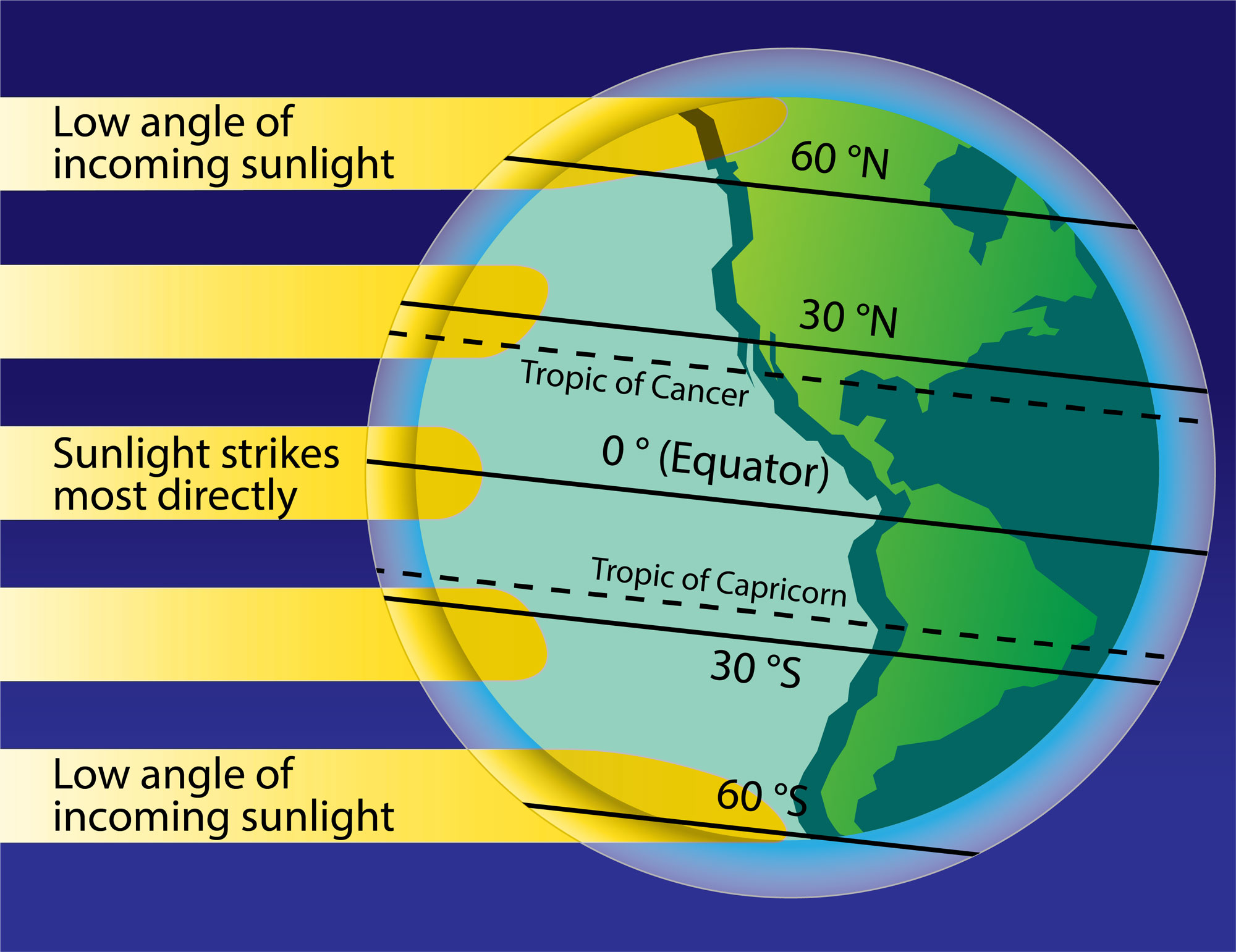
Environmental factors, including altitude, atmospheric conditions, and the angle of sunlight, affect how much solar radiation is absorbed and, consequently, how warm it feels. For instance, sunlight is more intense at noon when the Sun is directly overhead, leading to a higher perception of warmth compared to early morning or late afternoon when the Sun's rays strike at a more oblique angle.
Supporting Life: The Balance of Solar Energy
The delicate balance of solar energy intake and Earth's energy output is crucial for sustaining life:
Energy Balance
Earth maintains an energy balance where the incoming solar radiation is approximately equal to the outgoing infrared radiation. This equilibrium ensures that global temperatures remain relatively stable over long periods. Disruptions to this balance, such as increased greenhouse gas emissions, can lead to climate instability and adverse environmental effects.
Photosynthesis and Ecosystems
Sunlight is essential for photosynthesis, the process by which plants convert light energy into chemical energy, producing oxygen and organic compounds that form the foundation of food webs. The availability of solar energy directly influences ecosystem productivity, biodiversity, and the distribution of life on Earth.
Weather and Climate Systems
Solar energy drives weather patterns and climate systems by creating temperature gradients between the equator and the poles. These gradients result in atmospheric circulation, ocean currents, and the formation of diverse climatic zones. Understanding the interplay between solar radiation and Earth's systems is fundamental to predicting and mitigating the impacts of climate change.
Technological Applications Harnessing Solar Energy
Human ingenuity has leveraged the principles of solar energy transfer for various technological applications:
Solar Panels and Photovoltaic Cells
Solar panels use photovoltaic cells to convert sunlight directly into electricity. These cells absorb photons from visible light, initiating the flow of electrons and generating an electric current. Advancements in photovoltaic technology have increased efficiency, making solar energy a viable renewable energy source for reducing reliance on fossil fuels.
Solar Thermal Energy
Solar thermal systems capture and concentrate sunlight to produce heat, which can be used for space heating, water heating, or generating electricity through steam turbines. These systems are particularly effective in regions with high solar irradiance and can significantly reduce greenhouse gas emissions when integrated into energy infrastructure.
Passive Solar Design
Architectural designs that incorporate passive solar principles utilize building orientation, materials, and structural elements to maximize natural heating and lighting. Features such as large windows, thermal mass, and shading devices optimize the use of sunlight, enhancing energy efficiency and indoor comfort without relying on mechanical systems.
Conclusion
The ability to feel warmth from the Sun, despite its immense distance from Earth, is a testament to the Sun's extraordinary energy output and the efficiency of radiative heat transfer. The interplay between solar radiation and Earth's atmosphere not only sustains life by maintaining habitable temperatures but also drives essential ecological and climatic processes. Understanding these mechanisms underscores the importance of responsible stewardship of our planet's energy balance, especially in the face of anthropogenic climate change. As we harness solar energy through advanced technologies, we continue to rely on the fundamental principles that allow the Sun to warm our world from billions of miles away.
References
Last updated January 26, 2025