
Top Classical Mechanics Textbooks for High School
Essential Resources to Build Solid Foundations in Mechanics
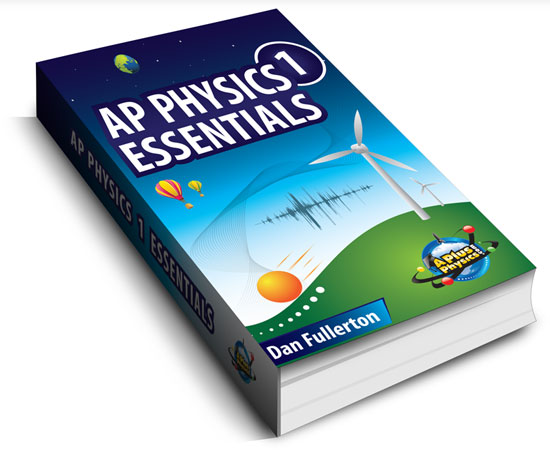
Key Highlights
- Comprehensive Foundations: Recommended texts build fundamental concepts in motion, forces, and energy.
- Problem-Solving Focus: Many of these textbooks include abundant exercises and real-world applications.
- Diverse Approaches: Options range from detailed treatments for advanced students to concise introductions for beginners.
Overview of Recommended Textbooks
Classical mechanics forms the bedrock of physics and provides insights into how objects move under the influence of forces. For high school students exploring this field, textbooks must strike a balance between clarity, depth, and practice opportunities. The recommended texts presented here encompass a range of approaches—from those that provide comprehensive foundations with numerous examples, to texts that introduce more advanced topics like Lagrangian and Hamiltonian frameworks. Below, we delve into some of the most highly regarded textbooks that have proven effective for high school learners wishing to develop a strong grounding in classical mechanics.
Principles of Physics by Halliday, Resnick, and Walker
Overview
This textbook is often heralded as one of the best starting points for high school students beginning their journey into physics. Its structure provides a logical progression from basic measurements and kinematics to more advanced concepts, ensuring that students build their understanding incrementally. The book is replete with real-world examples and illustrations that relate abstract concepts to everyday scenarios.
Key Features
- Clear Exposition: Concepts are explained in an approachable manner with plenty of diagrams and step-by-step explanations.
- Substantial Problem Sets: Numerous exercises help reinforce understanding and enhance problem-solving skills.
- Real World Applications: Examples integrate theory with phenomena observed in everyday life.
Classical Mechanics by John R. Taylor
Overview
John Taylor's textbook is another invaluable resource for high school students interested in delving deeper into the subject of classical mechanics. Known for its lucidity and systematic structure, the book tackles Newtonian physics with precision, making topics such as energy conservation and force dynamics more accessible.
Key Features
- Structured Approach: The textbook methodically covers fundamental topics, ensuring clarity and comprehension at every stage.
- Enhanced Problem-Solving: A large volume of practice problems encourages deep engagement with the material.
- Accessible Style: The explanations cater to both high school learners and students transitioning to college-level physics.
Introduction to Classical Mechanics by David Morin
Overview
This text is designed for those ready to face more challenging problems and delve into a richer analysis of mechanics. While it might pose a challenge to beginners, it offers extensive examples and exercises that are extremely beneficial for those aiming to develop a rigorous understanding. In addition, the book is a favorite among students aspiring to compete in physics Olympiads or prep for advanced studies.
Key Features
- Diverse Problem Set: A wide array of challenging questions that promote higher-order thinking and complete mastery of topics.
- Conceptual Depth: Detailed derivations and explanations of kinematics, dynamics, and rotational motion.
- Excellent resource for students preparing for competitive exams and advanced college-level courses.
Physics for Scientists and Engineers by Jewett & Serway
Overview
Though typically used at the college level, this textbook’s comprehensive treatment of classical mechanics makes it appealing for high school students demonstrating advanced interest in physics. Its clear structure and presentation of topics such as Newton's laws, energy, and momentum provide a smooth transition to more rigorous academic studies.
Key Features
- Comprehensive Content: Covers basic to advanced topics in classical mechanics, making it suitable for students who want to explore beyond the basics.
- Application-Oriented: Includes numerous real-life examples and problems emphasizing practical applications of theoretical principles.
- Pedagogical Tools: Abundant illustrations, charts, and problem sets that facilitate visual learning and analytical thinking.
Additional Resources
There are other excellent choices such as textbooks specifically tailored to high school curricula which emphasize the basics of Newtonian mechanics. These offerings are rich with fundamental constants, experimental demonstrations, and practical laboratory exercises. Students and educators are encouraged to explore these texts to match the learning style and progression rate desired within their classroom or personal study plan.
Comprehensive Comparison Table
| Textbook Title | Primary Focus | Target Audience | Key Strength |
|---|---|---|---|
| Principles of Physics | Fundamental physics concepts and real-world applications | High school and introductory college students | Clear exposition with extensive problem sets |
| Classical Mechanics (John R. Taylor) | Newtonian mechanics with systematic analysis | Advanced high school and early college students | Structured approach and clarity in explanations |
| Introduction to Classical Mechanics | In-depth examination of kinematics, dynamics, and rotational motion | Advanced high school students and Olympiad preparation | Challenging problems and rigorous derivations |
| Physics for Scientists and Engineers | Comprehensive coverage from basic mechanics to advanced topics | Motivated high school learners and college-bound students | Bridges the gap between high school and college-level physics |
In-Depth Analysis of Key Topics
Fundamentals of Motion
Kinematics and Dynamics
Understanding the basics of kinematics is essential as students learn to analyze motion through displacement, velocity, and acceleration. Textbooks like "Principles of Physics" integrate these concepts early on with clear examples and diagrams. Dynamics is then introduced by applying Newton’s laws of motion—particularly discussing the interplay between force, mass, and acceleration. This forms the cornerstone for exploring energy conservation and momentum, topics covered in almost all recommended texts.
Energy and Conservation Laws
Energy Conservation Principles
Several textbooks emphasize the role of energy in classical mechanics. In these texts, energy conservation is explained through practical examples, demonstrating how kinetic and potential energy interchange in isolated systems. This principle of conservation is not only academically significant but also crucial in solving practical mechanics problems. The rigorous treatment in texts such as "Physics for Scientists and Engineers" details these concepts with numerous exercises, ensuring students understand energy dynamics in both theoretical and applied contexts.
Advanced Concepts: Lagrangian and Hamiltonian Mechanics
Exploring Beyond Basics
While high school curricula often focus solely on Newtonian mechanics, some texts offer an introduction to more advanced areas like Lagrangian and Hamiltonian mechanics. Books such as John Taylor's and even David Morin’s work provide an accessible entry point into these methods. They introduce students to the concept of reformulating dynamic problems in terms of energy functions rather than forces directly. This analytical approach deepens a student’s understanding and prepares them for higher studies in physics.
Pedagogical Approaches and Learning Strategies
The textbooks recommended above not only present content but also foster learning through thoughtful pedagogy. Their strengths lie in:
Step-by-Step Explanations
Each resource methodically builds upon prior knowledge. Starting from basic principles, these texts gradually introduce more complex topics, ensuring that learners develop an integrated understanding of mechanics.
Diverse Problem Sets
Practice is essential in physics, and the challenging problems provided encourage students to apply theoretical knowledge to practical situations. This approach is especially valuable in textbooks like "Introduction to Classical Mechanics," where complex derivations and problem-solving exercises are charted out extensively.
Real-World Applications
Many of the selected texts incorporate examples from everyday life or engineering scenarios, providing context that makes abstract concepts more tangible. Whether it is analyzing the motion of projectiles or understanding energy transfer in mechanical systems, these resources make learning interactive and relevant.
Interactive Tools and Further Reading
To complement textbook learning, students can use interactive simulations and online resources. Tools such as computer simulations, online problem sets, and interactive labs can deeply enhance the understanding of classical mechanics. Combining textbook reading with digital resources can lead to a more dynamic and engaging learning experience.
References
- A Good High School Level Physics Book - Physics StackExchange
- Good Book for Classical Mechanics - Reddit
- Best Classical Mechanics Books for You - Physics Read
- Good Books on Classical Mechanics - Quora
- Classical Mechanics Resources - Profound Physics
Recommended Explorations

Last updated March 13, 2025