
Unlock Exponential Growth: Your Play-to-Earn App's Meta Ads Scaling Blueprint
Leverage rapid creative testing and smart audience segmentation on a £4k budget to dominate user acquisition for your casual game.
Scaling user acquisition (UA) for a casual play-to-earn (P2E) gaming app on Meta Ads requires a methodical approach, especially with a defined budget like £4,000 per month. Your initial thoughts on separating cold and warm campaigns, segmenting audiences, and prioritizing creative testing are spot on. This blueprint provides a comprehensive methodology, integrating best practices and insights, to help you implement rapid creative testing at scale and effectively grow your player base.
Key Highlights for Scaling Success
- Structured Campaign Segregation: Implement distinct campaigns for Cold Audiences (new users) and Warm Audiences (re-engagement) to tailor messaging and optimize budget allocation effectively.
- Rapid Creative Iteration Engine: Systematically test a high volume of diverse ad creatives (video, playable, static, carousel) using Meta's tools like Dynamic Creative to quickly identify winning formats and messages.
- Data-Driven Budget Allocation & Scaling: Start with controlled testing budgets, monitor key performance indicators (KPIs) closely, and incrementally scale spending on proven performers (winning creatives and audiences) to maximize Return on Ad Spend (ROAS).
Building Your Meta Ads Foundation: Campaign Structure
A solid campaign structure is the bedrock of scalable UA. Separating campaigns based on audience temperature allows for tailored messaging and efficient budget management.
Cold Audience Campaigns: Reaching New Players
These campaigns target users unfamiliar with your app. The primary goal is to drive awareness and initial installs.
Campaign Objectives
Focus on Meta's objectives like "App Installs" to maximize downloads or "Conversions" (linked to specific in-app events tracked via SDK) if you have sufficient data for optimization.
Budget Allocation
Allocate the majority of your budget here, typically around 60-70% (£2,400 - £2,800/month), as this is your primary engine for new user growth.
Targeting Strategies
Utilize a mix of broad and specific targeting options:
- Interest-Based Targeting: Target interests related to "casual games," "puzzle games," "word games," "play-to-earn," "cryptocurrency," "mobile gaming," or even competitor apps. Start broad and refine based on performance.
- Lookalike Audiences (LALs): Create LALs based on your existing high-value users (e.g., top spenders, highly retained players, players reaching key P2E milestones). Test various percentages (1%, 1-3%, 3-5%, 5-10%) in different regions (e.g., UK, US, or other relevant English-speaking countries).
- Demographic Targeting: Define age ranges (e.g., 18-45), genders, and locations relevant to your ideal player profile.
- Broad Targeting (Advantage+): Consider testing Meta's Advantage+ App Campaigns, which leverage machine learning to find users likely to install and engage, often requiring less manual segmentation initially.
Warm Audience Campaigns: Re-Engaging and Converting
These campaigns target users who have previously interacted with your app or brand. The goal is re-engagement, driving specific actions, or converting lapsed users.
Campaign Objectives
Use objectives like "Engagement" or "Conversions" focused on actions like app re-opens, completing tutorials, or making initial P2E actions.
Budget Allocation
Allocate the remaining 30-40% (£1,200 - £1,600/month) to warm audiences. These users often have higher conversion rates and contribute significantly to ROAS.
Targeting Strategies
Leverage custom audiences built from your first-party data:
- App Activity Audiences: Target users who installed but didn't complete onboarding, haven't opened the app recently (e.g., last 7, 14, 30 days), or reached specific levels but stopped playing.
- Engagement Audiences: Target users who interacted with your Facebook Page or Instagram Profile, or viewed a significant portion of your video ads.
- Website Visitors: If you have a website/landing page, retarget visitors using the Meta Pixel.
- Custom Lists: Upload lists of registered users (ensure GDPR/privacy compliance) to create custom audiences for targeted messaging.
Precision Targeting: Audience Segmentation
Within your cold and warm campaigns, further segmenting audiences allows for more personalized creatives and efficient spending. Don't over-segment initially, especially with a £4k budget. Start with 3-5 distinct audience segments per campaign type (Cold/Warm).
Segmenting Cold Audiences
Test different hypotheses about who your ideal player is:
- Segment 1: Broad Casual Gamers (Interests: Casual Games, Mobile Games | Age: 18-45)
- Segment 2: P2E/Crypto Enthusiasts (Interests: Play-to-Earn, Cryptocurrency, NFTs | Age: 21-50)
- Segment 3: High-Value Lookalikes (1-3% LAL based on payers or high retention users | Target Geos)
- Segment 4: Competitor App Users (Interests: Specific competitor game titles | Age/Geo relevant)
- Segment 5: Specific Genre Fans (Interests: Word Games, Puzzle Games | Age/Geo relevant)
Segmenting Warm Audiences
Tailor messages based on past behaviour:
- Segment 1: Recent Installers - No Action (Installed last 7 days, 0 sessions completed - Offer tutorial incentive)
- Segment 2: Lapsed Players (Active 14-30 days ago, inactive since - Highlight new features/rewards)
- Segment 3: Video Viewers (Viewed >50% of key ad videos - Drive install/re-engagement)
- Segment 4: Engaged Non-Players (Engaged with Page/IG, no install - Showcase gameplay/P2E benefits)
Continuously monitor Cost Per Install (CPI), ROAS, retention rates, and in-app P2E activity per segment. Reallocate budget towards the segments demonstrating the highest potential and quality.
The Engine of Growth: Rapid Creative Testing Methodology
Identifying winning ad creatives quickly is crucial for efficient scaling. This requires a systematic process to test numerous variations against your target audiences.
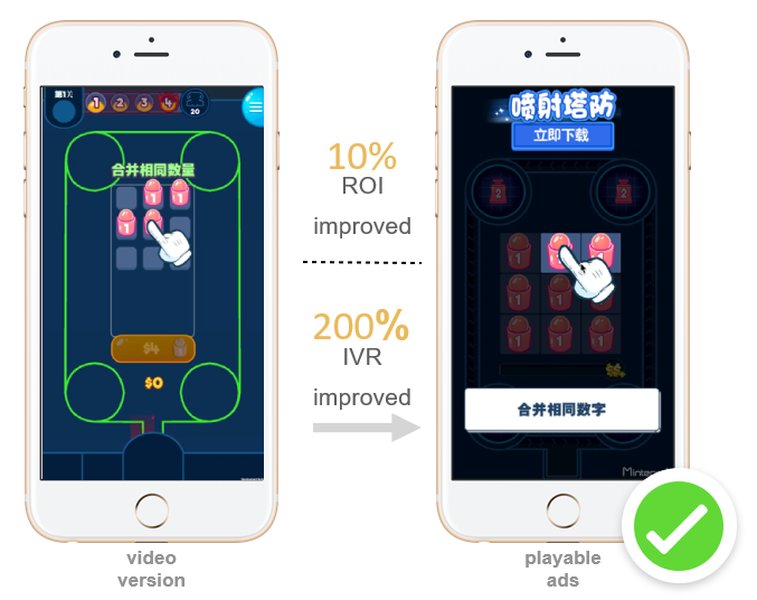
Visualizing creative strategy components for effective User Acquisition.
Step 1: Creative Concept Development & Volume
Don't limit yourself. Aim to generate a substantial pool of diverse creatives (start with 10-20 concepts, leading to many variations).
Creative Formats:
- Video Ads: Showcase actual gameplay, highlight the P2E mechanics (earning rewards), user testimonials, quick tutorials, or cinematic trailers. Test different lengths (15s, 30s, 60s).
- Playable Ads: Offer short, interactive demos of your core gameplay loop. Highly engaging for gamers.
- Static Image Ads: Clear, bold visuals focusing on unique selling points (e.g., "Play & Earn Crypto," "Relaxing Word Puzzles with Rewards").
- Carousel Ads: Showcase multiple features, characters, reward types, or gameplay aspects in a single ad unit.
- Story Ads: Vertically optimized video or image ads for Instagram/Facebook Stories.
Creative Angles:
- Focus on the "Play" aspect (fun, relaxing, challenging).
- Focus on the "Earn" aspect (rewards, value, crypto, prizes).
- Highlight community or social features.
- Showcase unique game mechanics or art style.
- Use urgency or limited-time offers (e.g., bonus starting rewards).
Copy Variations:
For each visual concept, write 3-5 variations of headlines and primary text, testing different hooks, calls-to-action (CTAs like "Install Now," "Play & Earn," "Get Rewards"), and benefit statements.
Step 2: Structuring Your Tests
Use Meta's tools to manage testing efficiently.
Ad Set Level Testing:
Within a campaign targeting a specific audience segment, create multiple ad sets. Each ad set can test a specific creative theme or a small group of related creatives. This allows clear performance comparison at the creative level.
Dynamic Creative Optimization (DCO):
Highly recommended. Upload multiple creative assets (images, videos, headlines, descriptions, CTAs) into a single ad. Meta's algorithm will automatically mix and match these elements to find the best-performing combinations for different users within your audience. This significantly accelerates multivariate testing.
A/B Testing Feature:
Use Meta's built-in A/B testing tool for more controlled experiments, such as comparing two distinct creative concepts, audience segments, or campaign objectives head-to-head.
Step 3: Launch, Monitor, and Analyze
Initial Budget & Duration:
Allocate a specific portion of your budget for testing (e.g., 10-20% or £400-£800/month initially, as suggested in Answer C's range but adjusted for lower total budget). Alternatively, use small daily budgets per test ad set (e.g., £5-£10 as suggested in Answer B) to gather initial data without significant risk. Run tests for a minimum of 3-7 days to gather statistically relevant data, depending on impression volume.
Key Performance Indicators (KPIs):
Track diligently:
- Click-Through Rate (CTR): Initial indicator of ad relevance/appeal.
- Install Rate (IPM - Installs Per Mille/Thousand Impressions): Efficiency of driving installs from impressions.
- Cost Per Install (CPI): Core acquisition cost metric. Aim for benchmarks relevant to casual/P2E games (e.g., strive for under £3 as mentioned in C, but monitor your specific results).
- Conversion Rate (CVR): Post-install actions (e.g., tutorial completion, first P2E action).
- Return on Ad Spend (ROAS): Crucial for P2E; track revenue generated (ad revenue, IAPs, token value if applicable) vs. ad spend.
- Retention Rate (Day 1, Day 7, Day 30): Quality of users acquired.
Analysis Cycle:
Review performance data frequently (daily or every 48 hours during active tests). Identify:
- Winners: Creatives/combinations with strong KPIs (low CPI, high CTR/CVR/ROAS/Retention).
- Losers: Creatives performing significantly below average. Be quick to pause these to conserve budget.
- Trends: Which formats, angles, or visual styles resonate most?
Step 4: Iterate and Scale
Iterate:
Use insights from winning creatives to develop new variations. If gameplay videos perform well, create more variations focusing on different aspects of gameplay. If the "Earn" angle drives conversions, test more specific reward messaging.
Scale Winners:
Once a creative or DCO setup proves successful (e.g., stable CPI, positive ROAS), gradually increase its budget. A common approach is to increase the budget by 20-50% every 2-3 days as long as performance holds. You can also duplicate the winning ad/ad set into new campaigns or target broader audiences (e.g., larger LAL percentages).
Refresh Creatives:
Ad fatigue is real. Plan to refresh your creative pool regularly (e.g., introduce new concepts and test variations every 2-4 weeks) to maintain performance.
Visualizing Creative Performance Potential
Understanding the potential strengths and weaknesses of different ad formats can guide your testing priorities. The radar chart below offers a hypothetical comparison based on common industry observations for mobile game advertising. Actual performance will vary based on your specific game, execution, and audience.
This chart suggests playable ads might excel in CTR and in-app conversions, while gameplay videos could offer strong ROAS potential and scalability. Static images might yield lower CPIs. Use this as a starting point for hypotheses, but let your own data guide decisions.
Structuring Your Scaling Strategy: A Mindmap Overview
To keep the various components organized, consider this mindmap outlining the core pillars of your Meta Ads scaling strategy for your P2E app.
This mindmap provides a visual checklist for the key areas to focus on as you build and scale your campaigns.
Rapid Creative Testing Framework Summary
This table summarizes the iterative process for testing and scaling your creatives effectively within your budget.
| Phase | Actions | Budget Focus | Timeline | Key Metrics |
|---|---|---|---|---|
| Discovery & Preparation | Generate large pool (10-20+ concepts) of diverse creatives (formats, angles). Prepare copy variations. Set up DCO or test ad sets. | Allocate specific test budget (e.g., £400-£800) OR use small daily budgets (£5-£10 per ad set). | Ongoing Prep | N/A |
| Initial Testing | Launch tests across key audience segments. Monitor performance closely. | Controlled test budget spend. | 3-7 days per test batch | CTR, IPM, CPI, Early CVR (e.g., tutorial complete) |
| Analysis & Decision | Analyze KPI data. Identify clear winners (high engagement, low cost) and losers (poor performance). Pause losers quickly. | N/A - Focus on data | Daily/Every 48 hours during tests | CPI, CTR, CVR, Initial Retention signals |
| Iteration | Develop new creatives based on insights from winners (e.g., double down on winning formats/angles). Replace paused losers with new tests. | Maintain test budget allocation for new variations. | Continuous cycle | Compare new variations against benchmarks |
| Scale Up Winners | Gradually increase budget (20-50% increments every 2-3 days) on winning creatives/ad sets. Potentially expand to broader audiences if performance holds. | Shift budget from testing/underperformers to scaling winners. Majority of budget here eventually. | Ongoing scaling based on performance | ROAS, Retention (D7+), LTV, CPI stability at scale |
| Refresh & Maintain | Continuously introduce new creative concepts to combat ad fatigue. Monitor scaled campaigns for performance degradation. | Sustain testing budget (~10-20%) for ongoing refresh cycles. | Every 2-4 weeks | Sustained ROAS, CPI, Volume |
Leveraging Technology: Tracking and Optimization
Accurate tracking is non-negotiable for effective optimization and scaling.
Essential Tracking Setup
- Meta SDK: Implement the Meta SDK in your app. This is crucial for tracking app installs, opens, and critical in-app events (e.g., tutorial completion, level achieved, first P2E reward claimed, in-app purchase). Configure standard and custom events relevant to your game's funnel and P2E mechanics.
- Meta Pixel: If you have a promotional website or landing page, install the Meta Pixel to track visits and conversions originating from web traffic.
- Conversion API (CAPI): Implement Meta's CAPI (server-side tracking) alongside the SDK/Pixel. This provides more reliable data tracking, especially with increasing privacy restrictions (like iOS ATT), leading to better optimization and potentially lower costs.
- Mobile Measurement Partner (MMP): Consider using an MMP (like AppsFlyer, Adjust, Singular) for unbiased, centralized attribution tracking across multiple channels, although Meta's native tools are powerful for Meta-specific campaigns.

Integrating advertising and rewards is key in the Play-to-Earn model.
Optimization Levers
- Bidding Strategies: Experiment with different bid strategies. Start with lowest cost or cost cap for installs, then potentially move to value optimization (VBO) if you have enough conversion data (especially purchase or high-value P2E events) to optimize towards users likely to generate higher lifetime value (LTV).
- Automated Rules: Set up automated rules in Meta Ads Manager to pause underperforming ads/ad sets (e.g., high CPI, low CTR) or automatically increase budgets on winners, saving manual effort.
- Platform & Placement Optimization: Let Meta's algorithm optimize placements initially (Advantage+ Placements). Review performance reports to see if specific placements (e.g., Instagram Stories, Facebook Feed) are driving significantly better results and consider adjusting manually if needed.
Insights from the Field: Scaling User Acquisition
Learning from experts who manage large-scale UA campaigns can provide valuable context. This video discusses scaling strategies often employed in the mobile gaming space, particularly relevant given the similarities between hypercasual and casual P2E UA funnels.
Expert discussion on scaling UA, drawing parallels from hypercasual game strategies.
Key takeaways often include the importance of rigorous testing, understanding cohort metrics (like retention and ROAS), diversifying channels eventually, and adapting quickly to performance data – all principles embedded in the methodology outlined above.
Frequently Asked Questions (FAQ)
How long should I run a creative test before making a decision?
Aim for at least 3-7 days per test batch. The key isn't just time, but gathering enough data (impressions, clicks, installs) for statistical significance. With a £4k/month budget, focus on getting enough impressions per creative variation (ideally thousands) rather than running tests for extended periods if performance is clearly poor early on. Monitor results daily/48hrs and be ready to pause underperformers quickly to reallocate budget efficiently.
What's a realistic Cost Per Install (CPI) goal for a casual P2E game?
CPI varies significantly based on genre, target geos (e.g., Tier 1 countries like UK/US have higher CPIs), platform (iOS vs. Android), and competition. For casual games in Tier 1 geos, CPIs can range from £1 to £5+. While aiming low (e.g., under £3) is a good starting point, the *most important* metric is achieving a positive Return on Ad Spend (ROAS). A higher CPI can be acceptable if those users have high retention and LTV due to the P2E mechanics. Focus on acquiring users who generate more value than they cost.
How often do I *really* need to refresh ad creatives?
Creative fatigue is real and impacts performance over time as audiences see the same ads repeatedly. A common best practice is to introduce new creative concepts and test new variations every 2-4 weeks. Monitor your frequency metric in Meta Ads; if it gets too high (e.g., >5-7 within a short period for the same audience), performance often dips. Continuous testing and having a pipeline of new creatives ready is key to sustained scaling.
Is £4k/month enough to implement this level of testing?
Yes, but it requires discipline. You can't test everything simultaneously. Prioritize your tests based on hypotheses with the highest potential impact. Use Meta's Dynamic Creative feature efficiently to test many combinations with less budget fragmentation than numerous separate ad sets. Start with smaller test budgets per variation (£5-£10/day) to gather initial signals before committing larger sums. Focus testing efforts on your primary cold audience campaigns first, as that's your main growth driver. It's about smart, focused testing rather than boiling the ocean.
Recommended Next Steps & Further Learning
- Explore advanced Meta Ads bidding strategies like Value Optimization for mobile games.
- Learn how to accurately calculate and track ROAS for play-to-earn apps with mixed revenue streams.
- Discover best practices and tools for creating high-converting playable ads for casual games.
- Find out how implementing Meta SDK custom events can help optimize for specific player actions in a P2E game.
References
Last updated May 5, 2025