
Understanding Molar Conductance vs. Conductance of a Cell
A Comprehensive Analysis of Electrical Conductance in Electrolyte Solutions
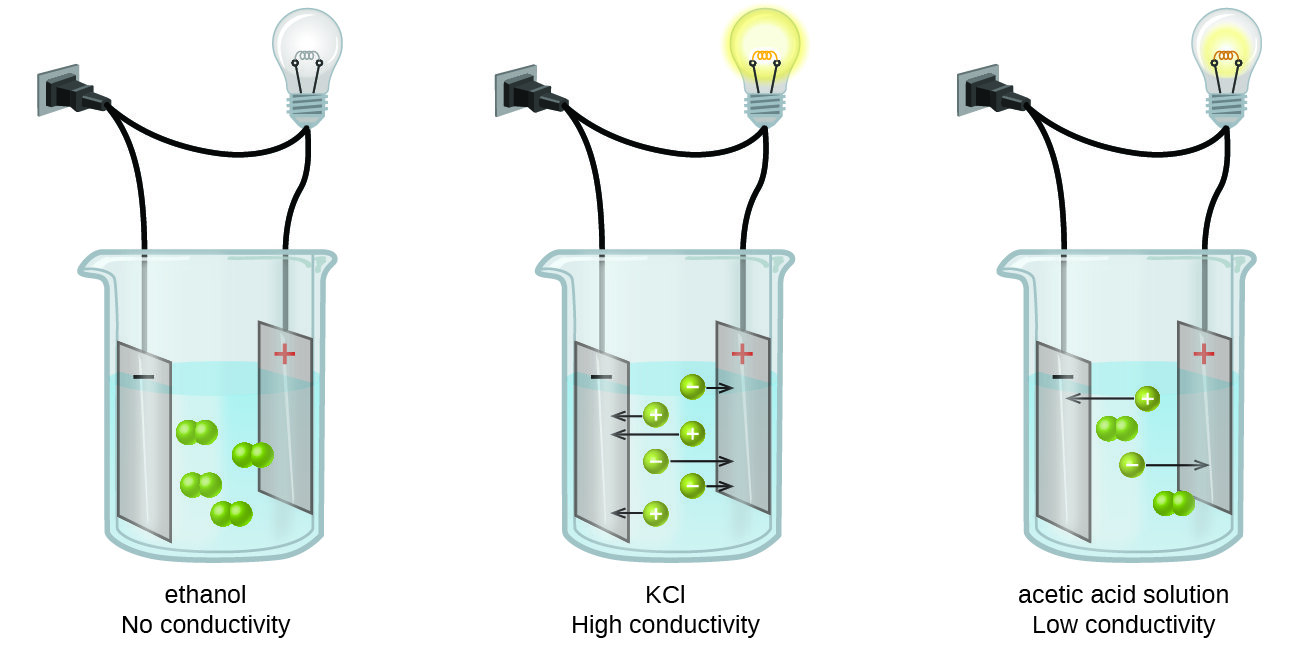
Key Takeaways
- Molar Conductance quantifies the conductance of ions per mole of electrolyte in solution, independent of experimental setup.
- Conductance of a Cell measures the actual conductance within a specific conductivity cell, influenced by its geometric configuration.
- The cell constant bridges the intrinsic properties of the solution with the physical dimensions of the measurement apparatus.
Introduction to Electrical Conductance in Electrolyte Solutions
Electrical conductance in electrolyte solutions is a fundamental concept in chemistry and electrochemistry, providing insights into the behavior of ions in various solvents. Two primary parameters used to describe this conductance are Molar Conductance (Λₘ) and Conductance of a Cell (G). While they are related, they serve distinct purposes and are derived through different methodologies.
Molar Conductance (Λₘ)
Definition and Significance
Molar Conductance is defined as the conductance of all the ions produced by the dissociation of one mole of an electrolyte in a given solution. It provides a normalized measure, allowing comparison between different electrolytes or the same electrolyte at varying concentrations.
Mathematical Expression
The formula for molar conductance is:
$$\Lambda_m = \frac{1000 \cdot \kappa}{c}$$
- κ (kappa): Specific conductance or conductivity of the solution, measured in Siemens per centimeter (S/cm). It represents the conductance of 1 cm³ of the solution.
- c: Molar concentration of the electrolyte in moles per liter (mol/L).
- The factor of 1000 is used to convert the volume from liters to cubic centimeters, ensuring that Λₘ is expressed in Siemens centimeter squared per mole (S·cm²/mol).
Physical Interpretation
Molar Conductance reflects how well the ions from one mole of electrolyte can conduct electricity in solution. It is inherently dependent on the concentration of the electrolyte; as concentration decreases, ions are more dispersed, often leading to an increase in Λₘ due to reduced ion-ion interactions.
Conductance of a Cell (G)
Definition and Measurement
Conductance of a cell refers to the actual conductance measured when an electrolyte solution is placed within a conductivity cell, which is an apparatus with defined geometry. This measurement is influenced by both the intrinsic properties of the solution and the geometric configuration of the cell.
Mathematical Expression
The formula for conductance of a cell is:
$$G = \frac{\kappa}{\text{Cell Constant}}$$
-
G: Conductance measured in Siemens (S).
-
κ (kappa): Specific conductance of the solution.
-
Cell Constant: Defined as the ratio of the distance between the electrodes (L) to the cross-sectional area of the electrodes (A), i.e., $$\text{Cell Constant} = \frac{L}{A}$$. It is expressed in centimeters inverse (cm⁻¹).
Role of the Cell Constant
The cell constant accounts for the geometry of the conductivity cell. Without it, conductance measurements would vary with different cell shapes and sizes, making comparisons infeasible. By incorporating the cell constant, G becomes a standardized measure reflecting the solution's ability to conduct electricity within a specific experimental setup.
Differences Between Molar Conductance and Conductance of a Cell
Intrinsic vs. Extrinsic Properties
Molar Conductance (Λₘ) is an intrinsic property of the electrolyte solution, independent of the measurement apparatus. It quantifies the conductance per mole of electrolyte, providing a basis for comparing different solutions or the same solution under varying conditions.
Conductance of a Cell (G), on the other hand, is an extrinsic property that depends on both the solution's conductivity and the geometric configuration of the conductivity cell. It reflects the actual conductance observed during an experiment.
Dependence on Concentration and Geometry
Molar conductance is inversely related to the concentration of the electrolyte. As concentration decreases, Λₘ increases because ions are less likely to interact and impede each other's movement.
Conductance of a cell is directly influenced by the cell's geometry. A larger cell constant (resulting from greater distance between electrodes or smaller electrode area) will reduce the measured conductance, assuming constant specific conductance of the solution.
Normalization and Standardization
Λₘ normalizes conductance to a per mole basis, facilitating comparisons across different concentrations and substances. It abstracts away from experimental variables, focusing solely on the electrolyte's behavior in solution.
G requires normalization through the cell constant to account for the experimental setup. This ensures that conductance measurements are standardized and comparable across different conductivity cells, provided the cell constants are known and applied correctly.
Practical Implications
In practical applications, Λₘ is valuable for characterizing electrolytes, studying ion mobility, and understanding electrolyte solutions' behavior. It aids in determining the degree of dissociation and ion interactions in solutions.
G is primarily used in experimental settings to obtain measurable data about a solution's ability to conduct electricity. Accurate determination of G, considering the cell constant, is essential for reliable conductivity measurements.
Connecting Molar Conductance and Conductance of a Cell
Interdependence Through Specific Conductivity
The specific conductance (κ) is the bridge linking Λₘ and G. It is a measure of how well a substance can conduct electricity and is inherent to the solution's properties.
From G, κ can be determined using the cell constant:
$$\kappa = G \cdot \text{Cell Constant}$$
Conversely, once κ is known, Λₘ can be calculated using the concentration of the electrolyte:
$$\Lambda_m = \frac{1000 \cdot \kappa}{c}$$
Step-by-Step Relationship
- Measure Conductance (G): Using a conductivity cell with a known cell constant, measure the conductance of the electrolyte solution.
- Calculate Specific Conductivity (κ): Multiply the measured conductance by the cell constant.
- Determine Molar Conductance (Λₘ): Use the specific conductivity and the concentration of the electrolyte in the molar conductance formula.
Practical Example
Scenario
Imagine you have a 0.1 M solution of sodium chloride (NaCl) and you wish to determine its molar conductance using a conductivity cell.
Given
- Measured Conductance (G): 20 S
- Cell Constant: 0.5 cm⁻¹
- Concentration (c): 0.1 mol/L
Calculations
Step 1: Calculate Specific Conductivity (κ)
$$\kappa = G \cdot \text{Cell Constant} = 20 \, \text{S} \times 0.5 \, \text{cm}^{-1} = 10 \, \text{S/cm}$$
Step 2: Calculate Molar Conductance (Λₘ)
$$\Lambda_m = \frac{1000 \cdot \kappa}{c} = \frac{1000 \times 10}{0.1} = 100,000 \, \text{S·cm²/mol}$$
Interpretation
The molar conductance of the sodium chloride solution is 100,000 S·cm²/mol, indicating the extent to which each mole of NaCl contributes to conducting electricity in this solution.
Visual Summary
| Aspect | Molar Conductance (Λₘ) | Conductance of a Cell (G) |
|---|---|---|
| Definition | Conductance per mole of electrolyte in solution. | Actual conductance measured in a specific conductivity cell. |
| Dependence | Depends on specific conductivity (κ) and concentration (c). | Depends on specific conductivity (κ) and cell geometry (cell constant). |
| Units | Siemens centimeter squared per mole (S·cm²/mol). | Siemens (S). |
| Normalization | Normalized to one mole of electrolyte. | No normalization; reflects experimental setup. |
| Purpose | To compare conducting ability per mole across different solutions. | To determine the conductance of a solution within a specific experimental framework. |
Conclusion
Understanding the distinction between Molar Conductance and Conductance of a Cell is crucial for accurately assessing and interpreting the electrical properties of electrolyte solutions. While Λₘ offers a normalized view of an electrolyte's conducting capability, independent of measurement conditions, G provides a tangible measure within the confines of a specific experimental setup. The cell constant serves as a pivotal factor, ensuring that conductance measurements remain consistent and comparable across various conductivity cells. Mastery of these concepts facilitates deeper insights into electrolyte behavior, ion mobility, and the dynamics of conducting solutions in both academic and practical applications.
References
- Chemistry Stack Exchange: Molar Conductance and Molar Conductivity
- Khan Academy: Types of Conductance
- Unacademy: Specific, Equivalent and Molar Conductivity
- BYJU'S: Specific Conductivity and Molar Conductivity
- Vedantu: Difference Between Molar Conductance and Specific Conductance
- Wikipedia: Molar Conductivity
Last updated January 20, 2025