
Unlocking Robust MOTO Payments: An Expert's Guide to Exploratory Testing with Whittaker's Tours
Systematically uncover vulnerabilities in your local MOTO system integrated with AWS Connect using proven exploratory testing strategies.
Key Insights: Mastering MOTO Payment Testing
- Comprehensive Coverage: Whittaker's testing tours provide a structured yet flexible framework to explore all facets of your MOTO payment system, from core functionality to edge-case scenarios involving the local system and AWS Connect.
- Security and Compliance Focus: Given the sensitivity of Mail Order/Telephone Order (MOTO) payments, a significant emphasis must be placed on verifying data security, PCI DSS compliance, and secure card detail handling through AWS Connect.
- Integration Integrity: Testing the seamless and secure data flow between your local MOTO application and AWS Connect is paramount, ensuring no data loss, corruption, or exposure occurs during card detail collection and processing.
As a professional software tester, embarking on an exploratory testing session for a Mail Order/Telephone Order (MOTO) payments system requires a meticulous and strategic approach. When this system involves a local component integrated with AWS Connect for the crucial task of collecting card details, the complexity and the stakes are notably higher. This guide leverages James Whittaker's renowned testing tours to formulate comprehensive "verify that" checks, ensuring a thorough examination of your MOTO payment solution.
Exploratory testing, by its nature, is about simultaneous learning, test design, and execution. Whittaker's tours offer heuristics or "guide maps" to navigate the software landscape, helping testers to systematically uncover defects that scripted tests might miss. For a MOTO system using AWS Connect, this means scrutinizing every aspect from the agent's interaction with the local system to the customer's experience providing card details via AWS Connect, and the secure transmission and processing of that sensitive data.
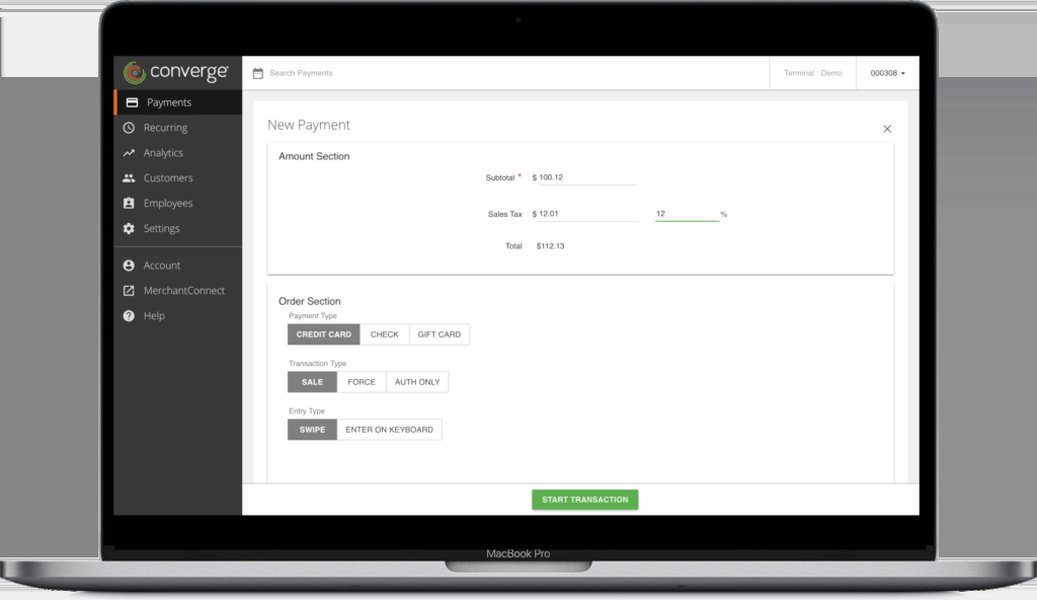
A virtual terminal interface, often part of a local MOTO system, used by agents to process payments.
Applying Whittaker's Testing Tours to Your MOTO Payment System
We will adapt several of Whittaker's testing tours to specifically address the nuances of your local MOTO system and its integration with AWS Connect for card detail collection. Each tour will be accompanied by a set of "verify that" checks designed to probe different aspects of the system.
1. Feature & Functionality Tour
This tour focuses on the core functionalities and primary workflows of the MOTO payment system. The objective is to ensure that the system performs its intended operations correctly and reliably, especially concerning the interaction between the local system and AWS Connect.
Core Payment Processing Checks:
- Verify that the MOTO payment workflow can be successfully initiated from the local system when an agent handles a customer call.
- Verify that the local system correctly triggers AWS Connect to begin the secure card detail collection process.
- Verify that AWS Connect prompts the customer clearly and accurately for all required card details (card number, expiry date, CVV).
- Verify that card details entered via DTMF (keypad) or voice input (if enabled) through AWS Connect are captured accurately.
- Verify that the local system receives the tokenized or appropriately masked card data from AWS Connect without exposing sensitive information to the agent.
- Verify that the local system can successfully submit the transaction to the payment gateway using the data obtained via AWS Connect.
- Verify that transaction success, failure, or pending statuses are correctly relayed from the payment gateway, through the local system, and clearly displayed to the agent.
- Verify that the system allows for corrections or re-entry of card details within the AWS Connect session if the customer makes an error.
- Verify that the system can handle various card types supported by your payment processor (e.g., Visa, Mastercard, Amex).
2. Data Integrity & Security Tour
This tour is critical for MOTO payments due to the handling of sensitive cardholder data. It focuses on data validation, secure transmission, storage (or lack thereof for sensitive data), and overall PCI DSS compliance aspects, especially concerning the AWS Connect integration.
Data Handling and Security Checks:
- Verify that all card numbers entered via AWS Connect are validated for correct length and format (e.g., Luhn algorithm).
- Verify that expiry dates are validated for correct format (MM/YY or MM/YYYY) and for not being in the past.
- Verify that CVV codes are validated for the correct number of digits based on the card scheme (e.g., 3 for Visa/Mastercard, 4 for Amex).
- Verify that the AWS Connect interface and the local system prevent the entry of non-numeric characters in numeric card detail fields.
- Verify that sensitive cardholder data (full card number, CVV) is never displayed on the agent's screen in the local system.
- Verify that sensitive cardholder data is not stored in plaintext in any logs, databases, or temporary files by either the local system or within accessible AWS Connect logs.
- Verify that communication channels between the local system and AWS Connect, and between AWS Connect and the customer, are encrypted (e.g., TLS/SRTP).
- Verify that if tokenization is used, the token is correctly generated, transmitted, and usable by the local system for payment processing.
- Verify that data input fields in AWS Connect for card details appropriately mask the input (e.g., showing asterisks).
- Verify that attempts to inject malicious scripts or unexpected data types into card detail fields via AWS Connect are handled gracefully and do not compromise the system.
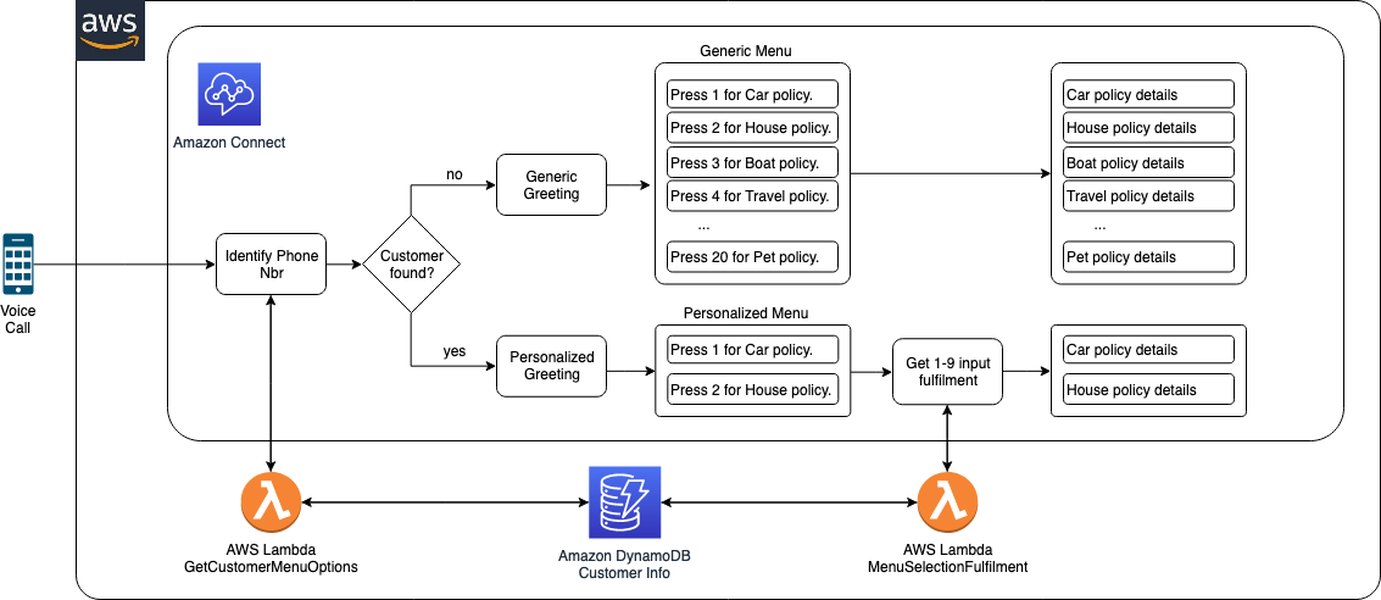
An example of an AWS Connect contact flow, which could be adapted for secure MOTO payment data collection.
3. User Experience & Interface Tour
This tour examines the system from the perspective of both the agent using the local system and the customer interacting with AWS Connect. It focuses on usability, clarity of instructions, and ease of navigation.
Agent and Customer Interaction Checks:
- Verify that the agent interface on the local system for initiating MOTO payments and viewing transaction status is intuitive and efficient.
- Verify that the prompts and instructions provided to the customer by AWS Connect for entering card details are clear, concise, and easy to understand.
- Verify that error messages provided by AWS Connect (e.g., for invalid card number) are helpful to the customer without revealing sensitive information.
- Verify that the agent receives clear feedback on the local system regarding the progress of the card detail collection by AWS Connect.
- Verify that the transition between the agent speaking to the customer and the customer interacting with AWS Connect for payment is smooth.
- Verify that accessibility features (e.g., for visually or hearing-impaired users, if applicable) are functional within the AWS Connect interaction for card entry.
4. Scenario & End-to-End Tour
This tour involves testing the system by simulating realistic end-to-end user scenarios. This helps to uncover issues that might only appear during a complete workflow, including interactions between the local system, AWS Connect, and the payment gateway.
Real-World Transaction Scenarios:
- Verify that a complete MOTO transaction, from call initiation to successful payment confirmation and agent notification, can be processed without errors.
- Verify that the system correctly handles declined transactions (e.g., insufficient funds, expired card) by providing appropriate feedback to the agent and allowing for alternative actions.
- Verify that if a customer hangs up or the call drops during card entry via AWS Connect, the session is terminated securely, and no partial card data is retained or processed.
- Verify that the system can handle scenarios where a customer needs to update card details after an initial failed attempt within the same AWS Connect session.
- Verify that transactions involving different currencies (if applicable) are processed correctly.
- Verify that refund or void transaction processes initiated from the local system, related to a MOTO payment collected via AWS Connect, function as expected.
5. Stress & Performance Tour
This tour aims to push the system to its limits to observe its behavior under duress. This is important for ensuring the system remains stable and responsive during peak loads.
System Load and Stability Checks:
- Verify that the system can handle multiple concurrent MOTO payment initiations and AWS Connect sessions without significant degradation in performance.
- Verify that the local system and AWS Connect integration respond within acceptable timeframes during high call volumes.
- Verify that network interruptions or latency between the local system and AWS Connect are handled gracefully, with appropriate error messaging or retry mechanisms.
- Verify that there is no data leakage or session interference between concurrent users processing MOTO payments.
- Verify that system resources (CPU, memory) on the local system and any intermediary components remain within acceptable limits under stress.
6. Compliance & Claims Tour
This tour focuses on verifying that the system adheres to documented requirements, industry standards (like PCI DSS), and any specific claims made about its functionality or security related to AWS Connect usage.
Adherence to Standards and Specifications:
- Verify that the overall MOTO payment process, including card detail collection via AWS Connect, aligns with PCI DSS requirements relevant to your environment (e.g., SAQ D for merchants, SAQ A-EP).
- Verify that AWS Connect features used for collecting sensitive data (e.g., "Get customer input" with encryption) are configured according to security best practices.
- Verify that agent access controls in the local system prevent unauthorized access to payment functionalities or any residual sensitive data.
- Verify that audit trails are accurately logged for all MOTO transactions, including key events during the AWS Connect interaction, for security and reconciliation purposes.
- Verify that data retention policies for any transaction data (excluding sensitive cardholder data) stored in the local system are adhered to.
7. Error Handling & Resilience Tour
This tour focuses on how the system responds to errors, invalid inputs, and unexpected conditions. A resilient system should handle such situations gracefully, preventing crashes and data corruption.
System Robustness Checks:
- Verify that the system provides clear, user-friendly error messages when invalid data is entered (e.g., incorrect card format before sending to AWS Connect, or via AWS Connect prompts).
- Verify that if AWS Connect service experiences a temporary outage or API error, the local system handles this gracefully (e.g., informs the agent, allows retry, or offers an alternative).
- Verify that the system recovers appropriately from timeouts during the AWS Connect card entry session (e.g., customer takes too long).
- Verify that unexpected responses from the payment gateway (e.g., malformed XML/JSON) are handled by the local system without crashing.
- Verify that attempts to bypass steps in the MOTO payment workflow (e.g., trying to submit payment without AWS Connect data collection) are prevented.
Visualizing Testing Focus: MOTO Payment System Health
The radar chart below provides an opinionated visualization of key areas to focus on during exploratory testing of your MOTO payment system. It highlights the perceived importance or potential risk across different facets of the system, considering both the local components and the AWS Connect integration. The "Target System Health" represents an ideal state of robustness and security.
This chart helps visualize where testing efforts might need to be intensified. For instance, 'Security,' 'PCI Compliance,' and 'Integration' are typically high-priority areas for payment systems involving third-party services like AWS Connect for sensitive data collection.
Testing Tours Overview for MOTO Payments
The following table summarizes the key objectives for each testing tour applied to your MOTO payment system integrated with AWS Connect, along with an example check to illustrate the focus.
| Testing Tour | Primary Objective | Example "Verify that..." Check |
|---|---|---|
| Feature & Functionality | Ensure core MOTO payment processes work as intended. | Verify that the local system correctly triggers AWS Connect for card detail collection upon agent initiation. |
| Data Integrity & Security | Validate secure handling, transmission, and processing of cardholder data. | Verify that sensitive card data (CVV, full PAN) is never logged in plaintext by the local system or exposed to the agent. |
| User Experience & Interface | Assess usability for both agents (local system) and customers (AWS Connect). | Verify that prompts given to the customer via AWS Connect for card entry are clear and unambiguous. |
| Scenario & End-to-End | Test realistic transaction flows from start to finish. | Verify that a declined payment scenario is handled gracefully, providing clear feedback to the agent and customer. |
| Stress & Performance | Evaluate system stability and responsiveness under load. | Verify that the system maintains acceptable response times during simulated peak call volumes for MOTO payments. |
| Compliance & Claims | Confirm adherence to PCI DSS and other documented requirements. | Verify that AWS Connect's secure input mechanisms are used to prevent agents from hearing or seeing full card details. |
| Error Handling & Resilience | Check system robustness against errors and unexpected conditions. | Verify that network interruptions between the local system and AWS Connect result in a defined, secure state. |
Mindmap: Structuring MOTO Payment Exploratory Testing
This mindmap illustrates the key areas of focus for your exploratory testing session, organized by Whittaker's testing tours adapted for your MOTO payments system with AWS Connect. It provides a visual guide to ensure comprehensive coverage.
(Local System + AWS Connect)"] id1["Feature & Functionality Tour"] id1_1["Core Payment Workflow"] id1_2["AWS Connect Invocation"] id1_3["Transaction Status Handling"] id1_4["Card Type Support"] id2["Data Integrity & Security Tour"] id2_1["Input Validation (PAN, Expiry, CVV)"] id2_2["Secure Data Transmission (TLS/SRTP)"] id2_3["No Plaintext Storage of Sensitive Data"] id2_4["Data Masking/Tokenization"] id2_5["PCI DSS Compliance Aspects"] id3["User Experience & Interface Tour"] id3_1["Agent UI (Local System)"] id3_2["Customer Prompts (AWS Connect)"] id3_3["Clarity of Error Messages"] id3_4["Smooth Agent-AWS Handoff"] id4["Scenario & End-to-End Tour"] id4_1["Successful Payment Cycle"] id4_2["Declined/Failed Payments"] id4_3["Call Drops/Interruptions"] id4_4["Refunds/Voids"] id5["Stress & Performance Tour"] id5_1["Concurrent Transactions"] id5_2["High Call Volume Simulation"] id5_3["Network Latency Impact"] id5_4["Resource Monitoring"] id6["Compliance & Claims Tour"] id6_1["PCI DSS Adherence Verification"] id6_2["AWS Secure Configuration"] id6_3["Audit Trail Completeness"] id6_4["Data Retention Policies"] id7["Error Handling & Resilience Tour"] id7_1["Invalid Data Entry"] id7_2["AWS Service Disruptions"] id7_3["Session Timeouts"] id7_4["Payment Gateway Errors"]
By systematically navigating through these tours and their sub-areas, you can ensure a robust and secure MOTO payment system.
Frequently Asked Questions (FAQ)
What is the primary goal of using Whittaker's tours for MOTO payment testing? +
The primary goal is to provide a structured yet flexible approach to exploratory testing. For MOTO payments, especially those involving sensitive data collection via AWS Connect, these tours help ensure comprehensive coverage of functionality, security, usability, and performance, systematically uncovering potential issues that scripted tests might miss.
How does AWS Connect impact the testing strategy for MOTO payments? +
AWS Connect introduces a critical component for secure card detail collection. The testing strategy must heavily focus on the integration points between the local system and AWS Connect, the security of data capture (DTMF/voice), the clarity of customer prompts, and PCI DSS compliance related to how AWS Connect handles sensitive information. Verifying that no sensitive data transits or is stored insecurely due to this integration is key.
Why is the "Data Integrity & Security Tour" particularly important for this setup? +
MOTO transactions are inherently "card-not-present," which carries a higher risk of fraud. When AWS Connect is used to collect these details, ensuring data integrity (accuracy, completeness) and security (encryption, no sensitive data exposure, PCI compliance) is paramount. This tour directly addresses these risks by focusing on how data is handled throughout its lifecycle in the system.
Can these "verify that" checks be automated? +
While exploratory testing is primarily a manual and cognitive activity, many of the "verify that" checks derived from these tours can inspire or be adapted into automated test cases. For example, API interactions between the local system and AWS Connect, data validation rules, and basic workflow confirmations can often be automated. However, the "exploration" aspect, which involves adapting tests based on observations, remains a human-driven skill.
Recommended Next Steps
To deepen your understanding and further refine your testing strategy, consider exploring these related queries:
- How can one effectively implement and verify PCI DSS controls within an AWS Connect environment specifically tailored for MOTO payments?
- What are the most common security vulnerabilities found in systems that integrate local business applications with cloud-based telephony services like AWS Connect for payment detail collection?
- What are effective techniques for performance testing the voice interaction and DTMF capture capabilities of AWS Connect during high-volume MOTO payment processing?
- What are the best practices for designing user-friendly yet highly secure customer experiences when using AWS Connect IVR for MOTO credit card input?
References

 docs.aws.amazon.com
 docs.aws.amazon.com
Last updated May 8, 2025