
Planetary Motion and Satellites
A Comprehensive Exploration of Celestial Mechanics and Space Technology
Highlights
- Theoretical Underpinnings: In-depth exploration of Kepler's and Newton's laws governing planetary motions.
- Satellite Classification: Detailed analysis of natural vs. artificial bodies and multiple satellite types with their functions.
- Practical Applications: Case studies demonstrating satellite launches, their merits/demerits, and real-world impact.
Introduction
The field of astronomy has witnessed an incredible evolution since its inception, and one of the most fascinating subjects within this realm is the study of planetary motion and satellites. This research paper presents a detailed exposition on the dynamics of celestial bodies, the governing laws of their motion, and the critical role that satellites—natural and artificial—play in modern science and technology. As we unravel the theories established by historical figures such as Kepler, Copernicus, and Newton, the paper combines theoretical perspectives with practical applications, including satellite launch methodologies and technological benefits and pitfalls. In-text references are provided throughout to ground the discussion in existing scientific literature [1][2].
Natural and Artificial Bodies
Natural Bodies
Natural bodies include planets, moons, asteroids, and comets—all formations that naturally populate our solar system. The gravitational pull between these bodies leads to predictable orbital patterns governed by strict laws of physics. For instance, the Earth’s Moon is a natural satellite whose motion has been studied to understand gravitational forces and orbital dynamics [3]. The interactions among these bodies not only impact the structure and evolution of the solar system but also provide benchmarks for comparative analysis with artificial satellite orbits.
Artificial Bodies
In contrast, artificial satellites are human-made devices designed and launched to orbit the Earth or other celestial bodies. Their functions range from communications and navigation to Earth observation and scientific research. Technological advances have allowed the development and deployment of satellites that maintain orbit based on precise calculations in celestial mechanics, offering utilities that significantly improve modern communication and data collection methods [4]. The duality of natural and artificial bodies offers rich insights into both historic astronomical discoveries and cutting-edge space engineering.
Laws Governing the Motions
The predictable nature of planetary motion has been defined by seminal laws first formulated by Johannes Kepler and later refined with Newton's work. These laws not only underlie natural celestial phenomena but also are essential for the operation of artificial satellites.
Kepler's Laws of Planetary Motion
Kepler's First Law states that planets move in elliptical orbits with the Sun at one of the foci, a revolutionary departure from earlier circular orbit models [1]. The Second Law, often referred to as the law of equal areas, demonstrates that a line joining a planet and the Sun sweeps out equal areas during equal intervals of time, implying variable orbital speeds. Kepler's Third Law provides a quantitative relationship between the orbital period and the semi-major axis of the ellipse, asserting that the square of a planet's orbital period is proportional to the cube of its semi-major axis [1]. These laws are fundamental to understanding both planetary dynamics and the orbital mechanics of satellites.
Newton's Law of Universal Gravitation
Complementing Kepler's empirical laws, Newton’s Law of Universal Gravitation formulates that every particle in the universe attracts every other particle with a force proportional to the product of their masses and inversely proportional to the square of the distance between them. This principle, expressed mathematically as \( F = G \frac{m_1m_2}{r^2} \), not only explains the motions of natural bodies but is also instrumental in calculating the forces acting on artificially launched satellites [2].
Types of Satellites and Their Functions
Satellites can be grouped into various categories based on their operational roles and orbital characteristics. The classification provides insights into how human progress in satellite technology has tailored tools for specific purposes.
Communication Satellites
Communication satellites, often positioned in geostationary orbits (approximately 36,000 kilometers above the Earth), enable real-time telecommunications, broadcasting, and internet services. Their stable positioning relative to the Earth's surface ensures that ground-based antennas can maintain continuous contact [4].
Navigation Satellites
Another vital class comprises navigation satellites, best exemplified by systems like GPS. These satellites provide precise positional information, aiding in military, commercial, and personal navigation. Their interconnected network ensures comprehensive global coverage [4].
Earth Observation Satellites
Earth observation satellites are designed to collect data pertaining to environmental monitoring, weather forecasting, and resource management. These satellites, including those in low Earth orbit (LEO), generate images and datasets that are essential for studying climate change and urban development over time [3].
Scientific Research Satellites
Scientific research satellites encompass devices such as the Hubble Space Telescope, which gather data far beyond Earth’s atmosphere. These instruments have revolutionized our understanding of deep space, offering unprecedented details about the cosmos [2].
Launch of Satellites
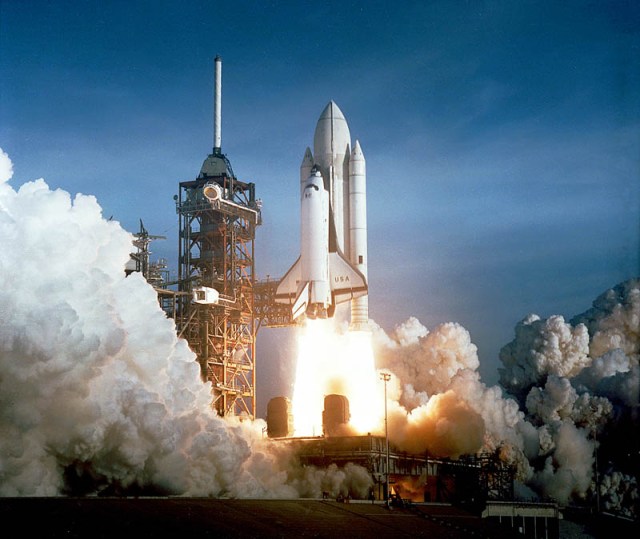
The deployment of satellites into orbit is a technical and delicate process that relies heavily on an intricate understanding of orbital mechanics and rocket propulsion. Launch vehicles, which can be expendable or reusable, provide the necessary thrust to overcome Earth’s gravitational pull. Achieving the proper orbital velocity, typically around 8 km/s for LEO satellites, ensures that satellites remain in stable orbit. The selection of an appropriate launch window and trajectory is critical for the success of the mission and requires careful planning and execution [2][4].
| Orbit Type | Altitude Range | Primary Functions |
|---|---|---|
| Geostationary Orbit (GEO) | ~36,000 km | Communications, Weather Forecasting |
| Low Earth Orbit (LEO) | 160 km to 2,000 km | Earth Observation, Scientific Research |
| Medium Earth Orbit (MEO) | 2,000 km to 35,786 km | Navigation, Timing Services |
| Polar Orbit | Varies | Environmental Monitoring, Reconnaissance |
Merits/Demerits
Merits
The deployment of satellites has provided numerous benefits in multiple domains:
- Global Connectivity: Satellites enable worldwide communication networks that connect remote areas and ensure continuous broadcasting services [4].
- Scientific Advancement: High-resolution imaging and data collection from satellites empower scientists to track environmental changes and explore deep space phenomena [2].
- Navigation Efficiency: Global navigation satellite systems such as GPS have revolutionized transportation, logistics, and personal navigation [3].
- Economic Impact: Satellite technology boosts global commerce and innovation by fostering advanced communication and data services.
Demerits
Despite the benefits, satellite technology is not without its challenges:
-
High Costs: The design, construction, and launch of satellites require significant investment in both technology and finance [4].
-
Space Debris: The accumulation of non-functional satellites and remnants from launches poses risks to both operational satellites and human spaceflight [2].
-
Operational Complexity: Maintaining stable orbits, avoiding collisions, and ensuring reliable communications demand sophisticated tracking and control systems.
-
Environmental Concerns: Rocket launches contribute to atmospheric emissions and potential environmental disruptions.
Case Study
To illustrate the practical applications of the theories and technologies discussed, consider the Hubble Space Telescope. Launched in 1990, Hubble represents one of the most successful scientific satellites ever deployed. Positioned in low Earth orbit, Hubble has provided invaluable data that has redefined modern astronomy. Its observations have helped determine the rate of expansion of the universe, provided critical insights into star formation, and captured images that have enrolled both scientists and the public in the wonder of space [2].
The Hubble mission incorporated rigorous planning based on Keplerian orbits and Newtonian physics to achieve and maintain its position in space. Advanced onboard instruments and periodic servicing missions have allowed Hubble to adapt to evolving scientific goals and continue operating beyond its originally anticipated lifespan. This case study exemplifies how theoretical principles are transformed into practical tools that drive forward our understanding of the cosmos.
Conclusion
The exploration of planetary motion and satellite technology encapsulates one of humanity’s greatest intellectual ventures. The interplay between natural celestial mechanics and the engineered precision of artificial satellites continues to shape our understanding of both the universe and our place within it. This research paper has examined the foundational laws governing planetary motion, classified the various types of satellites and their functions, analyzed the technical procedures involved in satellite launches, and evaluated both the merits and demerits of space-based technology. In-text references have helped to ground this discourse in established scientific literature, providing a roadmap of historical and contemporary achievements in space exploration [1][2][3][4]. As advancements in satellite technology and orbital mechanics continue to evolve, future research will undoubtedly uncover further applications and insights, maintaining the intrinsic value of exploring the heavens.
References
[1] Britannica. (2025). Kepler's Laws of Planetary Motion. Retrieved from Britannica - Science.
[2] Lumen Learning. (n.d.). Motions of Satellites and Spacecraft. Retrieved from Lumen Learning - Astronomy.
[3] NASA Science. (2025). Understanding Celestial Mechanics. Retrieved from NASA - Space Science.
[4] EOS. (2025). Types of Satellites: Functions and Applications. Retrieved from EOS - Satellite Blog.
[5] Wikipedia. (n.d.). Newton’s Law of Universal Gravitation. Retrieved from Wikipedia - Science.
Recommended Queries
 aws.amazon.com
 collegiatebd.blogspot.com
Last updated March 17, 2025