
Republican Areas and Californium Demystified
Exploring California’s Political Geography and the Element Californium
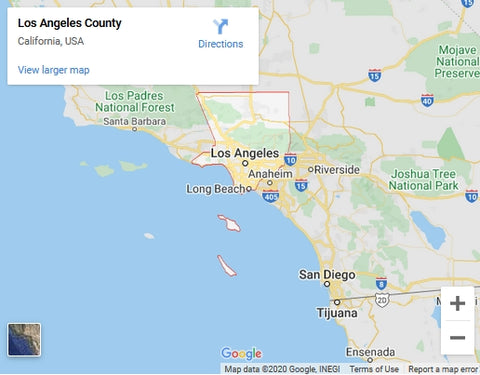
Your question, which mentions “republic areas if californium,” appears to be ambiguous due to the play on words between two very distinct topics: one concerning political landscapes and areas with Republican leanings in California, and the other concerning the chemical element Californium. In this discussion, we will explore both perspectives in detail so you can gain an in-depth understanding of each.
Key Insights
- Political Regions in California: While California is widely recognized as a Democratic stronghold, several regions, including parts of Orange County, the interior regions, and portions of San Diego County, have historically maintained a strong Republican presence.
- Californium – The Element: Californium is a synthetic, radioactive element (atomic number 98) produced in specialized laboratories, notable for its neutron emission capabilities and diverse industrial uses.
- Interpreting Ambiguous Queries: It is essential to clearly differentiate between political geography (i.e., areas with Republican voters) and scientific information about an element such as Californium.
Understanding Political Areas in California
Historically, California has undergone significant political shifts. Although today it is largely considered a Democratic state, several regions have maintained or are trending towards supporting Republican candidates. To comprehend where Republican influence remains, we must consider entire regions based on geographical, historical, and cultural factors.
Overview of Political Geography
The political geography of California is diverse. The state consists of coastal regions, urban centers with dense populations, and sprawling interior rural areas. In recent decades, coastal and urban areas—such as the Bay Area, Los Angeles County, and Central Coast—have become predominantly Democratic. However, the interior sections of the state, certain suburban towns, and historically conservative cities have displayed a sustained Republican presence over the years.
Notable Republican Regions
Below is an organized analysis of some of the areas in California that have been identified with a Republican leaning:
| Region/City | Political Trend | Notes |
|---|---|---|
| Orange County | Historically Republican, increasingly mixed | Strong conservative values and traditional culture; some parts are trending Democratic. |
| Rocklin (Placer County) | Republican | An example of a suburban area with a long history of Republican support. |
| Interior California | Republican | Rural and suburban populations in the interior often favor Republican candidates. |
| San Diego County (Northern parts) | Mixed, with Republican areas | Some regions remain conservative despite an overall competitive political landscape. |
It is important to emphasize that while this list provides a snapshot into areas traditionally associated with Republican support, political trends are subject to change over time. Shifts occur due to demographic changes, shifts in political parties’ policies, and evolving voter behaviors.
Recent Shifts and Influencing Factors
Urban sprawl, increased diversity, and changes in economic patterns have influenced voting habits in California. The transformation in some historically Republican counties has been underlined by the following factors:
Demographic Shifts
Over the years, migration and cultural integration have altered the demographic fabric in many parts of California, resulting in a mix of voting patterns. Urban centers, which were once Republican strongholds, now display a dynamic political mix due to significant influxes of younger, diverse populations.
Economic Factors
Economic opportunities and employment trends can influence voters' decisions. In regions where industries such as agriculture, manufacturing, or technology drive employment, voters may lean in favor of policies that support these sectors, which can lead to a conservative or moderate stance.
Cultural and Social Considerations
Values related to family, education, and religious communities often shape political outcomes in regions like Orange County and Rocklin. Trust in conservative policies that prioritize traditional community values remains a key factor in sustaining Republican influence.
The Element Californium
Shifting gears to a scientific perspective, Californium (symbol Cf) stands as a significant chemical element with distinctions that set it apart from naturally occurring elements.
What Is Californium?
Californium is a synthetic element with the atomic number 98, first synthesized in the 1950s during nuclear research at the Lawrence Berkeley National Laboratory. Due to its synthetic nature, Californium does not exist in significant amounts naturally but is created under controlled laboratory conditions.
Properties and Production
Californium is known for its strong neutron emission properties, making it a unique element in nuclear science and industrial applications. The element is produced in nuclear reactors or particle accelerators, and is primarily handled under strict security and safety protocols due to its radioactive nature. Both the United States and Russia have played roles in its production, predominantly through national laboratories such as the Oak Ridge National Laboratory.
Applications of Californium
Despite its rarity and radioactivity, Californium is extremely valuable in various practical applications. For instance:
- Neutron Sources: Californium’s high neutron emission is leveraged in portable neutron sources for scientific research and in oil exploration techniques.
- Medical Uses: In controlled doses, its neutron emission has been used in specific cancer treatment applications.
- Industrial Detection: It plays a role in portable metal detectors and is instrumental in identifying precious minerals like gold and silver ores.
Comparing the Two Concepts
It is crucial to delineate the significant distinctions between the two topics:
Political Areas versus Chemical Elements
On one hand, when discussing “republic areas,” the focus is on geographical regions and their political orientations. In this context, areas within California that historically or currently lean Republican are considered. On the other hand, Californium is a man-made element, entirely divorced from the principles of political geography. It is essential not to mix the scientific properties of a chemical element with the political affiliations of regions within a state.
Why the Confusion Might Occur
The similarity in sound between “Californium” and “California”—especially when paired with phrases such as “republic areas”—might lead to confusion. In research and casual dialogue, accidents or misinterpretations can occur, mixing scientific terminology with political jargon. It is always helpful to clarify context to ensure that discussions remain focused on either political geography or on the properties and applications of an element.
Synthesis and Integration
To synthesize a comprehensive answer, we can consider the following elements:
Dual Perspective on the Query
Despite the seemingly juxtaposed nature of the topics, we can integrate the information as follows:
1. Political Landscape of California
When one inquires about “republic areas” in the context of California, it triggers a reflection on the state’s diverse political landscape, specifically focusing on regions with persistent Republican influence. Examination of past election trends and cultural markers reveal that although coastal regions such as the Bay Area and Los Angeles are predominantly Democratic, there remain significant pockets of Republican support in regions like Orange County and the rural interior.
Detailed voter registration data, along with historical election results, underscore the presence of strong Republican bases in select areas. Urbanization and demographic changes have altered the political equations in some regions over time. Nevertheless, due to historical patterns and regional identity, communities in these areas continue to exhibit conservative voting behaviors to this day.
2. The Significance of Californium
Californium, in stark contrast, belongs to the realm of nuclear chemistry and material science. Synthesized for its unique neutron-emitting capabilities, it is a prime example of human technological advancement in creating novel elements for specific industrial and medical applications. Its production is monitored carefully due to its radioactivity, and its specialized uses underline the ingenuity of modern science.
3. Contextual Clarity in Query Interpretation
The blend of topics in your query highlights the importance of context. When facing queries that may imply multiple interpretations, it is crucial to address each possibility distinctly, ensuring that both the political and scientific interpretations are comprehensively covered. This not only eliminates ambiguity but also enhances clarity for those who may be navigating similar intersecting themes.
Further Comparisons and Detailed Analysis
Below is a comparative table that succinctly juxtaposes the key aspects of California’s political regions and the properties of Californium:
| Aspect | Republican Areas in California | Californium (Cf) |
|---|---|---|
| Nature | Geographical and political regions within California | Man-made chemical element |
| Key Characteristics | Areas with historical or current conservative voting trends; e.g., parts of Orange County and the state’s interior | Radioactive, neutron-emitting, synthetic element with atomic number \( \text{\(98\)} \) |
| Primary Applications | Political influence and cultural identity within the state | Industrial detection, cancer treatment, neutron sources in scientific research |
| Historical Context | Once more broadly Republican; evolved with demographic and cultural changes | First synthesized in the 1950s; produced under controlled laboratory conditions |
| Regional Influence | Impacted by local demographics, economic factors, and cultural identities | Used only in niche scientific and industrial applications |
As this table demonstrates, while both topics can be discussed under the initial query, their underlying contexts are entirely separate. One reflects sociopolitical trends in a U.S. state, and the other represents a valuable, albeit highly specialized, element in modern chemistry.
Additional Insights and Advanced Discussion
Understanding both dimensions of your query enriches the discussion on how terminology can bridge vastly different realms. Here, we summarize some advanced insights:
Expanding on the Political Landscape
For those interested in the evolving political geography of California, research indicates that migration patterns, local economic conditions, and cultural shifts will continue to influence voter registration trends. While some regions, such as the interior and parts of historically conservative counties, remain strongholds for Republican ideals, ongoing changes in demographics may lead to more balanced or even shifting allegiances in future electoral cycles.
Detailed mapping of voter registration, along with election outcomes from the past decades, reinforces the trend that political geographies are fluid—a factor that political scientists closely analyze to predict electoral outcomes and policy impacts.
Deep Dive into Californium in Modern Science
On the scientific front, Californium’s role as a potent neutron emitter is invaluable for various technical applications. Ongoing research aims to harness its properties for improved medical treatments, enhanced detection systems in security and mining, and further scientific exploration in nuclear physics.
Scientists prioritize controlled production environments due to the element’s radioactivity, ensuring safety and effective utilization. The strategic production of Californium reflects modern advancements in nuclear science and showcases the intersection of theoretical research and practical, real-world applications.
References
- 15 Most Conservative Cities in California – Strategistico
- Democrat & Republican Areas in California – BestNeighborhood.org
- California Locations by Voter Registration – Wikipedia
- Californium – Wikipedia
- Understanding Californium – Business & Leadership
Recommended Queries
Last updated March 12, 2025