
Smarter Decisions: How Predictive Analytics Tools Are Revolutionizing Business Intelligence
In today’s rapidly shifting economic landscape, businesses need to leverage cutting-edge technology to stay ahead of the competition. One breakthrough example is the evolution of AI tools specifically designed for Business Intelligence, with a special focus on Predictive Analytics. These sophisticated systems not only distill complex data into actionable insights but also enable organizations to forecast future trends with remarkable precision. In this article, we explore one such AI tool that is reshaping how enterprises harness the power of predictive analytics to inform more strategic decision-making.
The Rise of Predictive Analytics in Business Intelligence
Predictive analytics is not merely about analyzing historical data—it goes a step further by calculating probabilities and forecasting upcoming trends. For businesses, the ability to anticipate market shifts, consumer behavior changes, and potential operational hiccups can be the difference between success and stagnation. Today’s AI-powered systems integrate machine learning algorithms, statistical models, and real-time data ingestion to produce forecasts that inform everything from resource allocation to marketing strategies.
Introducing Tableau AI: A Game Changer
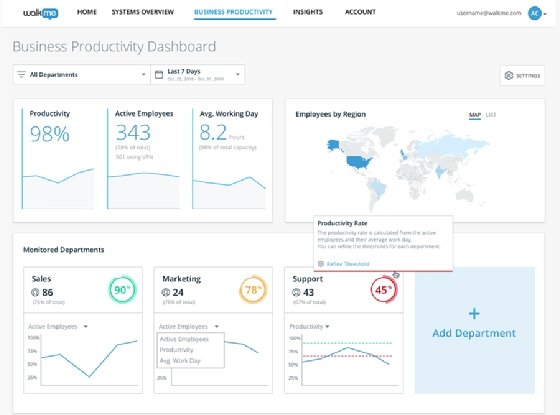
One of the standout AI tools in this arena is Tableau AI. This advanced platform marries the principles of artificial intelligence with the visual data representation capabilities of traditional business intelligence software. Tableau AI empowers users to interact with data in an intuitive manner, blending natural language queries with automated predictive models. This combination makes it accessible to both technical and non-technical users alike, thereby democratizing data-driven decision making.
Key Features of Tableau AI
Tableau AI is built with a myriad of features designed to simplify complex data processes while delivering actionable insights:
- Natural Language Processing: Users can engage with the system using everyday language, allowing rapid access to insights without needing expert knowledge of query languages.
- Predictive Modeling: Leveraging historical data, Tableau AI can forecast trends such as sales growth, demand fluctuations, and risk factors.
- Automated Alerts: The system monitors key performance indicators in real time, issuing alerts when data trends deviate from established norms.
- Intuitive Data Visualization: With a plethora of customizable dashboards and interactive graphs, users can analyze the comprehensive data in formats that are both insightful and visually appealing.
- Integration Capabilities: Seamlessly integrates with a host of other enterprise tools, allowing for a unified approach to business intelligence.
Implementing Tableau AI: A Step-by-Step Approach
Introduced into a business environment, Tableau AI works best when its implementation is meticulously planned and executed. Here’s a breakdown of the implementation process:
1. Identifying Critical Business Processes
Before integrating any advanced analytics tool, businesses should first pinpoint the areas most in need of insight. This could range from customer behavior analysis to supply chain optimization. A thorough audit of existing data sources and processes is essential to ensure the tool is used to its maximum potential.
2. Integration with Existing Systems
Tableau AI is designed to seamlessly plug into a company’s data ecosystem. Whether it’s ERP systems, CRM platforms, or custom databases, the tool consolidates all pertinent data into one intuitive dashboard, minimizing the need for multiple interfaces. This consolidation enhances overall efficiency and reduces operational silos.
3. Training and Talent Development
A key facet of a successful AI deployment is ensuring that team members are comfortable using the tool. Businesses must invest in training programs aimed at upskilling employees, enabling them to extract insightful analyses and make informed decisions without constant reliance on IT specialists.
4. Continuous Monitoring and ROI Measurement
To justify the investment in AI tools like Tableau AI, companies should establish robust measurement frameworks. Key performance indicators such as time saved, improved revenue forecasts, and efficiency gains should be continuously monitored. Automated alert systems in Tableau AI help track these metrics in real time, ensuring that businesses maintain a clear line of sight on ROI.
Comparative Analysis: How AI Tools Stack Up
To provide a clearer picture of where Tableau AI stands in the market, consider the following table, which lists key features and the benefits they deliver:
| Feature | Benefits | Real-World Application |
|---|---|---|
| Natural Language Processing | Simplifies user interaction, reduces technical barriers | Business executives quickly obtain critical insights without deep technical skills. |
| Predictive Modeling | Forecasts future trends, informs strategic planning | Retailers predict consumer demand to optimize inventory levels. |
| Automated Alerts | Real-time monitoring, immediate response to anomalies | Finance teams receive early warnings of market fluctuations, preventing potential revenue losses. |
| Data Visualization | Enhanced comprehension through interactive graphics | Marketing teams use visual dashboards to identify campaign performance in real-time. |
| Integration Capabilities | Streamlines various data inputs into a single platform | Manufacturers consolidate supply chain data to enhance operational efficiency. |
Maximizing ROI with Predictive Analytics
At the heart of Tableau AI’s value proposition is its capacity to drive revenue optimization and operational efficiency. Beyond simply collating data, this tool helps provide a detailed roadmap for business growth through:
- Real-Time Forecasting: Ensuring that businesses react quickly to changing market conditions, helping avoid losses and capitalize on emerging opportunities.
- Cost Reduction: By automating routine data analysis and alerting, organizations can minimize manual errors and reduce labor costs significantly.
- Improved Decision Support: Decision-makers are furnished with clear, evidence-based insights that inform everything from product launches to strategic pivots in uncertain times.
Business Intelligence Reinvented: What Lies Ahead
The dynamic nature of business environments means that today's AI tools are only the starting point of a much larger transformation. As machine learning algorithms become more sophisticated and data sources more diversified, predictive analytics platforms will gain even greater accuracy and protective capabilities. Future advancements could include hyper-personalized analytics, where data insights are directly linked to individual consumer behavior, dynamically adjusting marketing strategies in real time.
Companies that invest in these intelligent systems can expect not only to enhance their bottom lines but also to foster an organizational culture that is agile, data-driven, and ready to confront future challenges. The era of relying solely on static reports is over; the future is interactive, predictive, and continuously evolving—a future where tools like Tableau AI serve as critical allies in the quest for business excellence.
Real-World Impact: Case Studies in Predictive Analytics
Several organizations have already reaped significant benefits by implementing predictive analytics through Tableau AI. Consider the following scenarios:
- A Global Retailer: Leveraged predictive models to optimize stock levels across various regions. This initiative reduced overstocking and highlighted underperforming categories, leading to a 15% increase in operational efficiency.
- A Financial Institution: Employed automated alerts to monitor market conditions. With real-time notifications, the organization was able to adjust its investment portfolio swiftly, mitigating risks and generating a measurable uptick in returns.
- A Manufacturing Firm: Integrated data from production lines, quality control, and supply chain logistics into one cohesive dashboard. The result was a significant reduction in downtime and an increase in overall equipment effectiveness.
A Glimpse into the Future of Enterprise AI
As artificial intelligence continues to permeate business operations, the line between traditional analytics and AI-powered insights is rapidly blurring. The evolution of tools like Tableau AI indicates a promising future where predictive analytics will be seamlessly embedded into day-to-day decision support systems. This integration not only enhances the speed and accuracy of business decisions but also creates an ecosystem where every department—from sales to supply chain management—benefits from real-time, data-driven insights.
In summary, the transformation of business intelligence through AI, particularly with predictive analytics guidance, is not just a trend; it is a revolution. Organizations that align their strategies with these technologies are set to experience profound changes in operational dynamics, making them more competitive in an ever-evolving market.
References
- Tableau - Business Intelligence
- UiPath - AI and Automation
- Zapier - Workflow Automation
- Moveworks - AI for IT Support
- TechBullion - AI Tools for Business
Recommended Queries for Deeper Insights
Last updated March 24, 2025