
Mastering Activity-Based Costing: Understanding the Classification of Product Design
Explore why product design perfectly exemplifies a product-level activity in modern cost accounting systems
Key Insights About Activity Classification
- Product design is definitively a product-level activity because it supports a specific product regardless of production volume or batch size
- Activity-based costing (ABC) categorizes activities into four hierarchical levels to accurately allocate overhead costs in ways traditional costing methods cannot
- Understanding activity hierarchies enables better product costing, pricing decisions, and identification of value vs. non-value-added activities
Understanding Activity-Based Costing (ABC)
Activity-based costing (ABC) is a method of cost accounting that assigns overhead and indirect costs to related products and services based on the activities that cause those costs. Unlike traditional costing methods that might allocate overhead based on direct labor hours or machine hours, ABC provides more accurate cost information by recognizing the relationship between costs, activities, and products.
In an ABC system, resources are assigned to activities, then activities are assigned to cost objects based on consumption. This approach recognizes that products consume activities, and activities consume resources, allowing for more precise cost allocation.
The Four-Level Cost Hierarchy
Activity-based costing systems typically classify activities into a hierarchy with four levels:
| Activity Level | Definition | Examples |
|---|---|---|
| Unit-level activities | Activities performed for each individual unit of product | Direct labor, materials, machine operations, energy consumption per unit |
| Batch-level activities | Activities performed for groups of units rather than each individual unit | Machine setups, purchase orders, quality inspections, material handling |
| Product-level activities | Activities that support specific products regardless of production volume | Product design, engineering changes, maintaining product specifications, marketing campaigns |
| Organization-sustaining activities | Activities that support the business as a whole | Building maintenance, administrative salaries, corporate accounting, general management |
Why Is Designing a New Product a Product-Level Activity?
Designing a new product is classified as a product-level activity for several key reasons:
- It directly supports a specific product or product line
- The costs incurred are independent of the number of units produced
- These costs would be incurred even if only one unit were manufactured
- The activity maintains the existence of the product itself rather than facilitating production
- It doesn't change based on batch sizes or production runs
Activity-Based Costing in Product Development
When a company engages in designing a new product, it commits resources that are specifically tied to that product's development and existence. These design costs are incurred regardless of whether the company eventually produces 10 units or 10,000 units of the product. This makes them fundamentally different from unit-level or batch-level activities.
Contrasting Different Activity Levels
Unit-Level vs. Product-Level Activities
Unit-level activities, such as assembly or packaging, increase proportionally with each unit produced. If production doubles, these costs typically double. In contrast, product-level activities like design work remain largely fixed regardless of production volume. The design cost for a product is the same whether you produce a small or large quantity.
Batch-Level vs. Product-Level Activities
Batch-level activities occur each time a group of products is processed. Setting up equipment is a classic example - the setup cost is the same whether the batch contains 50 or 500 units. Product-level costs like design work, however, are incurred for the product as a whole, not for each batch produced.
Organization-Sustaining vs. Product-Level Activities
Organization-sustaining activities benefit the entire company rather than any specific product. Corporate accounting or executive salaries continue regardless of which products are being made. Product-level activities like design specifically support individual products and would cease if the product were discontinued.
This radar chart visualizes the characteristics of different activity levels across key dimensions. Note how product-level activities (which include product design) show high direct traceability to products and controllability at the product level, while showing low volume dependence - reinforcing why product design is classified as a product-level activity.
Product Design Within the Activity Hierarchy
Product design is a critical example of a product-level activity because it demonstrates all the hallmark characteristics of this category. Let's explore the product design process within the context of activity-based costing.
The Product Design Process
Product design involves multiple stages that all qualify as product-level activities:
- Market research and identification of customer needs
- Conceptual design and ideation
- Development of prototypes
- Engineering specifications and technical drawings
- Testing and refinement
- Finalization of design for manufacturing
Each of these activities supports the specific product being developed and would be incurred regardless of the eventual production volume. The costs associated with these design activities are traced directly to the product rather than to individual units or batches.
Visualizing the Activity Hierarchy in Product Development
This mindmap illustrates how product design fits within the broader activity hierarchy. Note that product design is prominently positioned as a product-level activity, distinct from unit-level, batch-level, and organization-sustaining activities.
Practical Application of Activity Classification
Understanding the classification of activities has significant implications for cost management and product profitability analysis. By correctly identifying product design as a product-level activity, managers can:
Benefits of Proper Activity Classification
- Allocate design costs appropriately to products rather than spreading them across all units
- Make more informed product continuation decisions by understanding the full product-specific costs
- Better analyze product profitability by separating product-level costs from volume-driven costs
- Identify opportunities for design improvement that could reduce overall product costs
- Determine appropriate pricing strategies that consider all levels of activities consumed by a product
Video Explanation: Activity-Based Costing Hierarchy
This video provides an excellent explanation of the activity hierarchy in ABC, including a clear discussion of product-level activities like product design:
Visual Examples of Product Design Activities
Product design encompasses various activities that all qualify as product-level activities within the ABC hierarchy. These images illustrate different aspects of the product design process:
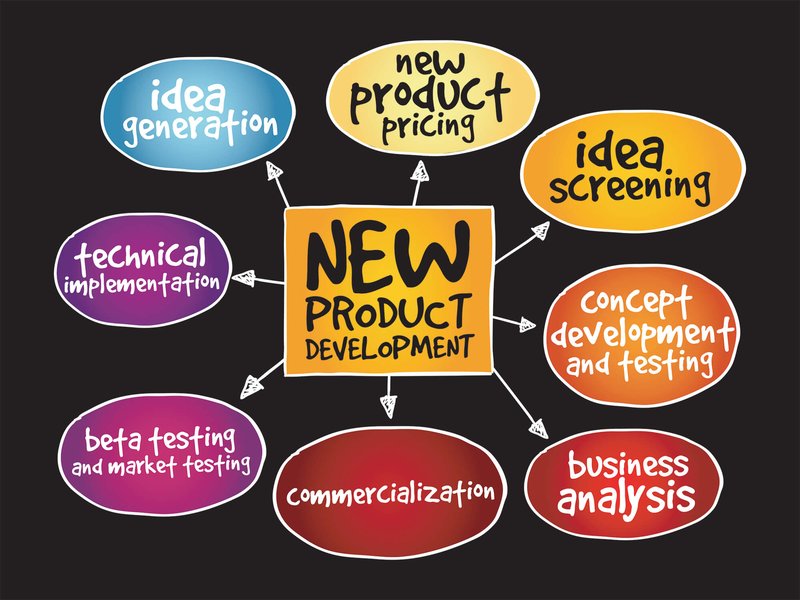
The new product development process includes multiple product-level activities, from concept development to design finalization.

Product engineering and development activities are classified as product-level activities because they support specific products regardless of production volume.

Product design engineers perform product-level activities that establish the specifications and characteristics of specific products.
Frequently Asked Questions
References
- Cost Accounting - Investopedia
- Activity-Based Costing (ABC) - Investopedia
- Activity-Based Costing - Overview, Approach, Benefits - Corporate Finance Institute
- Product-level activity definition - AccountingTools
- Cost Hierarchy - Meaning, Levels and Example - eFinanceManagement
- What is Product Level Activity? - SuperfastCPA
- Understanding Cost Accounting for Better Business Decisions - Fyle
Recommended Searches
Last updated April 9, 2025