
Profound Insights on Theological Thinking
Exploring Key Ideas Through the Words of Influential Thinkers
Theological thinking, the systematic study of the divine, has been a cornerstone of intellectual and spiritual exploration for centuries. It's a field that grapples with fundamental questions about existence, meaning, faith, and the nature of God. Throughout history, countless theologians, philosophers, and spiritual leaders have contributed to this rich discourse, offering diverse perspectives and profound insights. Exploring these ideas often reveals not only differing viewpoints but also common threads that highlight the enduring human quest for understanding the divine.
The importance of theological thinking lies not only in its academic pursuit but also in its practical implications for life, ethics, and worship. It shapes how individuals and communities understand their place in the world and their relationship with the transcendent. The following explores some of the most prominent ideas on theological thinking, illuminated by memorable quotes from influential figures.
Key Highlights on Theological Thinking
- Theology as a Map for Life: Many thinkers emphasize that theological doctrines serve as guides rather than ultimate destinations, helping individuals navigate their spiritual journey.
- The Inseparable Link Between Doctrine and Living: Sound theology is not merely an intellectual exercise but must be integrated into daily life and practice.
- The Ultimate Goal of Theology is Worship: The pursuit of theological knowledge should ultimately lead to a deeper adoration and praise of God.
Fundamental Concepts in Theological Thought
At the heart of theological thinking are several core concepts that provide a framework for understanding the divine and its relationship with humanity and the world. These concepts have been pondered, debated, and reinterpreted across different traditions and eras. Here, we delve into some of these foundational ideas, supported by the wisdom of various thinkers.
The Nature and Study of God
Perhaps the most central idea in theological thinking is the study of God itself. This involves exploring divine attributes, understanding God's actions in history, and contemplating the mystery of the divine being. As the source puts it, "[Theology] is the study of God."
Another perspective highlights the ultimate purpose of this study. As one quote suggests, "The ultimate goal of theology isn't knowledge, but worship. If our learning and knowledge of God do not lead to the joyful praise of God, we have failed." This emphasizes that intellectual understanding should lead to a transformative encounter with the divine.
Theologians have also grappled with the challenge of speaking about God, who transcends human comprehension. One quote notes, "Theologians have a great problem because they're seeking to speak about God. Since God is the ground of everything that is, there's a sense in which..." This highlights the inherent difficulty and humility required in theological discourse.
The Importance of Sound Doctrine
Sound doctrine, or accurate teaching, is repeatedly emphasized as crucial for a robust faith and a healthy church. The belief is that right living stems from right believing.
One quote directly addresses this: "The need of the hour is to restore sound theology into our churches. Of course it goes without saying that right doctrine must always be accompanied by right living. Orthodoxy must be wed to orthopraxis." This highlights the necessary connection between belief and practice.
The absence of clear doctrinal understanding can lead to a weakened faith, as another source points out, mentioning "myriads of ‘jellyfish’ worshipers—respectable Church-gone people, who have no distinct and definite views about any point in theology." This underscores the importance of theological clarity.
The call for greater theological understanding is not just for religious professionals but for all believers: "I am convinced that there is an urgent need in the church today for much greater understanding of Christian doctrine, or systematic theology. Not only pastors and teachers need to understand theology in greater depth – the WHOLE CHURCH does as well."
The Role of Scripture
For many theological traditions, particularly Christianity, the Bible is considered a primary source of divine revelation and a foundational text for theological reflection. Understanding and interpreting Scripture is therefore a vital aspect of theological thinking.
One source notes that definitions in theology are often the result of human attempts to understand Scripture: "Definitions are useful, but we should be warned that they are rarely, if ever, found in Scripture itself. Such definitions are themselves theology in that they are the work of human beings trying to understand Scripture."
The sufficiency of Scripture is also a key concept. One quote, while discussing the relevance of Scripture to various fields, states, "Certainly Scripture contains more specific information relevant to theology than to dentistry. But sufficient in the present context is not sufficiency of specific information but sufficiency of divine words."
Faith and Reason in Theology
The relationship between faith and reason has been a persistent theme in theological discussions. How do belief and intellectual inquiry interact? Some thinkers emphasize the necessity of faith for understanding, while others explore the role of reason in clarifying and articulating theological truths.
Thomas Aquinas, a highly influential theologian, is quoted as saying, “To one who has faith, no explanation is necessary. To one without faith, no explanation is possible.” This highlights the perspective that faith is a prerequisite for grasping theological concepts.
However, theology is also seen as a discipline that requires intellectual engagement. One quote humorously suggests, “Theology is simply that part of religion that requires brains.” This acknowledges the intellectual rigor involved in theological study.
The integration of intellect and spirit is also mentioned: “Theology is the dance of the intellect with the heart, guided by the Holy Spirit.” This beautiful image suggests a harmonious interplay between cognitive understanding and spiritual experience.
Prominent Ideas and Their Advocates
Throughout history, specific theological ideas have gained prominence, often championed by influential theologians. These ideas address various aspects of faith, salvation, and the Christian life. Below are some of these significant ideas, connected to the voices that articulated them.
Salvation and Grace
The concept of salvation and the role of God's grace are central to Christian theology. Discussions around topics like limited atonement and penal substitution have been significant within certain theological traditions.
Within Reformed theology, the idea of God's sovereignty in salvation is strongly emphasized. One quote states, "Among the mass of fallen humanity, all guilty of sin before God and exposed to his justice, no one has any claim or entitlement to God's mercy." This highlights the perspective on humanity's state and the unmerited nature of grace.
Another quote emphasizes God's complete control: "In Reformed theology, if God is not sovereign over the entire created order, then he is not sovereign at all. The term sovereignty too easily becomes a chimera. If God is not sovereign, then he is not God."
The Significance of the Body
Contemporary theology has seen increased attention to the theological significance of the human body. This includes discussions on gender, sexuality, and the resurrection.
John Paul II's "Theology of the Body" is a prominent example of this focus. A quote from this work highlights the complementary nature of masculinity and femininity: “The body, which expresses femininity 'for' masculinity and, vice versa, masculinity 'for' femininity, manifests the reciprocity and the communion of persons."
N.T. Wright, another influential theologian, emphasizes the importance of the present bodily life in light of the resurrection: “The point of the resurrection...is that the present bodily life is not valueless just because it will die...What you do with your body in the present matters."
Christopher West discusses three favorite quotes from St. John Paul II's Theology of the Body, illustrating the profound impact of this theological framework on understanding human identity and relationships.
The Kingdom of God
The concept of the Kingdom of God is a significant theme in Christian theology, referring to God's reign and its manifestation in the world.
One quote describes the present reality of the Kingdom: “Since Jesus' ascension, the kingdom of God is the work of God through his people, bringing Jesus' Kingship to bear on the whole world.” This highlights the ongoing activity of God's reign through believers.
Theology and Practice
Several quotes emphasize that theology should not remain an abstract intellectual pursuit but must be integrated into practical living and worship.
As one source states, "We love theology because it informs our understanding of the Lord, but theology becomes just an intellectual exercise if it doesn’t impact how we worship and how we enjoy the Lord."
Another quote is even more direct: “Theology without practice is the theology of demons.” This stark statement underscores the critical link between belief and action.
Addressing Suffering
The problem of suffering in the world in the face of a benevolent God is a challenging theological topic. Theological thinking attempts to provide frameworks for understanding and responding to suffering.
One source notes that many theological quotes provide insight into the role of suffering in the human experience, even though it may seem to contradict the idea of a loving God.
Theology as a Map
A helpful analogy for understanding the role of theology is that of a map. Theology provides guidance and orientation, but it is not the reality itself.
C.S. Lewis is famously quoted as saying, “Theology is like a map. Merely learning and thinking about the Christian doctrines, if you stop there, is less real and less exciting than the sort of thing my friend got in the desert. Doctrines are not God: they are only a kind of map."
This perspective reminds us that the goal is not just to accumulate knowledge but to experience the reality that the theology points to.
Theology in Context
Theological thinking does not occur in a vacuum. It is influenced by historical context, cultural shifts, and ongoing dialogue with other fields of knowledge.
Historical Developments in Theology
Theology has evolved significantly throughout history, with different periods marked by key developments and influential thinkers.
Some important historical developments mentioned include the Great Schism between Eastern and Western Christianity and Thomas Aquinas's synthesis of Aristotelian philosophy with Christian theology.
The Reformation also brought about significant theological shifts, with figures like Martin Luther and Philip Melanchthon playing pivotal roles.
Theology and Other Disciplines
Theology interacts with various other disciplines, including philosophy, history, sociology, and even science. These interactions can enrich theological understanding and lead to new insights.
The relationship between science and theology is a point of discussion. One quote suggests that science can offer glimpses into the intricate design of the universe, potentially leading to a deeper appreciation of a higher power: "This quote from one of the greatest scientific minds of all time reminds us that the study of God is not separate from the study of the natural world."
However, some express concern about theological thinking becoming too human-centered, as noted in the quote: "At present, too much theological thinking is very human-centered."
Theology and Culture
Theological ideas are often shaped by and, in turn, shape cultural contexts. This can be seen in discussions about workplace ethics, social justice, and the role of faith in public life.
One source mentions theological topics related to "Balancing Work and Home," "Faith in the Workplace," and "Workplace Ethics," highlighting the intersection of theology and daily life.
Key Theological Concepts and Ideas
To further illustrate the breadth of theological thinking, here is a table summarizing some of the key concepts and ideas frequently discussed within the field, based on the provided sources:
| Concept/Idea | Brief Description | Related Quotes/Themes |
|---|---|---|
| Study of God | Exploring the nature, attributes, and actions of the divine. | "Theology is the study of God." - Grace Quotes; Goal is worship, not just knowledge. |
| Sound Doctrine | The importance of accurate and clear theological teaching. | Need to restore sound theology; Orthodoxy and orthopraxis; Avoiding "jellyfish" worshipers. |
| Role of Scripture | The Bible as a primary source for theological understanding. | Definitions derived from understanding Scripture; Sufficiency of divine words. |
| Faith and Reason | The interaction between belief and intellectual inquiry in theology. | Faith as necessary for understanding; Theology requiring intellectual engagement. |
| Salvation and Grace | Concepts related to redemption and God's unmerited favor. | Limited atonement, penal substitution; God's sovereignty in salvation. |
| Theology of the Body | The theological significance of the human body, gender, and sexuality. | Reciprocity of masculinity and femininity; Importance of present bodily life. |
| Kingdom of God | God's reign and its presence and activity in the world. | God's work through his people bringing Jesus' Kingship to bear. |
| Theology and Practice | The integration of theological understanding into daily life and worship. | Theology impacting worship and enjoyment of God; Theology without practice is the theology of demons. |
| Problem of Suffering | Attempting to understand suffering in light of a benevolent God. | Quotes provide insight into the role of suffering. |
| Theology as a Map | An analogy to illustrate that theology guides but is not the ultimate reality. | Doctrines are a map, not God. |
| Historical Theology | The study of the historical development of theological ideas. | Great Schism, Aquinas's synthesis, Reformation thinkers. |
| Biblical Theology | Understanding God's revelation as it unfolds progressively in Scripture. | Progressive revelation of themes like covenant. |
| Systematic Theology | Organizing and understanding Christian doctrines in a cohesive system. | Need for greater understanding of systematic theology. |
| Theology and Culture | The interaction between theological ideas and cultural contexts. | Workplace ethics, faith in public life. |
| Relationship with Other Disciplines | The interaction of theology with philosophy, science, and other fields. | Science providing glimpses of design; Concerns about human-centered theology. |
This table provides a snapshot of the diverse areas that fall under the umbrella of theological thinking and the kinds of questions and concepts that are explored.
Theological Thinking and Personal Growth
Beyond its academic or historical significance, theological thinking is often seen as a vital component of personal spiritual growth and the development of a deeper relationship with the divine.
Cultivating a Divine Life
Several quotes suggest that the ultimate fruit of theological study is not just knowledge but a transformed life.
One source states, "The best theology is rather a divine life than a divine knowledge." This highlights the idea that true understanding is reflected in how one lives.
Another quote reinforces this connection: 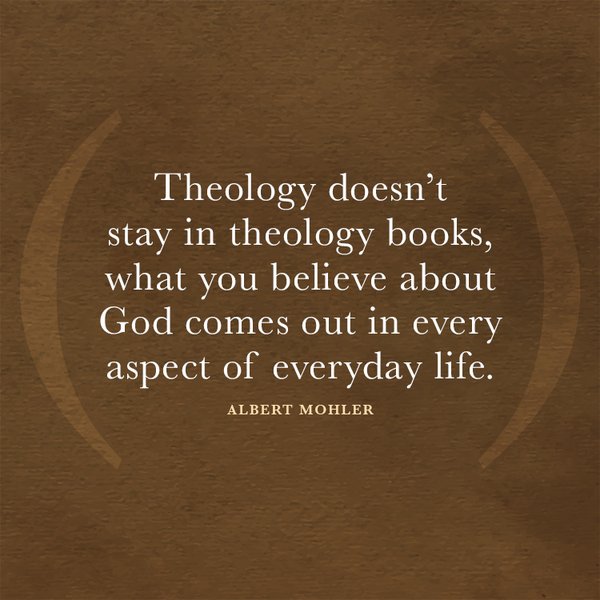
This image features a quote emphasizing that theology extends beyond books and influences every aspect of life.
"Theology doesn't stay in theology books, what you believe about god comes out in every aspect of everyday life." This quote emphasizes the pervasive influence of theological beliefs on a person's daily existence.
The Role of Doubt and Questions
Theological thinking is not always about having all the answers. It can also involve grappling with doubt, asking difficult questions, and acknowledging the mystery of the divine.
Karl Rahner, a notable theologian, is quoted as saying, “For it is the bitter grief of theology and its blessed task, too, always to have to seek (because it does not clearly have present to it at the time)...always providing that one has the courage to ask questions, to be dissatisfied, to think with the mind and heart one ACTUALLY has, and not with the mind and heart one is SUPPOSED TO have." This quote highlights the ongoing nature of theological inquiry and the importance of honest questioning.
Conclusion
Theological thinking is a multifaceted and dynamic field that invites individuals to explore the deepest questions about God, humanity, and the universe. As the quotes throughout this response demonstrate, it is a pursuit that engages the intellect, shapes beliefs, influences actions, and ultimately can lead to a more profound understanding and worship of the divine. Whether approached through the lens of historical development, systematic doctrine, or personal reflection, theological thinking remains a vital and enriching endeavor for many.
Frequently Asked Questions (FAQ)
What is the primary purpose of theological thinking?
Based on the quotes, the primary purpose is not just accumulating knowledge, but ultimately leading to worship and a transformed life. Theology helps us understand God so we can better relate to and praise the divine.
Is theological thinking only for religious scholars?
No, several sources suggest that theological thinking, at least in an amateur capacity, is a vocation for everyone, shaping how individuals understand and live their faith.
How does sound doctrine relate to daily life?
Sound doctrine is considered essential for right living. The belief is that what you believe about God directly impacts how you live every aspect of your life.
Can science and theology coexist?
Some perspectives suggest that science can provide insights into the natural world that can deepen our appreciation of a higher power, implying a potential for coexistence and mutual enrichment.
Is doubt a part of theological thinking?
Yes, some theologians acknowledge that asking questions and even experiencing dissatisfaction are part of the ongoing process of theological inquiry.
References
 lukenixblog.blogspot.com
Last updated April 21, 2025