
Unlocking the Quantum Brain: Does Your Mind Operate Like a Quantum Computer?
Exploring the fascinating, cutting-edge intersection of neuroscience, psychology, and quantum physics.
Highlights
- Emerging Evidence: Recent studies, notably from Trinity College Dublin, suggest biological processes in the brain might harness quantum phenomena like entanglement, potentially influencing memory and consciousness.
- Quantum Cognition vs. Quantum Computation: While 'Quantum Cognition' uses quantum math to model decision-making, the more radical idea explores whether the brain *physically performs* quantum computations, similar to a quantum computer.
- Revolutionary Implications: Confirming quantum processes in the brain could transform our understanding of consciousness, intelligence, mental health, and inspire new computing technologies.
Bridging Worlds: The Brain and Quantum Mechanics
What if the Brain's Power Comes From the Quantum Realm?
For centuries, we've tried to understand the human brain – that incredibly complex organ responsible for our thoughts, memories, feelings, and consciousness. Traditionally, we've viewed it as a sophisticated biological computer, processing information through electrical and chemical signals firing between billions of neurons. However, a fascinating and potentially revolutionary idea is emerging from the intersection of neuroscience and physics: could the brain be utilizing the strange rules of quantum mechanics to perform its most complex tasks?
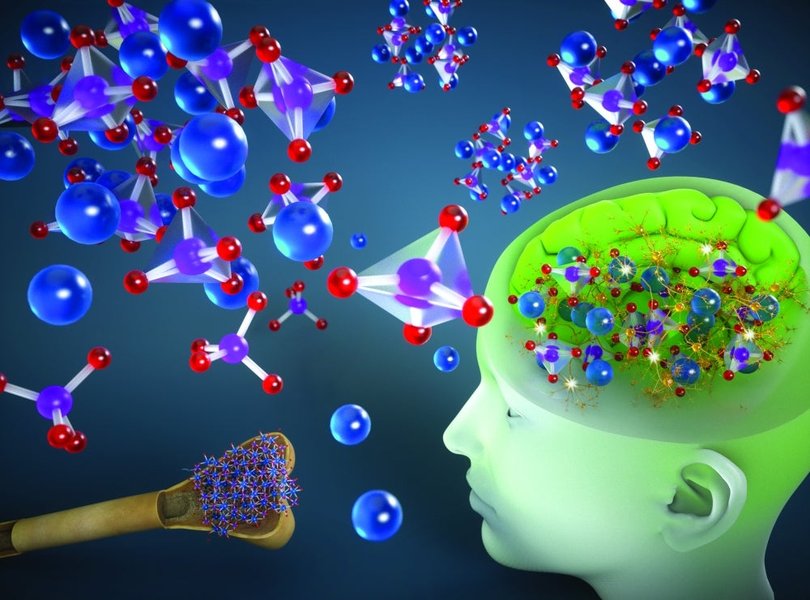
Visualizing the Quantum Brain Concept
This image represents the hypothetical merging of biological brain structures with the abstract, interconnected nature often associated with quantum phenomena.
Understanding Quantum Computing Basics
Before diving into the brain, let's briefly touch on quantum computing. Unlike regular computers that use bits representing either 0 or 1, quantum computers use 'qubits'. Thanks to quantum phenomena like superposition, a qubit can represent 0, 1, or a combination of both simultaneously. Furthermore, qubits can be linked through entanglement, where they remain connected and influence each other instantly, no matter the distance. These properties allow quantum computers to explore vast numbers of possibilities at once, potentially solving problems far beyond the reach of even the most powerful classical supercomputers.
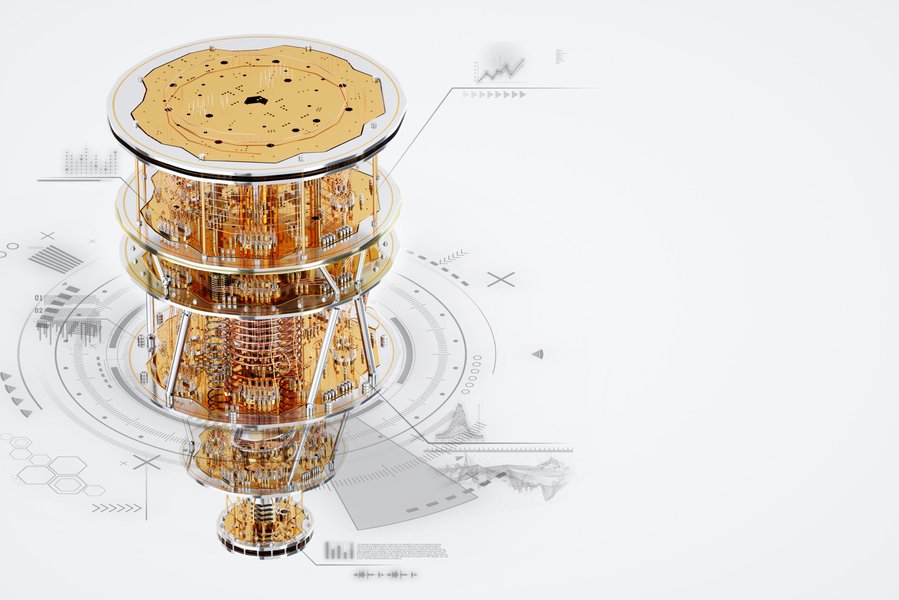
Inside a Quantum Computing System
Quantum computers rely on highly specialized and controlled environments to maintain the delicate quantum states of their qubits, often involving extremely low temperatures.
The question scientists are now asking is: does the warm, wet, and seemingly 'noisy' environment of the brain somehow support similar quantum processes?
Quantum Cognition: Modeling the Mind with Quantum Math
Using Quantum Rules to Explain Human Behavior
It's important to distinguish between two related ideas. The first is Quantum Cognition. This field doesn't necessarily claim the brain *is* a quantum computer. Instead, it uses the mathematical framework of quantum probability theory to model human cognitive phenomena that classical probability struggles to explain. Think about situations involving uncertainty, ambiguity, or paradoxes in decision-making.
Why Quantum Models?
- Handling Uncertainty: Classical models often assume clear-cut probabilities. Quantum probability allows for states of uncertainty and interference between possibilities, which seems to better reflect how humans grapple with ambiguous choices or conflicting information.
- Order Effects: The order in which questions are asked can change the answers people give. Quantum models can account for these context dependencies in ways classical models find difficult.
- Paradoxical Decisions: Phenomena like preference reversals (where choices change based on how options are presented) can sometimes be modeled more effectively using quantum-like principles.
Quantum cognition suggests that the *mathematics* developed for quantum mechanics provides a powerful toolkit for understanding psychology, even if no actual quantum computations are happening biologically.
Searching for Quantum Actions in the Brain
Is the Brain Literally Performing Quantum Computations?
The more radical idea is that the brain isn't just *modeled* by quantum math, but that it actively harnesses quantum phenomena at a physical level. This is where research gets truly intriguing, suggesting biological mechanisms might have evolved to exploit quantum effects.
Merging Biology and Computation
This image evokes the idea of the brain itself acting as a form of biological computer, potentially one operating on principles different from classical machines.
Key Experimental Evidence: The Trinity College Study
One of the most talked-about pieces of evidence comes from researchers at Trinity College Dublin. They adapted a technique originally designed to detect quantum gravity (a theory merging quantum mechanics and gravity) to study the brain.
- The Experiment: Using Magnetic Resonance Imaging (MRI), which relies on the quantum property of nuclear spin, they looked for specific signals in the protons within "brain water."
- The Findings: Their results suggested the presence of quantum entanglement between these proton spins. They observed brain signals consistent with entanglement-based quantum processing, particularly linked to functions like short-term memory and even conscious awareness.
- The Significance: If confirmed, this would be strong evidence that the brain isn't just a classical system but actively uses quantum mechanics. It implies that cognitive functions we experience daily might rely on these subatomic interactions.
Other Proposed Quantum Mechanisms
Beyond the Trinity study, other researchers have proposed potential ways quantum mechanics could play a role:
- Nuclear Spins as Qubits: Physicist Matthew Fisher proposed that the nuclear spins of phosphorus atoms (present in key biological molecules) could act as stable qubits within neurons, protected from the brain's noisy environment.
- Quantum Effects in Microtubules: Stuart Hameroff and Roger Penrose proposed the "Orch OR" (Orchestrated Objective Reduction) theory, suggesting that quantum computations occur within microtubules, protein structures inside neurons, potentially giving rise to consciousness. This theory remains controversial but influential.
- Entanglement in Neural Signaling: Some studies explore if entanglement could play a role in coordinating neural activity across different brain regions or even between the brain and other organs, like the heart.
Visualizing Quantum Brain Concepts
Mindmap: Connecting the Ideas
This mindmap provides a visual overview of the key concepts discussed, showing how quantum cognition, experimental evidence, proposed mechanisms, and potential implications relate to the central hypothesis of a quantum brain.
(Proton Spin Entanglement)"] id2b["MRI-based Detection"] id2c["Link to Memory & Consciousness"] id3["Proposed Mechanisms"] id3a["Nuclear Spins (Phosphorus)"] id3b["Microtubules (Orch OR)"] id3c["Quantum Tunneling in Synapses"] id3d["Entanglement in Neural Networks"] id4["Implications"] id4a["Understanding Consciousness"] id4b["Explaining Cognitive Superiority"] id4c["New Mental Health Treatments"] id4d["Advanced AI & Quantum Computing"] id5["Challenges"] id5a["Brain's Warm, Wet Environment (Decoherence)"] id5b["Need for More Robust Evidence"] id5c["Identifying Specific Biological Qubits"]
Radar Chart: Classical vs. Quantum Brain Models (Hypothetical Comparison)
This radar chart offers a conceptual comparison between how classical models view brain function versus how a quantum model *might* operate. The scores are illustrative, based on the theoretical advantages proposed by quantum brain theories, not established data. It helps visualize the potential differences in capabilities.
Interpreting the Chart
The chart speculatively suggests that a quantum brain might excel in areas requiring handling ambiguity, parallel processing, and complex problem-solving, potentially mirroring capabilities of quantum computers. Classical models might be seen as more robust in stable environments or faster for simple, sequential tasks. Remember, this is a theoretical comparison.
Why Does the Quantum Brain Hypothesis Matter?
Potential Impacts on Science and Technology
If the brain does leverage quantum mechanics, the implications are profound:
- Understanding Consciousness: Quantum processes could offer a physical basis for subjective experience and the 'hard problem' of consciousness, which classical neuroscience struggles to explain fully.
- Explaining Human Cognition: It might explain why humans excel at tasks involving intuition, creativity, and rapid decision-making under uncertainty – areas where even advanced AI currently falls short.
- New Medical Insights: Understanding quantum mechanisms could lead to novel diagnostic tools or treatments for neurological and psychiatric disorders by targeting these fundamental processes.
- Inspiring Technology: Studying the brain's potential quantum operations could provide blueprints for building more powerful and efficient quantum computers or developing new forms of artificial intelligence.
Exploring Further: Quantum Mechanics and the Brain
The video below delves deeper into the relationship between quantum mechanics and brain function, discussing some of the core ideas and ongoing research in this field.
Video Insights
This video provides commentary on the application of quantum mechanical concepts to neuroscience, touching upon the potential connections between the quantum world and complex brain activities like consciousness. It offers perspectives from physicists and neuroscientists grappling with these complex questions.
Challenges and the Road Ahead
Hurdles in Proving the Quantum Brain
Despite the exciting possibilities, the quantum brain hypothesis faces significant challenges:
- Decoherence: Quantum states are incredibly fragile. Maintaining them in the warm, wet, and chaotic environment of the brain is a major hurdle. How could delicate quantum effects like entanglement survive long enough to be computationally relevant? This is known as the decoherence problem.
- Lack of Definitive Proof: While suggestive, current evidence like the Trinity study needs independent replication and further investigation to be widely accepted. Identifying the specific biological structures acting as qubits and the mechanisms protecting them remains crucial.
- Alternative Explanations: Many complex brain functions might still be explainable through purely classical neuroscience, without invoking quantum mechanics.
Comparing Classical and Quantum Perspectives
The table below summarizes some key conceptual differences between viewing the brain through a classical versus a potential quantum lens.
| Feature | Classical Brain Model | Potential Quantum Brain Model |
|---|---|---|
| Basic Unit | Neuron firing (On/Off - Bit like) | Quantum states within neurons/molecules (Superposition/Entanglement - Qubit like) |
| Information Processing | Sequential and Parallel (Classical Circuits) | Massively Parallel Quantum Computation |
| Handling Uncertainty | Based on classical probability, heuristics | Utilizes quantum probability, interference |
| Key Challenge | Explaining consciousness, complex intuition | Overcoming decoherence, identifying mechanisms |
| Nature of Reality Modeled | Objective, definite states | Probabilistic, superposition of states until measurement/interaction |
This field is still in its early stages. It requires rigorous experimental work, theoretical refinement, and collaboration across disciplines like physics, biology, neuroscience, and computer science to determine if our brains truly tap into the quantum world.
Frequently Asked Questions (FAQ)
References
- Our Brains Use Quantum Computation - Trinity College Dublin News & Events
- Our Brains Could Use Quantum Computation - Neuroscience News
- Quantum cognition - Wikipedia
- Could nuclear spins in the brain be used for quantum computation? - Frontiers in Human Neuroscience
- Quantum physics in neuroscience and psychology: a new model for cognitive function - Nature
- A New Spin on the Quantum Brain - Quanta Magazine
-
Quantum Computing Applications in Healthcare and Medical Research - NCBI PMC
Recommended

Last updated April 13, 2025